
Twelve Cities
by John Gunther
On This Page
Tags
Recommendations














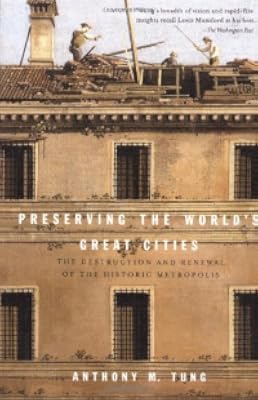


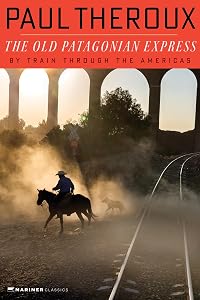
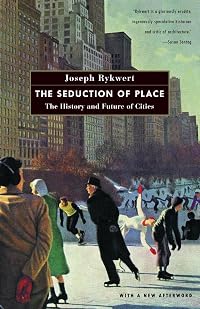


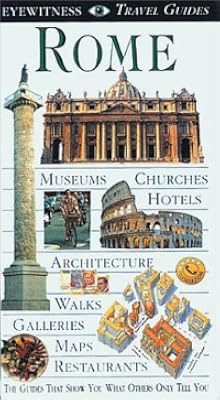






Member Recommendations

Member Reviews
The author was an American press and TV journalist, born at the turn of the last century and most known for a series of travel narratives based on the ”inside” look. He authored over 40 books and died in 1970.
This work was written over several trips in 1967 and is therefore, of course, somewhat dated as to the cities descriptions, politics and populations. Partly this is because of his choice of cities – Moscow, Warsaw, Jerusalem, Beirut and Tokyo – form a sort of epicenter of dynamics and change. His narrative is written in a fairly conventional and conversational prose, no sparkling interplay like Jan Morris, or Paul Theroux would offer the reader, and one repeated “twitch” he allows himself all too often, infuriated this show more reader. On several instances in the midst of descriptions of history or culture he deploys that rather strange excuse “… but space forbids further explanations here… in this work”. I actually margin-scribbled about the third of fourth time – “Take the ploody space man – tell us!”
He is heart-wrenching in Warsaw and the figures and descriptions of two million Jewish slaughtered there in the uprising against the Nazis still disturb – no matter how often we may have read of then before, and he is lyrical of Beirut, as it was in the still French-influenced time before the period of the “Six Day War” in the region. Of the current squalor, trash, and corruption he writes…” Beirut commits treason against itself.”
A turn of phrase that none of us who remember her in earlier years would dispute. An interesting book for any arm-chair traveller, but not recommended or offered as a guide for any current trips. show less
This work was written over several trips in 1967 and is therefore, of course, somewhat dated as to the cities descriptions, politics and populations. Partly this is because of his choice of cities – Moscow, Warsaw, Jerusalem, Beirut and Tokyo – form a sort of epicenter of dynamics and change. His narrative is written in a fairly conventional and conversational prose, no sparkling interplay like Jan Morris, or Paul Theroux would offer the reader, and one repeated “twitch” he allows himself all too often, infuriated this show more reader. On several instances in the midst of descriptions of history or culture he deploys that rather strange excuse “… but space forbids further explanations here… in this work”. I actually margin-scribbled about the third of fourth time – “Take the ploody space man – tell us!”
He is heart-wrenching in Warsaw and the figures and descriptions of two million Jewish slaughtered there in the uprising against the Nazis still disturb – no matter how often we may have read of then before, and he is lyrical of Beirut, as it was in the still French-influenced time before the period of the “Six Day War” in the region. Of the current squalor, trash, and corruption he writes…” Beirut commits treason against itself.”
A turn of phrase that none of us who remember her in earlier years would dispute. An interesting book for any arm-chair traveller, but not recommended or offered as a guide for any current trips. show less
Journalist presents a sort of biography of great contemporary cities -- declaiming this "the age of great cities". I agree. Same author writes the "inside __" books regarding countries and continents.
Ratings
Members
- Recently Added By
Published Reviews
Still as easily readable as ever, these summary cityscapes confirm what Gunther's audience may have seen or is most likely to see. Where possible there are the overall judgments: Paris--""balance, lucidity, precision""; London--""grace, durability, style""; while Rome provides ""no easy answers."" Although the emphasis varies from city to city, there are general perspectives of politics, show more quartiers, foods and nightclubs (the only aspects of Hamburg and Vienna considered), services, social strata, sites and sights, arts and letters. show less
added by John_Vaughan
Author Information

48+ Works 5,399 Members
Born in Chicago, John Gunther began a career in journalism in 1922 as a reporter for the Chicago Daily News. A war correspondent during World War II, Gunther later devoted all his time to writing and is famous for his Inside books. Following his fourth visit to Russia in 1956, he presented important as well as trivial facts in Inside Russia Today show more (1958). "The greatest service Mr. Gunther has done is to bring Russia down to a level we can all understand and talk and argue about" (N.Y. Times). In 1958 he received the Geographic Society of Chicago Publication Award for his Inside books. Unfortunately, Inside U.S.A. (1951) is out of print. Gunther wrote several biographies and a deeply moving account of the death of his young son of a brain tumor, Death Be Not Proud (1949). His Procession (1965) is a group of sketches of international political figures drawn from his Inside books and from articles. Inside Australia (1972), completed and edited by William Forbis, was published posthumously. (Bowker Author Biography) show less
Common Knowledge
- Canonical title
- Twelve Cities
- Original publication date
- 1967
- Important places
- Amman, Jordan; Austria; Beirut, Lebanon; Belgium; Brussels, Belgium; England, UK (show all 25); Europe; France; Germany; Hamburg, Germany; Israel; Italy; Japan; Jerusalem; Jordan; London, England, UK; Middle East; Moscow, Russia; Paris, France; Poland; Rome, Italy; Russia; Tokyo, Honshū, Japan; Vienna, Austria; Warsaw, Poland
- Dedication
- Dedicated with pleasure to DeWitt and Lila Acheson Wallace -- Pleasantville 1938 - Tokyo 1966
Classifications
Statistics
- Members
- 49
- Popularity
- 616,683
- Reviews
- 2
- Rating
- (3.67)
- Languages
- English
- Media
- Paper
- ISBNs
- 2
- ASINs
- 4


