
Patrick Leigh Fermor (1915–2011)
Author of A Time of Gifts
About the Author
Patrick Leigh Fermor was born in London, England on February 11, 1915. During World War II, he was the architect of the kidnapping of the commander of the German garrison on Crete. He wrote several books including A Time of Gifts, Between the Woods and the Water, The Traveller's Tree, The Violins show more of Saint-Jacques, Mani, and Roumeli. He was also a translator. He received a military OBE in 1943. He died on June 10, 2011 at the age of 96. (Bowker Author Biography) show less
Disambiguation Notice:
Note that this author's surname is Leigh Fermor, first name is Patrick.
Series
Works by Patrick Leigh Fermor
In Tearing Haste: Letters Between Deborah Devonshire and Patrick Leigh Fermor (2008) — Author — 364 copies, 10 reviews
Mani ; Roumeli 29 copies
The 11th Day 1 copy
The secrets of Greece 1 copy
Around the furthest capes 1 copy
Associated Works
Gigi / Julie de Carneilhan / Chance Acquaintances (1945) — Translator, some editions — 300 copies, 4 reviews
The Pleasure of Reading: 43 Writers on the Discovery of Reading and the Books That Inspired Them (2015) — Contributor — 104 copies, 2 reviews
Penguins 60s Classics (Loose as the Wind; Now Remember; Florence Nightingale; Rumpole and the Younger Generation; Elephant Tales; Scenes from Havian Life; Less is More Please;… (1996) — Contributor; Contributor — 12 copies
Forever Ulysses — Translator, some editions — 12 copies
Ghika: Peintures, Dessins, Sculptures — Translator, some editions — 1 copy
Tagged
Common Knowledge
- Canonical name
- Leigh Fermor, Patrick
- Legal name
- Leigh Fermor, Sir Patrick Michael
- Other names
- Fermor, Paddy Leigh
- Birthdate
- 1915-02-11
- Date of death
- 2011-06-10
- Gender
- male
- Education
- King's School, Canterbury, England, UK (expelled)
Royal Military Academy, Sandhurst - Occupations
- army officer (WWII)
travel writer
author - Organizations
- Special Operations Executive (WWII)
British Army (WWII) - Awards and honors
- Distinguished Service Order
Order of the Phoenix, Greece (Commander)
Royal Society of Literature (Companion of Literature)
Order of the British Empire (Officer)
Knight Bachelor (2004)
Royal Society of Literature (Fellow) - Agent
- Jock Murray (John Murray)
- Relationships
- Fermor, Lewis Leigh (father)
Chatwin, Bruce (friend)
Moss, W. Stanley (fellow officer)
Fielding, Xan (fellow officer, friend)
Eyres Monsell, Joan (spouse)
Hayden, Sir Henry Hubert (godfather) (show all 7)
Fielding, Daphne (friend) - Short biography
- Patrick Leigh Fermor was one of the world's great travellers and travel writers. He was also a courageous officer in the British Special Operations Executive in World War II. The BBC once described him as "a cross between Indiana Jones, James Bond, and Graham Greene."
- Nationality
- UK
- Birthplace
- London, Middlesex, England, UK
- Places of residence
- Crete
Kardamyli, Mani, Greece
Worcestershire, England, UK - Place of death
- Worcestershire, England, UK
- Burial location
- Dumbleton, Gloucestershire, England, UK
- Map Location
- England, UK
- Disambiguation notice
- Note that this author's surname is Leigh Fermor, first name is Patrick.
Members
Discussions
Found: Boy sent by father to walk to Istanbul over 3 years in Name that Book (March 2023)
Patrick Leigh Fermor, 1915-2011 in Folio Society Devotees (October 2014)
Reviews
A Time of Gifts: On Foot to Constantinople: From the Hook of Holland to the Middle Danube (New York Review Books Classics) by Patrick Leigh Fermor
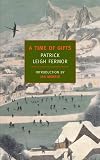
This is a time capsule. A warm, beautifully written time capsule that evokes a Europe on the cusp of modernity. The breadth of the people he meets, their ways of life, the little villages and the grand cities, the art, the churches, the ruined castles, the scenery … what a time to have been there, to see it all. There are whole sections that feel like a fairy tale. The book’s written years later, though, based off his journals at the time, which adds a layer of “what I’ve seen show more since” and a layer of “what a young fool I was”. (The whole Thing in Munich, for instance.) A wonderful piece of history and a lovely story of a journey, a time, and a place. Didn’t love enough to rush out for the next two, but will certainly be reading them both.
8/10 show less
8/10 show less
A Time of Gifts: On Foot to Constantinople: From the Hook of Holland to the Middle Danube (New York Review Books Classics) by Patrick Leigh Fermor
One of the greatest pieces of travel writing in the English language. Published 44 years after the walking expedition that it describes, the book gains a lifetime of experience and historical learning to leaven the youthful exuberance of the journey itself. The writing is brilliant, with historical digressions that bring to life the landscape and buildings that he passes. It describes a world about to disappear with the coming to power of the Nazis, and the imminent catastrophe of World War show more Two, a world of counts and country estates into which he is invited inbetween bouts of walking and sleeping in barns and ditches. If I could write one-tenth as well as Patrick Leigh Fermor, I would die a happy man. show less
Between the Woods and the Water: On Foot to Constantinople: From The Middle Danube to the Iron Gates (New York Review Books Classics) by Patrick Leigh Fermor
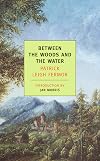
The central Europe portion in this enchanting travelogue of Fermor's walk from the Hook of Holland to Constantinople between the World Wars, continues the discursive marvel that began in the first volume. I don't know where to begin with my love of this book--the lush descriptions of long-gone landscapes, the cheerful, attentive detail to the appearance and character of all he meets, or Fermor's encyclopedic knowledge of history, art, architecture, and language. Polyglot and a lover of show more words, here he is in the chapter entitled "Carpathian Uplands." On foot, Fermor falls in with a logger and joins him and his brother, a Rabbi and the latter's two sons, who inquire, "Why was I travelling? To see the world, to study, to learn languages? I wasn't quite clear myself. Yes, some of these things, but mostly--I couldn't think of the word at first--and when I found it--'for fun'--it didn't sound right and their brows still puckered. 'Also, Sie teiben so herum aus Vergnügen?' The foreman [logger] shrugged his shoulders and smiled and said something in Yiddish to the others; they all laughed and I asked what it was. 'Es ist a goyim naches!' they said. 'A goyim naches', they explained, is something that the goyim like but which leaves Jews unmoved; any irrational or outlandish craze, a goy's delight or a gentile's relish. It seemed to hit the nail on the head" (p. 227). He is a truly companionable guide through an evanescent past. Highly recommended! show less
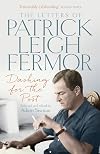
In recent years, I have become an enthusiast of the writings of Patrick Leigh Fermor - traveller, scholar, soldier, Hellene and linguist - after reading his books on Greece (Mani and Roumeli), his series on his youthful 'trudge across Europe' (A Time of Gifts, Between the Woods and the Water and the unfinished The Broken Road), and the biography by Artemis Cooper. So I went into this selection of his letters with interest.
Of course, PLF was writing in a pre-Internet, even pre-telephone age show more (especially where making international calls was concerned). He had a wide circle of friends and his urge to write to them to exchange experiences and discoveries was great. What we find in these letters, then, is a pen portrait of a particular strata of British society, as well as a picture of the man himself.
How much this is to your taste will depend on how open-minded you are. PLF was a product of his background and upbringing, and that was very much one that was at ease with the landed gentry and minor aristocracy. PLF's parents were well-placed, and he was educated privately whilst his parents returned to India (his father being a distinguished geologist in the Raj). However, for a time, PLF was brought up in working-class rural England, and when he undertook his walk from the Hook of Holland to Constantinople, he was as happy conversing with shepherds, farmers and other working people as he was in talking with priests, rabbis and minor aristocrats (a number of whom he had letters of introduction to).
This variety is shown in his letters. It was this ease with all manner of people, plus his ability with languages, that led him to Greece, and then to his wartime exploits on Crete. After the war, he moved in quite exalted circles, but would happily seek out the company of ordinary people when he returned to Greece, where he eventually settled with his wife. All this is front and centre in the letters. There is a list of dramatis personae at the end of the book; it starts with John Betjeman and includes Lawrence Durrell, Ann Fleming (wife of Ian), two of the Mitford girls (three if you count Deborah Cavendish, the Duchess of Devonshire), John Julius Norwich, Sacheverall Sitwell, Freya Stark, Philip Toynbee and Rex Warner. Other names are less well-known, but include a smattering of members of the British aristocracy. Deborah Cavendish ('Debo') was perhaps one of his greatest friends and their correspondence has been separately published.
It is interesting to speculate over PLF's relationship with the working classes. With a few exceptions, his connection with the English working class was fairly tenuous, whereas in Greece and Crete he was feted. Perhaps this is down to the English working class having become urbanised some hundred years earlier, and so disconnected from any sense of their history, folklore and culture, something which workers in Eastern Europe generally, and in the Balkans in particular still - at least in PLF's time - maintained. It is a theme in his books, albeit not directly stated; it does not appear so much in the letters, but knowing PLF's willingness to explore history and culture through the land's inhabitants, it underpins much of his writing even in personal correspondence.
Yet the overall effect of reading these letters, covering the years 1940 to 2010, is a little odd. It's a glimpse into a world now very much diminished, if not altogether vanished; and given the frequency with which PLF gets invited to country houses or circulates between England and the Continent, the reader could be excused for thinking that we were in the world of P.G. Wodehouse's Drones. But every one of PLF's correspondents and friends, whether of higher or lower birth, were people of accomplishment; authors, scholars, diplomats or explorers. PLF maintained contacts with his wartime comrades-in-arms; some were more successful in their post-war lives than others. Some of his Greek compatriots became influential politicians, though their stars waxed and waned,
This is certainly a world which I never had any insight into; PLF was a natural small-'c' conservative, though some of his views ran counter to the stereotype. Some of his attitudes were of his time, but there is little in this selection of letters that would raise much objection in more modern readers.
Having said that we moved in different circles, I was surprised to see that PLF was a regular house guest of the Devonshires at Chatsworth in Derbyshire, a place I know moderately well, and it seems that our circles made a slightly larger Venn diagram than I expected. After all, I was attracted first of all by the first part of his European 'trudge' covering ground I myself covered some sixty years after PLF did, and many of his reactions were ones I also had. I know one of the villages where he was brought up whilst his parents returned to India (and it is not a rural idyll). And his letters, like his books, show the same development of the author's voice. As an insight into the life and work of one of our more interesting characters, this book is valuable. show less
Of course, PLF was writing in a pre-Internet, even pre-telephone age show more (especially where making international calls was concerned). He had a wide circle of friends and his urge to write to them to exchange experiences and discoveries was great. What we find in these letters, then, is a pen portrait of a particular strata of British society, as well as a picture of the man himself.
How much this is to your taste will depend on how open-minded you are. PLF was a product of his background and upbringing, and that was very much one that was at ease with the landed gentry and minor aristocracy. PLF's parents were well-placed, and he was educated privately whilst his parents returned to India (his father being a distinguished geologist in the Raj). However, for a time, PLF was brought up in working-class rural England, and when he undertook his walk from the Hook of Holland to Constantinople, he was as happy conversing with shepherds, farmers and other working people as he was in talking with priests, rabbis and minor aristocrats (a number of whom he had letters of introduction to).
This variety is shown in his letters. It was this ease with all manner of people, plus his ability with languages, that led him to Greece, and then to his wartime exploits on Crete. After the war, he moved in quite exalted circles, but would happily seek out the company of ordinary people when he returned to Greece, where he eventually settled with his wife. All this is front and centre in the letters. There is a list of dramatis personae at the end of the book; it starts with John Betjeman and includes Lawrence Durrell, Ann Fleming (wife of Ian), two of the Mitford girls (three if you count Deborah Cavendish, the Duchess of Devonshire), John Julius Norwich, Sacheverall Sitwell, Freya Stark, Philip Toynbee and Rex Warner. Other names are less well-known, but include a smattering of members of the British aristocracy. Deborah Cavendish ('Debo') was perhaps one of his greatest friends and their correspondence has been separately published.
It is interesting to speculate over PLF's relationship with the working classes. With a few exceptions, his connection with the English working class was fairly tenuous, whereas in Greece and Crete he was feted. Perhaps this is down to the English working class having become urbanised some hundred years earlier, and so disconnected from any sense of their history, folklore and culture, something which workers in Eastern Europe generally, and in the Balkans in particular still - at least in PLF's time - maintained. It is a theme in his books, albeit not directly stated; it does not appear so much in the letters, but knowing PLF's willingness to explore history and culture through the land's inhabitants, it underpins much of his writing even in personal correspondence.
Yet the overall effect of reading these letters, covering the years 1940 to 2010, is a little odd. It's a glimpse into a world now very much diminished, if not altogether vanished; and given the frequency with which PLF gets invited to country houses or circulates between England and the Continent, the reader could be excused for thinking that we were in the world of P.G. Wodehouse's Drones. But every one of PLF's correspondents and friends, whether of higher or lower birth, were people of accomplishment; authors, scholars, diplomats or explorers. PLF maintained contacts with his wartime comrades-in-arms; some were more successful in their post-war lives than others. Some of his Greek compatriots became influential politicians, though their stars waxed and waned,
This is certainly a world which I never had any insight into; PLF was a natural small-'c' conservative, though some of his views ran counter to the stereotype. Some of his attitudes were of his time, but there is little in this selection of letters that would raise much objection in more modern readers.
Having said that we moved in different circles, I was surprised to see that PLF was a regular house guest of the Devonshires at Chatsworth in Derbyshire, a place I know moderately well, and it seems that our circles made a slightly larger Venn diagram than I expected. After all, I was attracted first of all by the first part of his European 'trudge' covering ground I myself covered some sixty years after PLF did, and many of his reactions were ones I also had. I know one of the villages where he was brought up whilst his parents returned to India (and it is not a rural idyll). And his letters, like his books, show the same development of the author's voice. As an insight into the life and work of one of our more interesting characters, this book is valuable. show less
Lists
Awards


You May Also Like


Associated Authors
Statistics
- Works
- 28
- Also by
- 20
- Members
- 9,763
- Popularity
- #2,446
- Rating
- 4.0
- Reviews
- 211
- ISBNs
- 232
- Languages
- 13
- Favorited
- 54


