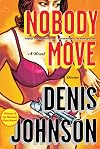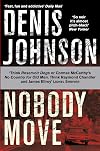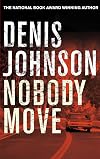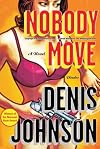
Nobody Move: A Novel
by Denis Johnson
On This Page
Description
From the National Book Award-winning, bestselling author of Tree of Smoke comes a provocative thriller set in the American West. Nobody Move, which first appeared in the pages of Playboy, is the story of an assortment of lowlifes in Bakersfield, California, and their cat-and-mouse game over $2. 3 million. Touched by echoes of Raymond Chandler and Dashiell Hammett, Nobody Move is at once an homage to and a variation on literary form. It salutes one of our most enduring and popular genres-the show more American crime novel-but does so with a grisly humor and outrageousness that are Denis Johnson's own. Sexy, suspenseful, and above all entertaining, Nobody Move shows one of our greatest novelists at his versatile best. show lessTags
Recommendations

























Member Reviews
(Reprinted from the Chicago Center for Literature and Photography [cclapcenter.com]. I am the original author of this essay, as well as the owner of CCLaP; it is not being reprinted here illegally.)
As heavy readers know, it's common for authors of big, giant, important, award-winning tomes to follow them up with something light and short, for a variety of reasons: as a literary 'cleanser,' to avoid burnout as a writer, to pre-deflate high audience expectations. But this turns out to be a real hit-and-miss proposition, also as heavy readers know; because sometimes you end up with, say, Michael Chabon's delightful genre experiment Gentlemen of the Road (his follow-up to the supposedly astounding Yiddish Policemen's Union, which believe it show more or not I still haven't gotten a chance to read), but then sometimes you end up with a book like Jonathan Lethem's truly dreadful You Don't Love Me Yet (his follow-up of sorts [there was a book of essays in between] to the also supposedly astounding Fortress of Solitude, which I also still haven't gotten a chance yet to read).
And now we have our latest example to judge, Denis Johnson's short pulp-fiction exercise Nobody Move (originally published serially last year in Playboy), his first book since the mindblowing 2007 National Book Award winning Tree of Smoke (which I've also reviewed here in the past, and whoo man what a phenomenal freaking book that is). And how is Nobody Move? Well, in a cliched nutshell: He shoots, he scores! And that's because Johnson does here what Chabon did as well, but Lethem simply did not -- he takes the light cleanser project just as seriously as he did the giant important award-winning one, even with them designed from the start to serve two very different purposes, honoring those intentions and taking a lot of care to get the details right. For example, just like most pulp projects, Johnson's novel is a look at a series of petty criminals and lowlife losers (in this case centered around the central California town of Bakersfield), which of course was one of the big things to originally differentiate the genre from the lurid crime tales of the Victorian Age that came right before it; that instead of featuring criminal masterminds or fiendish supervillains, the characters in pulp tales live out on the edges of society, too stupid and cowardly to go for the big score but rather sticking to the petty schemes they know definitively to work, trying to get away with them as long as possible without getting caught, while nonetheless always dreaming of the day their ship finally comes in.
In this case, for example, there is the weasely schlub Jimmy Luntz, the closest thing we have to an 'antihero' if any of them can be called that; then there's the aging enforcer Gambol, who spends the book chasing Luntz after getting shot in the leg by him in the first five pages; there is Anita, the unusually attractive Native American alcoholic who has just gotten busted embezzling several million dollars from the company she works for (in actuality a frame-up by her ex-husband, plus the crooked judge who granted him a divorce), who drunkenly hooks up with Luntz while both are on the run; there is Juarez, Gambol's boss who Luntz screwed over not too long ago (hence Gambol being on his trail), a Middle Easterner who tells everyone he's Hispanic and who dresses like a gangsta rapper; and then there's Mary, a former army medic dispatched at the beginning of the story to go find Gambol and quietly patch him up, who just happens to be Juarez's ex-wife and who just happens to now hate him but needs his money. And then the thing that brings them all together is not much more than a MacGuffin, and not actually very important to the story at all (you know, like the glowing briefcase in Quentin Tarantino's Pulp Fiction), with the point instead to spend 200 pages watching these people all chase each other around, while spouting unbelievably great lines of dialogue at each other.
Because that of course is one of the most well-known things about Johnson's writing style, what generates so many admirers but what you need to look out for as well; that if you're not already a fan of people like David Mamet, who attempt to boil stories down to the absolute minimum amount of words needed to make their point, you need to stay the hell away from Johnson no matter how much your friends keep recommending him, or else suffer a fit of self-righteous eye-rolling so bad that it will threaten to induce a seizure. And in fact Johnson delivers not only his usual brilliant yet controversial clipped dialogue here in Nobody Move, but even sometimes very cleverly skips over big sections of action-text when he thinks the audience doesn't need it; to cite one infamous example that I've already mentioned, how the opening scene of the book is of Gambol and Luntz riding in a car together, Gambol telling Luntz not to mess with the shotgun he's accidentally discovered in the back seat, while in the very next paragraph Gambol is now laying in the desert with a bullet in his leg, with it only then that we learn that he had been taking Luntz out somewhere desolated in order to do him some kind of unspecified harm.
This is why fans of the genre love pulp fiction, after all, because it's storytelling taken to its most terse, rat-a-tat extreme; a meaty yet bare-boned way of telling a tale, like watching a couple of scrawny yet professional lightweight boxers duke it out, a chance to admire the literary arts at its most stripped-down and essential. And this is certainly the case with Nobody Move, with a series of developments that I won't divulge any more of but let's just say are always unexpected, funny and horrifying at the same time just like pulp fiction should be, held together with sparkling gritty dialogue and just the general scuminess of the entire milieu. And I don't have a lot more to say about it, actually, because frankly there isn't a lot more to say about it -- when all is said and done, it is nothing more than a genre tale, never once straying from the well-known tropes that define pulp fiction, which is why it's getting an above-average but not spectacular score today; yet is pulled off almost perfectly, which is why it gets a boost in its rating specifically for those who are existing fans of, say, Raymond Chandler. If you're the kind of person who likes reading only one or two pulp tales a year, this should be one of them; and of course for those who like the genre more than that, this title is absolutely not to be missed.
Out of 10: 9.2, or 9.9 for lovers of pulp fiction show less
As heavy readers know, it's common for authors of big, giant, important, award-winning tomes to follow them up with something light and short, for a variety of reasons: as a literary 'cleanser,' to avoid burnout as a writer, to pre-deflate high audience expectations. But this turns out to be a real hit-and-miss proposition, also as heavy readers know; because sometimes you end up with, say, Michael Chabon's delightful genre experiment Gentlemen of the Road (his follow-up to the supposedly astounding Yiddish Policemen's Union, which believe it show more or not I still haven't gotten a chance to read), but then sometimes you end up with a book like Jonathan Lethem's truly dreadful You Don't Love Me Yet (his follow-up of sorts [there was a book of essays in between] to the also supposedly astounding Fortress of Solitude, which I also still haven't gotten a chance yet to read).
And now we have our latest example to judge, Denis Johnson's short pulp-fiction exercise Nobody Move (originally published serially last year in Playboy), his first book since the mindblowing 2007 National Book Award winning Tree of Smoke (which I've also reviewed here in the past, and whoo man what a phenomenal freaking book that is). And how is Nobody Move? Well, in a cliched nutshell: He shoots, he scores! And that's because Johnson does here what Chabon did as well, but Lethem simply did not -- he takes the light cleanser project just as seriously as he did the giant important award-winning one, even with them designed from the start to serve two very different purposes, honoring those intentions and taking a lot of care to get the details right. For example, just like most pulp projects, Johnson's novel is a look at a series of petty criminals and lowlife losers (in this case centered around the central California town of Bakersfield), which of course was one of the big things to originally differentiate the genre from the lurid crime tales of the Victorian Age that came right before it; that instead of featuring criminal masterminds or fiendish supervillains, the characters in pulp tales live out on the edges of society, too stupid and cowardly to go for the big score but rather sticking to the petty schemes they know definitively to work, trying to get away with them as long as possible without getting caught, while nonetheless always dreaming of the day their ship finally comes in.
In this case, for example, there is the weasely schlub Jimmy Luntz, the closest thing we have to an 'antihero' if any of them can be called that; then there's the aging enforcer Gambol, who spends the book chasing Luntz after getting shot in the leg by him in the first five pages; there is Anita, the unusually attractive Native American alcoholic who has just gotten busted embezzling several million dollars from the company she works for (in actuality a frame-up by her ex-husband, plus the crooked judge who granted him a divorce), who drunkenly hooks up with Luntz while both are on the run; there is Juarez, Gambol's boss who Luntz screwed over not too long ago (hence Gambol being on his trail), a Middle Easterner who tells everyone he's Hispanic and who dresses like a gangsta rapper; and then there's Mary, a former army medic dispatched at the beginning of the story to go find Gambol and quietly patch him up, who just happens to be Juarez's ex-wife and who just happens to now hate him but needs his money. And then the thing that brings them all together is not much more than a MacGuffin, and not actually very important to the story at all (you know, like the glowing briefcase in Quentin Tarantino's Pulp Fiction), with the point instead to spend 200 pages watching these people all chase each other around, while spouting unbelievably great lines of dialogue at each other.
Because that of course is one of the most well-known things about Johnson's writing style, what generates so many admirers but what you need to look out for as well; that if you're not already a fan of people like David Mamet, who attempt to boil stories down to the absolute minimum amount of words needed to make their point, you need to stay the hell away from Johnson no matter how much your friends keep recommending him, or else suffer a fit of self-righteous eye-rolling so bad that it will threaten to induce a seizure. And in fact Johnson delivers not only his usual brilliant yet controversial clipped dialogue here in Nobody Move, but even sometimes very cleverly skips over big sections of action-text when he thinks the audience doesn't need it; to cite one infamous example that I've already mentioned, how the opening scene of the book is of Gambol and Luntz riding in a car together, Gambol telling Luntz not to mess with the shotgun he's accidentally discovered in the back seat, while in the very next paragraph Gambol is now laying in the desert with a bullet in his leg, with it only then that we learn that he had been taking Luntz out somewhere desolated in order to do him some kind of unspecified harm.
This is why fans of the genre love pulp fiction, after all, because it's storytelling taken to its most terse, rat-a-tat extreme; a meaty yet bare-boned way of telling a tale, like watching a couple of scrawny yet professional lightweight boxers duke it out, a chance to admire the literary arts at its most stripped-down and essential. And this is certainly the case with Nobody Move, with a series of developments that I won't divulge any more of but let's just say are always unexpected, funny and horrifying at the same time just like pulp fiction should be, held together with sparkling gritty dialogue and just the general scuminess of the entire milieu. And I don't have a lot more to say about it, actually, because frankly there isn't a lot more to say about it -- when all is said and done, it is nothing more than a genre tale, never once straying from the well-known tropes that define pulp fiction, which is why it's getting an above-average but not spectacular score today; yet is pulled off almost perfectly, which is why it gets a boost in its rating specifically for those who are existing fans of, say, Raymond Chandler. If you're the kind of person who likes reading only one or two pulp tales a year, this should be one of them; and of course for those who like the genre more than that, this title is absolutely not to be missed.
Out of 10: 9.2, or 9.9 for lovers of pulp fiction show less
Trust Denis Johnson. If you need someone to lay down a straight flush pulp masterpiece, one of the best writers in the business is a safe bet. Not that I usually expect to find Johnson writing in this genre. But if anyone understands the movement of plot and character through dialogue, it’s him.
Jimmy Luntz is a bit down on his luck. He’s in debt to some unsavoury people. The kind who come round to collect. And that gun you see in the first act will go off. In the first act. It’s that kind of novel. When Jimmy crosses paths with Anita Desilvera, he might think his luck has changed. She’s clearly out of his league. But she’s got troubles of her own, a taste for vodka, a bad karaoke habit, and a few million in missing funds that show more she’s taking the fall for having pilfered. She’s also got a bit of a mean streak. But she and Jimmy hit it off, sort of. And their two narrative paths are certain to comingle. With consequences.
Mostly this is just fun writing and fun reading. There isn’t really much more to it than that. Johnson’s dialogue is endlessly refreshing. And he knows how to mingle fates both subtly and with lead. You might as well just sit back and enjoy. Gently recommended. show less
Jimmy Luntz is a bit down on his luck. He’s in debt to some unsavoury people. The kind who come round to collect. And that gun you see in the first act will go off. In the first act. It’s that kind of novel. When Jimmy crosses paths with Anita Desilvera, he might think his luck has changed. She’s clearly out of his league. But she’s got troubles of her own, a taste for vodka, a bad karaoke habit, and a few million in missing funds that show more she’s taking the fall for having pilfered. She’s also got a bit of a mean streak. But she and Jimmy hit it off, sort of. And their two narrative paths are certain to comingle. With consequences.
Mostly this is just fun writing and fun reading. There isn’t really much more to it than that. Johnson’s dialogue is endlessly refreshing. And he knows how to mingle fates both subtly and with lead. You might as well just sit back and enjoy. Gently recommended. show less
I continue to be very impressed with Johnson's writing. He is, without a doubt, one of the most talented American authors writing today.
In Nobody Move, Johnson gives us a short action-packed crime novel, complete with alcoholics, sex, morphine, shotguns, dead bodies being buried in the woods, testicle eating, and karaoke singing. Who could ask for more?
But it is more than that. It is interspersed with beautiful writing. For example "The crescent moon lay directly overhead, and on such a night the river's swollen surface resembled the unquiet belly of a living thing you could step onto and walk across." Every one of Johnson's books contain many such beautiful passages and Nobody Move is no exception. I loved it.
In Nobody Move, Johnson gives us a short action-packed crime novel, complete with alcoholics, sex, morphine, shotguns, dead bodies being buried in the woods, testicle eating, and karaoke singing. Who could ask for more?
But it is more than that. It is interspersed with beautiful writing. For example "The crescent moon lay directly overhead, and on such a night the river's swollen surface resembled the unquiet belly of a living thing you could step onto and walk across." Every one of Johnson's books contain many such beautiful passages and Nobody Move is no exception. I loved it.
Johnson takes what appears at first to be a typical crime story and imbues it with both spark and depth. Jimmy Luntz, a likeable. impractical gambler with a "sissy body" gets in trouble with a bad crowd over - what else? - gambling debts. There's a bad woman, a good woman, and many bad men. The writing is crisp and the dialogue pin-point, punctuated by moments of poetry: "Her hearing came up: the hiss of the river in this wide slow spot, and the breeze in the branches, the tick of the willow leaves." A deceitful judge is "the father of lies."
Johnson doles out facts and plot tidbits artfully, but not necessarily where you would expect them. Nearly every word and scene is written as if it could be no other way.
Johnson doles out facts and plot tidbits artfully, but not necessarily where you would expect them. Nearly every word and scene is written as if it could be no other way.
Early on in Denis Johnson’s “Nobody Move,” hero Jimmy Luntz hears the tiny snatch of a reggae song: “Nobody move/Nobody gets hurt.” Unfortunately the desperate and outcast denizens of this novella move around plenty.
Denis Johnson, National Book Award winner and Pulitzer Prize finalist for the august and delicious “Tree of Smoke,” turns his acknowledged talents to the crime caper here. Well, it’s not a crime caper so much as an adventure story about a gambler who hooks up with a beautiful woman, desperate herself, and tries without much success to stay ahead of the criminals who want to kill him.
The chief delight here is the dialog. It’s frank, laconic, and honest – there isn’t a wasted syllable anywhere. Picking show more out one conversation that one hopes is indicative of a whole story’s is quite risky, but I’m going to risk it anyway. Jimmy tells his temporary-but-beautiful partner Anita that a new outfit she’s trying on in J.C. Penney’s looks fine on her:
“It fits.”
“You’re sweet,” she said, and she sort of meant it. But not as a compliment. “You’re homeless, right?”
“I have a home. I’m just not going back there, is all.”
“So right there in that shopping bag is everything you own?”
“Everything I need.”
“And your white canvas bag – what’s in that one?”
“Everything else I need.”
“I know what’s in it. A sawed-off shotgun.”
He seemed completely unsurprised. “It’s not a sawed-off, it’s a pistol-grip. And it isn’t mine.”
“I peeked in the bag while you were in the shower.”
“You zipped it up real nice,” he said. “Good for you.”
Events take place in the blond blankness of minor Northern California valley towns, and feature its open fields and forested riversides: folks creep around on the lam and plot escape, revenge, or betrayal. Folks get caught, turn the tables, get shot, and angle for the big payday. Through it all, gambler Jimmy Luntz keeps trying to force his luck, and succeeds for a time. Go down gambling, his actions speak loud and clear, and you may not have to go at all.
I’m cheered and smiling at this mantissa of a story. Even with my challenging schedule, I read it in two sittings, nearly unheard-of for me. Yes, it’s slim, but it’s one of those things you don’t want to stop doing until it’s done, and then you just want to start all over again, like a looping out-of-control water slide. It’s wonderful, it shows Johnson’s force and skill to terrific effect, and well worth your while.
http://bassoprofundo1.blogspot.com/2011/12/nobody-move-by-denis-johnson.html show less
Denis Johnson, National Book Award winner and Pulitzer Prize finalist for the august and delicious “Tree of Smoke,” turns his acknowledged talents to the crime caper here. Well, it’s not a crime caper so much as an adventure story about a gambler who hooks up with a beautiful woman, desperate herself, and tries without much success to stay ahead of the criminals who want to kill him.
The chief delight here is the dialog. It’s frank, laconic, and honest – there isn’t a wasted syllable anywhere. Picking show more out one conversation that one hopes is indicative of a whole story’s is quite risky, but I’m going to risk it anyway. Jimmy tells his temporary-but-beautiful partner Anita that a new outfit she’s trying on in J.C. Penney’s looks fine on her:
“It fits.”
“You’re sweet,” she said, and she sort of meant it. But not as a compliment. “You’re homeless, right?”
“I have a home. I’m just not going back there, is all.”
“So right there in that shopping bag is everything you own?”
“Everything I need.”
“And your white canvas bag – what’s in that one?”
“Everything else I need.”
“I know what’s in it. A sawed-off shotgun.”
He seemed completely unsurprised. “It’s not a sawed-off, it’s a pistol-grip. And it isn’t mine.”
“I peeked in the bag while you were in the shower.”
“You zipped it up real nice,” he said. “Good for you.”
Events take place in the blond blankness of minor Northern California valley towns, and feature its open fields and forested riversides: folks creep around on the lam and plot escape, revenge, or betrayal. Folks get caught, turn the tables, get shot, and angle for the big payday. Through it all, gambler Jimmy Luntz keeps trying to force his luck, and succeeds for a time. Go down gambling, his actions speak loud and clear, and you may not have to go at all.
I’m cheered and smiling at this mantissa of a story. Even with my challenging schedule, I read it in two sittings, nearly unheard-of for me. Yes, it’s slim, but it’s one of those things you don’t want to stop doing until it’s done, and then you just want to start all over again, like a looping out-of-control water slide. It’s wonderful, it shows Johnson’s force and skill to terrific effect, and well worth your while.
http://bassoprofundo1.blogspot.com/2011/12/nobody-move-by-denis-johnson.html show less
This is my fourth Denis Johnson (after Train Dreams, Fiskadoro and The Name of the World) and was read in tribute to his life after his recent passing. It's also my J on an alphabetical list by author surname I've got going on!
I continue to be beguiled with how well Johnson writes in all manner of genres and 'Nobody Move' furthered this impressive versatility with its distinctly noir feel. Although only scoring it a 3 out of 5, it is a very good 3 and an accomplished story which is incredibly readable. Consequently, it's a quick read but an engaging one and as others have commented, it could've handled being longer.
Nobody Moves centres on the coming together of 4 principle characters and how their lives temporarily ricochet off each show more other's in gritty Bakersfield, California. Similar to the sitcom 'Will and Grace', none of the protagonists are particularly good people, yet, how much damage they do to each other and themselves makes for an intriguing tale. They are well rounded and believable, each growing with the story and their experiences, each holding out under their respective burdens be they framed embezzlement, being hunted by a notorious criminal, loneliness or a bullet wound to the leg.
The strength of this novel is particularly the dialogue, in which Johnson is a master: the exchanges between the four characters are rich and real and it is very much as if you are there with them, living their emotions and thoughts. A good mark for me of a book's success is if I 'miss' (finding out about) the characters after the story is finished. And I did. I wanted to know more, I wanted to follow them a little longer. A very good 3 out of 5! show less
I continue to be beguiled with how well Johnson writes in all manner of genres and 'Nobody Move' furthered this impressive versatility with its distinctly noir feel. Although only scoring it a 3 out of 5, it is a very good 3 and an accomplished story which is incredibly readable. Consequently, it's a quick read but an engaging one and as others have commented, it could've handled being longer.
Nobody Moves centres on the coming together of 4 principle characters and how their lives temporarily ricochet off each show more other's in gritty Bakersfield, California. Similar to the sitcom 'Will and Grace', none of the protagonists are particularly good people, yet, how much damage they do to each other and themselves makes for an intriguing tale. They are well rounded and believable, each growing with the story and their experiences, each holding out under their respective burdens be they framed embezzlement, being hunted by a notorious criminal, loneliness or a bullet wound to the leg.
The strength of this novel is particularly the dialogue, in which Johnson is a master: the exchanges between the four characters are rich and real and it is very much as if you are there with them, living their emotions and thoughts. A good mark for me of a book's success is if I 'miss' (finding out about) the characters after the story is finished. And I did. I wanted to know more, I wanted to follow them a little longer. A very good 3 out of 5! show less
I've never read anything by Johnson that wasn't good, and this is no exception. The story starts simply enough with an in-debt gambler shooting his about-to-be assailant in the leg, then it spirals through a group of mostly desperate characters--including a beautiful woman framed for theft--and a series of violent incidents, though the worst violence takes place off stage. What shines through is Johnson's characterization. Each member of the cast is made multi-dimensional. Even the worst of them have some elements of humanity we can identify with. And the relationships between the characters are well handled. The plotting is solid, but it is Johnson's writing that makes it all work. Recommended.
The audiobook version is well narrated.
The audiobook version is well narrated.
Members
- Recently Added By
Lists

Noirvember: The Best Noir
113 works; 56 members

Best Noir Fiction
160 works; 14 members

Biggest Disappointments
606 works; 163 members

mediocre books by authors i otherwise adore
10 works; 1 member
Author Information

36+ Works 14,427 Members
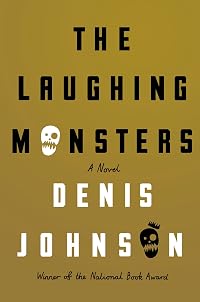
Denis Johnson was born in Munich, Germany on July 1, 1949. He received a bachelor's degree and a master's degree from the University of Iowa. He published his first book of poetry, The Man Among the Seals, at the age of 19. However, addictions to alcohol and drugs derailed him and he was in a psychiatric ward at the age of 21. He was sober by the show more early 1980s. Along with writing several volumes of poetry, Johnson wrote short stories for The New Yorker, Atlantic Monthly, Esquire, Paris Review, and Best American Short Stories. His novels included Angels, Jesus' Son, Resuscitation of a Hanged Man, Already Dead, Nobody Move, Train Dreams, and The Laughing Monsters. He won the National Book Award in 2007 for Tree of Smoke. He also received the Award for Literature from the American Academy of Arts, the Robert Frost Award, and the Library of Congress Prize for American Fiction. He died of liver cancer on May 24, 2017 at the age of 67. (Bowker Author Biography) show less
Some Editions
Awards and Honors
Distinctions
Common Knowledge
- Canonical title*
- Personne bouge
- Original title
- Nobody move
- Original publication date
- 2009-04-28
- People/Characters
- Jimmy Luntz; Gambol; Juarez; The Tall Man; Anita Desilvera
- Important places
- Bakersfield, California, USA
- Dedication
- For Meir Ribalow
- First words
- Jimmy Luntz had never been to war, but this was the sensation, he was sure of that - eighteen guys in a room, Rob, the director, sending them out - eighteen guys shoulder to shoulder, moving out on the orders of their leader ... (show all)to do what they've been training day and night to do.
- Last words
- (Click to show. Warning: May contain spoilers.)"It's cold. But it won't kill you."
- Blurbers
- Franzen, Jonathan; Passaro, Vince; Lewis, Jim; Coale, Sam; Walter, Jess; Ervin, Andrew (show all 18); Minzesheimer, Bob; Poole, Steven; Batten, Jack; Hoover, Bob; Bradley, James; Jones, Thomas; Saunders, Kate; Corliss, Richard; Baker, Jeff; Al-Shawaf, Rayyan; Lockhart, Timothy J.; Means, David
- Original language
- English
*Some information comes from Common Knowledge in other languages. Click "Edit" for more information.
Classifications
Statistics
- Members
- 807
- Popularity
- 34,313
- Reviews
- 59
- Rating
- (3.34)
- Languages
- 8 — Dutch, English, French, German, Italian, Polish, Portuguese, Spanish
- Media
- Paper, Audiobook, Ebook
- ISBNs
- 34
- ASINs
- 9