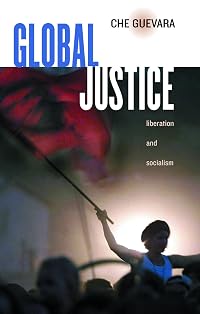
Che Guevara on Global Justice
by Che Guevara
On This Page
Description
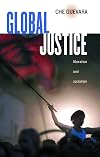
"In this collection of three speeches, Ernesto Che Guevara offers a revolutionary view of a world in which human solidarity and understanding replace imperialist agression and exploitation. First, in a sharp speech given in Algeria on February 24, 1965 at the Afro-Asia Economic Seminar, Che speaks about the nature of capitalism and the revolutionary struggle that would open the way for a new, socialist society. Guevara's 1965 essay, "Socialism and Man in Cuba," is a milestone in show more twentieth-century emancipatory social thought. Finally, "Message to the Tricontinental" is one of Che's more well-known works, which outlines the tactics and strategies that should be followed in revolutionary struggle. This collection of writings merges Che's philosophy, politics, and economics in his all encompassing, coherent revolutionary vision. His ideas and his struggle strike a chord in the current search for global justice"-- show lessTags
Recommendations


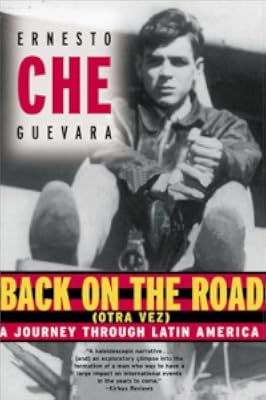
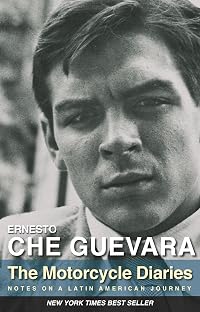









Member Reviews
Although best known as a guerrilla fighter, this book shows Che as a profound thinker with a radical world view that still strikes a chord with young rebels in every country today.
Classic works by Ernesto Che Guevara, presenting a revolutionary view of a different world in which human solidarity and understanding replace imperialist aggression and exploitation. Includes Socialism and Man in Cuba, plus Che's controversial speech in Algiers in 1965 and his final Message to the Tricontinental in which he calls for the creation of Two, Three, Many Vietnams'.'
Ratings
Members
- Recently Added By
Author Information

272+ Works 8,542 Members
Ernesto "Che" Guevara was born in Rosario, Argentina on June 14, 1928, to an aristocratic family of Spanish-Irish descent. He was known from an early age for his dynamic personality and radical points of view. Guevara graduated from the University of Buenos Aires with a degree of doctor of medicine and surgery in 1953. He witnessed the 1954 show more CIA-backed coup in Guatemala that ended the regime of socialist Jacobo Arbenz. As a direct result, Guevara became convinced that the United States would never support leftist governments and that violent revolution was the only way to end poverty in Latin America. He joined Fidel Castro's 26th of July Movement in 1956, and following the Cuban Revolution held several influential posts in the new socialist government, including Minister of Industries. In 1965, Che left Cuba for the ex-Belgian Congo to support the Marxist Simba movement, which was ultimately unsuccessful. Following his time in Africa, Guevara traveled to Bolivia to teach guerrilla warfare to native Communists preparing for revolution. He was captured during a military operation by army forces supported by the United States and executed on October 9, 1967. Guevara's remains were discovered in 1997 and relocated to a mausoleum in Cuba. Guevara had a daughter with Hilda Gadea, whom he married in 1955 and divorced in 1959, and four children with his second wife, Aleida March, a Cuban-born member of the 26th of July movement. He also had a son with Lilia Rosa López. After his death Guevara became a global icon of martyrdom and a symbol of rebellion, particularly during the worldwide student protests of the late 1960s. Among his most noted written works, which include texts on guerilla warfare, socialism, and political economy, are "The Motorcycle Diaries," "Bolivian Diary," and "Reminiscences of the Cuban Revolutionary War." (Bowker Author Biography) show less
Classifications
Statistics
- Members
- 80
- Popularity
- 397,771
- Reviews
- 2
- Rating
- (3.55)
- Languages
- English
- Media
- Paper, Ebook
- ISBNs
- 4
- ASINs
- 2