On This Page
Description
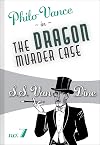
A whodunit that "presents a good puzzle, and that, according to Mr. Vance and his tens of thousands of readers, is what murder mystery books are for" (The New York Times). No question, The Dragon Murder Case showcases Our Philo at his most supremely irritating. The book is set at a Manhattan mansion complete with picturesque pool. Into that pool dives Sanford Montague, never to be seen again. Fools rush to blame the supernatural, noting that the "Dragon Pool," is supposedly home to a monster show more known to the Lenape Indians. Philo's not so sure: He is (of course) an expert on both dragons and the Lenape Indians, with a sort of sideline expertise in pools and fish. It is tempting to agree with Ogden Nash that "Philo Vance needs a kick in the pance": and by the time you reach the end of Dragon, you will almost certainly want to point your boot at his posterior. But you will have had a swell time getting there, and we've got a crisp greenback that says you'll be chuckling too hard to aim. Praise for the Philo Vance series "With his highbrow manner and his parade of encyclopedic learning, Philo Vance is not only a detective; he is a god out of the machine." --The New York Times "The Philo Vance novels were well-crafted puzzlers that captivated readers . . . the works of S.S. Van Dine serve to transport the reader back to a long-gone era of society and style of writing." --Mystery Scene "Outrageous cleverness . . . among the finest fruits of the Golden Age." --Bloody Murder show lessTags
Recommendations



















Member Reviews
“I can’t fit the pattern together yet. But something horrible is going on here, and there’s no telling what might happen if what we have just discovered became known.” — Philo Vance to John F.X. Markham, District Attorney
Perhaps just shy of the locked room murder puzzle masterpiece that is The Kennel Murder Case, culturally influential art critic Willard Huntington Wright’s (S.S. Van Dine) seventh Golden Age mystery featuring the dapper and borderline insufferably knowledgable amateur detective, Philo Vance, is an absolute blast in all respects. Those who’ve seen the early film adaptations with William Powell, and can picture him in their mind while reading, have a bit of an advantage, I’d say. Meticulously plotted and show more incredibly literate as always, Wright seems to be having great fun with a plot where the murder — if there is one — may have supernatural undertones.
During a party at a century-old estate, a man has gone missing after diving into the Dragon Pool — a mysterious body of water bathed in legends of a real dragon spirit living within the pool and guarding it. Markham and the erudite Vance are together when a frustrated Sergeant Heath, tired of questioning numerous party attendees who all seem to have a motive for a murder as yet unconfirmed — no body can be found; the man simply vanished in the pool, and never came up — asks for help. Intrigued, Vance accompanies Marham to the estate and finds the atmosphere more tied to the past than the present — and eerily so. Vance immediately realizes that body or no body, something at the Stamm estate is very wrong. The mysterious Dragon Pool is drained, but there is no body, despite it being impossible for the missing man to have escaped from the pool unseen by any of the guests! In a manner of speaking, Van Dine’s The Dragon Murder Case then becomes a locked-room mystery. Confusing everything, when the man’s body is finally discovered, in a mysterious place of caves and Indian legends, he has strange, talon-like markings on him. Even Vance isn’t sure yet what to make of it all:
“That’s a strange place, Markham. It’s full of infinite possibilities—with its distorted traditions, its old superstitions, its stagnant air of a dead and buried age, its insanity and decadence, and its folklore and demonology. Such a place produces strange quirks of the mind: even casual visitors are caught in its corroding atmosphere. Such an atmosphere generates and begets black and incredible crimes. You have seen, in the last two days, how every one with whom we talked was poisoned by these subtle and sinister influences.”
The death of Sanford Montague will not be the only fatality as Vance, Markham and Heath attempt to get to the bottom of things, without diving into the pool of the supernatural. Is the eldest Stamm female, who claims to have seen the great dragon, delusional, or is there truly something otherworldly at play here? Markham thinks not, but Heath is beginning to wonder — and becoming a bit uneasy about it. Though the analytical Vance feels there has to be a solution, his familiarity with rare fish and ancient aquatic life, and his nearly encyclopedic knowledge concerning dragons and their presence in mythology all over the world — Vance knows about pretty much everything — appears to Markham’s irritation, to have him sitting on the fence about the murders. At one point in the case, Vance even takes time out to inform Markham of dragon lore encompassing the globe. It goes on for page after page, like an info dump, yet Wright was such a terrific writer, that to skip over it is to miss some truly fascinating information.
What becomes clear, as Vance finally sees a glimmer of light at the end of the tunnel, is that The Dragon Murder Case will require something beyond the tried and true methods of detection. Vance comments on such when Heath admits to Markham that he isn’t sure how to handle the case, and rather than be miffed, Markham sympathizes with his Sergeant. That’s when Vance concurs:
“The usual methods are futile. The roots of these two crimes go down much deeper than that. The murders are diabolical—in more than one sense; and they are closely related, in some strange way, to all the sinister factors which go to make up this household and its influences…”
There’s some knowledge Wright doesn’t share with the reader, involving a trip into town by Vance where the high-brow detective figures it out, that might have a few purists shouting about fair play and all that, but with a Golden Age mystery from one if its true masters being so much fun, who cares? Wright’s sublime literate mysteries featuring the dapper Vance eventually gave way to the hardboiled detective, but nothing this good, nor as much fun, ever really goes out of fashion. Rediscover how much fun mysteries from another time and place can be by picking up The Dragon Murder Case. You’ll understand then, why they call it the Golden Age. show less
Perhaps just shy of the locked room murder puzzle masterpiece that is The Kennel Murder Case, culturally influential art critic Willard Huntington Wright’s (S.S. Van Dine) seventh Golden Age mystery featuring the dapper and borderline insufferably knowledgable amateur detective, Philo Vance, is an absolute blast in all respects. Those who’ve seen the early film adaptations with William Powell, and can picture him in their mind while reading, have a bit of an advantage, I’d say. Meticulously plotted and show more incredibly literate as always, Wright seems to be having great fun with a plot where the murder — if there is one — may have supernatural undertones.
During a party at a century-old estate, a man has gone missing after diving into the Dragon Pool — a mysterious body of water bathed in legends of a real dragon spirit living within the pool and guarding it. Markham and the erudite Vance are together when a frustrated Sergeant Heath, tired of questioning numerous party attendees who all seem to have a motive for a murder as yet unconfirmed — no body can be found; the man simply vanished in the pool, and never came up — asks for help. Intrigued, Vance accompanies Marham to the estate and finds the atmosphere more tied to the past than the present — and eerily so. Vance immediately realizes that body or no body, something at the Stamm estate is very wrong. The mysterious Dragon Pool is drained, but there is no body, despite it being impossible for the missing man to have escaped from the pool unseen by any of the guests! In a manner of speaking, Van Dine’s The Dragon Murder Case then becomes a locked-room mystery. Confusing everything, when the man’s body is finally discovered, in a mysterious place of caves and Indian legends, he has strange, talon-like markings on him. Even Vance isn’t sure yet what to make of it all:
“That’s a strange place, Markham. It’s full of infinite possibilities—with its distorted traditions, its old superstitions, its stagnant air of a dead and buried age, its insanity and decadence, and its folklore and demonology. Such a place produces strange quirks of the mind: even casual visitors are caught in its corroding atmosphere. Such an atmosphere generates and begets black and incredible crimes. You have seen, in the last two days, how every one with whom we talked was poisoned by these subtle and sinister influences.”
The death of Sanford Montague will not be the only fatality as Vance, Markham and Heath attempt to get to the bottom of things, without diving into the pool of the supernatural. Is the eldest Stamm female, who claims to have seen the great dragon, delusional, or is there truly something otherworldly at play here? Markham thinks not, but Heath is beginning to wonder — and becoming a bit uneasy about it. Though the analytical Vance feels there has to be a solution, his familiarity with rare fish and ancient aquatic life, and his nearly encyclopedic knowledge concerning dragons and their presence in mythology all over the world — Vance knows about pretty much everything — appears to Markham’s irritation, to have him sitting on the fence about the murders. At one point in the case, Vance even takes time out to inform Markham of dragon lore encompassing the globe. It goes on for page after page, like an info dump, yet Wright was such a terrific writer, that to skip over it is to miss some truly fascinating information.
What becomes clear, as Vance finally sees a glimmer of light at the end of the tunnel, is that The Dragon Murder Case will require something beyond the tried and true methods of detection. Vance comments on such when Heath admits to Markham that he isn’t sure how to handle the case, and rather than be miffed, Markham sympathizes with his Sergeant. That’s when Vance concurs:
“The usual methods are futile. The roots of these two crimes go down much deeper than that. The murders are diabolical—in more than one sense; and they are closely related, in some strange way, to all the sinister factors which go to make up this household and its influences…”
There’s some knowledge Wright doesn’t share with the reader, involving a trip into town by Vance where the high-brow detective figures it out, that might have a few purists shouting about fair play and all that, but with a Golden Age mystery from one if its true masters being so much fun, who cares? Wright’s sublime literate mysteries featuring the dapper Vance eventually gave way to the hardboiled detective, but nothing this good, nor as much fun, ever really goes out of fashion. Rediscover how much fun mysteries from another time and place can be by picking up The Dragon Murder Case. You’ll understand then, why they call it the Golden Age. show less
The Disappearing Diver
Review of the Arni Books Kindle eBook edition (August 10, 2023) of the Scribner’s hardcover original (1933).
The opening premise here was actually pretty fantastic. At an evening party a man dives into a swimming pool and doesn't resurface. Others jump in to look for him but he has disappeared. The rather histrionic show more matron of the household insists that a legendary flying dragon has scooped up the body and flown away with it. The police are completely baffled of course and only amateur sleuth Philo Vance can untangle the myth from the reality.
Eventually a real world explanation is arrived at, even though it seems ridiculously improbable. To postpone the unravelling we have the now typical S.S. Van Dine delaying tactic of providing long lists of dragon myths throughout history and then a further detailed listing of the scientific names of tropical fish. Philo Vance is of course an expert in all of those areas.
The final reveal has the least likely suspect revealed as the culprit with a deus ex machina method of serving the course of justice. I can't even label these with an Unsatisfactory Ending Alert™ as the S.S. Van Dine formula is now so predictable that you always know what you are going to get.
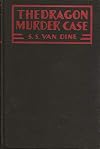
See cover at https://upload.wikimedia.org/wikipedia/en/2/20/TheDragonMurderCase.jpg
The front cover of the original Scribner’s first edition (1933). Image sourced from Wikipedia.
Footnote
* This appears to be an invented adjective form of the verb obfuscate: to make obscure, to confuse.
Trivia and Links
See film poster at https://upload.wikimedia.org/wikipedia/en/f/fc/The_Dragon_Murder_Case-Poster.jpg
The Dragon Murder Case was adapted as the same-titled film The Dragon Murder Case (1934) directed by H. Bruce Humberstone and starring Warren William as Philo Vance. You can see the opening credits and opening scenes on YouTube here.
Willard Huntington Wright aka S.S. Van Dine is also the author of the Twenty Rules for Writing Detective Stories. show less
Review of the Arni Books Kindle eBook edition (August 10, 2023) of the Scribner’s hardcover original (1933).
Of all the cases I have thus far recorded none was as exciting, as weird, as apparently unrelated to all rational thinking, as the dragon murder. Here was a crime that seemed to transcend all the ordinary scientific knowledge of man and to carry the police and investigators into an obfuscous* and unreal realm of demonology and folklore - a realm fraught with dim racial memories of legendary terrors.
The opening premise here was actually pretty fantastic. At an evening party a man dives into a swimming pool and doesn't resurface. Others jump in to look for him but he has disappeared. The rather histrionic show more matron of the household insists that a legendary flying dragon has scooped up the body and flown away with it. The police are completely baffled of course and only amateur sleuth Philo Vance can untangle the myth from the reality.
Eventually a real world explanation is arrived at, even though it seems ridiculously improbable. To postpone the unravelling we have the now typical S.S. Van Dine delaying tactic of providing long lists of dragon myths throughout history and then a further detailed listing of the scientific names of tropical fish. Philo Vance is of course an expert in all of those areas.
The final reveal has the least likely suspect revealed as the culprit with a deus ex machina method of serving the course of justice. I can't even label these with an Unsatisfactory Ending Alert™ as the S.S. Van Dine formula is now so predictable that you always know what you are going to get.
See cover at https://upload.wikimedia.org/wikipedia/en/2/20/TheDragonMurderCase.jpg
The front cover of the original Scribner’s first edition (1933). Image sourced from Wikipedia.
Footnote
* This appears to be an invented adjective form of the verb obfuscate: to make obscure, to confuse.
Trivia and Links
See film poster at https://upload.wikimedia.org/wikipedia/en/f/fc/The_Dragon_Murder_Case-Poster.jpg
The Dragon Murder Case was adapted as the same-titled film The Dragon Murder Case (1934) directed by H. Bruce Humberstone and starring Warren William as Philo Vance. You can see the opening credits and opening scenes on YouTube here.
Willard Huntington Wright aka S.S. Van Dine is also the author of the Twenty Rules for Writing Detective Stories. show less
If the writers of Scooby Doo had teamed up to write a Philo Vance novel with S. S. Van Dine the result would surely have been very similar to The Dragon Murder Case. No more than the audience of the modern cartoon would the readers of Van Dine’s day have felt that there was really a supernatural explanation for the strange events at the Stamm home. Van Dine resorts to having various characters refer to legends while having someone state at least once a chapter that the occurrences are particularly horrific. Yet Van Dine actually delivers few true moments of uneasiness let alone terror. Shorn of all the legerdemain this is a fairly straightforward mystery that is only difficult to solve because Van Dine (through Vance) neglects to show more mention some details while burying others in Vance’s endless disquisitions on irrelevant matters. show less
A weekend party turns deadly when the attendees go for a nigh swim.
Rudolph Stamm has invited a few friends to a weekend house party at the old family estate. The 100 year old estate has not only an eerie appearance, it also comes with some bizarre history and legends. It is the home of the Dragon Pool.
Sanford Montague, actor, ladies’ man and engaged to Stamm’s sister. Making a show of the first dive, Montague doesn’t surface. The other guests dive in and search for him but find no body.
A phone call from an old and close Stamm family friend brings Philo Vance into the case, along with John F.-X. Markham, DA of New York County.
There are no footprints around the pool, and when it is drained, Montague’s body isn’t found. What is show more found on the floor of the pool further stirs up the old superstitions and legends of the pool being the home of the Lenape Indians’ devil monster.
The body is later found and is in a brutal condition. A second guest goes missing the next evening. No solid clues or explanations.
Using regular police investigating procedures, little is revealed. It is Vance’s knowledge of the mythology and human nature that bring more sense to the solution.
Written in the 1930s, S.S. Van Dine’s Philo Vance mysteries still are good. Twists, turns, red herrings, distractions all add to the adventure and make a good visit to the “Golden Era” of mystery writing. show less
Rudolph Stamm has invited a few friends to a weekend house party at the old family estate. The 100 year old estate has not only an eerie appearance, it also comes with some bizarre history and legends. It is the home of the Dragon Pool.
Sanford Montague, actor, ladies’ man and engaged to Stamm’s sister. Making a show of the first dive, Montague doesn’t surface. The other guests dive in and search for him but find no body.
A phone call from an old and close Stamm family friend brings Philo Vance into the case, along with John F.-X. Markham, DA of New York County.
There are no footprints around the pool, and when it is drained, Montague’s body isn’t found. What is show more found on the floor of the pool further stirs up the old superstitions and legends of the pool being the home of the Lenape Indians’ devil monster.
The body is later found and is in a brutal condition. A second guest goes missing the next evening. No solid clues or explanations.
Using regular police investigating procedures, little is revealed. It is Vance’s knowledge of the mythology and human nature that bring more sense to the solution.
Written in the 1930s, S.S. Van Dine’s Philo Vance mysteries still are good. Twists, turns, red herrings, distractions all add to the adventure and make a good visit to the “Golden Era” of mystery writing. show less
Vance is interrupted in his reconstruction of the fragments of the Greek comedies of Menander by a police sergeant reporting that a man as dived into a pool at a legendary old estate outside New York City and has vanished. At one point an actual dragon is suspected of the crime, though another explanation is eventually provided.
Il giallo è uno dei miei generi preferiti, in particolare quello classico, quindi questo romanzo sulla carta aveva tutti i presupposti per piacermi: sulla carta, appunto.
Non mi aspettavo un capolavoro, ma nemmeno un romanzo dove niente funziona come si deve: Philo Vance non ha carisma, è solo un insieme di vezzi e saccenza; sugli altri personaggi stendiamo un velo pietoso, sono poco più che comparse senza il minimo approfondimento psicologico; la trama poi non coinvolge, non c'è mai tensione ed anche la risoluzione del mistero è banale. [SPOILER]La grande rivelazione dopo 3 giorni di investigazioni e quasi 200 pagine è che l'assassino per uccidere la vittima in fondo ad un lago ha usato un costume da sub: ma che altra spiegazione show more poteva mai esserci, come fa a non essere la prima cosa a cui tutti pensano? Bah [FINE SPOILER].
Perfino lo stile non va, è inutilmente ridondante e sfocia più volte nel ridicolo.
Ho letto in giro che i primi romanzi della serie sono decisamente più belli e che questo settimo segna l'inizio della "fase calante" dell'autore: stando così le cose potrei riprovare a dare una chance a Philo Vance, ma basandomi su quest'unico libro sono basita dal successo che ha avuto. show less
Non mi aspettavo un capolavoro, ma nemmeno un romanzo dove niente funziona come si deve: Philo Vance non ha carisma, è solo un insieme di vezzi e saccenza; sugli altri personaggi stendiamo un velo pietoso, sono poco più che comparse senza il minimo approfondimento psicologico; la trama poi non coinvolge, non c'è mai tensione ed anche la risoluzione del mistero è banale. [SPOILER]La grande rivelazione dopo 3 giorni di investigazioni e quasi 200 pagine è che l'assassino per uccidere la vittima in fondo ad un lago ha usato un costume da sub: ma che altra spiegazione show more poteva mai esserci, come fa a non essere la prima cosa a cui tutti pensano? Bah [FINE SPOILER].
Perfino lo stile non va, è inutilmente ridondante e sfocia più volte nel ridicolo.
Ho letto in giro che i primi romanzi della serie sono decisamente più belli e che questo settimo segna l'inizio della "fase calante" dell'autore: stando così le cose potrei riprovare a dare una chance a Philo Vance, ma basandomi su quest'unico libro sono basita dal successo che ha avuto. show less
Sep 19, 2018 (Edited)Italian
Riprendo in mano dopo un’infinità di tempo un romanzo di Philo Vance dopo la triade Benson-Canarina-Green che, peraltro, nella mia beata ignoranza credevo fossero gli unici ad avere come protagonista il detective dandy creato da S. S. Van Dine (pseudonimo di Willard H. Wright). Invece questo è il settimo volume di una serie di dodici e narra della ricerca del colpevole di due omicidi che avvengono in una lussuosa villa di Manhattan: la dimora è circondata da un vastissimo parco con al centro una piscina nella quale scompare – alla lettera, visto che non se ne trova il corpo - la prima delle vittime. La sparizione avviene al culmine di una festa ad alta gradazione alcolica i cui partecipanti trovavano tutti insopportabile il show more defunto: questo e un’antica leggenda indiana che narra di un drago che vive nella pozza d’acqua sembrano rendere inestricabile il garbuglio, ma le capacità di analisi di Vance, aiutate da un secondo delitto per molti versi chiarificatore, conducono all’inevitabile scoperta del colpevole. Ambientato nell’altissima società di New York, il romanzo mette in scena una famiglia di antico lignaggio e di attuale decadenza – con tanto di vecchia folle, ruolo ideale per Bette Davis - nella cui sfinita ricchezza sguazza come meglio non si potrebbe il detective con i gusti più raffinati e costosi che ci siano. Vance sprizza soldi e sapere da tutti i pori (però le divagazioni sui draghi e sui pesci tropicali sono davvero troppo lunghe e non si capisce perché, invece di stare ad ascoltarlo, dopo un po’ non lo mandino a stendere) e, malgrado qualche tentativo di umanizzazione da parte dell’autore, non si può certo dire che sia un mostro di simpatia: attorno a lui, però, la trama gialla scorre senza intoppi creando la giusta dose di curiosità nel lettore. Il libro è stato scritto nella prima metà degli anni Trenta e questo sta alla base di un impianto più che mai tradizionale con personaggi da cui si sa esattamente cosa aspettarsi (il sergente burbero, il procuratore pieno di dubbi e così via) raccontati in prima persona dallo scrittore che si immagina amico e segretario del protagonista riportando subito alla mente Watson, seppur con un ruolo assai più marginale: in ogni caso, il racconto procede sicuro e, malgrado il ritmo non si possa definire fulminante, regala alcune ore di piacevole svago a chiunque che abbia voglia di attenersi alle sue regole. show less
Jan 8, 2015Italian
Members
- Recently Added By
Author Information

81+ Works 2,827 Members
Series

Belongs to Publisher Series
Work Relationships
Is contained in
Has the adaptation
Common Knowledge
- Canonical title
- The Dragon Murder Case
- Original title
- The Dragon Murder Case
- Original publication date
- 1933
- People/Characters
- Philo Vance; John F.-X. Markham; Ernest Heath; Rudolf Stamm; Matilda Stamm; Bernice Stamm (show all 13); Sanford Montague; Gale Leland; Alex Greeff; Kirwin Tatum; Rubin Steele; Trainor; Dr. Emanuel Doremus
- Important places*
- New York, New York, USA; New York, USA; USA
- Related movies*
- The Dragon Murder Case (1934 | IMDb)
- Epigraph
- Sometime we see a cloud that's dragonish.
—Antony and Cleopatra - First words
- That sinister an terrifying crime, which came to be known as the dragon murder case, will always be associated in my mind with one of the hottest summers I have ever experienced in New York.
- Last words
- (Click to show. Warning: May contain spoilers.)"Not the proper conditions—if you know what I mean, sir"
- Original language*
- Inglese
*Some information comes from Common Knowledge in other languages. Click "Edit" for more information.
Classifications
Statistics
- Members
- 155
- Popularity
- 211,889
- Reviews
- 7
- Rating
- (3.41)
- Languages
- 6 — English, German, Hungarian, Italian, Portuguese, Spanish
- Media
- Paper, Ebook
- ISBNs
- 16
- ASINs
- 16