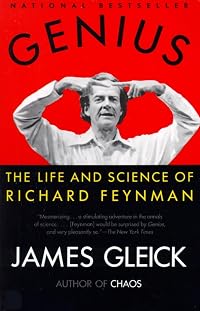
Genius: The Life and Science of Richard Feynman
by James Gleick
On This Page
Description
An illuminating portrayal of Richard Feynman - a giant of twentieth century physics - from his childhood tinkering with radios, to his vital work on the Manhattan Project and beyond. Raised in Depression-era Rockaway Beach, physicist Richard Feynman was irreverent, eccentric, and childishly enthusiastic - a new kind of scientist in a field that was in its infancy. His quick mastery of quantum mechanics earned him a place at Los Alamos working on the Manhattan Project under J. Robert show more Oppenheimer, where the giddy young man held his own among the nation's greatest minds. There, Feynman turned theory into practice, culminating in the Trinity test, on July 16, 1945, when the Atomic Age was born. He was only twenty-seven. And he was just getting started. In this sweeping biography, James Gleick captures the forceful personality of a great man, integrating Feynman's work and life in a way that is accessible to laymen and fascinating for the scientists who follow in his footsteps. show lessTags
Recommendations
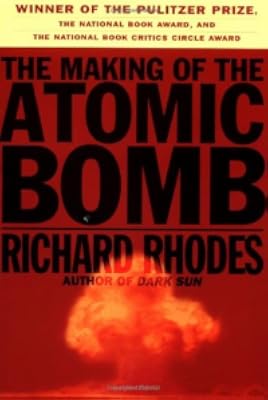
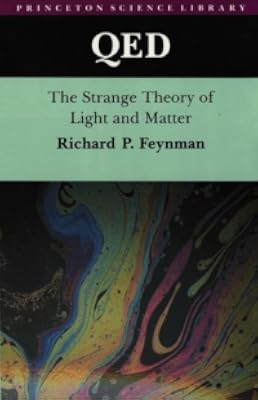
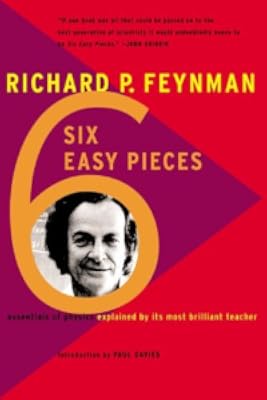
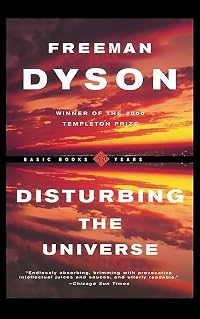




Member Recommendations
jeroenvandorp A shorter but more indepth explanation of the scientific work of Feynman

Member Reviews
I really enjoyed the insight into the person of Feynman. He was, as any other physicist, a human with positive and negative characteristics. This is an important book because it captures this balance, which I believe is intrinsic to any "Genius" because the term focuses on some exceptional characteristics while ignoring the rest of the person.
The mental patterns I found most interesting in how Feynman thought were his reliance on fundamental characteristics of a physical relation and to visualize this in a way that he could gain a personal insight into the big picture of what was going on. He cared more about the units of measurement in a relation than the values. This is an example of what we might call genius because it is an show more unconventional focus on how to do physics.
And yes of course the maverick was also a bit of an asshole. I think anyone that dedicates that much time and energy to abstract processing suffers a price in social value alignment. show less
The mental patterns I found most interesting in how Feynman thought were his reliance on fundamental characteristics of a physical relation and to visualize this in a way that he could gain a personal insight into the big picture of what was going on. He cared more about the units of measurement in a relation than the values. This is an example of what we might call genius because it is an show more unconventional focus on how to do physics.
And yes of course the maverick was also a bit of an asshole. I think anyone that dedicates that much time and energy to abstract processing suffers a price in social value alignment. show less
For those who know of Richard Feynman, I salute you.
This biography by Gleik, the writer that made [b:Chaos: Making a New Science|64582|Chaos Making a New Science|James Gleick|https://i.gr-assets.com/images/S/compressed.photo.goodreads.com/books/1327941595l/64582._SY75_.jpg|62690] a household name, tries, mostly successfully, to give us the same treatment about Feynman.
I was fascinated throughout. I've only heard a few funny anecdotes about the man and everyone seems to concur that he's one hell of a genius, but it's better to get into ALL the aspects. Humor, the heartwarming bits, the slightly frustrating but mostly amazing rise of his career as a physicist... all of these things pop out on the page.
An iconoclast? Possibly. But I see show more him more like a man who, from near-first principles, derived a new way of looking at the universe without bothering to read the majority of the works that came before. He was always shaking things up, keeping his mind agile, and never letting himself succumb to that most horrible of states: rigidity. He was well aware of the tendency of scientists with their pet theories to become ossified the longer they protected their positions.
Feynman always rode the high wave of creativity and originality. He may not have always been successful, but he never took himself too seriously despite being an integral part of quantum physics. Strong, Weak, and EM forces? Oh, yeah.
This book truly humanizes him but also rises above normal biographies in that it postulates, rightly so, a wide and specific theory of what makes Genius. It also comes to some conclusions that shed a bit of light on our own world, too.
For one: where are all the geniuses? :) The answer? They're all around us. And it's often hard to pick certain creative geniuses out of a crowd because the market might be saturated with tons of people who stand on the backs of giants.
One could argue that Richard Feynman was very lucky to have come around at exactly the right time, work on the first atomic bomb, and be surrounded by so many other brilliant minds. His bouts of isolation and creativity were bolstered by others.
Who knows? Without biographies like this, he might have disappeared into footnotes, too.
No one ever really sees the worth of the people around them while they're living. ; ; show less
This biography by Gleik, the writer that made [b:Chaos: Making a New Science|64582|Chaos Making a New Science|James Gleick|https://i.gr-assets.com/images/S/compressed.photo.goodreads.com/books/1327941595l/64582._SY75_.jpg|62690] a household name, tries, mostly successfully, to give us the same treatment about Feynman.
I was fascinated throughout. I've only heard a few funny anecdotes about the man and everyone seems to concur that he's one hell of a genius, but it's better to get into ALL the aspects. Humor, the heartwarming bits, the slightly frustrating but mostly amazing rise of his career as a physicist... all of these things pop out on the page.
An iconoclast? Possibly. But I see show more him more like a man who, from near-first principles, derived a new way of looking at the universe without bothering to read the majority of the works that came before. He was always shaking things up, keeping his mind agile, and never letting himself succumb to that most horrible of states: rigidity. He was well aware of the tendency of scientists with their pet theories to become ossified the longer they protected their positions.
Feynman always rode the high wave of creativity and originality. He may not have always been successful, but he never took himself too seriously despite being an integral part of quantum physics. Strong, Weak, and EM forces? Oh, yeah.
This book truly humanizes him but also rises above normal biographies in that it postulates, rightly so, a wide and specific theory of what makes Genius. It also comes to some conclusions that shed a bit of light on our own world, too.
For one: where are all the geniuses? :) The answer? They're all around us. And it's often hard to pick certain creative geniuses out of a crowd because the market might be saturated with tons of people who stand on the backs of giants.
One could argue that Richard Feynman was very lucky to have come around at exactly the right time, work on the first atomic bomb, and be surrounded by so many other brilliant minds. His bouts of isolation and creativity were bolstered by others.
Who knows? Without biographies like this, he might have disappeared into footnotes, too.
No one ever really sees the worth of the people around them while they're living. ; ; show less
In Genius, James Gleick has the same problem with Richard Feynman that Robert Kanigel had with Ramanujan in The Man Who Knew Infinity. If you are writing about a genius in literature, you can include excerpts from their works; if a genius painter, pictures of their paintings; if a genius musician, recordings of their music; and thus give some level of accessibility to readers who don’t happen to be geniuses. With a genius in science or mathematics, you’re out of luck; thus, there are some equations in Genius, and some Feynman diagrams, but they don’t really help very much. Biographers of scientific geniuses are reduced to stressing eccentricities – on the order of “Well, perhaps Albert Einstein was the greatest physicist who show more ever lived, but he never wore socks”. (In fact, Einstein is mentioned in Genius, when Feynman goes to visit him at Princeton – and it’s noted that Einstein was wearing shoes, but no socks). If you’re a genius with no eccentricity besides your scientific ability, your biographers will be lost – in fact, you probably won’t get a biography at all. (Example: there’s only one person ever to win two Nobel Prizes in physics. Their personal life was perfectly ordinary. Name this person).
So, we get Feynman the eccentric – playing the bongos, cracking safes at Los Alamos, “womanizing”, juicy details. Gleick notes Feynman cultivated this to a small extent; but he also enjoyed the challenges of playing the bongos, cracking safes, and women. There’s nothing that gives me a real understanding of Feynman’s physics – because I’m not a genius and I wouldn’t understand it. Ah well, there’s always the Lectures. show less
So, we get Feynman the eccentric – playing the bongos, cracking safes at Los Alamos, “womanizing”, juicy details. Gleick notes Feynman cultivated this to a small extent; but he also enjoyed the challenges of playing the bongos, cracking safes, and women. There’s nothing that gives me a real understanding of Feynman’s physics – because I’m not a genius and I wouldn’t understand it. Ah well, there’s always the Lectures. show less
This is a fantastic book for those interested in physics, but more importantly for those interested in change.
It is the biography of Richard Feynman, the talented physicist, winner of the Nobel Prize and major contributor to our understanding of particle physics. The term ‘genius’ is often used cheaply, and although Feynman would have declined the description, having read this account it is difficult to argue that he was not fully deserving of the title.
I first became aware of Richard Feynman through quotations credited to him, and was intrigued to find out more about the man behind the ideas. This book deals with his life and achievements and as much of this was directed at the hidden and mysterious world and mathematics that show more define the inner working of atoms, you might expect a difficult read. Have no fear. James Gleick has done a brilliant job of avoiding the mathematics whilst successfully conveying the ideas that Feynman spent a lifetime working on, without belittling them through oversimplification. Instead he succeeds in graphically illuminating the world of quantum physics as a truly remarkable one where particles exist for fractions of a billionth of a second, appear capable of travelling back in time, and provide the key to unlock our understanding of the universe, gravity and time itself.
‘I was born not knowing and have had only a little time to change that here and there.’
Richard Feynman.
That James Gleick is able to graphically convey the work of a genius operating in this field is truly fitting since the hallmark of Feynman’s work was a single minded focus on creating and sharing understanding, to create penny dropping moments of revelation, no matter how complex the underlying concepts. His career spanned almost the entire period of the development of modern physics, through to his untimely death in 1988. His life criss-crossed the paths of an array of great scientists such as Einstein, Dirac and Fermi and includes work on the development of the atom bomb and the investigation of the Challenger Shuttle disaster. Along the way he left a trail of discoveries. ideas and people he inspired, and received the Nobel Prize in recognition of only a small part of his contribution to science.
All of this is a fascinating account of a key participant and luminary at the cutting edge of scientific advance. But for me it is so much more. With an interest in the journey of change, this book provides a real insight into the thinking and approach of someone who saw change as an invitation to explore. His guiding principles were that nothing can ever be known with absolute certainty and that all knowledge was partial and temporary. For Feynman, as for Einstein, the most powerful tool in creating advance was imagination.
Rather than the widespread popularly held view that science is about the known,
This is a book full of insights. If you want to glimpse into the world of quantum physics and understand concepts and principles that you may have feared were beyond you, this book does the job. Beyond this the book provides an insight into the thinking of a man who was truly a genius and who defined genius as the ability to question, challenge, understand and create understanding.
Feynman is quoted as saying that he never read a scientific biography that he enjoyed. I agree with the reviewer who on the back cover suggests that he would have enjoyed this one. I read it on holiday and recommend that you set aside a little time to do the same. show less
It is the biography of Richard Feynman, the talented physicist, winner of the Nobel Prize and major contributor to our understanding of particle physics. The term ‘genius’ is often used cheaply, and although Feynman would have declined the description, having read this account it is difficult to argue that he was not fully deserving of the title.
I first became aware of Richard Feynman through quotations credited to him, and was intrigued to find out more about the man behind the ideas. This book deals with his life and achievements and as much of this was directed at the hidden and mysterious world and mathematics that show more define the inner working of atoms, you might expect a difficult read. Have no fear. James Gleick has done a brilliant job of avoiding the mathematics whilst successfully conveying the ideas that Feynman spent a lifetime working on, without belittling them through oversimplification. Instead he succeeds in graphically illuminating the world of quantum physics as a truly remarkable one where particles exist for fractions of a billionth of a second, appear capable of travelling back in time, and provide the key to unlock our understanding of the universe, gravity and time itself.
‘I was born not knowing and have had only a little time to change that here and there.’
Richard Feynman.
That James Gleick is able to graphically convey the work of a genius operating in this field is truly fitting since the hallmark of Feynman’s work was a single minded focus on creating and sharing understanding, to create penny dropping moments of revelation, no matter how complex the underlying concepts. His career spanned almost the entire period of the development of modern physics, through to his untimely death in 1988. His life criss-crossed the paths of an array of great scientists such as Einstein, Dirac and Fermi and includes work on the development of the atom bomb and the investigation of the Challenger Shuttle disaster. Along the way he left a trail of discoveries. ideas and people he inspired, and received the Nobel Prize in recognition of only a small part of his contribution to science.
All of this is a fascinating account of a key participant and luminary at the cutting edge of scientific advance. But for me it is so much more. With an interest in the journey of change, this book provides a real insight into the thinking and approach of someone who saw change as an invitation to explore. His guiding principles were that nothing can ever be known with absolute certainty and that all knowledge was partial and temporary. For Feynman, as for Einstein, the most powerful tool in creating advance was imagination.
Rather than the widespread popularly held view that science is about the known,
This is a book full of insights. If you want to glimpse into the world of quantum physics and understand concepts and principles that you may have feared were beyond you, this book does the job. Beyond this the book provides an insight into the thinking of a man who was truly a genius and who defined genius as the ability to question, challenge, understand and create understanding.
Feynman is quoted as saying that he never read a scientific biography that he enjoyed. I agree with the reviewer who on the back cover suggests that he would have enjoyed this one. I read it on holiday and recommend that you set aside a little time to do the same. show less
It's a great account of Feynman, and comes off feeling like less of a facade than Surely You're Joking or his other autobiographical works. It's not a life-changing book by any account, but it's a fascinating read for any researcher; in my opinion, the history presented in the book is completely paled by the glimpses we get into the governing dynamics of Feynman's mind.
You're not going to learn any science here, but you might get an inkling into how to actually do science. And that's a wonderful thing.
You're not going to learn any science here, but you might get an inkling into how to actually do science. And that's a wonderful thing.
Reader: If you love Dr.Feynman and physics, you will love this book too. Impeccably written it charts out four phases in his life,from birth, early education, Los Alamos and the final struggle with cancer which apparently had its origins in the Manhattan project owing to prolonged exposure to radiation. Woven into the body of the text is the same light heartedness and banter that so characterized his life and work but brings home the rampant brilliance of this man in all its profundity. His uncanny sense of bringing the truth, far removed from the official verbose so much in evidence when he was a member of the commission that probed the Challenger disaster, is the recurring theme throughout the book. Gleick illustrates that beyond the show more free sprit that seems to stick out, an intensely personal side shows up as his tribulations when wife Arlene battled tuberculosis and he frantically worked at Los Alamos .The last few sections are poignant, when a cancer struck Dr.Feynman realizes that his hopes of visiting an exotic but secluded Soviet territory Tuva was fast vanishing, caught in the foliage of government bureaucracy, he so detested; the visa did arrive but by then it was a little too late. Even in the final moment his spirit shines through; his last words being, "I would hate to die twice, it's so boring", as the end came at 10:34 pm, 15th of Feb, 1988 at the UCLA medical college. James Gleick has composed a wonderful book of one of the most inscrutable characters of the world of physics. Surely worth reading!! show less
The challenge for every biographer is this: how do you tie together the stories that are a person’s life, what is it (besides that very life) that is the drive behind the story? James Gleick’s approach initially makes sense – tie the life of the Nobel prize-winning quantum scientist with the developments of quantum mechanics; tie his progress to that of the science that made him so famous.
While an admirable idea, Gleick overdoes it. In fact, the book feels more like the history of quantum mechanics than the biography of this most remarkable man. In small doses, it would work. But too much time is spent away from the man, and too much on the other men and the science. And that science often gets to be too much, attempting to take show more the reader deeper into the math and theories than most lay-people can absorb.
Now, let’s make it just that much worse. The main attraction that a biography of Richard Feynman holds (the reason I was interested in reading over 400 pages about a scientist) is that the man was a genius, an eccentric, an explorer (of the mind), and a story-teller. He had an important roll in development of the atom bomb. He was an accomplished drummer (including becoming part of a Brazilian samba band.) He raised the hardest questions while on the panel reviewing the Challenger disaster and almost single-handedly found the cause (and the root cause.) He was a noted safe-cracker. He had an amazing coded correspondence with his wife while working in Los Alamos. He did a lot of fascinating and strange things (this list merely scratches the surface). However, although you might have recognized his work in Los Alamos and his work on the Challenger disaster within this book, you would only hear mentions of the other stories and never understood how much they said about who Feynman was.
This means that the reader who is unaware of the full spectrum of Feynman’s talent will never understand it by reading this biography. And more’s the shame. Because, as already mentioned, the lay reader will get lost in this biography and think that this is just another scientist – a genius no doubt (which reminds me that I haven’t mentioned the single chapter spent talking about “What is genius”, and other similar chapters that spend more time pontificating than describing - but I won’t go into that now), but more than a genius – a curious and fascinating man.
At the end of the day, the full Feynman does not appear. And I wonder if this was a conscious choice on Gleick’s part. After all, Feynman did far too good a job of letting us know his human side; maybe Gleick has decided to give us more of the scientist. (And, if you want that human side, I highly recommend “Surely You’re Joking, Mr. Feynman”, “What Do You Care What Other People Think?”, The Pleasure of Finding Things Out, and just about anything else authored by Feynman himself.) But the result, while of interest to the scientist, loses the rest of us. There had to be a middle ground, and it is a shame that Gleick did no find it. By focusing so much on the science, he has authored an incomplete biography, and an incomplete description of the man.
But, all that being said, I do not want to totally dismiss (nor dis) this book - because it does have value in placing Feynman in the times. And, while it should not have been the primary purpose of a biography on Feynman, the book does do an excellent (if sometimes confusing to the non-specialist) job of providing the history of quantum mechanics. This was a strange group of people. And the book does do a good job of showing how Feynman, by being just a little stranger, was a little better. Which means that the book is good as far as it goes, probably excellent at what it attempts to be, and a far-sight short of the man himself. show less
While an admirable idea, Gleick overdoes it. In fact, the book feels more like the history of quantum mechanics than the biography of this most remarkable man. In small doses, it would work. But too much time is spent away from the man, and too much on the other men and the science. And that science often gets to be too much, attempting to take show more the reader deeper into the math and theories than most lay-people can absorb.
Now, let’s make it just that much worse. The main attraction that a biography of Richard Feynman holds (the reason I was interested in reading over 400 pages about a scientist) is that the man was a genius, an eccentric, an explorer (of the mind), and a story-teller. He had an important roll in development of the atom bomb. He was an accomplished drummer (including becoming part of a Brazilian samba band.) He raised the hardest questions while on the panel reviewing the Challenger disaster and almost single-handedly found the cause (and the root cause.) He was a noted safe-cracker. He had an amazing coded correspondence with his wife while working in Los Alamos. He did a lot of fascinating and strange things (this list merely scratches the surface). However, although you might have recognized his work in Los Alamos and his work on the Challenger disaster within this book, you would only hear mentions of the other stories and never understood how much they said about who Feynman was.
This means that the reader who is unaware of the full spectrum of Feynman’s talent will never understand it by reading this biography. And more’s the shame. Because, as already mentioned, the lay reader will get lost in this biography and think that this is just another scientist – a genius no doubt (which reminds me that I haven’t mentioned the single chapter spent talking about “What is genius”, and other similar chapters that spend more time pontificating than describing - but I won’t go into that now), but more than a genius – a curious and fascinating man.
At the end of the day, the full Feynman does not appear. And I wonder if this was a conscious choice on Gleick’s part. After all, Feynman did far too good a job of letting us know his human side; maybe Gleick has decided to give us more of the scientist. (And, if you want that human side, I highly recommend “Surely You’re Joking, Mr. Feynman”, “What Do You Care What Other People Think?”, The Pleasure of Finding Things Out, and just about anything else authored by Feynman himself.) But the result, while of interest to the scientist, loses the rest of us. There had to be a middle ground, and it is a shame that Gleick did no find it. By focusing so much on the science, he has authored an incomplete biography, and an incomplete description of the man.
But, all that being said, I do not want to totally dismiss (nor dis) this book - because it does have value in placing Feynman in the times. And, while it should not have been the primary purpose of a biography on Feynman, the book does do an excellent (if sometimes confusing to the non-specialist) job of providing the history of quantum mechanics. This was a strange group of people. And the book does do a good job of showing how Feynman, by being just a little stranger, was a little better. Which means that the book is good as far as it goes, probably excellent at what it attempts to be, and a far-sight short of the man himself. show less
Members
- Recently Added By
Published Reviews
ThingScore 75
In "Genius: The Life and Science of Richard Feynman" Mr. Gleick, a former science reporter for The New York Times and the author of "Chaos," demonstrates a great ability to portray scientific people and places and to dramatize the emergence of new ideas.
Trying to explain scientific work of the caliber of Feynman's is a difficult undertaking, however, especially if one tries to do it without show more resort to much mathematics, as Mr. Gleick does. But despite the lack of authentic science, one can thoroughly enjoy this well-researched biography for its picture of Feynman and his world. show less
Trying to explain scientific work of the caliber of Feynman's is a difficult undertaking, however, especially if one tries to do it without show more resort to much mathematics, as Mr. Gleick does. But despite the lack of authentic science, one can thoroughly enjoy this well-researched biography for its picture of Feynman and his world. show less
added by mikeg2
Lists

Books Read in 2019
4,052 works; 108 members

In Our Time books
4,934 works; 2 members
Author Information

20+ Works 19,767 Members
He wrote the worldwide bestseller Chaos, which was nominated for the National Book Award. He was the 1990 McGraw Distinguished Lecturer at Princeton University. (Publisher Provided) James Gleick was born in New York City on August 1, 1954. He received a degree in English and linguistics from Harvard College in 1976. He helped found Metropolis, an show more alternative weekly newspaper in Minneapolis. After the newspaper folded, he worked for ten years as an editor and reporter for The New York Times. In 1989-1990, he was the McGraw Distinguished Lecturer at Princeton University. He has written several books including Chaos: Making a New Science, Genius: The Life and Science of Richard Feynman, Faster: The Acceleration of Just About Everything, What Just Happened: A Chronicle from the Information Frontier, and The Information: A History, a Theory, a Flood. (Bowker Author Biography) show less
Some Editions
Awards and Honors
Awards
Distinctions
Notable Lists
Common Knowledge
- Canonical title*
- Genio: la vita e la scienza di Richard Feynman
- Original title
- Genius: The Life and Science of Richard Feynman
- Original publication date
- 1992
- People/Characters
- Richard Feynman; John Archibald Wheeler; Hans Bethe; Esther Lederberg; Julian Schwinger; Sin-Itiro Tomonaga (show all 8); Ralph Leighton; Niels Bohr
- Epigraph
- I was born not knowing
and have only had a little time to change that here and there.
-Richard Feynman - Dedication
- For my mother and father,
Beth and Donen - First words
- Nothing is certain. (Prologue)
Eventually the art went out of radio tinkering. - Last words
- (Click to show. Warning: May contain spoilers.)An imprint remained: what he knew, how he knew.
- Blurbers
- Dyson, Freeman J.
- Original language
- English
*Some information comes from Common Knowledge in other languages. Click "Edit" for more information.
Classifications
Statistics
- Members
- 3,513
- Popularity
- 4,755
- Reviews
- 33
- Rating
- (4.04)
- Languages
- 6 — Chinese, English, French, German, Italian, Portuguese
- Media
- Paper, Audiobook, Ebook
- ISBNs
- 22
- ASINs
- 16