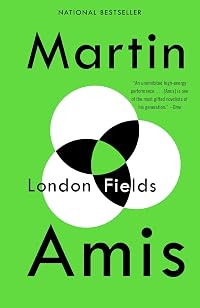
London Fields
by Martin Amis
On This Page
Description
The murderee is Nicola Six, a "black hole" of sex and self-loathing who is intent on orchestrating her own extinction. The murderer may be Keith Talent, a violent lowlife whose only passions are pornography and darts; or the rich, honorable, and dimly romantic Guy Clinch. As Nicola leads her suitors towards the precipice, London-and, indeed, the whole world-seems to shamble after them in a corrosively funny novel of complexity and morality.Tags
Recommendations


























Member Reviews
A hyperbolic sledgehammer of a book, vicious and vitriolic. It is a wonderfully inventive post-modern crime story, with a broad and vivid cast of London life, that sadly rings a little too true. I'm not a big Amis fan, but I loved London Fields.
While written in the late 80s, it still feels highly relevant today. Perhaps it would have seemed less so in the middle of Blair's premiership, but the new age of austerity suits book just fine. The dread of imminent apocalypse (a touch of JG Ballard there, particularly The Drowned World with its relentless sun), may have a different flavour these days but it still resonates - perhaps that's just the age I'm at. Certainly, despite the political backdrop, the real apocalypses tend to be personal. show more I think that's what makes it such a existential, misanthropic and desperate cri de coeur. The plot is clear and bleak (and telegraphed, in all the book's post modern flourishes), but the struggle with the modern human condition is a constant. Which, through the course of the book, you might become convinced is worse than the looming global catastrophe.
It may be slightly overlong, or at least I felt it sagged a touch in the middle middle. The repetition of one incident through three of the players' eyes didn't feel like it repaid the effort. That said, it does have the feel of a book that could stand a second run at it, so maybe that section would open up.
On a personal note, it is particularly interesting to read it, working, as I have been for the last 6 months, around Westbourne Park (I know exactly what he means, 20 years on, about the difficult junction by the canal bridge and bus station on Great Western Road). And my trips to the falafel stand on Portobello Road now have me looking out for Keith Talent-alikes, and Black Cross pub archetypes (it's not a fruitless search).
A good part of the enjoyment of London Fields derives from the cheerfully grotesque characters. The main figure is like a hyper-real Del Boy - bits of it read like an extreme reaction to Only Fools and Horses and the lovable cockney rogue archetype. I would have relished an adaptation featuring the casts and sets from that sitcom in its heyday.
Well, an astonishing searing hurricane of a book, that blows you away in the reading and leaves you feeling worn out and dessicated. That said, for me the final resolution didn't quite satisfy. Clearly you know that not everyone was going to play their roles as scripted, but the climactic switcheroo left some important arcs dangling disconcertingly and also felt a little implausible. I feel like I understand why Amis resolved it as he did, just that it could have been handled a little better. While it was all foreshadowed (a little too) neatly through shoals of red herrings, even that foreshadowing seemed a little too manufactured (a criticism that Amis deftly and disingenuously heads off by his narrator pointing out what he didn't go back and change the beginning to fit his resolution). While his murderee convinced, it was as if, despite the ingrained misanthropy on every page, he couldn't quite conjure up what would bring someone to murder. I guess that's somehow encouraging.
Despite my slight dissatisfaction at the resolution, this is one of the best and most engrossing books I've read. If you were to read only one Martin Amis book (and, honestly, I think that may be enough (though Money is a lot of fun)), make it London Fields. show less
While written in the late 80s, it still feels highly relevant today. Perhaps it would have seemed less so in the middle of Blair's premiership, but the new age of austerity suits book just fine. The dread of imminent apocalypse (a touch of JG Ballard there, particularly The Drowned World with its relentless sun), may have a different flavour these days but it still resonates - perhaps that's just the age I'm at. Certainly, despite the political backdrop, the real apocalypses tend to be personal. show more I think that's what makes it such a existential, misanthropic and desperate cri de coeur. The plot is clear and bleak (and telegraphed, in all the book's post modern flourishes), but the struggle with the modern human condition is a constant. Which, through the course of the book, you might become convinced is worse than the looming global catastrophe.
It may be slightly overlong, or at least I felt it sagged a touch in the middle middle. The repetition of one incident through three of the players' eyes didn't feel like it repaid the effort. That said, it does have the feel of a book that could stand a second run at it, so maybe that section would open up.
On a personal note, it is particularly interesting to read it, working, as I have been for the last 6 months, around Westbourne Park (I know exactly what he means, 20 years on, about the difficult junction by the canal bridge and bus station on Great Western Road). And my trips to the falafel stand on Portobello Road now have me looking out for Keith Talent-alikes, and Black Cross pub archetypes (it's not a fruitless search).
A good part of the enjoyment of London Fields derives from the cheerfully grotesque characters. The main figure is like a hyper-real Del Boy - bits of it read like an extreme reaction to Only Fools and Horses and the lovable cockney rogue archetype. I would have relished an adaptation featuring the casts and sets from that sitcom in its heyday.
Well, an astonishing searing hurricane of a book, that blows you away in the reading and leaves you feeling worn out and dessicated. That said, for me the final resolution didn't quite satisfy. Clearly you know that not everyone was going to play their roles as scripted, but the climactic switcheroo left some important arcs dangling disconcertingly and also felt a little implausible. I feel like I understand why Amis resolved it as he did, just that it could have been handled a little better. While it was all foreshadowed (a little too) neatly through shoals of red herrings, even that foreshadowing seemed a little too manufactured (a criticism that Amis deftly and disingenuously heads off by his narrator pointing out what he didn't go back and change the beginning to fit his resolution). While his murderee convinced, it was as if, despite the ingrained misanthropy on every page, he couldn't quite conjure up what would bring someone to murder. I guess that's somehow encouraging.
Despite my slight dissatisfaction at the resolution, this is one of the best and most engrossing books I've read. If you were to read only one Martin Amis book (and, honestly, I think that may be enough (though Money is a lot of fun)), make it London Fields. show less
Samson Young, first-person narrator of this Martin Amis novel, is a somewhat jaded, frequently sarcastic and acerbic 40-something intellectual literary writer from, not surprisingly, New York City. But his hard-edged Big Apple voice is absolutely pitch-perfect for the story he is telling, a story involving a host of memorable and very human characters, not to mention a couple of super-human characters: an Incredible Hulk-like toddler and one doozy of a MAN MAGNET, and, yes, indeed, that’s spelled with all capital letters. Meet the lady at the center of the novel’s vortex, Ms. Nicola Six – modern day Helen of Troy, X-rated femme fatale and manifestation of goddess Kali all rolled up into one – everything you always wanted and show more everything you never wanted, your most cherished dream and your most dreaded nightmare, complete with Eastern European accent, mysterious Middle Eastern origins, Ms. World face and figure, shiny dark hair and even shinier dark eyes. Oh, my goodness, what a gal.
London Fields is a loose, baggy monster if you are looking for a tight-knit murder mystery; but if you enjoy your novels with many characters finely portrayed in gritty, grimy detail along with generous portions of philosophical musing thrown in along the way, then you will enjoy taking your time with its 470 pages. Now, on one level, the men and women are stereotypes representing a particular social and cultural class, but on another level Amis fills out his characters with such vivid, visceral descriptions, their eccentricities, their passions, their intense emotions and desires, in a way, I almost had the feeling I was reading an epic with the streets of London standing in for the walls of Troy – modern city life as the ultimate human blood sport.
One major character – Keith Talent, low-class grunge par excellence, a 29-year old addicted to liquor, pornography and sex, has made a life-long career out of cheating and steeling. Any time Keith opens his mouth we hear an open sewer of words – thick, coarse, vulgar and garbled. If there was ever an example of Wittgenstein’s “The limits of your language are the limits of your world.”, Keith is our man. From what I’ve said, you might think Keith would be totally despicable, a character incapable of our empathy, yet, through the magic of Amis’ fiction, we feel Keith’s pain.
By way of example, here is a scene after Nicola, posing as a social worker, barged uninvited into his cramped, dirty, pint-sized home and accused Keith’s wife and Keith of being too poor and too ignorant to properly care for their baby girl. Shortly thereafter, Keith is at Nicola’s apartment and he looks at her and in his look he says: “Home was his secret. Nobody had ever been there before. Oh, there had been ingress: rentmen and census people, the police, and cheating electricians and would-be plumbers and so on as well as real social workers and probations officers – but nobody he knew. Not ever. Only the dog, and the woman, and the child: the insiders. They, too, were secrets. Home was his terrible secret. Home was his dirty little secret. And now the secret was out.”
Words are exchanged. Keith tells Nicola repeatedly she “shouldn’t’ve fucking done it”. Nicola replies “You didn’t want me to know, did you, that you lived like a pig.”. Keith says, “That’s so . . . That’s so out of order.” We understand the humanness of Keith’s plight – no matter how crappy and filthy his living conditions, to have his private space violated and be called a pig by such a woman.
Second major character – Guy Clinch, a wealthy, refined, well-educated gentleman with the heart of a love poet reminds me of the 1950-60s British actor Terry-Thomas. Here is Guy in Nicola’s apartment, letting her know how rude men can be about women and sex: “Guy got to his feet and came forward. In no uncertain terms, and with his mind half-remembering some analogous recital, some previous exercise in illusion-shattering (when? how long ago? what about?), he told her what Keith and his kind were really like, how they thought of women as chunks of meat, their dreams of violence and defilement.” Guy explaining the sexual dynamics of men and women to Nicola is like a university student explaining Machiavelli to Shakespeare’s Richard III. Talk about black humor.
Among the many other characters, one of my personal favorites is Marmaduke, Guy Clinch’s son who needs an army of nannies to keep him from tearing the house apart and wreaking havoc on adults, especially his mother and most especially his father. When his wife Hope was pregnant, Guy was worried about protecting his son from the world; after colossal Marmaduke’s birth, he’s worried about protecting the world from his son. Here is a taste of what our first-person narrator Samson has to say about the child: “Turn your back for ten seconds and he’s in the fire or out the window or over in the corner, fucking a light socket (he’s the right height for that, with a little bend of the knees). His chaos is strongly sexual, no question. If you enter his nursery you’ll usually find him with both hands down the front of his diaper, or behind the reinforced bars of his playpen leering over a swimsuit ad in one of the magazines that some nanny has thrown in to him. He goes at that bottle like a top-dollar Vegas call-girl, like a grand-an-hour sex diva.”
Lastly, a word about the novel’s structure: Samson Young is in the process of writing a novel about the very novel we hold in our hands, offering ongoing critique and color commentary on the art of his telling and the act of our reading. Metafiction, anyone? Nothing like heaping another layer (or two or three) on top of an already many-layered work of literary fiction. show less
Samson Young, first-person narrator of this Martin Amis novel, is a somewhat jaded, frequently sarcastic and acerbic 40-something intellectual literary writer from, not surprisingly, New York City. But his hard-edged Big Apple voice is absolutely pitch-perfect for the story he is telling, a story involving a host of memorable and very human characters, not to mention a couple of super-human characters: an Incredible Hulk-like toddler and one doozy of a MAN MAGNET, and, yes, indeed, that’s spelled with all capital letters. Meet the lady at the center of the novel’s vortex, Ms. Nicola Six – modern day Helen of Troy, X-rated femme fatale and manifestation of goddess Kali all rolled up into one – everything you always wanted and show more everything you never wanted, your most cherished dream and your most dreaded nightmare, complete with Eastern European accent, mysterious Middle Eastern origins, Ms. World face and figure, shiny dark hair and even shinier dark eyes. Oh, my goodness, what a gal.
London Fields is a loose, baggy monster if you are looking for a tight-knit murder mystery; but if you enjoy your novels with many characters finely portrayed in gritty, grimy detail along with generous portions of philosophical musing thrown in along the way, then you will enjoy taking your time with its 470 pages. Now, on one level, the men and women are stereotypes representing a particular social and cultural class, but on another level Amis fills out his characters with such vivid, visceral descriptions, their eccentricities, their passions, their intense emotions and desires, in a way, I almost had the feeling I was reading an epic with the streets of London standing in for the walls of Troy – modern city life as the ultimate human blood sport.
One major character – Keith Talent, low-class grunge par excellence, a 29-year old addicted to liquor, pornography and sex, has made a life-long career out of cheating and steeling. Any time Keith opens his mouth we hear an open sewer of words – thick, coarse, vulgar and garbled. If there was ever an example of Wittgenstein’s “The limits of your language are the limits of your world.”, Keith is our man. From what I’ve said, you might think Keith would be totally despicable, a character incapable of our empathy, yet, through the magic of Amis’ fiction, we feel Keith’s pain.
By way of example, here is a scene after Nicola, posing as a social worker, barged uninvited into his cramped, dirty, pint-sized home and accused Keith’s wife and Keith of being too poor and too ignorant to properly care for their baby girl. Shortly thereafter, Keith is at Nicola’s apartment and he looks at her and in his look he says: “Home was his secret. Nobody had ever been there before. Oh, there had been ingress: rentmen and census people, the police, and cheating electricians and would-be plumbers and so on as well as real social workers and probations officers – but nobody he knew. Not ever. Only the dog, and the woman, and the child: the insiders. They, too, were secrets. Home was his terrible secret. Home was his dirty little secret. And now the secret was out.”
Words are exchanged. Keith tells Nicola repeatedly she “shouldn’t’ve fucking done it”. Nicola replies “You didn’t want me to know, did you, that you lived like a pig.”. Keith says, “That’s so . . . That’s so out of order.” We understand the humanness of Keith’s plight – no matter how crappy and filthy his living conditions, to have his private space violated and be called a pig by such a woman.
Second major character – Guy Clinch, a wealthy, refined, well-educated gentleman with the heart of a love poet reminds me of the 1950-60s British actor Terry-Thomas. Here is Guy in Nicola’s apartment, letting her know how rude men can be about women and sex: “Guy got to his feet and came forward. In no uncertain terms, and with his mind half-remembering some analogous recital, some previous exercise in illusion-shattering (when? how long ago? what about?), he told her what Keith and his kind were really like, how they thought of women as chunks of meat, their dreams of violence and defilement.” Guy explaining the sexual dynamics of men and women to Nicola is like a university student explaining Machiavelli to Shakespeare’s Richard III. Talk about black humor.
Among the many other characters, one of my personal favorites is Marmaduke, Guy Clinch’s son who needs an army of nannies to keep him from tearing the house apart and wreaking havoc on adults, especially his mother and most especially his father. When his wife Hope was pregnant, Guy was worried about protecting his son from the world; after colossal Marmaduke’s birth, he’s worried about protecting the world from his son. Here is a taste of what our first-person narrator Samson has to say about the child: “Turn your back for ten seconds and he’s in the fire or out the window or over in the corner, fucking a light socket (he’s the right height for that, with a little bend of the knees). His chaos is strongly sexual, no question. If you enter his nursery you’ll usually find him with both hands down the front of his diaper, or behind the reinforced bars of his playpen leering over a swimsuit ad in one of the magazines that some nanny has thrown in to him. He goes at that bottle like a top-dollar Vegas call-girl, like a grand-an-hour sex diva.”
Lastly, a word about the novel’s structure: Samson Young is in the process of writing a novel about the very novel we hold in our hands, offering ongoing critique and color commentary on the art of his telling and the act of our reading. Metafiction, anyone? Nothing like heaping another layer (or two or three) on top of an already many-layered work of literary fiction. show less
London Fields is a book with a plot so pointless it made me angry, and a cast of blatant stereotypes. It's distinguished by some flourishes of wonderful writing, and the presence of one character who is one of my favourite creations of modern British fiction.
Initially, there is plenty to like. The narrator – a failed American writer on a house-swap in London – has an engaging line in self-doubt, a brooding sense of millennial disaster, and a neat turn of phrase. The traffic-clogged, grimy streets of London, its monotonous weather and its sweaty pubs, are perfectly evoked and give the whole novel a very effective tone of edginess, latent violence, and even what comes to feel like looming apocalypse. The plot focuses on a girl with show more the delightful name of Nicola Six, who, thanks to a kind of second sight, knows that she will be murdered on the night of her thirty-fifth birthday; she also knows who will do it, and, in many ways, she positively wants it to happen.
The narrator has been asked by Nicola to tell her story – and he throws himself into it with gusto, developing close relationships with her and with the putative murderer, Keith Talent, and the foil, Guy Clinch. Keith, a petty criminal and amateur darts player, is a fantastic and original character, and the book lifts to a higher level every time he's on the page. With his chain-smoking, his string of girlfriends, the long-suffering wife, and his general lager-and-sports demeanour, he can seem a bit of a type. But there's something so pleasurable about how perfectly Amis has skewered the type that it doesn't seem like a problem. His dialogue in particular is a joy, no more so than when he and his friends are discussing darts, in an endless stream of pundit's clichés:
‘You can't argue with finishing of that quality. No way.’
‘It was a stern test,’ said Thelonius deliberately, ‘of your darting character.’
Bogdan said, ‘You responded to the – to the big-match atmosphere.’
‘The choice of venue could have posed problems to a lesser player,’ said Dean. ‘You fended off the. . .’
‘You disposed of the. . .’
‘Challenge of the. . .’
‘Brixton left-hander,’ said Thelonius with a sigh.
It is the more impressive that Amis does not allow you to regard Keith simply as comic relief; he is also behind most of the disgust and anger that the reader feels. He's a nasty piece of work – a wife-beater, pornographer, and statutary rapist who makes regular trips to a fifteen-year-old prostitute.
Perhaps this is the first clue to a pervasive hatred that underlies much of Amis's writing. It shows itself in a constant low-level intolerance, sometimes in the form of bizarrely xenophobic outbreaks about "the blacks silent with unreadable hungers", and on one occasion the comment that "black people are better at fighting than white people, because, among other reasons, they all do it". How much of this is Amis and how much his narrator is, of course, difficult to say.
It all crystallises in the character of Nicola. I found her really the most pitiful example of what literary theorists like to call the "male gaze" that I've ever come across. Young, beautiful, sexually irresistible, she is described in long voyeuristic and faintly implausible passages in which she evaluates herself as a sex object:
she stood naked in the middle of the warm room. Her mouth was full, and unusually wide. Her mother had always said it was a whore's mouth. It seemed to have an extra half-inch at either wing, like the mouth of the clowngirl in pornography.
Nicola prowls about this novel like a embarrassing fantasy of Amis's, endlessly peeling off pairs of stockings, mulling over what kind of underwear to put on, having long contemplative baths, or thinking about masturbation. And by the way, Martin, you can't just get out of it by including an exchange like this one:
‘I'm worried they're going to say you're a male fantasy figure.’
‘I am a male fantasy figure. [...] You should see me in bed. I do all the gimmicks men read up on in the magazines and the hot books.’
Ah yes the sex. Nicola, you are unsurprised to learn at this point, is a bit of a goer. And wouldn't you know it, what she particularly likes is to take it up the arse.
Sodomy pained Nicola, but not literally; it was its local prevalence, as it were, that pained her so greatly. It was the only thing about herself that she couldn't understand and wouldn't forgive. [...] No, not everybody did it. But Nicola did it. At a certain point (and she always vowed she wouldn't, and always knew she would) Nicola tended to redirect her lover's thrusts, down there in the binary system. . . .
I'm not saying that no women are like this. I'm just saying that Martin Amis offers the least convincing portrait of one that I've ever seen. The sex, and the dark sexual secrets, are just one aspect of what starts to seem like a frightened fascination with women in general. When Nicola is sure of something, she feels it "in her tits". We follow her into the toilet; whole scenes revolve around her urinating, menstruating, or in some other way secreting something which makes Martin Amis uncomfortable.
And when she appeared at the top of the stairs – the white dressing-gown, the hair aslant over the unpainted face – I fielded the brutal thought that she'd just had fifteen lovers all at once, or fifteen periods.
What does this seem like, if not fear and ignorance? It's a big problem, because Nicola is so pivotal to the plot and such a central character in the book. For the novel to work, you have to accept her, and understand her – that she wants to die, that she is spending so much time deliberately facilitating her own murder. But why? There is no real reason offered except for a general apocalyptic atmosphere and a few melancholy comments about how she feels that she's "come to the end of men". It's not enough.
There is a playful twist at the end, and a sort of satisfaction in how things are resolved. But I was left with a lasting irritation at how flimsy the plot was, which got in the way of my enjoyment at Keith and some of Amis's elegant sentences. Thinking back now, I still remember some wonderful passages. But I also still feel annoyed at how ridiculous Nicola was. The whole novel had the disconcerting air of being a great book, written by a twat. show less
Initially, there is plenty to like. The narrator – a failed American writer on a house-swap in London – has an engaging line in self-doubt, a brooding sense of millennial disaster, and a neat turn of phrase. The traffic-clogged, grimy streets of London, its monotonous weather and its sweaty pubs, are perfectly evoked and give the whole novel a very effective tone of edginess, latent violence, and even what comes to feel like looming apocalypse. The plot focuses on a girl with show more the delightful name of Nicola Six, who, thanks to a kind of second sight, knows that she will be murdered on the night of her thirty-fifth birthday; she also knows who will do it, and, in many ways, she positively wants it to happen.
The narrator has been asked by Nicola to tell her story – and he throws himself into it with gusto, developing close relationships with her and with the putative murderer, Keith Talent, and the foil, Guy Clinch. Keith, a petty criminal and amateur darts player, is a fantastic and original character, and the book lifts to a higher level every time he's on the page. With his chain-smoking, his string of girlfriends, the long-suffering wife, and his general lager-and-sports demeanour, he can seem a bit of a type. But there's something so pleasurable about how perfectly Amis has skewered the type that it doesn't seem like a problem. His dialogue in particular is a joy, no more so than when he and his friends are discussing darts, in an endless stream of pundit's clichés:
‘You can't argue with finishing of that quality. No way.’
‘It was a stern test,’ said Thelonius deliberately, ‘of your darting character.’
Bogdan said, ‘You responded to the – to the big-match atmosphere.’
‘The choice of venue could have posed problems to a lesser player,’ said Dean. ‘You fended off the. . .’
‘You disposed of the. . .’
‘Challenge of the. . .’
‘Brixton left-hander,’ said Thelonius with a sigh.
It is the more impressive that Amis does not allow you to regard Keith simply as comic relief; he is also behind most of the disgust and anger that the reader feels. He's a nasty piece of work – a wife-beater, pornographer, and statutary rapist who makes regular trips to a fifteen-year-old prostitute.
Perhaps this is the first clue to a pervasive hatred that underlies much of Amis's writing. It shows itself in a constant low-level intolerance, sometimes in the form of bizarrely xenophobic outbreaks about "the blacks silent with unreadable hungers", and on one occasion the comment that "black people are better at fighting than white people, because, among other reasons, they all do it". How much of this is Amis and how much his narrator is, of course, difficult to say.
It all crystallises in the character of Nicola. I found her really the most pitiful example of what literary theorists like to call the "male gaze" that I've ever come across. Young, beautiful, sexually irresistible, she is described in long voyeuristic and faintly implausible passages in which she evaluates herself as a sex object:
she stood naked in the middle of the warm room. Her mouth was full, and unusually wide. Her mother had always said it was a whore's mouth. It seemed to have an extra half-inch at either wing, like the mouth of the clowngirl in pornography.
Nicola prowls about this novel like a embarrassing fantasy of Amis's, endlessly peeling off pairs of stockings, mulling over what kind of underwear to put on, having long contemplative baths, or thinking about masturbation. And by the way, Martin, you can't just get out of it by including an exchange like this one:
‘I'm worried they're going to say you're a male fantasy figure.’
‘I am a male fantasy figure. [...] You should see me in bed. I do all the gimmicks men read up on in the magazines and the hot books.’
Ah yes the sex. Nicola, you are unsurprised to learn at this point, is a bit of a goer. And wouldn't you know it, what she particularly likes is to take it up the arse.
Sodomy pained Nicola, but not literally; it was its local prevalence, as it were, that pained her so greatly. It was the only thing about herself that she couldn't understand and wouldn't forgive. [...] No, not everybody did it. But Nicola did it. At a certain point (and she always vowed she wouldn't, and always knew she would) Nicola tended to redirect her lover's thrusts, down there in the binary system. . . .
I'm not saying that no women are like this. I'm just saying that Martin Amis offers the least convincing portrait of one that I've ever seen. The sex, and the dark sexual secrets, are just one aspect of what starts to seem like a frightened fascination with women in general. When Nicola is sure of something, she feels it "in her tits". We follow her into the toilet; whole scenes revolve around her urinating, menstruating, or in some other way secreting something which makes Martin Amis uncomfortable.
And when she appeared at the top of the stairs – the white dressing-gown, the hair aslant over the unpainted face – I fielded the brutal thought that she'd just had fifteen lovers all at once, or fifteen periods.
What does this seem like, if not fear and ignorance? It's a big problem, because Nicola is so pivotal to the plot and such a central character in the book. For the novel to work, you have to accept her, and understand her – that she wants to die, that she is spending so much time deliberately facilitating her own murder. But why? There is no real reason offered except for a general apocalyptic atmosphere and a few melancholy comments about how she feels that she's "come to the end of men". It's not enough.
There is a playful twist at the end, and a sort of satisfaction in how things are resolved. But I was left with a lasting irritation at how flimsy the plot was, which got in the way of my enjoyment at Keith and some of Amis's elegant sentences. Thinking back now, I still remember some wonderful passages. But I also still feel annoyed at how ridiculous Nicola was. The whole novel had the disconcerting air of being a great book, written by a twat. show less
Scrambled eggsE' così che se ne esce, un po' frullati, strapazzati, del resto qui si parla di Estinzione, di molteplici estinzioni, e di una Seduzione. Sarcastico, cinico, disilluso, caotico. Che cos'è un mistery, un noir, un divertissement, una commedia nera? Di certo il nostro è un romanzo postmoderno, cioè destrutturato; tutto ciò che è moderno è destrutturato, no? Dalle relazioni interpersonali, alle giacche di Armani, ai romanzi di Calvino, passando per le poltrone pouf di Fantozzi. La storia procede a passo lento, perdendosi in mille rivoli di uno stream of consciousness rivisitato in chiave moderna, tra elucubrazioni sentimentali dei personaggi, intromissioni del narratore che interagisce con i protagonisti e li va a show more trovare a casa (!), continui cambiamenti della prospettiva di narrazione, digressioni filosofiche o erotiche o quotidiane, riflessioni sulla fine del mondo, del romanzo e dell'amore. In effetti la storia ne risulta molto diluita, frammentata, talvolta un po' faticosa da seguire.Ci viene presentata come una tragedia annunciata e come in una tragedia ci vengono inizialmente presentati i personaggi principali e i loro ruoli: Nicola Six, non Sex come sarebbe azzeccatissimo, Six, per un mirabile e malandrino gioco di vocali, la bella stronza, la femme fatale bellissima e sensuale, disincantata, cinica, altera come una regina, lei gioca con li uomini di ogni genere e sorta, li usa e li getta come Kleenex. Ha la dote della preveggenza, prevede la sua morte e si adopera per metterla in scena. Lei sarebbe la vittima designata. Keith Talent, un ladruncolo scalcagnato, diversamente bello, dotato di un erotismo ruspante, con la passione per la pornografia ed un unico talento (Amis si diverte proprio coi cognomi, sisi): tirare a freccette. L'assassino. Guy Clinch (abbraccio stretto, diavolo di un Amis!), altoborghese impiegato della City, bello, alto, era una brava persona, quanto meno una persona simpatica. Non gli mancava niente e aveva bisogno di tutto [...] ed era senza vita.; sposato con Hope, innamorato di Nicola, padre di un piccolo teppista erotomane in erba, ha un portafoglio gonfio e un cuore arcaico ma, sostanzialmente, è in fuga dalla sua vita. Fuga che lo porta solo a rifugiarsi in un pub, dove s'intrecceranno il suo destino con quelli di Nicola e Keith. Anche detto l'antagonista.Ci si affeziona a questi personaggi squinternati, che ci inchiodano per oltre 600 pagine, e alla storia del loro triangolo, narrata con impietoso e corrosivo sarcasmo, che all'inizio sembrava già scritta, ma proprio alla fine si ribalta lasciandoci confusi: com'è tutto diverso da come appare, come tutto è indecifrabile, labile, in questi giorni di fine Millennio (siamo nella Londra 1999), dove il sentimento di estinzione pervade tutto. La terra sta morendo, il romanzo è morto e qui lo abbiamo letto smembrato, l'amore è morto e chiedetelo a Guy Clinch se non è vero, l'erotismo è morto e diventato pornografia, l'apocalisse nucleare è vicina e con tutti i romanzi apocalittici che ho letto ultimamente, nemmeno io mi sento troppo bene. Mi è piaciuto leggerlo, è originale, nuovo, ovviamente moderno, onestamente non griderei al capolavoro, però il titolo di libro bello se lo merita tutto. Sì, bello. Tanto. show less
The book abounds with black humor (the attacks of Marmaduke, the epic and excruciating hard-on of Guy, the charmed squalor of Keith) and post-modern meta-narratives on the act of writing (every chapter "written" by Samson is followed by a short section in Samson's voice commenting on his process of gathering information and putting it into his novel). Dark comedy and post-modernism can so easily fall into the trap of a winky and substanceless exchange between the reader and writer, but Amis counters that with his enticingly rich descriptions and gradual escalation of the panic and loss of control of his narrator and cast of characters.
[full review here: http://spacebeer.blogspot.com/2010/08/london-fields-by-martin-amis-1989.html ]
[full review here: http://spacebeer.blogspot.com/2010/08/london-fields-by-martin-amis-1989.html ]
This is easily the worst book I read in 2022. Awful, just awful. It has relieved me of the need to read anything else by Mr Amis.Save yourself the bother.
I listened to this as I needed a book published in 1989 and the pickings were thin. An American author undertakes a house swop with an author based in London. He arrives and meets with 3 people who form the core of the book. They are Guy (an upper class nit), Keith (a neanderthal that can barely string a sentence together) and Nicola. Nicola is barely human, she seems to be, instead, a fantasy figure to each of the three men involved, such that she is utterly unconvincing. She has this gift/curse of being able to see the future, and so the events that happen are both pre-ordained and show more induced by Nicola's own actions. She also invents a scheme to extract money from Guy by searching for her childhood imaginary friend, Enola Gay and her equally made up child Little Boy. I found it impossible to believe that no-one twigs. She feels to be the object of different male fantasy, and each different fantasy is scrunched into one woman, but she is made inhuman by this creation.
Keith is into darts, has a harem of women, including an underage girl that he pays her mother for regular congress. Keith rips off everyone, leaving an old lady with very little and an exploding boiler while acting as a handman. Keith also abuses his wife, who then takes it out on their child - to whom Keith makes no effort whatsoever. There is also discussion of historic rape and violence and ongoing compensation for prior actions. He is a thoroughly unpleasant creation and spending 18 hours with him is not something I can ever recommend to anyone else.
Guy just seems to be somewhat dense. Not stupid, just rather naive. I'm not sure how he ended up involved, but he has his own problems that need attention that he had been spending elsewhere.
I can't decide if the author is writing these events, and there is a degree of uncertainty as to if they are real to the author or whether he is also inventing these people & events. It was the longest 18 hours listen of my life. Save yourself the effort, just don;t go there. show less
I listened to this as I needed a book published in 1989 and the pickings were thin. An American author undertakes a house swop with an author based in London. He arrives and meets with 3 people who form the core of the book. They are Guy (an upper class nit), Keith (a neanderthal that can barely string a sentence together) and Nicola. Nicola is barely human, she seems to be, instead, a fantasy figure to each of the three men involved, such that she is utterly unconvincing. She has this gift/curse of being able to see the future, and so the events that happen are both pre-ordained and show more induced by Nicola's own actions. She also invents a scheme to extract money from Guy by searching for her childhood imaginary friend, Enola Gay and her equally made up child Little Boy. I found it impossible to believe that no-one twigs. She feels to be the object of different male fantasy, and each different fantasy is scrunched into one woman, but she is made inhuman by this creation.
Keith is into darts, has a harem of women, including an underage girl that he pays her mother for regular congress. Keith rips off everyone, leaving an old lady with very little and an exploding boiler while acting as a handman. Keith also abuses his wife, who then takes it out on their child - to whom Keith makes no effort whatsoever. There is also discussion of historic rape and violence and ongoing compensation for prior actions. He is a thoroughly unpleasant creation and spending 18 hours with him is not something I can ever recommend to anyone else.
Guy just seems to be somewhat dense. Not stupid, just rather naive. I'm not sure how he ended up involved, but he has his own problems that need attention that he had been spending elsewhere.
I can't decide if the author is writing these events, and there is a degree of uncertainty as to if they are real to the author or whether he is also inventing these people & events. It was the longest 18 hours listen of my life. Save yourself the effort, just don;t go there. show less
Members
- Recently Added By
Published Reviews
ThingScore 75
Martin Amis's 'London Fields' dissected by Carla Scura. It's set, of course, not in Hackney but in Notting Hill!
added by scura
"London Fields" is a virtuoso depiction of a wild and lustful society. In an age of attenuated fiction, this is a large book of comic and satirical invention.
Keith Talent represents Mr. Amis's best creation in the book - a grotesque who is nevertheless both surprisingly vivid and desperate. It is a portrait done in verbal glitter. [...] Nicola is a problem, though; she makes us yield to a show more sneaking suspicion that a misogynist lingers here somewhere. She is not truly satisfying as character or caricature.
As a tale of nuclear warning, ''London Fields'' is unconvincing. It succeeds, however, as a picaresque novel rich in its effects. show less
Keith Talent represents Mr. Amis's best creation in the book - a grotesque who is nevertheless both surprisingly vivid and desperate. It is a portrait done in verbal glitter. [...] Nicola is a problem, though; she makes us yield to a show more sneaking suspicion that a misogynist lingers here somewhere. She is not truly satisfying as character or caricature.
As a tale of nuclear warning, ''London Fields'' is unconvincing. It succeeds, however, as a picaresque novel rich in its effects. show less
added by Widsith
In a prefatory note, Amis says he toyed with the idea of calling his book The Murderee. The coinage describes the dark lady of the novel, whose self- arranged annihilation strongly suggests one of the author's recurrent themes: the nuclear and toxic capacities of industrial nations to destroy life on earth. "Hard to love, when you're bracing yourself for impact" is the succinct way the show more narrator of London Fields puts this modern predicament. But not hard to laugh when slouching toward the millennium with Amis. show less
added by Widsith
Lists

The Guardian's 1000 Novels Everyone Must Read
1,004 works; 552 members

1001 Books You Must Read Before You Die
1,448 works; 1,137 members

BBC Radio 4 Bookclub
341 works; 13 members

1,001 BYMRBYD Concensus
723 works; 27 members

A Novel Cure
742 works; 23 members

hopes
34 works; 1 member

My TBR
371 works; 3 members

living room bookshelf
150 works; 1 member
Canon de la narrativa universal del s. XX (cicutadry)
499 works; 3 members

Gen X Library
245 works; 4 members

Novels with a city or town in the title
61 works; 1 member

Books With Place Names in the Title
315 works; 12 members
Author Information

58+ Works 29,880 Members
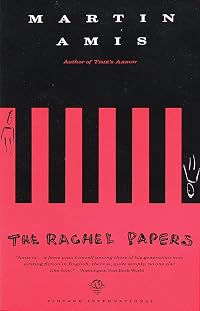
Martin Amis, son of the novelist Kingsley Amis, was born August 25, 1949. His childhood was spent traveling with his famous father. From 1969 to 1971 he attended Exeter College at Oxford University. After graduating, he worked for the Times Literary Supplement and later as special writer for the Observer. Amis published his first novel, The Rachel show more Papers, in 1973, which received the prestigious Somerset Maugham Award in 1974. Other titles include Dead Babies (1976), Other People: A Mystery Story (1981); London Fields (1989), The Information (1995), and Night Train (1997). Martin Amis has been called the voice of his generation. His novels are controversial, often satiric and dark, concentrating on urban low life. His style has been compared to that of Graham Greene, Philip Larkin and Saul Bellow, among others. He is currently Professor of Creative Writing at the Centre for New Writing at the University of Manchester. In 2008, The Times named him one of the 50 greatest British writers since 1945. (Bowker Author Biography) show less
Some Editions
Awards and Honors
Distinctions
Common Knowledge
- Original title
- London Fields
- Original publication date
- 1989
- People/Characters
- Keith Talent; Guy Clinch; Nicola Six
- Important places
- London, England, UK; England, UK
- Dedication
- to my father
- First words
- This is a true story but I can't believe it's really happening.
- Last words
- (Click to show. Warning: May contain spoilers.)It was me.
- Original language
- English
Classifications
Statistics
- Members
- 3,564
- Popularity
- 4,634
- Reviews
- 47
- Rating
- (3.69)
- Languages
- 14 — Catalan, Chinese, Czech, Dutch, English, French, German, Italian, Polish, Portuguese, Romanian, Serbian, Spanish, Swedish
- Media
- Paper, Audiobook, Ebook
- ISBNs
- 53
- ASINs
- 14