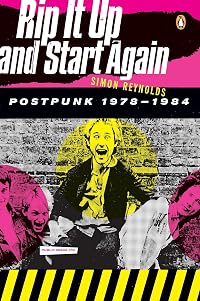
Rip it Up and Start Again: Postpunk 1978-1984
by Simon Reynolds
On This Page
Description
This is the first book-length exploration of the wildly adventurous music created in the years after punk. Renowned music journalist Simon Reynolds celebrates the futurist spirit of such bands as Joy Division, Gang of Four, Talking Heads, and Devo, which resulted in endless innovations in music, lyrics, performance, and style and continued into the early eighties with the video-savvy synth-pop of groups such as Human League, Depeche Mode, and Soft Cell, whose success coincided with the rise show more of MTV. Full of insight and anecdotes and populated by charismatic characters, this book re-creates the idealism, urgency, and excitement of one of the most important and challenging periods in the history of popular music. show lessTags
Recommendations





Member Recommendations




Member Reviews
Qué bonito el post-punk. Este libro recorre cada paso en su desarrollo, desde John Lydon dejando los Pistols hasta Frankie Goes to Hollywood convirtiéndose en sus herederos anti-sistema y pasando al olvido no mucho después. Lo más destacable aquí, a parte de las opiniones de los que lo vivieron, es como el libro es capaz de reflejar lo increíble que fue este período para la música y lo valioso de las aportaciones de grupos que me gustan cero (Cabaret Voltaire, This Heat, Throbbing Gristle...) al mismo nivel que otros poperos (The Human League, ABC, y sobre todo un increíble repaso a la peculiar trayectoria de Scritti Politti).
Es un libro que te hace querer fundar una discográfica o un grupo, sonar como el culo y revolucionar show more la música. Para qué quieres más. show less
Es un libro que te hace querer fundar una discográfica o un grupo, sonar como el culo y revolucionar show more la música. Para qué quieres más. show less
http://www.tangents.co.uk/tangents/main/2005/june/lastpost.html
“There is hope in honest error, none in the icy perfections of the mere stylist.”
- Charles Rennie Mackintosh, before he became rhythm guitarist for Crispy Ambulance.
I remember the first time I saw the word ‘postmodern’ and I remember just not understanding it. Because modern was, like, NOW, right? “This is the modern world”, opined St Paul not “was” or “will be”. Postmodern seemed to be, by definition, something that had yet to happen, art oozing through wormholes in time. Several years later, years of state-subsidised chin-stroking to the happy, happy sound of Rushdie and Nabokov and a professor who looked disturbingly like Roland Barthes, I kind of got show more the joke, but by that time postmodernism came free with every packet of cornflakes. The new Doctor Who is just one great big huggy Yeti of intertextual metanarrative, with lashings of extra homoeroticism, and kids in the playground can deconstruct like Derrida on crack (but they call it happy slapping).
So, yeah. This ‘post’ thing. After. Which immediately implies that it’s happening once something is dead and gone. So, Postpunk 1978-1984 safety-pins the shroud of punk at around the time the Pistols were disintegrating in San Francisco, despite the fact that at that point The Clash still hadn’t released London Calling. It’s official: the stumbling, stinky diehards who kept the flame burning throughout the following decades, like The Exploited or Peter and the Test Tube Babies - not to mention the new heads on the block like Nirvana, Green Day and, uh, Busted were, in fact, like Bruce Willis in The Sixth Sense-, dead without knowing it. That was your punk and two veg, that was. Now for afters.
And this is where the problem starts for Simon Reynolds, as he bravely attempts to create some kind of coherence the brief period of grace between Rotten’s “Ever get the feeling you’ve been cheated?” and Geldof’s “Give us your fookin’ money!” Punk was a cohesive reaction against specific phenomena, from the Queen’s Silver Jubilee to Rod Stewart going disco. Postpunk was, well, stuff that happened after punk. Its motivations were many and various. There was, of course, music that followed on directly from punk in the sense that its instigators had been at the heart of punk for example, Public Image Limited and Magazine. And there were some acts, such as Joy Division, that clearly owed much to punk, but benefited from not having jumped on the original bandwagon, and had time to develop free from the clichés of flob and bondage.
Postpunk, in retrospect (and certainly from the perspective of alleged postpunk revivalists such as Franz Ferdinand and Interpol) is wrong-angled guitars and throbby bass the names to check nowadays are Gang of Four and A Certain Ratio and Wire. Funk for maths postgrads. But in Reynolds’ world, it’s really anything that happened in these six years that he quite liked.
Was punk really the big motivator for the likes of the Human League and Cabaret Voltaire, or was it cheap synths and Kraftwerk? What pushed the development of 2-Tone was surely the post-war demographics of the West Midlands: immigration + collapse of manufacturing sector_ Þ racism = ska revival. And what exactly links these musics with Scritti Politti and Devo and Eurythmics and Was (Not Was) and The Waterboys and ESG and Psychic TV and Art of Noise and Duran Duran and The Residents and Big Country and Bauhaus and Nurse With Wound except for chronological coincidence and, in some cases, a tendency to sing a bit like Peter Cook? If they were all postpunk, then either postpunk means nothing, or it means everything. If they were all postpunk, then so were Joe Dolce and the St Winifred’s School Choir.
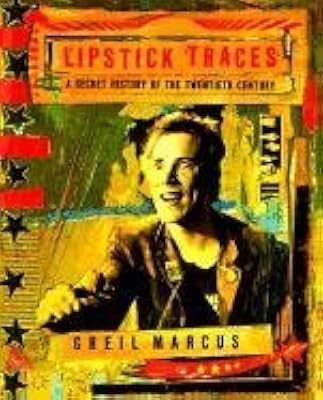
Punk offered an example, a sign that the proles had the means of production at their disposal, but surely the most significant development here was Geoff Travis setting up Rough Trade. And, as Reynolds points out, Travis was nowt but an old hippy. Indeed, the most significant operators, it would seem from the narrative on offer, were the non-musicians. Malcolm McLaren hovers over the narrative like a malevolent pagan godlet his seedy manipulation of Bow Wow Wow, and his fascination (entirely theoretical, it seems) with paedophilia, made me feel retrospectively guilty over my adolescent crush on Annabella Lwin (and she’s older than me, for Christ’s sake). The initial success of Postcard and the Scottish New Pop is ascribed to the need for hacks Paul Morley and Dave McCullough to find something a bit more cheerful to think about after Ian Curtis killed himself, and from there it was but a step to Martin Fry’s gold suit. Incidentally, it’s a shame that, despite the blurb describing the author as “this country’s finest and most intellectually engaging journalist”, the best stylistic tropes that Reynolds can summon up are the work of others: Morley labelling David Sylvian as “too fragile to fuck”; Ian Penman’s image of Scritti’s Green Gartside, “disapproving of things, like an unwashed Pope”. In Reynolds’ bibliography, Lipstick Traces, Greil Marcus’s bold, flawed attempt to put John Lydon’s cackle in historical and aesthetic context, is conspicuous by its absence. It might not be so informative, if you’re revising for a GCSE in Punk And After, but Marcus’s is a better book.
Although, in a way, the facts-first, tinsel-free reportage style that Reynolds employs is appropriate. This is what happened. Make of it what you will, reader. Because postpunk didn’t rip it up. It took a scalpel, and calmly sliced up small pieces of yesterday’s media to create a neat collage but not enough to cause a fatal loss of blood. It was just a slightly more challenging task than that set by Sniffin’ Glue magazine (“here are three chords, now form a band”). For Orange Juice, the Four Tops and the Buzzcocks alike were just there for the borrowing. The funny thing is, it’s the Four Tops and the Buzzcocks, albeit each in a somewhat mutated form, that are still plying their wares, in an era that must now be postpostpostpostpunk, and then some. show less
“There is hope in honest error, none in the icy perfections of the mere stylist.”
- Charles Rennie Mackintosh, before he became rhythm guitarist for Crispy Ambulance.
I remember the first time I saw the word ‘postmodern’ and I remember just not understanding it. Because modern was, like, NOW, right? “This is the modern world”, opined St Paul not “was” or “will be”. Postmodern seemed to be, by definition, something that had yet to happen, art oozing through wormholes in time. Several years later, years of state-subsidised chin-stroking to the happy, happy sound of Rushdie and Nabokov and a professor who looked disturbingly like Roland Barthes, I kind of got show more the joke, but by that time postmodernism came free with every packet of cornflakes. The new Doctor Who is just one great big huggy Yeti of intertextual metanarrative, with lashings of extra homoeroticism, and kids in the playground can deconstruct like Derrida on crack (but they call it happy slapping).
So, yeah. This ‘post’ thing. After. Which immediately implies that it’s happening once something is dead and gone. So, Postpunk 1978-1984 safety-pins the shroud of punk at around the time the Pistols were disintegrating in San Francisco, despite the fact that at that point The Clash still hadn’t released London Calling. It’s official: the stumbling, stinky diehards who kept the flame burning throughout the following decades, like The Exploited or Peter and the Test Tube Babies - not to mention the new heads on the block like Nirvana, Green Day and, uh, Busted were, in fact, like Bruce Willis in The Sixth Sense-, dead without knowing it. That was your punk and two veg, that was. Now for afters.
And this is where the problem starts for Simon Reynolds, as he bravely attempts to create some kind of coherence the brief period of grace between Rotten’s “Ever get the feeling you’ve been cheated?” and Geldof’s “Give us your fookin’ money!” Punk was a cohesive reaction against specific phenomena, from the Queen’s Silver Jubilee to Rod Stewart going disco. Postpunk was, well, stuff that happened after punk. Its motivations were many and various. There was, of course, music that followed on directly from punk in the sense that its instigators had been at the heart of punk for example, Public Image Limited and Magazine. And there were some acts, such as Joy Division, that clearly owed much to punk, but benefited from not having jumped on the original bandwagon, and had time to develop free from the clichés of flob and bondage.
Postpunk, in retrospect (and certainly from the perspective of alleged postpunk revivalists such as Franz Ferdinand and Interpol) is wrong-angled guitars and throbby bass the names to check nowadays are Gang of Four and A Certain Ratio and Wire. Funk for maths postgrads. But in Reynolds’ world, it’s really anything that happened in these six years that he quite liked.
Was punk really the big motivator for the likes of the Human League and Cabaret Voltaire, or was it cheap synths and Kraftwerk? What pushed the development of 2-Tone was surely the post-war demographics of the West Midlands: immigration + collapse of manufacturing sector_ Þ racism = ska revival. And what exactly links these musics with Scritti Politti and Devo and Eurythmics and Was (Not Was) and The Waterboys and ESG and Psychic TV and Art of Noise and Duran Duran and The Residents and Big Country and Bauhaus and Nurse With Wound except for chronological coincidence and, in some cases, a tendency to sing a bit like Peter Cook? If they were all postpunk, then either postpunk means nothing, or it means everything. If they were all postpunk, then so were Joe Dolce and the St Winifred’s School Choir.
Punk offered an example, a sign that the proles had the means of production at their disposal, but surely the most significant development here was Geoff Travis setting up Rough Trade. And, as Reynolds points out, Travis was nowt but an old hippy. Indeed, the most significant operators, it would seem from the narrative on offer, were the non-musicians. Malcolm McLaren hovers over the narrative like a malevolent pagan godlet his seedy manipulation of Bow Wow Wow, and his fascination (entirely theoretical, it seems) with paedophilia, made me feel retrospectively guilty over my adolescent crush on Annabella Lwin (and she’s older than me, for Christ’s sake). The initial success of Postcard and the Scottish New Pop is ascribed to the need for hacks Paul Morley and Dave McCullough to find something a bit more cheerful to think about after Ian Curtis killed himself, and from there it was but a step to Martin Fry’s gold suit. Incidentally, it’s a shame that, despite the blurb describing the author as “this country’s finest and most intellectually engaging journalist”, the best stylistic tropes that Reynolds can summon up are the work of others: Morley labelling David Sylvian as “too fragile to fuck”; Ian Penman’s image of Scritti’s Green Gartside, “disapproving of things, like an unwashed Pope”. In Reynolds’ bibliography, Lipstick Traces, Greil Marcus’s bold, flawed attempt to put John Lydon’s cackle in historical and aesthetic context, is conspicuous by its absence. It might not be so informative, if you’re revising for a GCSE in Punk And After, but Marcus’s is a better book.
Although, in a way, the facts-first, tinsel-free reportage style that Reynolds employs is appropriate. This is what happened. Make of it what you will, reader. Because postpunk didn’t rip it up. It took a scalpel, and calmly sliced up small pieces of yesterday’s media to create a neat collage but not enough to cause a fatal loss of blood. It was just a slightly more challenging task than that set by Sniffin’ Glue magazine (“here are three chords, now form a band”). For Orange Juice, the Four Tops and the Buzzcocks alike were just there for the borrowing. The funny thing is, it’s the Four Tops and the Buzzcocks, albeit each in a somewhat mutated form, that are still plying their wares, in an era that must now be postpostpostpostpunk, and then some. show less
This highly entertaining survey of the period in question basically breaks down into two parts. One, starting with the implosion of the Sex Pistols, there's coverage of such classic post-punk outfits such as Gang of Four, Talking Heads, Joy Division and other groups that expanded the musical possibilities that were opened to bands. What Reynolds does particularly well is to give the flavor of the cities and communities that these acts came out of.
The second half of the book is mostly devoted to New Pop, which covers a multitude of high-concept bands that sought to lighten the tone of rock in the early Eighties. Many of these bands were the so-called "New Romantics," which I certainly had little use for as a twenty-something at the time show more (my heroes were most notably Elvis Costello, David Byrne and Robyn Hitchcock). For Reynolds, the climax and implosion of this period was ZTT Records (mostly the brainchild of Trevor Horne (of Buggles fame)) and their effort to make Frankie Goes to Hollywood the next big thing; another failure due to the artists gagging on being turned into the lab rats for the benefit of schemes they wanted no part of.
For Reynolds, apart from representing the period when he became acutely aware of music, he regards this as a unique expression of future-oriented efforts to reinvent pop music and also a certain golden age of music journalism. One certainly gets the impression that the author has little use for the "grumpy rockists" of the time (it's been years since I've heard the term "Rockist") and certainly evinces some disappointment over the Roots Rock revival that came in the mid-Eighties. Reynolds' most astute observation is that the person who really ran with the notion of pop as high concept was a certain Ms. Ciccone. Certainly a book that I should have read years ago. show less
The second half of the book is mostly devoted to New Pop, which covers a multitude of high-concept bands that sought to lighten the tone of rock in the early Eighties. Many of these bands were the so-called "New Romantics," which I certainly had little use for as a twenty-something at the time show more (my heroes were most notably Elvis Costello, David Byrne and Robyn Hitchcock). For Reynolds, the climax and implosion of this period was ZTT Records (mostly the brainchild of Trevor Horne (of Buggles fame)) and their effort to make Frankie Goes to Hollywood the next big thing; another failure due to the artists gagging on being turned into the lab rats for the benefit of schemes they wanted no part of.
For Reynolds, apart from representing the period when he became acutely aware of music, he regards this as a unique expression of future-oriented efforts to reinvent pop music and also a certain golden age of music journalism. One certainly gets the impression that the author has little use for the "grumpy rockists" of the time (it's been years since I've heard the term "Rockist") and certainly evinces some disappointment over the Roots Rock revival that came in the mid-Eighties. Reynolds' most astute observation is that the person who really ran with the notion of pop as high concept was a certain Ms. Ciccone. Certainly a book that I should have read years ago. show less
Highly readable account of the (mostly British) post-punk music scene from 78-84. He does a great job of putting the music in context of the social/political climate of the time (the backlash of punk, Thatcher and Reagan's rise to power, the return of the right wing) and exploring the different sub-sects of post-punk. From arty (Talking Heads, Gang of Four) to No Wave (Suicide, Teenage Jesus & The Jerks) to industrial (Throbbing Gristle, Cabaret Voltaire) to new wave (Devo, etc) to gothic (Bauhaus, Siouxsie) to synth pop (Human League, Gary Numan). Best of all, this book proves that it's possible to write an engaging account of an entire movement of music that is entertaining as well as informative. Now, if only someone would write an show more account of death metal like this! show less
Reynolds takes a long, hard look at the “post-punk” music scene in Britain, Europe, and America, and likes what he sees. Growing up during this time period, I was lucky enough to have some friends with contacts outside my relatively bucolic town, who first exposed me to many of these groups (along with many of the punk groups that preceded them). Early MTV, with its dependence on UK and American “post-punk” groups for video content, along with the USA Networks’ Night Flight program, continued my exposure and both broadened and deepened my understanding of the world that generated this music.
Reynolds concentrates on the UK (where he lived and grew up to this music), with brief forays into the States. His coverage of what was show more happening in the States is the weakest part of the book, as it seems to skip around and be considerably less in depth than the UK material. As I, personally, liked the UK music better, however, I got a lot out of this book. I now have a much better understanding of connections between various groups and the history of individual groups than I had prior to reading the book.
Rip It Up and Start Again is well worth reading if you grew up in the late seventies and early eighties and wonder what was going on with music. show less
Reynolds concentrates on the UK (where he lived and grew up to this music), with brief forays into the States. His coverage of what was show more happening in the States is the weakest part of the book, as it seems to skip around and be considerably less in depth than the UK material. As I, personally, liked the UK music better, however, I got a lot out of this book. I now have a much better understanding of connections between various groups and the history of individual groups than I had prior to reading the book.
Rip It Up and Start Again is well worth reading if you grew up in the late seventies and early eighties and wonder what was going on with music. show less
I enjoyed this, but had mixed feelings as well.
There's enough here on the post-punk diaspora to ensure that pretty much any reader is going to learn something new. And Reynolds is a good writer, easily personal and inspiring enough to make you want to go out and hear all this music again without delay.
But I was a little disappointed by some sections, which get a little flat, especially when it's clear that it's someone he feels he has to include for completeness, rather than a group he actually holds any enthusiasm for.
There's enough here on the post-punk diaspora to ensure that pretty much any reader is going to learn something new. And Reynolds is a good writer, easily personal and inspiring enough to make you want to go out and hear all this music again without delay.
But I was a little disappointed by some sections, which get a little flat, especially when it's clear that it's someone he feels he has to include for completeness, rather than a group he actually holds any enthusiasm for.
This is a great read, but definitely meant only for those with previous knowledge of or respect for this era of music history. Newcomers to this genre will most likely be put off by the sheer amount of obscure information that Reynolds includes, while post-punk nerds such as myself will revel in it.
However, it should be noted that the US version is highly censored and cut by almost 200 pages, and does not include the original photos of the UK release. Take some time to seek out the original UK publication and, of course, actually listen to the music that it's describing! It makes the whole experience of reading this book so much more enjoyable, you won't regret it!
However, it should be noted that the US version is highly censored and cut by almost 200 pages, and does not include the original photos of the UK release. Take some time to seek out the original UK publication and, of course, actually listen to the music that it's describing! It makes the whole experience of reading this book so much more enjoyable, you won't regret it!
Members
- Recently Added By
Author Information

17+ Works 2,512 Members
Series
Belongs to Publisher Series
Common Knowledge
- Canonical title
- Rip it Up and Start Again: Postpunk 1978-1984
- Original publication date
- 2005
- People/Characters
- John Lydon; David Byrne; Brian Eno; Devo; Joy Division; Human League (show all 21); Throbbing Gristle; Public Image Ltd.; The Pop Group; The Slits; Gang of Four; Mekons; Pere Ubu; Cabaret Voltaire; The Fall; Talking Heads; Wire; Mission of Burma; Malcolm McLaren; The Art of Noise; Frankie Goes to Hollywood
- Important places
- New York, New York, USA; New York, USA; Cleveland, Ohio, USA; Ohio, USA; Sheffield, South Yorkshire, England, UK; Manchester, England, UK (show all 8); San Francisco, California, USA; California, USA
- Original language*
- Inglese
*Some information comes from Common Knowledge in other languages. Click "Edit" for more information.
Classifications
- Genres
- Music, Nonfiction, General Nonfiction, History
- DDC/MDS
- 781.6609047 — Arts & recreation Music General principles and musical forms Traditions of music Rock (Rock 'n' roll) History, geographic treatment, biography By Period
- LCC
- ML3534 .R492 — Music Literature on music Literature on music History and criticism Popular music
- BISAC
Statistics
- Members
- 1,156
- Popularity
- 21,875
- Reviews
- 15
- Rating
- (4.14)
- Languages
- 5 — English, French, German, Italian, Spanish
- Media
- Paper, Audiobook, Ebook
- ISBNs
- 15
- ASINs
- 5