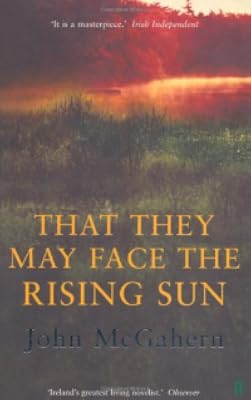
That They May Face the Rising Sun
by John McGahern
On This Page
Description
From the very opening pages, we see many memorable characters as they move about the Ruttledges, who have come from London home to Ireland in search of a different life. There is John Quinn, who will stop at nothing to ensure a flow of women; Johnny, who left for England twenty years before in pursuit of love; and Jimmy Joe McKiernan, head of the IRA, both auctioneer and undertaker. The gentle Jamesie and his wife Mary embody the spirit of the place. They have never left the lake but know show more everything that ever stirred or moved there. The drama of a year in the lives of these and many other characters unfolds through the action, the rituals of work, religious observances and play. With deceptive simplicity, by the novel's close we feel that we have been introduced to a complete representation of existence. An enclosed world has been transformed into an Everywhere. show lessTags
Recommendations
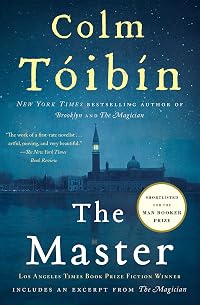
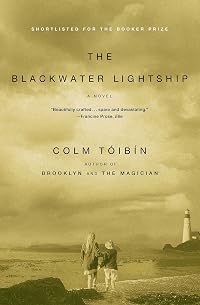
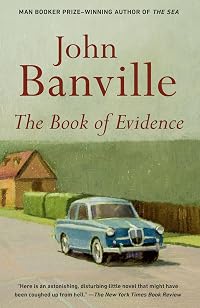
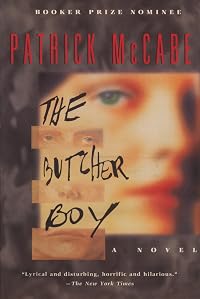


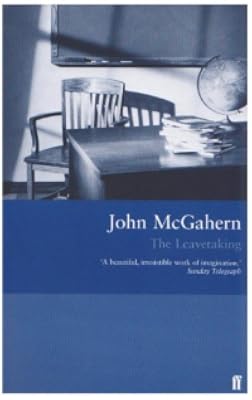






Member Recommendations
by IamAleem
Member Reviews
BY THE LAKE (2002) is my second John McGahern novel, having read his THE LEAVETAKING a year or two back. McGahern, who died in 2006, was a revered writer in Ireland, and this quiet look at a year in a small rural community is a fine example of his work. Told from the vantage point of Joe and Kate Ruttledge, a childless, semi-retired professional couple (she is an illustrator, he a copywriter in the advertising biz), outsiders (she from Boston, he from London) who have fled the London rat race to raise a few cows and sheep on a small farm by a lake. Other "cast members" are their neighbors, Jamesie and Mary Murphy, who know everyone around and keep them abreast of all the latest gossip. And "the Shah," Joe's bachelor uncle, made wealthy show more by his scrap yard empire. And John Quinn, a widower with several grown children who cuts a wide swath through various women. The local priest, who figures into Quinn's remarriage and the funeral of a former village resident who had worked for years in England. And Bill Evans, a mentally challenged man who lives alone in a house with no plumbing, and carries his water daily in buckets from the lake. The seasons change, relatives visit from Dublin and London. Calves and lambs are born and shipped off to market following stock auctions. Businesses change hands. The "Troubles" hover in the background, personified by a local Northerner who runs a local bar and is also the undertaker. All of the characters are fully depicted with their own faults, fears and insecurities. The lake and the surrounding countryside are colorful and key to McGahern's success. I thoroughly enjoyed this quiet narrative of country life and was sad to see it end. Very highly recommended, especially if you like Irish settings.
- Tim Bazzett, author of the memoir, BOOKLOVER show less
- Tim Bazzett, author of the memoir, BOOKLOVER show less
This is a beautiful novel about Joe Rutledge, a native of Ireland, who returns in middle age to the country of his birth, bringing his wife, Kate. A lakeside house is purchased for Joe by his well-to-do uncle, fondly known as "the Shah." McGahern follows the rhythms of the couple's life on their small, lovingly tended farm over the course of a year that sees many changes. The Rutledges' close friendship with their neighbours, the Murphys, is described with considerable nuance, and a range of other distinctive "characters" make their entrances and exits. All are graciously tolerated by the members of the community by the lake.
One quibble: I had some trouble figuring out the time-period in which the novel is set. Was it the 1970s or show more early 1980s? It was hard to tell. So much of the farming equipment seemed to be from an earlier time. (However, that may have been just a reflection of Joe's predilection for doing things in the old way, as they were done when he was a child.) There was also mention, towards the end of the book, of telephone service coming to the lake--which caused me a little further confusion.
I loved McGahern's lyrical descriptions of the natural world--which doesn't mean he glosses over its harshness. Likewise: human nature. He reveals it with subtlety, but does not sacrifice the truth. The ugly actions of some--like John Quinn, who badly uses women--are plainly presented.
This is a rich piece of character-driven fiction, in which the rural setting is as much a character as anyone. I can see myself wanting to return to this book. There is just so much here to appreciate. show less
One quibble: I had some trouble figuring out the time-period in which the novel is set. Was it the 1970s or show more early 1980s? It was hard to tell. So much of the farming equipment seemed to be from an earlier time. (However, that may have been just a reflection of Joe's predilection for doing things in the old way, as they were done when he was a child.) There was also mention, towards the end of the book, of telephone service coming to the lake--which caused me a little further confusion.
I loved McGahern's lyrical descriptions of the natural world--which doesn't mean he glosses over its harshness. Likewise: human nature. He reveals it with subtlety, but does not sacrifice the truth. The ugly actions of some--like John Quinn, who badly uses women--are plainly presented.
This is a rich piece of character-driven fiction, in which the rural setting is as much a character as anyone. I can see myself wanting to return to this book. There is just so much here to appreciate. show less
John McGahern's Novel "That they may face the rising sun" is the first Novel I have ever read where very little happens and yet everything that does happen is magnified by McGaheran’s’ amazing art of storytelling and the vivid images he creates of Irish rural life.
Joe and Kate Rutledge have come to Ireland from London in search of a different life. In passages of beauty and truth the drama of a year in their lives and those of the memorable characters that move around them unfolds through the actions, the rituals of work religious observances and play.
I loved the relaxed pace of this novel and the wonderful characters which include James and Mary Murphy who rarely travel from their local area; John Quinn, a notorious womaniser; show more Kate's uncle The Shah; Bill Evans, a farmer and James Murphy's brother who works at a Ford plant in England. The characters are so realistic that I was able to identify with characters I had encountered throughout the 80s in rural Ireland.
Throughout the novel I was trying to place what year the story takes place as some parts hints at the 50s/60s and others the late 80s(which was where I would put it) and I think readers will make it fit the timeframe that suits them .
The book is an extremely calming and relaxing read. It takes an honest look at Irish life in a small rural community and how local news and gossip played a huge part in their daily lives. It also deals with immigration and the struggles people have in everyday life and most importantly the beauty of the simple life.
I especially loved the mood of the 80s Ireland and vivid descriptions of the changing of the seasons in the countryside. John McGahern really knows how to set a scene.
I REALLY enjoyed this book and found it a nostalgic read. A word of warning! this as I have stated earlier is not a plot driven novel and its slow pace will not suit every reader.
My only criticism would be that characters seemed to consume whiskey far more than tea and this was just a tad unrealistic in the novel! show less
Joe and Kate Rutledge have come to Ireland from London in search of a different life. In passages of beauty and truth the drama of a year in their lives and those of the memorable characters that move around them unfolds through the actions, the rituals of work religious observances and play.
I loved the relaxed pace of this novel and the wonderful characters which include James and Mary Murphy who rarely travel from their local area; John Quinn, a notorious womaniser; show more Kate's uncle The Shah; Bill Evans, a farmer and James Murphy's brother who works at a Ford plant in England. The characters are so realistic that I was able to identify with characters I had encountered throughout the 80s in rural Ireland.
Throughout the novel I was trying to place what year the story takes place as some parts hints at the 50s/60s and others the late 80s(which was where I would put it) and I think readers will make it fit the timeframe that suits them .
The book is an extremely calming and relaxing read. It takes an honest look at Irish life in a small rural community and how local news and gossip played a huge part in their daily lives. It also deals with immigration and the struggles people have in everyday life and most importantly the beauty of the simple life.
I especially loved the mood of the 80s Ireland and vivid descriptions of the changing of the seasons in the countryside. John McGahern really knows how to set a scene.
I REALLY enjoyed this book and found it a nostalgic read. A word of warning! this as I have stated earlier is not a plot driven novel and its slow pace will not suit every reader.
My only criticism would be that characters seemed to consume whiskey far more than tea and this was just a tad unrealistic in the novel! show less
I think it's best to think of That They May Face the Rising Sun less as a novel without a plot and more as a fictionalised anthropological study of rural Ireland. It's a lucid, serene rendering of the kind of place where I grew up: one governed by the rhythms of the landscape and circumscribed by social ritual and interdependence, by the striving towards modernity clashing with the old, old ways of things. McGahern's prose style is superb, sentences turning on the most precise and illuminating of details, and his ability to capture the rhythms of rural Irish Midlands speech is impressive. Every page brought me some new moment of recognition, new ways of seeing my home and myself. A wonderful, extended meditation in prose.
Earthy storytelling from a master craftsperson, McGahern creates a world on the pages of this book. The story takes place over one year in the countryside in Leitrim, with little to note in the way of major events. In place of story is repetition (of the seasons, the characters' behaviours, the statements). The timeline is difficult to reason out - events that make sense any time in the past 100 years seem to happen simultaneously, adding to the dreamlike repetitiousness. The real drive is in how the characters are crafted and moulded into living things, and how this places you as a reader inside the story. Brilliant.
Now I know what many are going to say on finishing this: ‘what the heck was that about? Where was the story? What was the point?’ And I have to say that had the 1001 books list not pushed me deeper into fiction than I’ve been comfortable going, I would have said the same thing earlier in my reading career.
Now, however, I can appreciate literature that doesn’t need a point, a plot or a polished ending. I can just appreciate it for what it is – literature pure and simple; writing for the joy of being written.
McGahern is Irish and writes about a couple returning from London to a rural community in their native Ireland. That there is no point and no plot is the point and plot. This is Ireland, people. Life is life, and that is show more what the writing consists of. Beautiful, lyrical, this is an ethnography of a vanishing world.
So, as I started out, I did find it a challenge keeping track of who the characters were. But when I finally twigged that I wasn’t supposed to try, I could just lie back and let McGahern’s prose take me along in its current. Reading the book before going to sleep each night was a perfect way to relax. The slow pace was accentuated by beautiful moments of poignant prose as small details of life and nature are described in delightful detail, such as
"The sun was now high above the lake. There wasn’t a wisp of cloud. Everywhere the water sparkled. A child could easily believe that the whole of heaven were dancing."
Gorgeous.
As the couple get to know the inhabitants of their rural location, characters are fleshed out and there are moving moments as their fortunes ebb and flow with the community.
I greatly enjoyed the calm wash of the writing. It was quite soothing.
Those into Dan Brown’s formulas, contrived plot twists and mandatory cliff-hangers at the end of each chapter, stay away from this book of real writing. You don’t know how to read yet and will be confused. This is one for those of you who know what words are really for. show less
Now, however, I can appreciate literature that doesn’t need a point, a plot or a polished ending. I can just appreciate it for what it is – literature pure and simple; writing for the joy of being written.
McGahern is Irish and writes about a couple returning from London to a rural community in their native Ireland. That there is no point and no plot is the point and plot. This is Ireland, people. Life is life, and that is show more what the writing consists of. Beautiful, lyrical, this is an ethnography of a vanishing world.
So, as I started out, I did find it a challenge keeping track of who the characters were. But when I finally twigged that I wasn’t supposed to try, I could just lie back and let McGahern’s prose take me along in its current. Reading the book before going to sleep each night was a perfect way to relax. The slow pace was accentuated by beautiful moments of poignant prose as small details of life and nature are described in delightful detail, such as
"The sun was now high above the lake. There wasn’t a wisp of cloud. Everywhere the water sparkled. A child could easily believe that the whole of heaven were dancing."
Gorgeous.
As the couple get to know the inhabitants of their rural location, characters are fleshed out and there are moving moments as their fortunes ebb and flow with the community.
I greatly enjoyed the calm wash of the writing. It was quite soothing.
Those into Dan Brown’s formulas, contrived plot twists and mandatory cliff-hangers at the end of each chapter, stay away from this book of real writing. You don’t know how to read yet and will be confused. This is one for those of you who know what words are really for. show less
Now I want to move to Ireland. After listening to the lilting, fluid conversational rhythms in John McGahern’s By the Lake, I can’t wait to pull up stakes and move to the Sacred Sod. It doesn’t hurt that the late Mr. McGahern set all these charming spoken words in the mortar of his own graceful narrative. The whole is more than agreeable, it’s enchanting. I’m sorry I finished, and that doesn’t happen for me that often.
And I do admire By the Lake, make no mistake. We witness the cycle of the agricultural year in a vaguely-identified region of the Republic of Ireland. It might be County Donegal, but it doesn’t matter. Joe Ruttledge and his wife Kate live next to a lake, raise sheep along with a few cattle, and are much show more admired and loved in the community, particularly by their lakeside neighbors, Jamesie and Mary Murphy. This is a quiet community, encompassing a small market town, and Jamesie is well known for his nosy nature and his innocent, innocuous ways. Other characters aren’t quite so sympathetic, but their discourse and their manners always adhere to a carefully respectful, even sunny, code. Events flow like a stream that never overruns its banks. An egotist remarries later in life, only to find a bride – and her entire family – reject him. Crops are brought in with neighbors’ help, livestock taken to market, construction projects proceed, folks pass away, and atheists and priests are on friendly terms. The conflicts all play out in confidential conversations, it seems. No one does anything rude or aggressive in By the Lake, but the strife of conflicting interests unwinds its tense energy below the surface nonetheless.
So what commends this book to our attention? Here’s what: the unceasing and beautiful description of nature in rural Ireland, and how it dictates these farmers’ agendas; the awe-inspiring and delightful diction of Irish conversation, here faithfully tendered; the glowing significance inhering to everyday objects and statements, given them by this lovely soup of emotion and honor. There is a lot of folk wisdom contained herein, and we can all take a lesson – or any number of lessons – from this novel’s poetically-spoken characters.
I recommend this joy of a novel to anyone interested in an ennobling narrative, set in the hearts and minds of some earthy – not simple – Irish country folk. Take and enjoy!
http://bassoprofundo1.blogspot.com/2012/12/by-lake-by-john-mcgahern.html show less
And I do admire By the Lake, make no mistake. We witness the cycle of the agricultural year in a vaguely-identified region of the Republic of Ireland. It might be County Donegal, but it doesn’t matter. Joe Ruttledge and his wife Kate live next to a lake, raise sheep along with a few cattle, and are much show more admired and loved in the community, particularly by their lakeside neighbors, Jamesie and Mary Murphy. This is a quiet community, encompassing a small market town, and Jamesie is well known for his nosy nature and his innocent, innocuous ways. Other characters aren’t quite so sympathetic, but their discourse and their manners always adhere to a carefully respectful, even sunny, code. Events flow like a stream that never overruns its banks. An egotist remarries later in life, only to find a bride – and her entire family – reject him. Crops are brought in with neighbors’ help, livestock taken to market, construction projects proceed, folks pass away, and atheists and priests are on friendly terms. The conflicts all play out in confidential conversations, it seems. No one does anything rude or aggressive in By the Lake, but the strife of conflicting interests unwinds its tense energy below the surface nonetheless.
So what commends this book to our attention? Here’s what: the unceasing and beautiful description of nature in rural Ireland, and how it dictates these farmers’ agendas; the awe-inspiring and delightful diction of Irish conversation, here faithfully tendered; the glowing significance inhering to everyday objects and statements, given them by this lovely soup of emotion and honor. There is a lot of folk wisdom contained herein, and we can all take a lesson – or any number of lessons – from this novel’s poetically-spoken characters.
I recommend this joy of a novel to anyone interested in an ennobling narrative, set in the hearts and minds of some earthy – not simple – Irish country folk. Take and enjoy!
http://bassoprofundo1.blogspot.com/2012/12/by-lake-by-john-mcgahern.html show less
Members
- Recently Added By
Lists

Top Five Books of 2013
1,562 works; 715 members

Irish writers
87 works; 17 members

International IMPAC Dublin Literary Award
179 works; 6 members

Novels set in the Irish Border Region
10 works; 1 member
Author Information

38+ Works 4,463 Members
John McGahern was born in Dublin in 1934. He has received several awards for his writing, including the AE Memorial Award in 1952, for the manuscript of "'The Barracks," and British Arts Council awards in 1968, 1970, and 1973. His other books include "The Dark" and "Amongst Women," nominated for the Booker Prize in 1990. (Bowker Author Biography)
Awards and Honors
Awards
Distinctions
Common Knowledge
- Canonical title
- That They May Face the Rising Sun
- Alternate titles
- By the Lake
- Original publication date
- 2002
- Important places
- County Leitrim, Ireland; Ireland
- Dedication
- To Madeleine
- First words
- The morning was clear.
- Last words
- (Click to show. Warning: May contain spoilers.)At the porch, before entering the house, they both turned to look back across, the lake, even though they knew that both Jamesie and Mary had long since disappeared from the sky.
- Disambiguation notice
- This was also published as By The Lake.
Classifications
Statistics
- Members
- 1,120
- Popularity
- 22,553
- Reviews
- 27
- Rating
- (3.91)
- Languages
- 5 — Danish, Dutch, English, French, Portuguese
- Media
- Paper, Ebook
- ISBNs
- 16
- ASINs
- 5