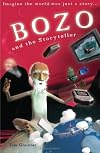
Bozo and the Storyteller
by Tom Glaister
On This Page
Description
You might not know it but you, everyone you know, and the world itself are all but figments in the imagination of a Storyteller on another planet. Each night foolish creatures called Bloons gather around him to listen to the latest crazy antics of Hoomanity. But it seems as though the Story itself has got out of control. The Hoomans appear set on a course of self-destruction and the Storyteller's health is failing as a result. A Bloon by the name of Bozo volunteers to enter the Story and the show more Storyteller writes in a boy called Theo to accompany him. Travelling the planet in search of a Cure, they seek the counsel of the Awakened Ones and are pursued by a terrible force they only know as the Enemy. All hope for the Storyteller lies in their hands. And if he should die then our world might just disappear along with him... show lessTags
Recommendations





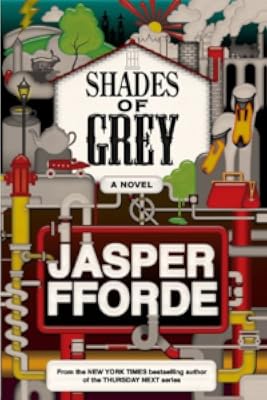
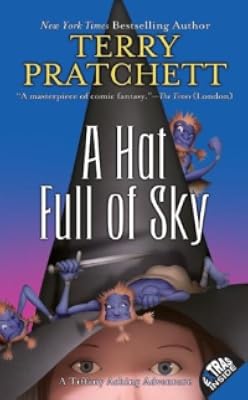
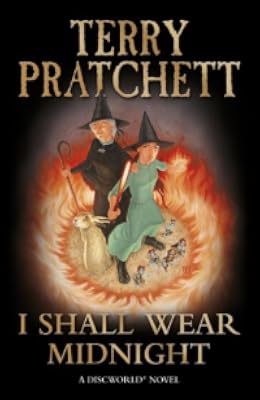
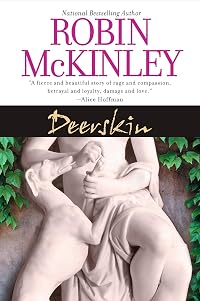
Member Recommendations
anonymous user Coraline and Bozo share the same sense of quirky humour and both can be read by adults or kids as the jokes and ideas are quite layered.
by Rubbah
Member Reviews
Bozo and the Storyteller is a book whose good concept is marred by poor execution. It's clear from the acknowledgements that Glaister had a lot of enthusiastic supporters while he wrote this book; it's too bad he didn't have at least one equally honest editor.
First, there's the question of tone. Glaister isn't sure if he wants to write a fairytale for children or spiritual novel for adults. He attempts to do both, with predictably unfortunate results. Children enticed by its fantastic elements (a clownish race of blue-skinned, long-tailed beings called "Bloons" live on a planet made of cheese and wine and listen as the godlike "Storyteller" tells them the tale of Earth) will be put off by its slow pace, overabundance of tedious show more description, and heavy-handed Life of Pi-esque meditations on the meanings of morality and existence. Adults coming to it for the latter, however, are likely to be put off not only by the fantastic elements, but by the two-dimensional characters and overly simplistic narration, as well.
Stylistically, Glaister is extremely repetitive. Entire chunks of the story are frequently recapped, not at, say, the end of a relevant chapter, but at the end of the very passage or even paragraph in which they've just occurred. It's annoying to have the story spoonfed to one in this way. It's as if Glaister distrusts that his readers are capable of remembering what they've just read, or that he's capable of remembering what he's just written. There are frequent grammatical and typographical errors as well.
And then there is the issue of Glaister's authorial blind spots. Glaister's protagonists lie, steal, and destroy property during the course of their quest, but the narrative treats these actions as comical and--more alarmingly for a book that purports to be about morality and big issues--clever. Glaister seems utterly unaware of this dissonance. Furthermore, Glaister's writes capital-letter Good Guys and Bad Guys, not protagonists and antagonists; and this, if not exactly hypocritical, is rather short-sighted in a big issues book, because one of life's biggest lessons is that good and evil coexist in the same person or situation more often than not. Glaister makes this point in a very ham-fisted way with the Storyteller, but seems oblivious to the chance to reinforce it with the rest of his characters.
Final verdict: I was very surprised to learn that Bozo and the Storyteller was not published by a vanity press, because it certainly reads like it was. As it stands, while it undoubtably would have made for a good first draft, it doesn't hold up as a finished novel. show less
First, there's the question of tone. Glaister isn't sure if he wants to write a fairytale for children or spiritual novel for adults. He attempts to do both, with predictably unfortunate results. Children enticed by its fantastic elements (a clownish race of blue-skinned, long-tailed beings called "Bloons" live on a planet made of cheese and wine and listen as the godlike "Storyteller" tells them the tale of Earth) will be put off by its slow pace, overabundance of tedious show more description, and heavy-handed Life of Pi-esque meditations on the meanings of morality and existence. Adults coming to it for the latter, however, are likely to be put off not only by the fantastic elements, but by the two-dimensional characters and overly simplistic narration, as well.
Stylistically, Glaister is extremely repetitive. Entire chunks of the story are frequently recapped, not at, say, the end of a relevant chapter, but at the end of the very passage or even paragraph in which they've just occurred. It's annoying to have the story spoonfed to one in this way. It's as if Glaister distrusts that his readers are capable of remembering what they've just read, or that he's capable of remembering what he's just written. There are frequent grammatical and typographical errors as well.
And then there is the issue of Glaister's authorial blind spots. Glaister's protagonists lie, steal, and destroy property during the course of their quest, but the narrative treats these actions as comical and--more alarmingly for a book that purports to be about morality and big issues--clever. Glaister seems utterly unaware of this dissonance. Furthermore, Glaister's writes capital-letter Good Guys and Bad Guys, not protagonists and antagonists; and this, if not exactly hypocritical, is rather short-sighted in a big issues book, because one of life's biggest lessons is that good and evil coexist in the same person or situation more often than not. Glaister makes this point in a very ham-fisted way with the Storyteller, but seems oblivious to the chance to reinforce it with the rest of his characters.
Final verdict: I was very surprised to learn that Bozo and the Storyteller was not published by a vanity press, because it certainly reads like it was. As it stands, while it undoubtably would have made for a good first draft, it doesn't hold up as a finished novel. show less
 This review was written for LibraryThing Early Reviewers.
Bozo and the Storyteller is the kind of book that is ageless. Ostensibly a novel for older children, it’s the kind of book their parents will sneak in to borrow once they’ve fallen asleep.
With echoes of The Never Ending Story, Bozo and the Storyteller turns the concept on its head by suggesting the we are, in fact, just characters in a Story. Somewhere, on a planet made of cheese, a bunch of foolish creatures called Bloons gather around a rock each night to hear the Storyteller tell the latest chapter in the antics of Hoomanity.
We learn that our mobile Fones have tiny teeth that eat away at our sunsets and good conversations, that inside lightbulbs are imprisoned creatures of light called Phootons and that most Hoomans are prisoner show more to the flashing images of the Hypnosis Box.
All is not well in Bloonland, however, as the Storyteller announces that he’s dying and that when he passes away, the Story shall be no more… A Bloon by the name of Bozo volunteers to enter the Story, however, and go look for a Cure. He teams up with a 9 year old boy called Theo and the two of them travel the planet looking for a way t heal the Storyteller.
Meeting mystics and sages in Europe, the Middle East, India and the US, they find themselves pursued by a mysterious force known only as The Enemy. As they go on they find that there may be more to the Storyteller’s illness than they bargained for…
Bozo and the Storyteller is a book to make you laugh, think and maybe, just maybe, look up at the sky and wonder if an old man is talking about you right now to the raucous laughter of a gang of Bloons. show less
With echoes of The Never Ending Story, Bozo and the Storyteller turns the concept on its head by suggesting the we are, in fact, just characters in a Story. Somewhere, on a planet made of cheese, a bunch of foolish creatures called Bloons gather around a rock each night to hear the Storyteller tell the latest chapter in the antics of Hoomanity.
We learn that our mobile Fones have tiny teeth that eat away at our sunsets and good conversations, that inside lightbulbs are imprisoned creatures of light called Phootons and that most Hoomans are prisoner show more to the flashing images of the Hypnosis Box.
All is not well in Bloonland, however, as the Storyteller announces that he’s dying and that when he passes away, the Story shall be no more… A Bloon by the name of Bozo volunteers to enter the Story, however, and go look for a Cure. He teams up with a 9 year old boy called Theo and the two of them travel the planet looking for a way t heal the Storyteller.
Meeting mystics and sages in Europe, the Middle East, India and the US, they find themselves pursued by a mysterious force known only as The Enemy. As they go on they find that there may be more to the Storyteller’s illness than they bargained for…
Bozo and the Storyteller is a book to make you laugh, think and maybe, just maybe, look up at the sky and wonder if an old man is talking about you right now to the raucous laughter of a gang of Bloons. show less
Glaister's forthcoming novel begins with an ancient man on the planet of the Bloons telling an elaborate tale that is us. Earth. People. Humanity (called Hoomanity by the Storyteller) are just the imaginative creation of one man's mind.
It's a clever premise with lots of potential. After all, how many of us haven't pondered such an idea when in the right frame of mind? I clearly remember several discussions along similar topics in high school. The zaniness of the ideas and originality of the story are the factors that work best for this book, but also work against it on other levels.
The key to a successful fantasy, which this book mostly is, is enabling people to accept the unrealistic by suspending belief. To do so, you have to ground show more all of those unbelievable details in a believable framework. This novel succeeds at this only intermittently. We begin the story on Bloon, which is such a strange place that I had trouble accepting it. Soon, however, the Storyteller writes one of the Bloons, Bozo of the title, into The Story itself, and we are transported along with him to more familiar territory where I had an easier time relating to the novel. Theo, the young Earthling created by the Storyteller to help him, provided the skeptical human framework that I needed. When he laughs at Bozo's antics, I can laugh, as well. When he can't believe the philosophies of the Bloons, I can see my own disbelief mirrored back at me. Theo was a filter that finally helped to me to accept the strange alien creatures that we met initially, and if we had started with his perspective it would have made my entry into the world of the novel easier. As it was, I was initially put off by a world that I couldn't buy into.
(By the way, I loved Theo. He was a sweet and sincere young boy, how could you not? Occasionally he conversed in a fashion that was far too mature for his years, but in general he was very well realized. I also liked Buntee, the Indian clown, and Michelle and Simon. I agree with other reviewers that some of the characters were too black and white, but others were more fleshed out, and all were colorful.)
Other places in the novel jarred against me in a similar fashion. For instance, when Theo looks into the crystal ball he sees the history of humankind in all its lack of glory. Slavery, burning women for witches, dragon tears ... dragon tears? Now, how can I accept a crystal ball that really works, and not a dragon? Well, the woman is a fortune teller, a crystal ball fits. But to jump from a historically accurate overview of people to a lonely dragon in a cave, just feels like I'm stepping out of one story into another. No transition, no hints before to the possibility of dragons, just boom. Don't get me wrong, I love dragons. I like flying carpets, and magic, and fantasy, and I love genres like urban fantasy where the supernatural is blended with the mundane. So why didn't this work for me? I think it needed more grounding. Just like Theo grounded Bozo for me, I needed more transition details to help me accept these elements. Again, inventive ideas, and a lot of potential, but I felt that the potential was not always realized.
The reason I mentioned that this novel is "mostly" a fantasy is because the author is also pushing an agenda, almost like this is an elaborate allegory. No, not quite allegory, but that the whole story is secretly a vehicle for his message. Choose your own destiny, write your own story, you are your own maker, all with a distinct new age flair (fortune tellers, tarot cards, reincarnation, sages in mountains). Sometimes heavy handed, but always clearly present. Since I don't prescribe to that way of viewing the world, it distanced me. I only like agendas if I agree with them. :) Those who have a similar world outlook will enjoy this story more than myself, I'm sure.
The writing was easy to read (yes, many errors that will need to be cleaned up, but this is an advance copy and I assume those will be fixed), the story flowed and was peopled with interesting characters and even more intriguing plot twists. This is one of the more original ideas that I have read recently. Due to the fact that I couldn't always accept these ideas, though, or the message that went along with them, the novel as a whole was an average read for me.
(The author did send me a personal thank-you letter, though, which was very sweet and genuine. Major brownie points. I hope his book sales do well, and hit all the right markets.) show less
It's a clever premise with lots of potential. After all, how many of us haven't pondered such an idea when in the right frame of mind? I clearly remember several discussions along similar topics in high school. The zaniness of the ideas and originality of the story are the factors that work best for this book, but also work against it on other levels.
The key to a successful fantasy, which this book mostly is, is enabling people to accept the unrealistic by suspending belief. To do so, you have to ground show more all of those unbelievable details in a believable framework. This novel succeeds at this only intermittently. We begin the story on Bloon, which is such a strange place that I had trouble accepting it. Soon, however, the Storyteller writes one of the Bloons, Bozo of the title, into The Story itself, and we are transported along with him to more familiar territory where I had an easier time relating to the novel. Theo, the young Earthling created by the Storyteller to help him, provided the skeptical human framework that I needed. When he laughs at Bozo's antics, I can laugh, as well. When he can't believe the philosophies of the Bloons, I can see my own disbelief mirrored back at me. Theo was a filter that finally helped to me to accept the strange alien creatures that we met initially, and if we had started with his perspective it would have made my entry into the world of the novel easier. As it was, I was initially put off by a world that I couldn't buy into.
(By the way, I loved Theo. He was a sweet and sincere young boy, how could you not? Occasionally he conversed in a fashion that was far too mature for his years, but in general he was very well realized. I also liked Buntee, the Indian clown, and Michelle and Simon. I agree with other reviewers that some of the characters were too black and white, but others were more fleshed out, and all were colorful.)
Other places in the novel jarred against me in a similar fashion. For instance, when Theo looks into the crystal ball he sees the history of humankind in all its lack of glory. Slavery, burning women for witches, dragon tears ... dragon tears? Now, how can I accept a crystal ball that really works, and not a dragon? Well, the woman is a fortune teller, a crystal ball fits. But to jump from a historically accurate overview of people to a lonely dragon in a cave, just feels like I'm stepping out of one story into another. No transition, no hints before to the possibility of dragons, just boom. Don't get me wrong, I love dragons. I like flying carpets, and magic, and fantasy, and I love genres like urban fantasy where the supernatural is blended with the mundane. So why didn't this work for me? I think it needed more grounding. Just like Theo grounded Bozo for me, I needed more transition details to help me accept these elements. Again, inventive ideas, and a lot of potential, but I felt that the potential was not always realized.
The reason I mentioned that this novel is "mostly" a fantasy is because the author is also pushing an agenda, almost like this is an elaborate allegory. No, not quite allegory, but that the whole story is secretly a vehicle for his message. Choose your own destiny, write your own story, you are your own maker, all with a distinct new age flair (fortune tellers, tarot cards, reincarnation, sages in mountains). Sometimes heavy handed, but always clearly present. Since I don't prescribe to that way of viewing the world, it distanced me. I only like agendas if I agree with them. :) Those who have a similar world outlook will enjoy this story more than myself, I'm sure.
The writing was easy to read (yes, many errors that will need to be cleaned up, but this is an advance copy and I assume those will be fixed), the story flowed and was peopled with interesting characters and even more intriguing plot twists. This is one of the more original ideas that I have read recently. Due to the fact that I couldn't always accept these ideas, though, or the message that went along with them, the novel as a whole was an average read for me.
(The author did send me a personal thank-you letter, though, which was very sweet and genuine. Major brownie points. I hope his book sales do well, and hit all the right markets.) show less
This review was written for LibraryThing Early Reviewers.A very fun read! It is adventure galore as Theo and his new friend Bozo the Bloon race around the world in search of a cure for the Storyteller who is slowly dying. He must be saved or the 'story' that we all live in will stop. I enjoyed the characters and their interaction, especially the humorous aspects of their relationships and mishaps. The author is obviously very well traveled and I really enjoyed his take on the middle east and the (light) comparison of the religions found there. He summed it up pretty well for me! I especially like the evil Dr. Bunson. He was quite memorable. Even though he was a scary character the descriptions of him were very clever and funny.
I would highly recommend this story and look forward to the next show more installment. Great fun. show less
I would highly recommend this story and look forward to the next show more installment. Great fun. show less
This review was written for LibraryThing Early Reviewers.It's a cute story. Our world is really only a story told by an old man to cartoonish creatures on a planet made of cheese, and a freshly-minted character is given the task "healing" the story of all its problems (war, cruelty, poverty, pollution, etc) from within. The strongest aspect is the characters. They're clearly and efficiently portrayed, and almost all of them are fun and relatable. The quality of the writing is inconsistent; some parts are a little awkward, and a few sections feel like a rough draft, but other parts are quite good. My edition (an early reviewer copy) gives no indication of being an advanced proof rather than the final published edition, but there are loads of large typographical errors. It's possible to read show more around them, but I would be pretty upset about it if I had paid for the book. If the plot sounds like fun to you, I'd say it's worth reading, but don't expect to be blown away. show less
This review was written for LibraryThing Early Reviewers.I like to read fantasy, but I just could not suspend my sense of disbelief that the world as we know it is only part of a story told to cheese loving simple blue apes on another world. The story seemed too simplistic to me, the characters were very black and white, and the lessons were very much in-your-face.
It would have been nice to get to know the characters more but they jumped around so quickly from place to place, and emotion to emotion, that I felt like I was only seeing the surfaces of the characters and the events they were a part of. I would have loved to dwell more on the 7 Awakened Ones, whom we barely get to know at all, even though they are the ones with centuries of history behind them and help Theo advance on his quest. show more Theo is the main character that we follow but we don't learn very much about him either as he seems to just blindly accepts what he is told and goes where he is bid without much question.. show less
It would have been nice to get to know the characters more but they jumped around so quickly from place to place, and emotion to emotion, that I felt like I was only seeing the surfaces of the characters and the events they were a part of. I would have loved to dwell more on the 7 Awakened Ones, whom we barely get to know at all, even though they are the ones with centuries of history behind them and help Theo advance on his quest. show more Theo is the main character that we follow but we don't learn very much about him either as he seems to just blindly accepts what he is told and goes where he is bid without much question.. show less
This review was written for LibraryThing Early Reviewers.On a planet somewhere, every night, The Storyteller weaves stories to the childlike Bloons about a strange world called Earth and the Hoomans who live there. A world created in his own imagination. But the story has grown a life of it's own and a darkness, The Enemy, is taking over, making The Storyteller sick. So he sends a boy into the story - the only hope of finding The Cure. On his heels, to give the boy a hand, he sends Bozo, a Bloon with a bit more curiosity than the rest.
Here, in the real world, an untraceable boy wakes up from a coma with a mission.
This is a morality story, a quest, and it's a fun read - light hearted, despite the subject matter, traipsing all over the world - and I enjoyed it very much. But, if I'm honest, show more there was something about the story that was just a little heavy handed. There's a doctor, for example, who, for me, was too evil - too black and white and I just did feel as though I was being preached to on occasion. Irrespective of this however, it's a lovely story and I look forward to finding out what happens next to Bozo and Theo and the people that they have met along the way (and to finding out if they ever discover that The Cure are a band from England ;)) show less
Here, in the real world, an untraceable boy wakes up from a coma with a mission.
This is a morality story, a quest, and it's a fun read - light hearted, despite the subject matter, traipsing all over the world - and I enjoyed it very much. But, if I'm honest, show more there was something about the story that was just a little heavy handed. There's a doctor, for example, who, for me, was too evil - too black and white and I just did feel as though I was being preached to on occasion. Irrespective of this however, it's a lovely story and I look forward to finding out what happens next to Bozo and Theo and the people that they have met along the way (and to finding out if they ever discover that The Cure are a band from England ;)) show less
This review was written for LibraryThing Early Reviewers.Members
- Recently Added By
Author Information
1 Work 26 Members
Common Knowledge
- People/Characters
- Bozo; The Storyteller; The Enemy; Theo; Dr Bunsen; Buntee
- Dedication
- For Mustafa who first told me: " it's your movie-if you don't like it just write yourself a better part in the script!"
And gal, who showed me how the magic happens. - First words
- With the rising of the second moon over the Kraggy Mountains, the Bloons realised that it was almost time for the Story to begin.
- Last words
- (Click to show. Warning: May contain spoilers.)Theo pondered. If his particular story was written one day, would the reader finish the last page, put down the book and wonder: could I do anything to save a Story like the one I live in?
Classifications
Statistics
- Members
- 26
- Popularity
- 1,044,960
- Reviews
- 14
- Rating
- (3.17)
- Languages
- English
- Media
- Paper
- ISBNs
- 1