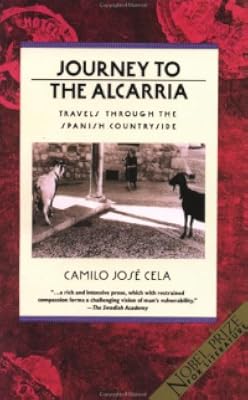
Journey to the Alcarria: Travels Through the Spanish Countryside
by Camilo José Cela
On This Page
Description
Describes author's ten-day vagabond trip afoot through Spain's barren hills of the Alcarria, and the innkeepers, priests, salesmen, friendly peasants, and other acquaintences he made.Tags
Recommendations



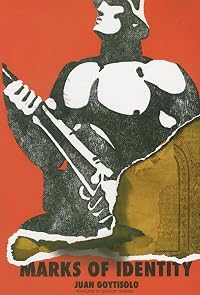
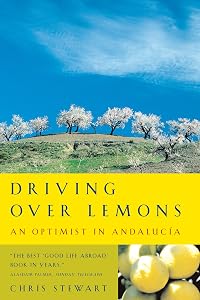

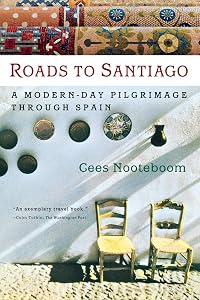
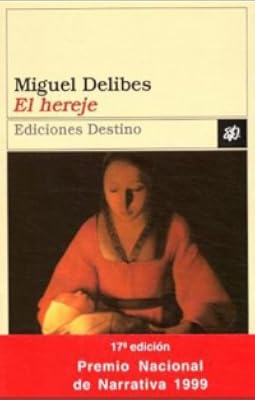


















Member Recommendations

caflores Bajo las descripciones, el cariño del autor por la zona.
Member Reviews
Despite Cela's reputation for literary experimentation and scandalous content, this little book seems to be relatively innocent and straightforward, its only obvious eccentricity being the use of the third person instead of the first person narrative that is usual in travel books: Cela refers to himself throughout as "el viajero" (the traveller). This gives the book a sort of quirky archness, which is irritating at first but soon comes to seem natural. It probably allows him to distance himself a bit further from the story and add a layer of irony. Perhaps it is also meant to remind the reader that a travel book has to be read as a literary construction, not an unfiltered account of a journey.
The book describes a tour Cela made of the show more Alcarria region, to the north-east of Madrid, in 1946, seven years after the end of the civil war. He sets out from Guadalajara and makes his way, mostly on foot, in a big arc, travelling from village to village and staying in the local inns (posadas, paraderos and fondas). Although he comes across a great deal of poverty, neglect, hardship and ignorance, the tone of the book is determinedly upbeat. The traveller wants to tell us about the beauties of the countryside and villages of the region, and about the amazing diversity of the ways people respond to the challenges of living there. The great charm of the book really lies in the traveller's frequently very offbeat dialogues with the characters he meets (shepherds, a slightly deranged tramp, a super-sharp commercial traveller, a monumentally ignorant local antiquary, various innkeepers, ...).
Whether the narrator entirely agrees with the traveller's optimistic view of things is something we have to make our own minds up about. He does tell us directly in his introduction that there are bad things he has suppressed from the text (the village where they mistook him for a wanted criminal and put him in jail overnight), and he drops a few hints about his exasperation with people who are so concerned with lamenting the passing of the golden age that they don't bother to take simple steps to improve their own environments (e.g. by looking after historic buildings). show less
The book describes a tour Cela made of the show more Alcarria region, to the north-east of Madrid, in 1946, seven years after the end of the civil war. He sets out from Guadalajara and makes his way, mostly on foot, in a big arc, travelling from village to village and staying in the local inns (posadas, paraderos and fondas). Although he comes across a great deal of poverty, neglect, hardship and ignorance, the tone of the book is determinedly upbeat. The traveller wants to tell us about the beauties of the countryside and villages of the region, and about the amazing diversity of the ways people respond to the challenges of living there. The great charm of the book really lies in the traveller's frequently very offbeat dialogues with the characters he meets (shepherds, a slightly deranged tramp, a super-sharp commercial traveller, a monumentally ignorant local antiquary, various innkeepers, ...).
Whether the narrator entirely agrees with the traveller's optimistic view of things is something we have to make our own minds up about. He does tell us directly in his introduction that there are bad things he has suppressed from the text (the village where they mistook him for a wanted criminal and put him in jail overnight), and he drops a few hints about his exasperation with people who are so concerned with lamenting the passing of the golden age that they don't bother to take simple steps to improve their own environments (e.g. by looking after historic buildings). show less
In 1946 a man travels from Madrid through the area known as the Alcarria, northeast of the city, in the province of Guadalajara. He travels mostly on foot and describes the towns, people, food, the differences between them, their prejudices, and even their animals. It's a fascinating look at post-civil war Spain at a time when each town had its own distinct personality.
Camilo Jose Cela won the Nobel Prize for Literature for this book. The writing is clear and descriptive, beautiful at times. Red wine is described as "noble as the blood of animals, pungent and ancient as a terrifying family history."
In one town "A few hens are scratching in some heaps of dung. On the front of a house, some well-washed shirts, so stiff and rigid that they show more seem to be made of cardboard, shine like snow."
Well worth reading if you have interest in Spain, travel, or travel writing. show less
Camilo Jose Cela won the Nobel Prize for Literature for this book. The writing is clear and descriptive, beautiful at times. Red wine is described as "noble as the blood of animals, pungent and ancient as a terrifying family history."
In one town "A few hens are scratching in some heaps of dung. On the front of a house, some well-washed shirts, so stiff and rigid that they show more seem to be made of cardboard, shine like snow."
Well worth reading if you have interest in Spain, travel, or travel writing. show less
A sensitive portrayal of provincial Spain. Its people are thoughtful and caring in their physical appearance, psychology, and values. A few days were spent in Alcarria by Camilo José Cela, the undisputed master of the Spanish novel of the twentieth century and the author of The Family of Pascal Duarte and The Hive. His travel sketch has a brilliant sheen to it. It describes a trip to several different parts of the peninsula, such as Cifuentes, Soledad, and Guadalajara. You leave with the impression that you were actually there, taking part in the adventure firsthand. In this translation, it is an enjoyable journey.
The author, who won a Pulitzer later in life, recounts his travels in Spain's Alcarria region. He enjoyed talking to locals or doing things based on opportunity. The tale seemed to be as erratic as his planning for the journey had been. The narrative ended somewhat abruptly although some hints of its near completion appeared in the concluding chapter. The author consistently refers to himself in the third person as "the traveler." The construction seems odd to us now. While more modern forms of transportation existed--and the author did take a bus at one point--the locals mostly seemed to get around by animal-driven carts. I wonder what a modern traveler to the region would find. Perhaps the style appeals more to his original Spanish show more audience, but it lost its appeal through time or translation. Interesting tidbits of local color make it still worth reading, but one must slog through less interesting pieces to get to these gems. show less
Viaje a la Alcarria (Journey to Alcarria) by Camilo Jose Cela
★★★.5
Journey to Alcarria is essentially a travelogue. The protagonist is a traveller (actually Cela himself although he only mentions his name once or twice) who leaves home and travels through Alcarria a largely rural region northeast of Madrid. The book is neither character nor plot driven but rather is like a journal of travels. Readers are given virtually no information about the protagonist (Cela) or his intentions in wandering the countryside, but instead are taken along for the trip. IN 1989 he as awarded the Nobel Prize for literature. Cela wanders from village to village through some beautiful and often desolate land.
Overall, I enjoyed this book despite its show more lack of plot or character development. I felt that Cela really captured the beauty and atmosphere of the countryside. The writing was very descriptive and beautiful. There were some amusing characters encountered along the way and a few moments when I laughed out loud at some of his experiences. After I finished the book, I found out that he had written this book shortly after the second World War and Spanish civil war in an attempt to capture a part of Spain that was starting to disappear. In this context, the book took on additional meaning as there were some interesting commentaries on contrast between city and country, tradition vs. modernity and emerging poverty in suburban and city communities. show less
★★★.5
Journey to Alcarria is essentially a travelogue. The protagonist is a traveller (actually Cela himself although he only mentions his name once or twice) who leaves home and travels through Alcarria a largely rural region northeast of Madrid. The book is neither character nor plot driven but rather is like a journal of travels. Readers are given virtually no information about the protagonist (Cela) or his intentions in wandering the countryside, but instead are taken along for the trip. IN 1989 he as awarded the Nobel Prize for literature. Cela wanders from village to village through some beautiful and often desolate land.
Overall, I enjoyed this book despite its show more lack of plot or character development. I felt that Cela really captured the beauty and atmosphere of the countryside. The writing was very descriptive and beautiful. There were some amusing characters encountered along the way and a few moments when I laughed out loud at some of his experiences. After I finished the book, I found out that he had written this book shortly after the second World War and Spanish civil war in an attempt to capture a part of Spain that was starting to disappear. In this context, the book took on additional meaning as there were some interesting commentaries on contrast between city and country, tradition vs. modernity and emerging poverty in suburban and city communities. show less
A traveller in Nueva Castilla in the '40s. A window into life under Franco, villages and the people in them, the scenery and the observations of the traveller himself.
The traveller does not have a particular journey in mind, rather he follows the trails, often taking the more circuitous route. He seems to prefer chatting with people he meets, from travelling salesmen to old men on their donkeys. He notes the names they have for the people from other villages, all rather picaresque, such as "the Squatters", who sleep squatting so they can get to work quickly. The reception he receives is mixed, though he mentions that a village seems friendlier if you arrive there in the morning, rather than at night. It does seem that life in the show more region hasn't changed for centruries, but at the end there is a glimpse of how their way of life is about to change, in the music the young people are listening to.
The style of the book is simple, following the traveller's journey, all at a leisurely pace. While it was interesting to read about villages at a certain point in time, the traveller merely observed whereas I, as the reader, was hoping for more insight, although there was an episode where he questioned the meaning of some rhetoric that a teacher's "best student" had learnt. I would also like to know more about the traveller, he offers little of himself, and doesn't always tell the truth to those he speaks to. An interesting read, especially as I now live in Spain, but ultimately it left me feeling as if it lacked the right amount of substance. show less
The traveller does not have a particular journey in mind, rather he follows the trails, often taking the more circuitous route. He seems to prefer chatting with people he meets, from travelling salesmen to old men on their donkeys. He notes the names they have for the people from other villages, all rather picaresque, such as "the Squatters", who sleep squatting so they can get to work quickly. The reception he receives is mixed, though he mentions that a village seems friendlier if you arrive there in the morning, rather than at night. It does seem that life in the show more region hasn't changed for centruries, but at the end there is a glimpse of how their way of life is about to change, in the music the young people are listening to.
The style of the book is simple, following the traveller's journey, all at a leisurely pace. While it was interesting to read about villages at a certain point in time, the traveller merely observed whereas I, as the reader, was hoping for more insight, although there was an episode where he questioned the meaning of some rhetoric that a teacher's "best student" had learnt. I would also like to know more about the traveller, he offers little of himself, and doesn't always tell the truth to those he speaks to. An interesting read, especially as I now live in Spain, but ultimately it left me feeling as if it lacked the right amount of substance. show less
Viaje a la Alcarria
Camilo José Cela
Publicado: 1946 | 126 páginas
Crónica Viajes
Serie: Áncora & Delfín #101 /sl6aQAUlz_G4
El famoso relato de Camilo José Cela, es una obra consagrada de la literatura española que, dentro de una aparente simplicidad, encierra una gran sabiduría formal. La sencillez de Viaje a la Alcarria es resultado de un difícil ejercicio de depuración formal y su amenidad es el acceso a un mundo de gran hondura lírica. La pureza de empleo del idioma, lo ha convertido en libro de texto en muchas universidades extranjeras y no sólo ha servido para el estudio del idioma castellano sino también de la fisonomía de la España rural de la posguerra.La narración en tercera persona diferencia a este texto del tono show more tradicional de los relatos de viajes, en que siempre habla el protagonista.Una indagación que pretenda no dejar desperdicio, encontrará que el Viaje a la Alcarria es una novela de aventuras. Al menos, rastreará en sus páginas lo dos elementos más característicos de ellas: el exotismo y el riesgo. Nada más singular que el escenario primitivo por donde transcurre el relato y en donde el viajero encuentra las situaciones más comprometidas. Pasa hambre en el camino, duerme al raso, desciende con peligro de deslomarse por el barranco de Trascastillo en Durón, es atacado en Tendilla por perros y gansos, sube a Casasana por vericuetos ásperos, en la senda por las Tetas de Viana encuentra los vestigios de un crimen, sufre prisión en Budia, le echan de Pareja a las voces de «Usted coge su morral y se va. ¡Como hay Dios…!» Nuestro aventurero también irá registrando con su corazón el hallazgo de mozas, criadas y señoritas que aparecen en su camino por la Alcarria. show less
Camilo José Cela
Publicado: 1946 | 126 páginas
Crónica Viajes
Serie: Áncora & Delfín #101 /sl6aQAUlz_G4
El famoso relato de Camilo José Cela, es una obra consagrada de la literatura española que, dentro de una aparente simplicidad, encierra una gran sabiduría formal. La sencillez de Viaje a la Alcarria es resultado de un difícil ejercicio de depuración formal y su amenidad es el acceso a un mundo de gran hondura lírica. La pureza de empleo del idioma, lo ha convertido en libro de texto en muchas universidades extranjeras y no sólo ha servido para el estudio del idioma castellano sino también de la fisonomía de la España rural de la posguerra.La narración en tercera persona diferencia a este texto del tono show more tradicional de los relatos de viajes, en que siempre habla el protagonista.Una indagación que pretenda no dejar desperdicio, encontrará que el Viaje a la Alcarria es una novela de aventuras. Al menos, rastreará en sus páginas lo dos elementos más característicos de ellas: el exotismo y el riesgo. Nada más singular que el escenario primitivo por donde transcurre el relato y en donde el viajero encuentra las situaciones más comprometidas. Pasa hambre en el camino, duerme al raso, desciende con peligro de deslomarse por el barranco de Trascastillo en Durón, es atacado en Tendilla por perros y gansos, sube a Casasana por vericuetos ásperos, en la senda por las Tetas de Viana encuentra los vestigios de un crimen, sufre prisión en Budia, le echan de Pareja a las voces de «Usted coge su morral y se va. ¡Como hay Dios…!» Nuestro aventurero también irá registrando con su corazón el hallazgo de mozas, criadas y señoritas que aparecen en su camino por la Alcarria. show less
Members
- Recently Added By
Lists

Best Literary Walks
35 works; 7 members

My TBR
371 works; 3 members

Philip Ward's Lifetime Reading Plan
592 works; 22 members

Non-Fiction Worth Reading
1,025 works; 264 members

Best Travel Writing - Non-Fiction
110 works; 6 members
Author Information

205+ Works 7,619 Members
Camilo José Cela was born on May 11, 1916 in Iria Flavia, Spain. He attended the University of Madrid before and after the Spanish Civil War, during which he served with Franco's army. His first novel, La Familia de Pascual Duarte (The Family of Pascual Duarte), was published in 1942. He primarily wrote novels, short narratives, and travel show more diaries. His works include Journey to the Alcarria, The Hive, and Mrs. Caldwell Speaks to Her Son. He won the Nobel Prize for Literature in 1989. He died on January 17, 2002. (Bowker Author Biography) show less
Awards and Honors
Series
Belongs to Publisher Series
Common Knowledge
- Canonical title
- Journey to the Alcarria: Travels Through the Spanish Countryside
- Original title
- Viaje a la Alcarria
- Original publication date
- 1948 (original Spanish) (original Spanish); 1964 (English) (English)
- People/Characters
- The traveler
- Important places
- La Alcarria, Castile-La Mancha, Spain
- Epigraph
- To him who in the love of nature holds
Communion with her visible forms, she speaks
A various language
- William Cullen Bryant - First words
- The traveler is is sprawled, face up, on a chaise lounge covered in cretonne.
- Last words
- (Click to show. Warning: May contain spoilers.)Don Monico, Don Paco, and the traveler go into the club to have a vermouth and some olives stuffed with anchovies...
Classifications
- Genres
- Travel, Nonfiction
- DDC/MDS
- 914.6 — History & geography Geography & travel Geography of and travel in Europe Spain, Andorra, Gibraltar, Portugal
- LCC
- DP302 .L13 .C4 — History of Europe, Asia, Africa and Oceania Spain – Portugal History of Spain Local history and description Provinces, regions, ets., A-Z
- BISAC
Statistics
- Members
- 529
- Popularity
- 56,768
- Reviews
- 23
- Rating
- (3.43)
- Languages
- English, French, Spanish, Swedish
- Media
- Paper, Ebook
- ISBNs
- 27
- ASINs
- 14