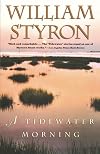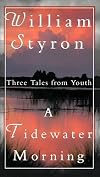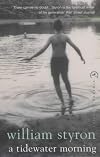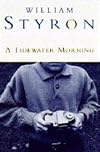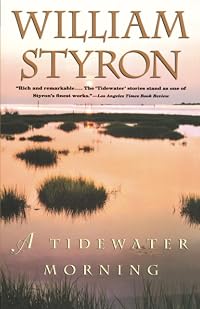
A Tidewater Morning: Three Tales from Youth
by William Styron
On This Page
Description
In this brilliant collection of "long short stories, " the Pulitzer Prize-winning author of Sophie's Choice returns to the coastal Virginia setting of his first novels. Through the eyes of a man recollecting three episodes from his youth, William Styron explores with new eloquence death, loss, war, and racism.Tags
Recommendations
















Member Reviews
I was very disappointed in this loosely tied group of three stories. Perhaps part of my disappointment was tied to the fact that I have recently read a collection of similar structure written by Wendell Berry, and those were so marvelous that I could not leave them behind. The comparison was impossible to avoid.
Styron’s collection is coarse and his characters are difficult to engage with. It is set in the Tidewater of Virginia, which is home to me now, and I expected to feel connected from at least that point of view, but his opening story takes place in Europe during WWII, and neither of the other two felt part of the places I know, even though the names were there.
The second story, Shadrach, which is the best of the three, deals show more with a ninety-nine year old former slave returning, in the 1930s, wishing to be buried on the land where he was held in slavery as a child. The idea seemed too far-fetched to be believable, the reactions of the people involved were unrealistic, and the racial overtones were hard to overlook, despite an effort to put them into their time context.
All in all, I would say Styron missed the mark with this collection. I truly loved Sophie’s Choice, so I will probably still tackle the two Styron’s I have left on my list, but I am hoping to find they have little or nothing in common with this failed effort. show less
Styron’s collection is coarse and his characters are difficult to engage with. It is set in the Tidewater of Virginia, which is home to me now, and I expected to feel connected from at least that point of view, but his opening story takes place in Europe during WWII, and neither of the other two felt part of the places I know, even though the names were there.
The second story, Shadrach, which is the best of the three, deals show more with a ninety-nine year old former slave returning, in the 1930s, wishing to be buried on the land where he was held in slavery as a child. The idea seemed too far-fetched to be believable, the reactions of the people involved were unrealistic, and the racial overtones were hard to overlook, despite an effort to put them into their time context.
All in all, I would say Styron missed the mark with this collection. I truly loved Sophie’s Choice, so I will probably still tackle the two Styron’s I have left on my list, but I am hoping to find they have little or nothing in common with this failed effort. show less
Styron is simply a beautiful writer. Every word is used as if it’s his last and must not be squandered. He strips his characters back to the bones and forces you to feel the sting of life and death and what that means in each case through seemingly innocent and inconsequential anecdotes.
This is such a beautiful novella in three parts, and felt much like a conversation with a man, learning about a few of the most poignant times of his life. There is something incredibly real and soothing about Styron's words. He is not particularly flashy or overtly skillful/technical, but just a really great storyteller. I enjoyed each story equally. I will seek out other works by William Styron. Highly recommended.
Few American authors write is such a stylized fashion. Styron is a "wordsmith" - so lyrical and descriptive. These three short stories are written from the perspective of a young man/boy a three critically different periods in his life. The themes of race, class, religion, approaching adulthood, puberty, even life & death swirl through the pages. I do not know enough about the author to have a grasp of his personal beliefs but imagine these stories give a rather wide open glimpse into elements that helped him form his personal creed.
Review of: A Tidewater Morning, by William Styron
by Stan Prager (4-25-21)
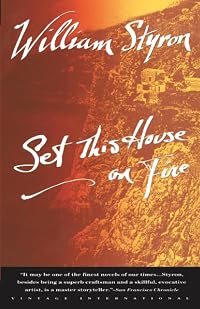
In April 1962, President John F. Kennedy hosted a remarkable dinner for more than four dozen Nobel Prize winners and assorted other luminaries drawn from the top echelons of the arts and sciences. With his characteristic wit, JFK pronounced it “The most extraordinary collection of talent, of human knowledge, that has ever been gathered together at the White House with the possible exception of when Thomas Jefferson dined alone.” One of the least prominent guests that evening was the novelist William Styron, who attended with his wife Rose, and recalled his surprise at the invitation. Styron was not yet then the critically-acclaimed, Pulitzer Prize-winning show more literary icon he was to later become, but he was hardly an unknown figure, and it turns out that his most recent novel of American expatriates, Set This House on Fire, was the talk of the White House in the weeks leading up to the event. So he had the good fortune to dine not only with the President and First Lady, but with the likes of John Glenn, Linus Pauling, and Pearl Buck—and in the after-party forged a long-term intimate relationship with the Kennedy family.
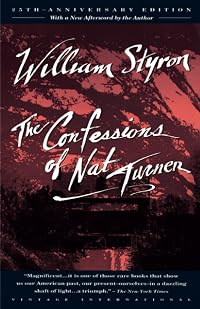
My first Styron was The Confessions of Nat Turner, which I read as a teen. Its merits somewhat unfairly subsumed at the time by the controversy it sparked over race and remembrance, it remains a notable achievement, as well as a reminder that literature is not synonymous with history, nor should it be held to that account. I found Set This House on Fire largely forgettable, but as an undergrad was utterly blown away when I read Lie Down in Darkness, his first novel and a true masterpiece that while yet indisputably original clearly evoked the Faulknerian southern gothic. I went on to read anything by the author I could get my hands on. Also a creature of controversy upon publication, Sophie’s Choice, winner of the National Book Award for Fiction in 1980, remains in my opinion one of the finest novels of the twentieth century.
I thought I had read all of Styron’s fiction, so it was with certain surprise that I learned from a friend who is both author and bibliophile of the existence of A Tidewater Morning, a collection of three novellas I had somehow overlooked. I bought the book immediately, and packed it to take along for a pandemic retreat to a Vermont cabin in the woods where I read it through in the course of the first day and a half of the getaway, parked in a comfortable chair on the porch sipping hot coffee in the morning and cold beer in late afternoon. Perhaps it was the fact that this was our first breakaway from months of quarantine isolation, or maybe it was the alcohol content of the IPA I was tossing down, but there was definitely a palpable emotional tug for me reading Styron again—works previously unknown to me no less—so many decades after my last encounter with his work, back when I was a much younger man than the one turning these pages. The effect was more pronounced, I suppose, because the semi-autobiographical stories in this collection look back to Styron’s own youth in the Virginia Tidewater in the 1930s and were written when he too was a much older man.
“Love Day,” the first tale of the collection, has him as a young Marine in April 1945 yet untested in combat, awaiting orders to join the invasion of Okinawa and wrestling the ambivalence of chasing heroic destiny while privately entertaining “gut-heaving frights.” There’s much banter among the men awaiting their fate, but the story of real significance is told through flashbacks to an episode some years prior, he still a boy in the back seat of his father’s Oldsmobile, broken down on the side of the road. War is looming—the very war he is about to join—although it was far from certain then, but the catastrophe of an unprepared America overrun by barbaric Japanese invaders is the near-future imagined in the Saturday Evening Post piece the boy is reading in the back of the stalled car. Simmering tempers flare when he lends voice to the prediction. His mother, stoic in her leg brace, slowly dying of a cancer known to all but unacknowledged, had earlier furiously rebuked him for mouthing a racist epithet and now upbraided him again for characterizing the Japanese as “slimy butchers,” while belittling the notion of a forthcoming war. Unexpectedly, his father—a mild, highly-educated man quietly raging at his own inability to effect a simple car repair—lashes out at his wife, branding her “idiotic” and “a fool” for her naïve idealism, then crumbles under the weight of his words to beg her forgiveness. It is a dramatic snapshot not only of a moment of a family in turmoil, but of a time and a place that has long faded from view. Only Styron’s talent with a pen could leave us with so much from what is after only a few pages.
The third story is the title tale, “A Tidewater Morning,” which revisits the family to follow his mother’s final, agonizing days. It concludes with both the boy and his father experiencing twin if unrelated epiphanies. It’s a good read, but I found it a bit overwrought, lacking the subtlety characteristic of Styron’s prose.
Sandwiched between these two is my own favorite, “Shadrach,” the story of a 99-year-old former slave—sold away to an Alabama plantation in antebellum days—who shows up unpredictably with the dying wish to be buried in the soil of the Dabney property where he was born. The problem is that the Dabney descendant currently living there is a struggling, dirt-poor fellow who could be a literary cousin of one of the Snopes often resident in Faulkner novels. The law prohibits interring a black man on his property, and he likewise lacks the means to afford to bury him elsewhere. On the surface, “Shadrach” appears to be a simple story, but on closer scrutiny reveals itself to be a very complex one peopled with multidimensional characters and layered with vigorous doses of both comedy and tragedy.
I highly recommend Styron to those who have not yet read him. For the uninitiated, (spoiler alert!) I will close this review with a worthy passage:
“Death ain’t nothin’ to be afraid about,” he blurted in a quick, choked voice … "Life is where you’ve got to be terrified!” he cried as the unplugged rage spilled forth. … Where in the goddamned hell am I goin’ to get the money to put him in the ground? … I ain’t got thirty-five-dollars! I ain’t got twenty-five dollars! I ain’t got five dollars!” … “And one other thing!” He stopped. Then suddenly his fury—or the harsher, wilder part of it—seemed to evaporate, sucked up into the moonlit night with its soft summery cricketing sounds and its scent of warm loam and honeysuckle. For an instant he looked shrunken, runtier than ever, so light and frail that he might blow away like a leaf, and he ran a nervous, trembling hand through his shock of tangled black hair. “I know, I know,” he said in a faint, unsteady voice edged with grief. “Poor old man, he couldn’t help it. He was a decent, pitiful old thing, probably never done anybody the slightest harm. I ain’t got a thing in the world against Shadrach. Poor old man.” …
“And anyway,” Trixie said, touching her husband’s hand, “he died on Dabney ground like he wanted to. Even if he’s got to be put away in a strange graveyard.”
“Well, he won’t know the difference,” said Mr. Dabney. “When you’re dead nobody knows the difference. Death ain’t much.” [p76-78]
NOTE: To learn more about JFK’s Nobel Dinner, check out my review of this outstanding book, which contains a foreword by Rose Styron: Dinner in Camelot: The Night America’s Greatest Scientists, Writers, and Scholars Partied at the Kennedy White House, by Joseph A. Esposito https://regarp.com/2018/11/18/review-of-dinner-in-camelot-the-night-americas-gre...
Review of: A Tidewater Morning, by William Styron https://regarp.com/2021/04/25/review-of-a-tidewater-morning-by-william-styron/
PODCAST: https://www.podbean.com/ew/pb-quvn5-101ad6d show less
by Stan Prager (4-25-21)
In April 1962, President John F. Kennedy hosted a remarkable dinner for more than four dozen Nobel Prize winners and assorted other luminaries drawn from the top echelons of the arts and sciences. With his characteristic wit, JFK pronounced it “The most extraordinary collection of talent, of human knowledge, that has ever been gathered together at the White House with the possible exception of when Thomas Jefferson dined alone.” One of the least prominent guests that evening was the novelist William Styron, who attended with his wife Rose, and recalled his surprise at the invitation. Styron was not yet then the critically-acclaimed, Pulitzer Prize-winning show more literary icon he was to later become, but he was hardly an unknown figure, and it turns out that his most recent novel of American expatriates, Set This House on Fire, was the talk of the White House in the weeks leading up to the event. So he had the good fortune to dine not only with the President and First Lady, but with the likes of John Glenn, Linus Pauling, and Pearl Buck—and in the after-party forged a long-term intimate relationship with the Kennedy family.
My first Styron was The Confessions of Nat Turner, which I read as a teen. Its merits somewhat unfairly subsumed at the time by the controversy it sparked over race and remembrance, it remains a notable achievement, as well as a reminder that literature is not synonymous with history, nor should it be held to that account. I found Set This House on Fire largely forgettable, but as an undergrad was utterly blown away when I read Lie Down in Darkness, his first novel and a true masterpiece that while yet indisputably original clearly evoked the Faulknerian southern gothic. I went on to read anything by the author I could get my hands on. Also a creature of controversy upon publication, Sophie’s Choice, winner of the National Book Award for Fiction in 1980, remains in my opinion one of the finest novels of the twentieth century.
I thought I had read all of Styron’s fiction, so it was with certain surprise that I learned from a friend who is both author and bibliophile of the existence of A Tidewater Morning, a collection of three novellas I had somehow overlooked. I bought the book immediately, and packed it to take along for a pandemic retreat to a Vermont cabin in the woods where I read it through in the course of the first day and a half of the getaway, parked in a comfortable chair on the porch sipping hot coffee in the morning and cold beer in late afternoon. Perhaps it was the fact that this was our first breakaway from months of quarantine isolation, or maybe it was the alcohol content of the IPA I was tossing down, but there was definitely a palpable emotional tug for me reading Styron again—works previously unknown to me no less—so many decades after my last encounter with his work, back when I was a much younger man than the one turning these pages. The effect was more pronounced, I suppose, because the semi-autobiographical stories in this collection look back to Styron’s own youth in the Virginia Tidewater in the 1930s and were written when he too was a much older man.
“Love Day,” the first tale of the collection, has him as a young Marine in April 1945 yet untested in combat, awaiting orders to join the invasion of Okinawa and wrestling the ambivalence of chasing heroic destiny while privately entertaining “gut-heaving frights.” There’s much banter among the men awaiting their fate, but the story of real significance is told through flashbacks to an episode some years prior, he still a boy in the back seat of his father’s Oldsmobile, broken down on the side of the road. War is looming—the very war he is about to join—although it was far from certain then, but the catastrophe of an unprepared America overrun by barbaric Japanese invaders is the near-future imagined in the Saturday Evening Post piece the boy is reading in the back of the stalled car. Simmering tempers flare when he lends voice to the prediction. His mother, stoic in her leg brace, slowly dying of a cancer known to all but unacknowledged, had earlier furiously rebuked him for mouthing a racist epithet and now upbraided him again for characterizing the Japanese as “slimy butchers,” while belittling the notion of a forthcoming war. Unexpectedly, his father—a mild, highly-educated man quietly raging at his own inability to effect a simple car repair—lashes out at his wife, branding her “idiotic” and “a fool” for her naïve idealism, then crumbles under the weight of his words to beg her forgiveness. It is a dramatic snapshot not only of a moment of a family in turmoil, but of a time and a place that has long faded from view. Only Styron’s talent with a pen could leave us with so much from what is after only a few pages.
The third story is the title tale, “A Tidewater Morning,” which revisits the family to follow his mother’s final, agonizing days. It concludes with both the boy and his father experiencing twin if unrelated epiphanies. It’s a good read, but I found it a bit overwrought, lacking the subtlety characteristic of Styron’s prose.
Sandwiched between these two is my own favorite, “Shadrach,” the story of a 99-year-old former slave—sold away to an Alabama plantation in antebellum days—who shows up unpredictably with the dying wish to be buried in the soil of the Dabney property where he was born. The problem is that the Dabney descendant currently living there is a struggling, dirt-poor fellow who could be a literary cousin of one of the Snopes often resident in Faulkner novels. The law prohibits interring a black man on his property, and he likewise lacks the means to afford to bury him elsewhere. On the surface, “Shadrach” appears to be a simple story, but on closer scrutiny reveals itself to be a very complex one peopled with multidimensional characters and layered with vigorous doses of both comedy and tragedy.
I highly recommend Styron to those who have not yet read him. For the uninitiated, (spoiler alert!) I will close this review with a worthy passage:
“Death ain’t nothin’ to be afraid about,” he blurted in a quick, choked voice … "Life is where you’ve got to be terrified!” he cried as the unplugged rage spilled forth. … Where in the goddamned hell am I goin’ to get the money to put him in the ground? … I ain’t got thirty-five-dollars! I ain’t got twenty-five dollars! I ain’t got five dollars!” … “And one other thing!” He stopped. Then suddenly his fury—or the harsher, wilder part of it—seemed to evaporate, sucked up into the moonlit night with its soft summery cricketing sounds and its scent of warm loam and honeysuckle. For an instant he looked shrunken, runtier than ever, so light and frail that he might blow away like a leaf, and he ran a nervous, trembling hand through his shock of tangled black hair. “I know, I know,” he said in a faint, unsteady voice edged with grief. “Poor old man, he couldn’t help it. He was a decent, pitiful old thing, probably never done anybody the slightest harm. I ain’t got a thing in the world against Shadrach. Poor old man.” …
“And anyway,” Trixie said, touching her husband’s hand, “he died on Dabney ground like he wanted to. Even if he’s got to be put away in a strange graveyard.”
“Well, he won’t know the difference,” said Mr. Dabney. “When you’re dead nobody knows the difference. Death ain’t much.” [p76-78]
NOTE: To learn more about JFK’s Nobel Dinner, check out my review of this outstanding book, which contains a foreword by Rose Styron: Dinner in Camelot: The Night America’s Greatest Scientists, Writers, and Scholars Partied at the Kennedy White House, by Joseph A. Esposito https://regarp.com/2018/11/18/review-of-dinner-in-camelot-the-night-americas-gre...
Review of: A Tidewater Morning, by William Styron https://regarp.com/2021/04/25/review-of-a-tidewater-morning-by-william-styron/
PODCAST: https://www.podbean.com/ew/pb-quvn5-101ad6d show less
Three long short stories make up this roughly 150-page book. All feature Styron's alter ego Paul Whitehurst; in each, Paul is a different age. In the first story, he's a young Marine, trapped aboard a troopship that's headed to Okinawa; the thousands on board are destined for an amphibious assault. But there's a rumor circulating that the ship is part of a diversion force to mislead the Japanese about the exact location of the assault. As the men talk—what else is their to do?—they slowly sort out their feelings of disappointment and relief.
The second story, "Shadrack" tells of an ancient Negro who appears at the ramshackle house sheltering the family of 10-year-old Paul's best friend, Little Mole Dabney. The Dabneys are a family of show more nine—Vernon and Trixie and their boys Big Mole, Middle Mole, and Little Mole (ah, you have to read the story) and four girls As the story plays out, we learn who this man is, why he's there, and a good deal more about the Dabney family. And some Tidewater Virginia history.
The third story, set only two years after the second, depicts the protracted, painful death of Paul's mother. Cancer. show less
The second story, "Shadrack" tells of an ancient Negro who appears at the ramshackle house sheltering the family of 10-year-old Paul's best friend, Little Mole Dabney. The Dabneys are a family of show more nine—Vernon and Trixie and their boys Big Mole, Middle Mole, and Little Mole (ah, you have to read the story) and four girls As the story plays out, we learn who this man is, why he's there, and a good deal more about the Dabney family. And some Tidewater Virginia history.
The third story, set only two years after the second, depicts the protracted, painful death of Paul's mother. Cancer. show less
I often find that one book leads me to another. In "Taken on Trust" Terry Waite had savoured every word of "Set This House on Fire" whilst being held hostage.
I was therefore keen to try this author and was able to obtain "A Tidewater Morning" from the library.
Styron was a pre-eminent American author, who seemed to me as eloquent as a modern day Shakespeare. Tidewater was the sort of classic book I would have studied at school, rather than necessarily something I would read for enjoyment. It consists of several short stories. He deals with some very difficult and disturbing subjects with beautifully expressed prose. Unfortunately I found it too disturbing and by the time I reached the third story, I found it too hard to continue and show more reluctantly gave up. show less
I was therefore keen to try this author and was able to obtain "A Tidewater Morning" from the library.
Styron was a pre-eminent American author, who seemed to me as eloquent as a modern day Shakespeare. Tidewater was the sort of classic book I would have studied at school, rather than necessarily something I would read for enjoyment. It consists of several short stories. He deals with some very difficult and disturbing subjects with beautifully expressed prose. Unfortunately I found it too disturbing and by the time I reached the third story, I found it too hard to continue and show more reluctantly gave up. show less
Members
- Recently Added By
Lists

Books Read in 2021
5,361 works; 114 members
Author Information

41+ Works 16,049 Members
William Clark Styron was born in Newport News, Virginia on June 11, 1925. He attended Duke University and took courses at the New School for Social Research in New York City, which started him on his writing career. He was a Marine lieutenant during World War II and while serving during the Korean War, was recalled from active duty because of show more faulty eyesight. After leaving the service, he helped start a magazine called the Paris Review and remained as an advisory editor. His first novel, Lie Down in Darkness, was published in 1951. His other books include The Long March and Set This House on Fire. He won several awards including the Pulitzer Prize for The Confessions of Nat Turner and the American Book Award for Sophie's Choice, which was made into a movie in 1982. His short story, A Tidewater Morning, was the basis for the movie Shadrach, which Styron wrote the screenplay for with his daughter. He also wrote several nonfiction books including The Quiet Dust and Other Writings and Darkness Visible: A Memoir of Madness. He died on November 1, 2006 at the age of 81. (Bowker Author Biography) show less
Some Editions
Series
Belongs to Publisher Series
Work Relationships
Common Knowledge
- Canonical title
- A Tidewater Morning: Three Tales from Youth
- Original title
- A Tidewater Morning
- Original publication date
- 1993
- Important places
- Virginia, USA
- Important events
- World War II
- Dedication
- To Carlos Fuentes
- First words
- Love day: On April Fool's Day, 1945 (which was also Easter Sunday), the Second Marine Division, in which Doug Stiles and I were platoon leaders, made an assault on the southeast coast of Okinawa.
Shadrach: My tenth summer on earth, in the year 1935, will never leave my mind because of Shadrach and the way he brightened and darkened my life then and thereafter.
A Tidewater morning: During the late summer of 1938, there was black news of the onrushing war. - Last words
- (Click to show. Warning: May contain spoilers.)Love day: ..., and kept murmuring to myself with rhythmic fatuity: you love the Marine Corps, it's a terrific war, you love the Marine Corps, it's a terrific war...
(Click to show. Warning: May contain spoilers.)Shadrach: Death ain't much.
(Click to show. Warning: May contain spoilers.)A Tidewater morning: And there, floating abreast of the immortal musicians, I was able to gaze down impassively on the grieving father and the boy pinioned in his arms. - Original language*
- Amerikanisch
*Some information comes from Common Knowledge in other languages. Click "Edit" for more information.
Classifications
Statistics
- Members
- 666
- Popularity
- 43,108
- Reviews
- 9
- Rating
- (3.79)
- Languages
- 8 — Czech, Danish, Dutch, English, French, Italian, Spanish, Swedish
- Media
- Paper, Ebook
- ISBNs
- 22
- ASINs
- 5