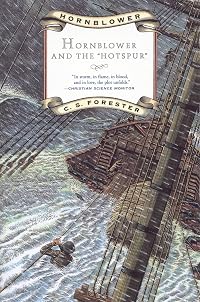
Hornblower and the Hotspur
by C. S. Forester
Horatio Hornblower (3), Horatio Hornblower: Chronological Order (3)
On This Page
Description
Only twenty-seven years old, Horatio Hornblower has distinguished himself as a capable and intrepid officer in the Royal Navy. On a reconnaissance mission with the Hotspur, a three-masted frigate under his command, Hornblower and his crew narrowly avoid capture by their French adversaries, but the danger is not over. In the meantime, misgivings about his recent marriage also weigh heavily on the young officer's mind. In this 10th novel of the Hornblower series, C.S. Forester depicts another show more rousing adventure set during the Napoleonic wars. show lessTags
Recommendations









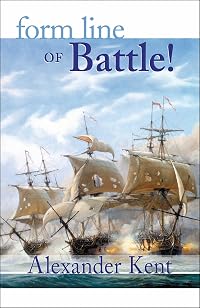

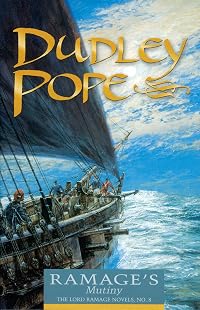
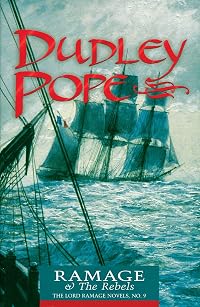

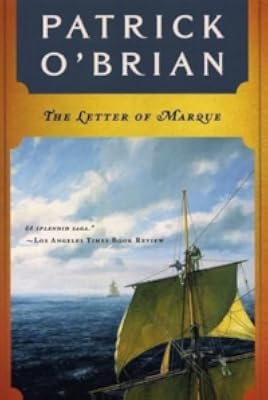



Member Reviews
This entry in the series teeters on three stars entirely due to the agonies of Hornblower's mésalliance. Any mention of Maria brought the energy and momentum of the story to a crashing halt, not least because it is impossible to either respect or pity Hornblower when confronted with his behavior and attitude toward her. I'm sincerely hoping there is much, much less of his domestic drama in the following books...or that Maria does the sensible thing and leaves him for a doting swain bound for America.
Hornblower may be even more miserable in this book than in some others. He is a mere commander with no realistic hope of promotion, so his pay is meager and his vessel is small. Poverty and seasickness are a constant trouble for him. In spite of all this, he plans and carries out many audacious and technically interesting actions appropriate for a commander of a sloop-of-war. As always, he exposes himself to danger frequently because he cannot be confident that any of his subordinates will do the job correctly. The absolute discipline of the Royal Navy and the necessity for any able officer to offer suggestions and even to contradict his superior provide an interesting tension as does the conflict between Hornblower's essential humanity show more and the harsh discipline of the navy.
As with other books, Hornblower's misery and self-contempt are a recurrent motif employed for comic effect. At the same time they are realistic enough to excite empathy and provide a kind of catharsis to equally neurotic readers, even those who don't have to deal with French frigates firing at close range into the delicate vessel under their command. show less
As with other books, Hornblower's misery and self-contempt are a recurrent motif employed for comic effect. At the same time they are realistic enough to excite empathy and provide a kind of catharsis to equally neurotic readers, even those who don't have to deal with French frigates firing at close range into the delicate vessel under their command. show less
I think this could be the best Hornblower novel: I only discovered recently that it was the last complete Hornblower that Forester wrote. There's a lot of action and variety and the description of life at sea has moved up a gear from Lieutenant Hornblower. The description of the storm in chapter 13 (was Forester superstitious) is particularly vivid and stirring. Hornblower's character is developed in this story through his interactions with his wife Maria and his steward Doughty as well as Bush of course. The incident with the howitzer shell may well be the most memorable incident in the whole of the Hornblower series. This story never flags for a moment.
This is the last completed Hornblower novel by publication order. Something I didn't realize before doing this readthrough is that Forester jumps around within his flashback stories; I thought that having gone backward, Forester works his way forward again. But he doesn't. Hornblower and the Atropos pretty much leads straight into Beat to Quarters, so to get another prequel adventure in, Forester jumps backward yet again, filling a not-quite-extant gap between Lieutenant and Atropos. He disregards his own continuity to do so, as having Bush as Hornblower's first lieutenant prior to Beat to Quarters really pushes the bounds of plausibility. It's also kind of odd to have Hornblower deal with an inconsequential act of insubordination show more immediately after a similar incident in Admiral Hornblower in the West Indies, and the solution he chooses here doesn't entirely mesh with the one there. Also also Hornblower knows French in this book, but in the original trilogy he knew Spanish but not French, which he only learned in Flying Colours.
But who cares when the result is as good as this? Unlike Atropos, this installment is highly focused, chronicling two years on the Channel blockade, two years where Hornblower distinguishes himself in action, but never manages to win any prize money. His financial and romantic and career fortunes are the threads that tie the novel together as we follow him from escapade to escapade. The incident with the treasure fleet is a particular highlight, and I will always remember where I was the first time I read the chapter where Hornblower is served a delectable feast by an admiral (on a transatlantic flight, eating much less delectable food), lavishly described by Forester. This isn't the best Hornblower book, but it's a solid outing of naval adventure, for the final time.
I've read the incomplete Hornblower during the Crisis before, and it's a curio, worth reading once but not worth rereading, so this will be my last Hornblower book. It's nice that Hornblower's last outing is a good one, and that it takes place in the middle of his career, and that it includes Bush. We don't end with and old man and/or a dead one, but two of the greatest sailors of fiction, in action. One can imagine Hornblower and Bush out there sailing, forever. show less
But who cares when the result is as good as this? Unlike Atropos, this installment is highly focused, chronicling two years on the Channel blockade, two years where Hornblower distinguishes himself in action, but never manages to win any prize money. His financial and romantic and career fortunes are the threads that tie the novel together as we follow him from escapade to escapade. The incident with the treasure fleet is a particular highlight, and I will always remember where I was the first time I read the chapter where Hornblower is served a delectable feast by an admiral (on a transatlantic flight, eating much less delectable food), lavishly described by Forester. This isn't the best Hornblower book, but it's a solid outing of naval adventure, for the final time.
I've read the incomplete Hornblower during the Crisis before, and it's a curio, worth reading once but not worth rereading, so this will be my last Hornblower book. It's nice that Hornblower's last outing is a good one, and that it takes place in the middle of his career, and that it includes Bush. We don't end with and old man and/or a dead one, but two of the greatest sailors of fiction, in action. One can imagine Hornblower and Bush out there sailing, forever. show less
This third installment in the Horatio Hornblower series shares the same good and bad points as its predecessors.
Hornblower is promoted to Commodore as war with France is imminent. He is called to duty with his own sloop to command, leaving his new bride behind.
The book is rich with gripping descriptions of sea battles and Hornblower's keen grasp of things nautical. I always enjoy these books mainly for the adventure involved.
On the downside, however, one has to deal with Hornblower himself. From the beginning, the hero has been full of contempt for himself and self-recrimination for any real or imagined lapse in judgment. His constant disgust with himself and his 'atoning' for his faults by refusing to acknowledge deeds likely to put show more him in line for advancement grow harder and harder to take. I am heartily sick of Hornblower's constant fault-finding with himself because he is not omniscient and because he exhibits human failings.
However, I enjoy the series despite the hero. He really is brilliant in the nautical sense, and as long as he is occupied with naval matters, he is vastly interesting (and quite tolerable).
Definitely worth a read if you are at all in to Navy books. show less
Hornblower is promoted to Commodore as war with France is imminent. He is called to duty with his own sloop to command, leaving his new bride behind.
The book is rich with gripping descriptions of sea battles and Hornblower's keen grasp of things nautical. I always enjoy these books mainly for the adventure involved.
On the downside, however, one has to deal with Hornblower himself. From the beginning, the hero has been full of contempt for himself and self-recrimination for any real or imagined lapse in judgment. His constant disgust with himself and his 'atoning' for his faults by refusing to acknowledge deeds likely to put show more him in line for advancement grow harder and harder to take. I am heartily sick of Hornblower's constant fault-finding with himself because he is not omniscient and because he exhibits human failings.
However, I enjoy the series despite the hero. He really is brilliant in the nautical sense, and as long as he is occupied with naval matters, he is vastly interesting (and quite tolerable).
Definitely worth a read if you are at all in to Navy books. show less
The Horatio Hornblower novels keep getting better and better and “Hornblower and the ‘Hotspur’” is no exception. C.S. Forester takes the trials and tribulations of naval men in early 19th century England and bestows upon them vim, vigor and a joie de vivre seldom seen -to this extent- within this genre. Mr. Forester’s indefatigable hero Hornblower is the model for so many historical fiction novel heroes, that it is sometimes hard to tell where Horatio –Horry– ends and the next fretful obstinate hero begins. Filled with thrills and adventure “Hornblower and the ‘Hotspur’” was a delight to read and I am more than anxiously awaiting the next tale.
What I liked about the book:
The character of hornblower: is quite interesting as adventure heroes go. I found myself reflecting from time to time on his extreme and sometimes bipolar characteristics.
Naval manuevers: to the extent a land lubber like me could appreciate this sort of thing I found his descriptions of naval manuevers and Hornblowers ingenuity to be very engaging, page-turny sort of stuff. I recently read "The Perfect Storm" and some of the maritime concepts seemed to carry over (which I guess is a good thing given that previous book is roughly nonfiction).
What I thought could have been improved:
I would have appreciated a glossary of naval terms and explanations of certain maritime assumptions, as a lot of stuff is taken show more for granted. I tended to dip into wikipedia a bit as I read which certainly enhanced my enjoyment of the material.
Overall: Slow sea battles are made gripping by the well executed writing. show less
The character of hornblower: is quite interesting as adventure heroes go. I found myself reflecting from time to time on his extreme and sometimes bipolar characteristics.
Naval manuevers: to the extent a land lubber like me could appreciate this sort of thing I found his descriptions of naval manuevers and Hornblowers ingenuity to be very engaging, page-turny sort of stuff. I recently read "The Perfect Storm" and some of the maritime concepts seemed to carry over (which I guess is a good thing given that previous book is roughly nonfiction).
What I thought could have been improved:
I would have appreciated a glossary of naval terms and explanations of certain maritime assumptions, as a lot of stuff is taken show more for granted. I tended to dip into wikipedia a bit as I read which certainly enhanced my enjoyment of the material.
Overall: Slow sea battles are made gripping by the well executed writing. show less
Members
- Recently Added By
Lists

Best Historical Fiction
620 works; 261 members

Favourite Books
1,819 works; 316 members

Best Sea Stories
33 works; 5 members

Huxley's Reading Log 2018
37 works; 1 member
Author Information

182+ Works 34,718 Members
Born Cecil Louis Troughton Smith on August 27, 1899, in Cairo, Egypt, where his father was a government official, C. S. Forester grew up mainly in England. He was educated at Dulwich College, studying medicine briefly before decidint to become a writer. Forester moved to the United States before the start of World War II, and lived in Berkeley, show more California, until his death in 1966. Although Forester was a journalist, a novelist and a Hollywood scriptwriter, he is probably best known for his historical fiction, particularly the series of novels that feature Horatio Hornblower. The eleven-book series begins with Mr. Midshipmen Hornblower, in which the seventeen-year old Hornblower joins the British navy in 1793, just as the Napoleonic Wars are about to begin. Hornblower's continuing adventures, as well as his advancement to the highest ranks of the navy, are chronicled in further books, including Beat to Quarters, Flying Colours, Commodore Hornblower, Lord Hornblower, The Happy Return, and A Ship of the Line, for which Forester recived the James Tait Black Memorial Prize in 1939. Several of Forester's novels were made into films, most notably Payment Deferred (his first novel published in 1926), Eagle Squadron, The Commandos (the movie title was The Commandos Strike at Dawn), Captain Horatio Hornblower, Sink the Bismarck!, and The African Queen, starring Katharine Hepburn and Humphrey Bogart. Forester's nonfiction includes The Age of Fighting Sail: The Story of the Naval War of 1812, as well as biographies of Lord Nelson, Napoleon, Josephine, and King Louis XIV. He also wrote an autobiography, Long Before Forty. (Bowker Author Biography) show less
Some Editions
Awards and Honors
Distinctions
Series


Belongs to Publisher Series
Ullstein Buch (2651-2652)
Work Relationships
Is contained in
Mr. Midshipman Hornblower / Lieutenant Hornblower / Hornblower and the Hotspur / Hornblower and the Crisis by C. S. Forester
Mr. Midshipman Hornblower / Lieutenant Hornblower / Hornblower and the Hotspur / Hornblower and the Atropos / Beat to Quarters by Cecil Scott Forester
Mr. Midshipman Hornblower / Lieutenant Hornblower / Hornblower and the Hotspur / Hornblower During the Crisis / Hornblower and the Atropos / Beat to Quarters / A Ship of the Line by C. S. Forester
Has as a student's study guide
Common Knowledge
- Canonical title
- Hornblower and the Hotspur
- Original title
- Hornblower and the Hotspur
- Original publication date
- 1962
- People/Characters
- Horatio Hornblower (Commander); William Cornwallis; William Bush (Lieutenant); Maria Hornblower; John Grimes; James Doughty
- Important places
- English Channel; Brest, Brittany, France
- Important events
- Napoleonic Wars; Peace of Amiens
- Related movies
- Hornblower: Loyalty (2003 | IMDb); Hornblower: Duty (2003 | IMDb)
- Epigraph
- [None]
- Dedication
- [None]
- First words
- "Repeat after me," said the parson. "I, Horatio, take thee, Maria Ellen --"
- Last words
- (Click to show. Warning: May contain spoilers.)Maria would be delighted.
- Original language
- English
Classifications
Statistics
- Members
- 2,284
- Popularity
- 8,757
- Reviews
- 35
- Rating
- (4.08)
- Languages
- 10 — Czech, Dutch, English, Finnish, French, German, Italian, Norwegian (Bokmål), Spanish, Swedish
- Media
- Paper, Audiobook, Ebook
- ISBNs
- 59
- ASINs
- 54