
A Barnstormer In Oz
by Philip José Farmer
On This Page
Description
In this variation on the Oz books, Glinda, the Good Witch, is helped by Dorothy's son.Tags
Recommendations

















Member Recommendations
jonathankws More closely linked back to the original books, but still quite adult/dark in material.
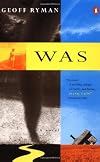
Was by Geoff Ryman
jonathankws Set more in the 'real world' this re-telling of Oz compares three protagonists: a gay male actor with AIDS, a girl called Dorothy who a fictional L. Frank Baum 'created' Oz for, and a makeup girl on the set of the original film version film who encounters Judy Garland.
Member Reviews
In A Barnstormer in Oz, Philip José Farmer reinterprets L. Frank Baum's original Oz work and alters its genre from fantasy to science fiction. Farmer acknowledges Baum's books, but works from the premise that Dorothy was a real person who really traveled to Oz, a world in a parallel dimension to our own. After her return Baum, then a reporter, met with her and made some notes, which he later adapted into a children's story, altering some events to protect Dorothy's identity and others to streamline the story. In Farmer's version, Dorothy never returned to Oz and the subsequent books by Baum were of his own creation.
A Barnstormer in Oz begins in 1923 when Dorothy's son, Hank Stover, and his plane are transported to Oz as a result of an show more experiment by the U.S. Army Signal Corps. Hank finds himself in the middle of a war between Glinda and another witch while also trying to prevent the U.S. military from sending more people to Oz, which would endanger the native population in much the same way as European colonization spread disease in the New World. Farmer updates the Oz books, but maintains Baum's distinct Americanized fairytale vision. As the book is set in the 1920s, it has a less romanticized and more scientific and worldly view than Baum's late-19th and early-20th century novels. Some of the more adult themes, such as sexuality and religion, foreshadow Gregory Maguire's later Wicked series. Most interestingly, Farmer worked to explain how Oz was populated by familiar animals and humans, even creating a Germanic language for his Quadlings to speak.
Fans of the original Baum books will find plenty to enjoy in Farmer's work, where he seeks to explain much of what Baum took for granted. Farmer's premise serves to separate A Barnstormer in Oz enough from the original works that any parts that offend die-hard Baum fans can be easily dismissed, though Farmer clearly holds Baum in high regard. For those who grew up with Baum and are looking for something a little more adult, like Wicked and its subsequent sequels, this book fills that desire. I only have two complaints: First, that it's a pity Farmer never turned the book into a series. His notes at the end (well worth the read) make clear that he had more in mind for this book and a sequel would have offered him the chance to explore that. Second, the absence of the Cowardly Lion is irksome. Farmer describes some events involving the Cowardly Lion, but, as Stover isn't in the vicinity, they're reported third-hand. Despite this, Farmer cleverly explains the Cowardly Lion's size though descent from the American Lion, an extinct animal that was larger than the modern African Lion.
These two complaints notwithstanding, A Barnstormer in Oz is a worthy entry into the world of Oz and offers a great deal of thought-provoking material while shifting genres from fantasy to science-fiction. show less
A Barnstormer in Oz begins in 1923 when Dorothy's son, Hank Stover, and his plane are transported to Oz as a result of an show more experiment by the U.S. Army Signal Corps. Hank finds himself in the middle of a war between Glinda and another witch while also trying to prevent the U.S. military from sending more people to Oz, which would endanger the native population in much the same way as European colonization spread disease in the New World. Farmer updates the Oz books, but maintains Baum's distinct Americanized fairytale vision. As the book is set in the 1920s, it has a less romanticized and more scientific and worldly view than Baum's late-19th and early-20th century novels. Some of the more adult themes, such as sexuality and religion, foreshadow Gregory Maguire's later Wicked series. Most interestingly, Farmer worked to explain how Oz was populated by familiar animals and humans, even creating a Germanic language for his Quadlings to speak.
Fans of the original Baum books will find plenty to enjoy in Farmer's work, where he seeks to explain much of what Baum took for granted. Farmer's premise serves to separate A Barnstormer in Oz enough from the original works that any parts that offend die-hard Baum fans can be easily dismissed, though Farmer clearly holds Baum in high regard. For those who grew up with Baum and are looking for something a little more adult, like Wicked and its subsequent sequels, this book fills that desire. I only have two complaints: First, that it's a pity Farmer never turned the book into a series. His notes at the end (well worth the read) make clear that he had more in mind for this book and a sequel would have offered him the chance to explore that. Second, the absence of the Cowardly Lion is irksome. Farmer describes some events involving the Cowardly Lion, but, as Stover isn't in the vicinity, they're reported third-hand. Despite this, Farmer cleverly explains the Cowardly Lion's size though descent from the American Lion, an extinct animal that was larger than the modern African Lion.
These two complaints notwithstanding, A Barnstormer in Oz is a worthy entry into the world of Oz and offers a great deal of thought-provoking material while shifting genres from fantasy to science-fiction. show less
The Barnstormer in OZ, by Philip Jose Farmer is so much fun! Now, in this little book, we find out that Dorothy had a son, Hank, and he, as an adult, flies into the land of OZ in his WWI biplane.
Now, this book uses the Baum OZ series as a basis of characters and location, not the movie. As such, it takes place in 1923 and Dorothy's son, Hank, is a WWI veteran who 'barnstorms' in his trusty biplane, Jenny, for a living as he decompresses from his wartime adventures.
One day he is flying and suddenly is encompassed by a green haze and after a very short time finds himself in a strange place- definitely not the Kansas landscape he had just a few moments before been flying over. In due time he discovers he has flown into the land of OZ show more which his mother had told him about.
Through the book, he confronts the differences and similarities between what his mother told him about OZ, what Baum had written in his series of books, and what it its actually like! He learns the language (they don't speak English), meets the characters from Dorothy's original adventure, and we and he also meet additional characters.
A landscape and history of this land is explained through words and adventure which leave us with many questions as to how the populace got there. We discover similarities with life on Earth and this leads to questions as to the movement of persons (and animals) from one land to another.
I don't want to give too many spoilers, but we find out the the US government/military have been experimenting with a way to open a portal between the two worlds, which is how Hank go to OZ in the first place. You see, OZ has so many precious gems, gold and silver, that in OZ they are simply used as decoration but the US wants these items because in the world of Earth they are 'worth' something and will make some people very rich. There is a sad and devastating ending for those American troops who are transported to OZ, which is the beginning of the end of the US invasion. BUT there is a greater threat in this land - a battle between the Good Witch (Glinda) and the Red/Bad Witch (Erakna). This adventure comprises a fun romp through the land with Hank and a couple of new OZ characters into the actual battle.
Hank meets and has adventure with the Tin Man and the Scarecrow. We hear of the Cowardly Lion but, sadly, never meet him in the story.
I was a bit disappointed in the ending, it was rather abrupt. Other than that, I think this book is well worth the read! show less
Now, this book uses the Baum OZ series as a basis of characters and location, not the movie. As such, it takes place in 1923 and Dorothy's son, Hank, is a WWI veteran who 'barnstorms' in his trusty biplane, Jenny, for a living as he decompresses from his wartime adventures.
One day he is flying and suddenly is encompassed by a green haze and after a very short time finds himself in a strange place- definitely not the Kansas landscape he had just a few moments before been flying over. In due time he discovers he has flown into the land of OZ show more which his mother had told him about.
Through the book, he confronts the differences and similarities between what his mother told him about OZ, what Baum had written in his series of books, and what it its actually like! He learns the language (they don't speak English), meets the characters from Dorothy's original adventure, and we and he also meet additional characters.
A landscape and history of this land is explained through words and adventure which leave us with many questions as to how the populace got there. We discover similarities with life on Earth and this leads to questions as to the movement of persons (and animals) from one land to another.
I don't want to give too many spoilers, but we find out the the US government/military have been experimenting with a way to open a portal between the two worlds, which is how Hank go to OZ in the first place. You see, OZ has so many precious gems, gold and silver, that in OZ they are simply used as decoration but the US wants these items because in the world of Earth they are 'worth' something and will make some people very rich. There is a sad and devastating ending for those American troops who are transported to OZ, which is the beginning of the end of the US invasion. BUT there is a greater threat in this land - a battle between the Good Witch (Glinda) and the Red/Bad Witch (Erakna). This adventure comprises a fun romp through the land with Hank and a couple of new OZ characters into the actual battle.
Hank meets and has adventure with the Tin Man and the Scarecrow. We hear of the Cowardly Lion but, sadly, never meet him in the story.
I was a bit disappointed in the ending, it was rather abrupt. Other than that, I think this book is well worth the read! show less
An idea, the science-fiction-ication of the setting of the Oz books, that should have been left on the whiteboard.
Philip Jose Farmer tries very hard to sell you on the idea, of course. There's even a collection of endnotes (well, *points* really, as they are not referenced in the text) anticipating the sort of nitpicking criticism you would now find on a Reddit threat.
The problem is that it's just not that interesting an idea, and there is very little in the way of story or character development to make up for it.
Granted, there are a few bright moments, such as the escapades of the hero and a couple of outlaws when they run out of fuel and are forced to land in the mountains, but for the most part it's just made-up facts proving that show more Baum's made-up facts were wrong, or conjecture about one or both set of made-up facts in an attempt to find a scientific explanation.
There's so much of this, coupled with statements like "so that explains why miracles can happen" or "so astrology isn't total hokum", that it becomes clear that author is an I Want To Believe type trying to convince himself and the world that a place like Oz is possible. show less
Philip Jose Farmer tries very hard to sell you on the idea, of course. There's even a collection of endnotes (well, *points* really, as they are not referenced in the text) anticipating the sort of nitpicking criticism you would now find on a Reddit threat.
The problem is that it's just not that interesting an idea, and there is very little in the way of story or character development to make up for it.
Granted, there are a few bright moments, such as the escapades of the hero and a couple of outlaws when they run out of fuel and are forced to land in the mountains, but for the most part it's just made-up facts proving that show more Baum's made-up facts were wrong, or conjecture about one or both set of made-up facts in an attempt to find a scientific explanation.
There's so much of this, coupled with statements like "so that explains why miracles can happen" or "so astrology isn't total hokum", that it becomes clear that author is an I Want To Believe type trying to convince himself and the world that a place like Oz is possible. show less
A Barnstormer in Oz seems to me to be an exercise in explaining the wonders of Oz in scientific terms. Or, at least as close to scientific as you can get in a world of magical events that defy explanation. Farmer has done an excellent job of that. His narrative also includes action sequences which serve to enliven the tale and create suspense, so that it’s not just one long treatise. The dual purpose of the text therefore feels a little disjointed, as though explanations must be interrupted for something interesting to happen, and vice versa. I enjoyed Farmer’s perspective, but was not much caught up in the action. The subplot of what would happen if Americans invaded Oz was much more fascinating to me than the eventual defeat of show more the evil Erakna. Both sets of invaders were dispatched without much in the way of fanfare, and the final battle between Glinda and Erakna was rather confusing to read. I found I was spending more time trying to picture what Farmer was describing, than feeling the suspense and excitement of the altercation. This is an interesting book, but recommended only for hardcore fans of the Land of Oz. show less
Ratings
Members
- Recently Added By
Lists

Parallel Novels
37 works; 6 members

KayStJ's to-read list
1,616 works; 11 members

Books Read in 2020
4,379 works; 123 members
Author Information

367+ Works 36,065 Members
Philip José Farmer was born in North Terre Haute, Indiana on January 26, 1918. He worked in a steel mill while attending Bradley University at night and writing in his spare time. In 1952, his story The Lovers, in which a human has sex with an alien, was published in a pulp magazine called Startling Stories and won him the Hugo Award in 1953 for show more most promising new author. He quit his job to become a full-time writer, but a string of misfortunes eventually forced him to take jobs as a manual laborer. He worked as a technical writer from 1956 to 1970, but continued writing science fiction. He finally found success in the 1960's with the Riverworld series. He wrote more than 75 books throughout his lifetime including the Dayworld series and the World of Tiers series. He also wrote short stories. He won the Hugo award for best novella in 1968 for Riders of the Purple Wage and for best novel in 1972 for To Your Scattered Bodies Go. In 1988, he was the recipient of the Writers of the Past Award and the Nova for best book for Riverworld. In 2001 he was awarded the Grand Master Award and the World Fantasy Life Achievement Award. He died on February 25, 2009 at the age of 91. (Bowker Author Biography) show less
Some Editions
Series
Belongs to Publisher Series
Knaur Science Fiction (5800)
Work Relationships
Was inspired by
Common Knowledge
- Important places
- Oz
Classifications
Statistics
- Members
- 329
- Popularity
- 96,560
- Reviews
- 4
- Rating
- (3.48)
- Languages
- English, German
- Media
- Paper
- ISBNs
- 4
- ASINs
- 1


