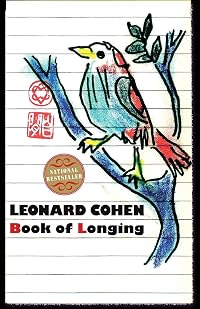
Book of Longing
by Leonard Cohen
On This Page
Description
Leonard Cohen wrote the poems in Book of Longing-his first book of poetry in more than twenty years after 1984's Book of Mercy-during his five-year stay at a Zen monastery on Southern California's Mount Baldy, and in Los Angeles, Montreal, and Mumbai. This dazzling collection is enhanced by the author's playful and provocative drawings, which interact in exciting, unexpected ways on the page with poetry that is timeless, meditative, and often darkly humorous. An international sensation, Book show more of Longing contains all the elements that have brought Cohen's artistry with language worldwide recognition. show lessTags
Recommendations










Member Recommendations

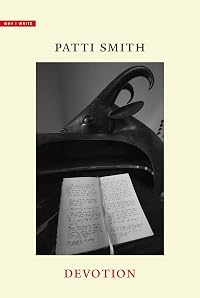
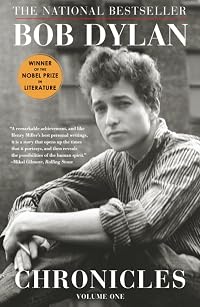
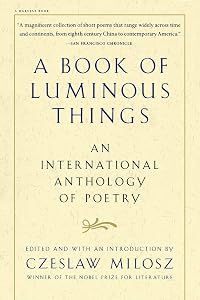
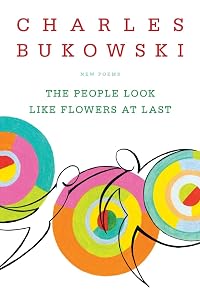
betterthanchocolate More pith and rage from another singer songwriter, with insights and language equally as satisfying.
Member Reviews
A collection of poems, including many written during Cohen's time in a Zen monastery. Anyone familiar with any of his other work will probably find the themes and contents here unsurprising: sex, love, loneliness, and desire, the sacred and the earthy and the places where the two meet, anger and sadness and wistfulness and acceptance, the darkness and the light in the world, all intermixed with little personal moments and glimmerings of self-aware, self-deprecating humor.
Some of these poems instantly made sense to me and evoked thoughts and feelings I could relate to. Others were obscure enough that I suspect only the poet himself really knew who and what they were about. Most fell somewhere in between, which seems like a pretty good show more place for poetry to fall. Although, I must say, I'm usually not a very good reader of poetry (or poetry isn't a particularly good medium for me as a reader), as I often react poorly when I don't feel like I "get" a poem. It makes me feel uncultured and dumb, I suppose, which makes me feel resentful. But Leonard Cohen, as I realized the last time I read one of his poetry collections, circumvents that problem for me entirely, because I take his poems in exactly the spirit I take his song lyrics -- indeed, not a few of these have also appeared as songs on his albums -- and I've never felt dumb not understanding a song lyric, only interested in what I could make out of it for myself. And, as with his music, there is a lot to be made out of these poems. show less
Some of these poems instantly made sense to me and evoked thoughts and feelings I could relate to. Others were obscure enough that I suspect only the poet himself really knew who and what they were about. Most fell somewhere in between, which seems like a pretty good show more place for poetry to fall. Although, I must say, I'm usually not a very good reader of poetry (or poetry isn't a particularly good medium for me as a reader), as I often react poorly when I don't feel like I "get" a poem. It makes me feel uncultured and dumb, I suppose, which makes me feel resentful. But Leonard Cohen, as I realized the last time I read one of his poetry collections, circumvents that problem for me entirely, because I take his poems in exactly the spirit I take his song lyrics -- indeed, not a few of these have also appeared as songs on his albums -- and I've never felt dumb not understanding a song lyric, only interested in what I could make out of it for myself. And, as with his music, there is a lot to be made out of these poems. show less
better than poetry
is my poetry
which refers
to everything
that is beautiful and
dignified, but is
neither of these itself."
-- 'Better', pg. 11.
I don't usually read poetry and so I don't really know how to review it, but I am a fan of Leonard Cohen's music and I can say that his work holds up as well on paper as it does on vinyl. From the very first poem of this modest collection, in which he proclaims "Desire the horse, Depression the cart" (pg. 1), Cohen is on top form. Of course, given his fame as a songwriter, it is easy to forget nowadays that Cohen started out as a poet, and so he is on familiar ground here. He still has great affection for music (see 'His Master's Voice' on pg. 3), but his skill with the written word ensures that many show more of the selections in Book of Longing are stand-alone poems that you don't dismiss as merely song lyrics without the beat.
The selections herein are also impressively diverse, being romantic, spiritual, humorous, profound, self-deprecating or erotic, sometimes all at once. Many of the poems deal with his experience with Buddhism and invoke such teachings though, as he amusingly notes, these lessons were "so imperfectly grasped that I cannot be accused either of stealing or absorbing them" (pg. 232). Indeed, his attitude towards spirituality is often grumpy and humorous, and one can detect a longing for materialism in 'The Lovesick Monk' (pg. 13). But whilst Cohen can be cynical ("The book of love I read was wrong, It had a happy ending" - pg. 191), most of his songs are positive ("When hatred with his package comes, You forbid delivery." - pg. 55), if not necessarily upbeat ("In spite of the ache in your heart about the girl you never found, and the fact that after years of spiritual rigour, you did not manage to enlighten yourself, a certain cheerfulness will begin to arise out of your crushed hopes and intentions." - pg. 66).
Cohen also warns us against reading too deeply into his words ("Do not decode these cries of mine - They are the road, and not the sign." - pg. 42) but simply enjoy them (Undeciphered let my song, rewire circuits wired wrong." - pg. 43). And enjoy them we do.
Personal favourites include: 'My Life in Robes', 'S.O.S. 1995', 'Seisen is Dancing', 'You Are Right, Sahara', 'My Baby Wasn't There', 'If You Knew', 'How Could I Have Doubted', 'The Paris Sky', 'The Faithless Wife', 'Suggestions' and 'Report to R.S.B.' Oh, and of course:
"You go your way
I'll go your way too."
-- 'The Sweetest Little Song', pg. 111." show less
is my poetry
which refers
to everything
that is beautiful and
dignified, but is
neither of these itself."
-- 'Better', pg. 11.
I don't usually read poetry and so I don't really know how to review it, but I am a fan of Leonard Cohen's music and I can say that his work holds up as well on paper as it does on vinyl. From the very first poem of this modest collection, in which he proclaims "Desire the horse, Depression the cart" (pg. 1), Cohen is on top form. Of course, given his fame as a songwriter, it is easy to forget nowadays that Cohen started out as a poet, and so he is on familiar ground here. He still has great affection for music (see 'His Master's Voice' on pg. 3), but his skill with the written word ensures that many show more of the selections in Book of Longing are stand-alone poems that you don't dismiss as merely song lyrics without the beat.
The selections herein are also impressively diverse, being romantic, spiritual, humorous, profound, self-deprecating or erotic, sometimes all at once. Many of the poems deal with his experience with Buddhism and invoke such teachings though, as he amusingly notes, these lessons were "so imperfectly grasped that I cannot be accused either of stealing or absorbing them" (pg. 232). Indeed, his attitude towards spirituality is often grumpy and humorous, and one can detect a longing for materialism in 'The Lovesick Monk' (pg. 13). But whilst Cohen can be cynical ("The book of love I read was wrong, It had a happy ending" - pg. 191), most of his songs are positive ("When hatred with his package comes, You forbid delivery." - pg. 55), if not necessarily upbeat ("In spite of the ache in your heart about the girl you never found, and the fact that after years of spiritual rigour, you did not manage to enlighten yourself, a certain cheerfulness will begin to arise out of your crushed hopes and intentions." - pg. 66).
Cohen also warns us against reading too deeply into his words ("Do not decode these cries of mine - They are the road, and not the sign." - pg. 42) but simply enjoy them (Undeciphered let my song, rewire circuits wired wrong." - pg. 43). And enjoy them we do.
Personal favourites include: 'My Life in Robes', 'S.O.S. 1995', 'Seisen is Dancing', 'You Are Right, Sahara', 'My Baby Wasn't There', 'If You Knew', 'How Could I Have Doubted', 'The Paris Sky', 'The Faithless Wife', 'Suggestions' and 'Report to R.S.B.' Oh, and of course:
"You go your way
I'll go your way too."
-- 'The Sweetest Little Song', pg. 111." show less
This book is written for more than twenty years, from India to Mt. Baldy. Leonard Cohen always has his way of writing lyrics for his music. Same with this compilation of poetries, they can sing by themselves. Some of his poems were brutally honest about his feelings--sensual reverie, spirituality, and desire. The poetries are accompanied by his sometimes provocative sketches that give us more depth to the story. However, some poetries are not as strong as the other. And much like other poetry books that I've read, there are some works that I can’t relate to. Regardless, it inspired me to write poetry again but with the courage to be more honest.
“You should go
from place to place
recovering the poems
that have been written for you
to show more which you can affix your signature.
Don't discuss these matters
with anyone.
Retrieve. Retrieve.
When the basket is full
someone will appear
to whom you can present it.” show less
“You should go
from place to place
recovering the poems
that have been written for you
to show more which you can affix your signature.
Don't discuss these matters
with anyone.
Retrieve. Retrieve.
When the basket is full
someone will appear
to whom you can present it.” show less
If you or I wrote this poem
Darling, I now have a butter dish
that is shaped like a cow
would it be accepted for publication?
Even if the 'you' in that question is Les Murray or Seamus Heaney or John Tranter or Ezra Pound
I think you'll agree that the most likely answer is no.
But in Leonard Cohen's Book of Longing it shares a whole expensive page with a tiny drawing of just such a butter dish. Such are the disadvantages of celebrity.
Darling, I now have a butter dish
that is shaped like a cow
would it be accepted for publication?
Even if the 'you' in that question is Les Murray or Seamus Heaney or John Tranter or Ezra Pound
I think you'll agree that the most likely answer is no.
But in Leonard Cohen's Book of Longing it shares a whole expensive page with a tiny drawing of just such a butter dish. Such are the disadvantages of celebrity.
To be fair, I'm not the biggest fan of poetry and included in this book is a note from the poet himself that it's not intended to be read cover to cover (but really, how else do you read a book?). There were poems I loved, ones I found eerie, and a few where I think the poet's humor missed its mark. And likely, someone who really loves poetry would get a lot more out of this volume and could tell me out my interpretations are wrong. Overall, this wasn't a bad book, but I think it might be more enjoyable to the reader who likes to skip around in a text.
I would have been shocked if I had not loved this collection of Leonard Cohen's poems, as he has been one of my favorite poet/songwriters for decades. His poetry continued to plumb his deep yearnings -- sexual, philosophical, and spiritual. A reminder of how much his voice is missed.
Not all of the poems were for me, but it was still an enjoyable journey to read this book. I found it more enjoyable to read in the morning when my mind was fresh; if I read at the end of the day I found I didn't have as much patience for the lonely/horny/existential poet.
Members
- Recently Added By
Lists

Poetry Corner
187 works; 15 members

Bull Tongue
319 works; 2 members

Favorite Recent Poetry: 1980-2022
178 works; 70 members
Author Information

191+ Works 10,798 Members
Leonard Norman Cohen was born in Montreal, Canada on September 21, 1934. He received a degree in English from McGill University and studied literature at Columbia University for a year. His first collection of poetry, Let Us Compare Mythologies, was published in 1956. His other collections of poetry include The Spice-Box of Earth, Flowers for show more Hitler, Death of a Lady's Man, Poems and Songs, and Book of Longing. He also wrote two novels entitled The Favorite Game and Beautiful Losers. He was a musician and songwriter for almost five decades. He recorded 14 studio albums including Songs of Leonard Cohen, Songs from a Room, Songs of Love and Hate, Ten New Songs, Dear Heather, Popular Problems, and You Want It Darker. He wrote numerous songs including Hallelujah, Suzanne, Dress Rehearsal Rag, Bird on a Wire, The Story of Isaac, Famous Blue Raincoat, Dance Me to the End of Love, First We Take Manhattan, Everybody Knows, and Tower of Song. In 2008, he was inducted into the Rock and Roll Hall of Fame. In 2010, he received a lifetime achievement award from the National Academy of Recording Arts and Sciences. He died on November 7, 2016 at the age of 82. (Bowker Author Biography) show less
Some Editions
Work Relationships
Inspired
Common Knowledge
- Canonical title
- Book of Longing
- Original publication date
- 2006; 2007
- People/Characters
- Leonard Cohen
- Dedication
- For Irving Layton
- First words
- I can't make the hills / The system is shot / I'm living on pills / For which I thank G-d
- Last words
- (Click to show. Warning: May contain spoilers.)The flood it is gathering / Soon it will move / Across every valley / Against every roof / The body will drown / And the soul will break loose / I write all this down / But I don't have the proof / - Sinai, 1973
- Disambiguation notice
- Do not combine this book with the music sound recording work item
Music sound recording - do not combine with the book
Classifications
Statistics
- Members
- 1,648
- Popularity
- 13,716
- Reviews
- 17
- Rating
- (3.82)
- Languages
- 14 — Chinese, Czech, Danish, English, Finnish, French, German, Italian, Norwegian (Nynorsk), Norwegian (Bokmål), Polish, Portuguese, Romanian, Spanish
- Media
- Paper, Audiobook, Ebook
- ISBNs
- 43
- ASINs
- 8