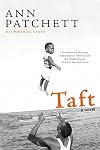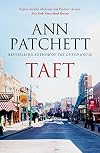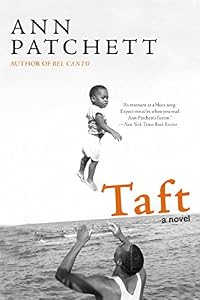
Taft
by Ann Patchett
On This Page
Description
An ex-jazz drummer wants nothing more than to be a good father in this moving family novel by the New York Times–bestselling author of The Dutch House.When his lover takes away his son, he's left only with his Beale Street, Memphis bar. He hires a young waitress named Fay Taft who brings with her a desperate, dangerous brother, Carl, and the possibility of new intimacy. Nickel finds himself consumed with Fay and Carl's dead father—Taft—obsessing over and reconstructing the life of a show more man he never met.
A stunning artistic achievement, Taft confirms Ann Pathcett's standing as one of the most gifted writers of her generation and reminds us of our deepest instincts to protect the people we love.
"What could be merely a literary parlor trick—keeping three stories in the air at once—becomes...as resonant as a blues song, each story harmonizing with and answering others.... Expect miracles when you read Ann Patchett's fiction."—New York Times
"A moving emblem of fatherhood's rarely explored passion."—Los Angeles Times
"Patchett writes with remarkable conviction and attention to telling detail.... [She] is excellent at portraying the steady love and interest that holds the family members together, even though that love and interest isn't always successful in preserving the members from danger."—Jane Smiley, Pulitzer Prize–winning author of Golden Age
"Strikingly original."—Kirkus Reviews. show less
Tags
Recommendations






























Member Reviews
Carl and Fay were the brother and sister in the fairy stories, the pretty white babies holding hands in the forest. Everything in the world was waiting to eat them up. This was not the job I was meant for, looking after other people’s children…
Black musician/bar manager John Nickel has grown more responsible in the years since he disrespected his pregnant girlfriend to the point that she omitted him from his son’s birth certificate. But is he up for the problems presented by a couple of teen siblings who are without their own father?
In an essay at the end, Patchett laments “the curse of the second novel” (in her case, Taft), and admits that it might be her favorite despite its “failure to thrive” in the marketplace. It’s show more one of my favorites by her, too. show less
Black musician/bar manager John Nickel has grown more responsible in the years since he disrespected his pregnant girlfriend to the point that she omitted him from his son’s birth certificate. But is he up for the problems presented by a couple of teen siblings who are without their own father?
In an essay at the end, Patchett laments “the curse of the second novel” (in her case, Taft), and admits that it might be her favorite despite its “failure to thrive” in the marketplace. It’s show more one of my favorites by her, too. show less
"Home seemed a heaven and that we were cast out ..."
-- Henry Green
Ann Patchett's early novel "Taft" (1994) begins with these words from the British novelist, and as I think about the novel in the days after reading it I see that that, in brief, summarizes Patchett's story. Her characters seem to want nothing more than to go back home, back to earlier, happier times, even if those times weren't really as happy or as heavenly as they seem in memory.
The story is told by John Nickel,a black man and a former drummer, who now manages a Memphis bar. His former girlfriend has moved to Florida and taken their son with her. It was her idea that John give up music and get a steady job to better support his son. Now he misses his drums, misses his show more boy and even misses the ex-girlfriend who refused to marry him.
One day a white teenager named Fay Taft walks into his bar and asks for a job. Against his better judgment, he hires her, the first of many times when he finds he cannot say no to Fay. Soon her brother, Paul, begins hanging out at the bar. It's clear, to John at least, that Paul is high on drugs.
The Taft kids grew up in eastern Tennessee, but when their father died they moved to Memphis to live with relatives. They, too, have been cast out of their heaven.
Complications follow. Paul becomes a dealer, putting John's business in jeopardy. Fay decides she's in love with John and keeps finding excuses to be near him. His girlfriend and the boy return to Memphis, perhaps for a visit, perhaps to stay, but John has made the mistake of having sex with her sister. Then things really turn bad.
The title, oddly enough, refers neither to Fay nor her brother but to their father. There are flashbacks, apparently from out of John's imagination, about him and his kids back home.
This wonderful little novel leaves hints that maybe, just maybe, some of us really can go home again. show less
-- Henry Green
Ann Patchett's early novel "Taft" (1994) begins with these words from the British novelist, and as I think about the novel in the days after reading it I see that that, in brief, summarizes Patchett's story. Her characters seem to want nothing more than to go back home, back to earlier, happier times, even if those times weren't really as happy or as heavenly as they seem in memory.
The story is told by John Nickel,a black man and a former drummer, who now manages a Memphis bar. His former girlfriend has moved to Florida and taken their son with her. It was her idea that John give up music and get a steady job to better support his son. Now he misses his drums, misses his show more boy and even misses the ex-girlfriend who refused to marry him.
One day a white teenager named Fay Taft walks into his bar and asks for a job. Against his better judgment, he hires her, the first of many times when he finds he cannot say no to Fay. Soon her brother, Paul, begins hanging out at the bar. It's clear, to John at least, that Paul is high on drugs.
The Taft kids grew up in eastern Tennessee, but when their father died they moved to Memphis to live with relatives. They, too, have been cast out of their heaven.
Complications follow. Paul becomes a dealer, putting John's business in jeopardy. Fay decides she's in love with John and keeps finding excuses to be near him. His girlfriend and the boy return to Memphis, perhaps for a visit, perhaps to stay, but John has made the mistake of having sex with her sister. Then things really turn bad.
The title, oddly enough, refers neither to Fay nor her brother but to their father. There are flashbacks, apparently from out of John's imagination, about him and his kids back home.
This wonderful little novel leaves hints that maybe, just maybe, some of us really can go home again. show less
John Nickel, manager of a bar in Memphis, hires a young white waitress. Although he has some reservations about Fay's age and ability, she seems to be working out well enough. She also seems to be developing a bit of an attraction to the older black man, which he doesn't quite know how to handle. Is this a longing for a father figure, her own father having died fairly recently, or is it something else? And then her brother Carl, almost her twin, shows up and becomes part of the increasingly unsettling picture. Nickel has some domestic issues of his own, and starts to create these kids' previous life in his imagination, focusing on their father, the "Taft" of the title. We know what Taft did for a living, how he died, and that his show more children loved him and miss him. Beyond that, however, his character as presented to the reader is entirely Nickel's invention. As the story flows on, Nickel seems to be drawing on this mental image to guide him in his relationship with his own young son, and in his response to Fay and Carl. Unfortunately, he falls into a common parental trap, attempting to protect a child from the consequences of its own actions. It is nearly a fatal mistake. Up until the final plot development I was ready to give this novel a very high 4 or 4 1/2 star rating. The writing is fine, the characters felt authentic, Nickel was just flawed enough to be interesting, but not so much that you wanted to shout at his obvious errors in judgment. But in my view Patchett sort of jumped the shark with her climactic events, and I had a tough time believing a crucial piece of the action. It was a "that couldn't happen" rather than a "nobody would DO that" situation, and even while caught up in the story I couldn't quite suspend my disbelief. So. 3 1/2 it is. show less
John Nickel manages a blues bar in Memphis. He is a former blues drummer who stowed his drum kit when his girlfriend got pregnant. But when she gave birth to their son, Franklin, she still refused to marry him. Now she and Franklin have moved to Florida and he is stuck in the rut of his life, still in Memphis, still managing a marginal bar, still waiting for life to happen. Then into his bar and his life walks gamine Fay Taft, fey in name and nature, seeking employment and more. Fay and her more problematic younger brother Carl are like the re-emergence of a blues cliché, with the promise of sex, drugs, and noire-like violence that brings the story to climax and just as quickly dissipates.
Patchett is usually worth reading even when, show more as here, she does not entirely succeed in bringing off what she attempts. Along with the main storyline set in the bar, there is a second line, like a backbeat, following the life of Fay’s recently deceased father. But it is unclear what this second storyline is doing, and even more confusing that it appears to be imagined by John himself. It smacks of high concept and design, perhaps, but the result is a muddle.
However, the real problem in this novel is that the narrative voice of John is simply unbelievable. No doubt it is brave of Patchett to even attempt it. But I don’t think she succeeds, as evidenced by the fact that I didn’t even realize John was black until three-quarters of the way through the novel when he explicitly says it of himself. That intrusion feels like an editor’s pen pointing out that even at this late date we have no clear vision of who this man is. Yet this in a first-person narrative. Pretty obviously something hasn’t clicked.
The result is that although the novel is not very long, it simply failed to hold my attention. I kept drifting off. And then the climactic violent final episode just appears, almost out of nowhere, or so it seems. There are better Patchett novels out there and, I hope, more yet to come. This one, though, is best left on the shelf. show less
Patchett is usually worth reading even when, show more as here, she does not entirely succeed in bringing off what she attempts. Along with the main storyline set in the bar, there is a second line, like a backbeat, following the life of Fay’s recently deceased father. But it is unclear what this second storyline is doing, and even more confusing that it appears to be imagined by John himself. It smacks of high concept and design, perhaps, but the result is a muddle.
However, the real problem in this novel is that the narrative voice of John is simply unbelievable. No doubt it is brave of Patchett to even attempt it. But I don’t think she succeeds, as evidenced by the fact that I didn’t even realize John was black until three-quarters of the way through the novel when he explicitly says it of himself. That intrusion feels like an editor’s pen pointing out that even at this late date we have no clear vision of who this man is. Yet this in a first-person narrative. Pretty obviously something hasn’t clicked.
The result is that although the novel is not very long, it simply failed to hold my attention. I kept drifting off. And then the climactic violent final episode just appears, almost out of nowhere, or so it seems. There are better Patchett novels out there and, I hope, more yet to come. This one, though, is best left on the shelf. show less
2. Taft by Ann Patchett
reader: J. D. Jackson
OPD: 1994
format: 9:14 audible audio (246 pages)
acquired: December 18 listened: Dec 18, 2023, Jan 2-10, 2024
rating: 3
genre/style: Fiction theme: Random audio
locations: then contemporary Memphis, TN
about the author: American author born in Los Angeles in 1963, who grew up mainly in Nashville.
Anne Patchett's second novel. I'm not sure this was reasonable or fair, but I felt uncomfortable enough with white author Ann Patchett writing the voice of a black character, that when, after listening to this for a day, I got covid and stopped commuting to work, I also stopped listening. I just paused. My discomfort was cultural appropriation. I didn't mean to be political, it just felt wrong to me. Of show more course, she wrote this in 1994 and at that time I don't imagine I would have cared. Anyway, come January 2, I drove into work and started listening again.
This is a novel of Beale Street in Memphis. John Nickel, who misses his young son, living in Miami with the boy's mother, managers a bar on Beale Street, and hires a young white girl who says she's 20 as a waitress, Fey Taft. Fay's east Tennessee family is displaced and imploding after the recent death of her father. Slowly John finds himself getting involved in their issues.
This is not Patchett's best work. It doesn't have what I consider her strength: strong characters that she understands well in some way and can place in any situation and make it captivating. These are characters she can't know, and has to construct, and I didn't feel they were very strong. Nonetheless, it is actually an enjoyable novel.
For Patchett completists only.
2024
https://www.librarything.com/topic/356616#8353749 show less
reader: J. D. Jackson
OPD: 1994
format: 9:14 audible audio (246 pages)
acquired: December 18 listened: Dec 18, 2023, Jan 2-10, 2024
rating: 3
genre/style: Fiction theme: Random audio
locations: then contemporary Memphis, TN
about the author: American author born in Los Angeles in 1963, who grew up mainly in Nashville.
Anne Patchett's second novel. I'm not sure this was reasonable or fair, but I felt uncomfortable enough with white author Ann Patchett writing the voice of a black character, that when, after listening to this for a day, I got covid and stopped commuting to work, I also stopped listening. I just paused. My discomfort was cultural appropriation. I didn't mean to be political, it just felt wrong to me. Of show more course, she wrote this in 1994 and at that time I don't imagine I would have cared. Anyway, come January 2, I drove into work and started listening again.
This is a novel of Beale Street in Memphis. John Nickel, who misses his young son, living in Miami with the boy's mother, managers a bar on Beale Street, and hires a young white girl who says she's 20 as a waitress, Fey Taft. Fay's east Tennessee family is displaced and imploding after the recent death of her father. Slowly John finds himself getting involved in their issues.
This is not Patchett's best work. It doesn't have what I consider her strength: strong characters that she understands well in some way and can place in any situation and make it captivating. These are characters she can't know, and has to construct, and I didn't feel they were very strong. Nonetheless, it is actually an enjoyable novel.
For Patchett completists only.
2024
https://www.librarything.com/topic/356616#8353749 show less
Reading the negative reviews lowered my expectations. But as I got into this short book I still had hope. Ann Patchett put together some interesting characters in relationships that it was easy to relate to. The focus was on the Black man who started out as a drummer in Memphis only to fall for a woman who wanted more and demanded he get a real job which eventually lead to him managing a bar. He gets her pregnant but does not give her the support she needed. She holds him at bay while he feels more and more about the son he misses. And then there's the young white girl with the problematic brother and the dead father. Patchett creates believable characters who get into the problems you can see coming. But the end of the book is where it show more all falls apart. Patchett decides to leave everything unresolved so it builds to a hot mess and then just leaves us wondering what happened next. If that's enough for you you'll like this book. But if you want the author to finish what they started this is a skippable book. To make matters worse if you're like me and get squeamish when you're dragged through descriptions of surgery this book is not for you. Now I understand the reviews. show less
A black man named John Nickel runs a bar in Memphis. He meets Fay Taft and hires her as a server, despite the fact that he believes she is underage. Her brother, Carl, is mixed up with drugs. Their father (the titular Taft) has died, and their mother is not around. Nickel begins imagining the life of their father, though they had never met.
Nickel is an interesting character. He is an ex-drummer. He is estranged from his ex-girlfriend and mother of his son, who has moved to Miami. He made some mistakes earlier in life, which he acknowledges, but very much wants a relationship with his son. I think we are supposed to admire him but his actions make this difficult.
For me, the structure of this story does not work very well. It mixes up show more what is real (Nickel’s life) with what is imagined (Taft’s life with his kids). I am not sure I understood the point of the imagined storyline. Perhaps Nickel is dreaming a fatherhood he would like to have with his own son? If so, it was a weak link. I think it would have been much more effective if the storyline had focused on Nickel. The plot takes a strange twist toward the end, which did not work for me. It was okay but not Patchett’s best in my opinion. show less
Nickel is an interesting character. He is an ex-drummer. He is estranged from his ex-girlfriend and mother of his son, who has moved to Miami. He made some mistakes earlier in life, which he acknowledges, but very much wants a relationship with his son. I think we are supposed to admire him but his actions make this difficult.
For me, the structure of this story does not work very well. It mixes up show more what is real (Nickel’s life) with what is imagined (Taft’s life with his kids). I am not sure I understood the point of the imagined storyline. Perhaps Nickel is dreaming a fatherhood he would like to have with his own son? If so, it was a weak link. I think it would have been much more effective if the storyline had focused on Nickel. The plot takes a strange twist toward the end, which did not work for me. It was okay but not Patchett’s best in my opinion. show less
Members
- Recently Added By
Author Information

31+ Works 55,106 Members
Ann Patchett was born on December 2, 1963. She received the Orange Prize for Fiction and the PEN/Faulkner Award in 2002 for her novel Bel Canto. Her other novels include The Patron Saint of Liars, Taft, The Magician's Assistant, and State of Wonder. She has also written several nonfiction works including Truth and Beauty: A Friendship, The Getaway show more Car, The Bookshop Strikes Back, and This Is the Story of a Happy Marriage. Ann's title's Commonweatlth and The Patron Saint of Liars made the New York Time bestseller list. (Bowker Author Biography) show less
Some Editions
Awards and Honors
Awards
Common Knowledge
- Canonical title
- Taft
- Original publication date
- 1994
- Important places
- Memphis, Tennessee, USA
- Epigraph
- ''Home seemed a heaven and that we were cast out...''
- Dedication
- For Ann and Jerry Wilson
of Carthage, Tennessee - First words
- A girl walked into the bar.
- Last words
- (Click to show. Warning: May contain spoilers.)''Hey,'' Carl yells. ''Watch me.''
Classifications
Statistics
- Members
- 856
- Popularity
- 31,723
- Reviews
- 30
- Rating
- (3.37)
- Languages
- English, Polish
- Media
- Paper, Audiobook, Ebook
- ISBNs
- 15
- UPCs
- 1
- ASINs
- 11