Baseball Saved Us
by Ken Mochizuki
On This Page
Description
A Japanese American boy learns to play baseball when he and his family are forced to live in an internment camp during World War II, and his ability to play helps him after the war is over.Tags
Recommendations
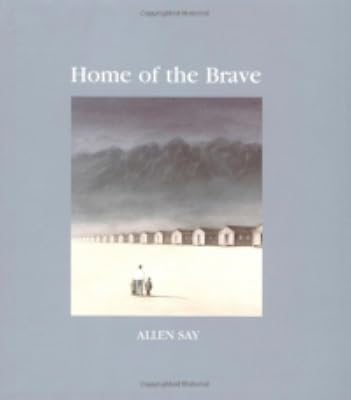
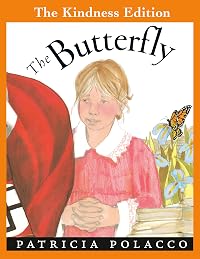
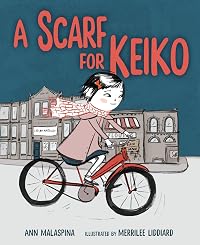

Member Recommendations
Member Reviews
A young Japanese-American boy narrates this story of his experiences in an internment camp during World War II, describing how his father helped to create a baseball field and league in the camp, and how he played with one of the children's teams. Not very good at first, the boy improves, and when he and his family return home after the war, his new skills give him a means of finding his place with his peers...
Having recently read Marissa Moss's Barbed Wire Baseball, a picture-book biography of Kenichi "Zeni" Zenimura, a Japanese-American baseball player who did indeed create a baseball league at the Gila River internment camp, I was reminded of Baseball Saved Us, which I read years ago, when it first came out. It's clear that Ken show more Mochizuki's fictional story is inspired by Zenimura's real life one, although his own parents' experiences in the Minodoka camp in Idaho must surely have also been an influence. I found the story here moving, although I did think that the transition from camp to post-camp life was very abrupt. One moment the boy is hitting a home run in a baseball game at the camp, and then on the next page his family is back home on the west coast. Although this was rather jarring - there needed to be some bridging incident, to tie the two parts of the story together, I think - I nevertheless found the narrative engaging, and entered into the main character's feelings throughout. The artwork was likewise engrossing, building upon the emotional undercurrents in each scene. Created in an unusual medium - scratched out from encaustic beeswax on paper, and then colored with oil paint - it was very expressive, and often had an interesting sepia tone that matched the story quite well. All in all, a solid children's book about a very difficult and shameful moment in American history, one I would recommend to picture-book readers looking for stories about the internment of the Japanese in World War II, or about baseball as a meaningful experience in a child's life. show less
Having recently read Marissa Moss's Barbed Wire Baseball, a picture-book biography of Kenichi "Zeni" Zenimura, a Japanese-American baseball player who did indeed create a baseball league at the Gila River internment camp, I was reminded of Baseball Saved Us, which I read years ago, when it first came out. It's clear that Ken show more Mochizuki's fictional story is inspired by Zenimura's real life one, although his own parents' experiences in the Minodoka camp in Idaho must surely have also been an influence. I found the story here moving, although I did think that the transition from camp to post-camp life was very abrupt. One moment the boy is hitting a home run in a baseball game at the camp, and then on the next page his family is back home on the west coast. Although this was rather jarring - there needed to be some bridging incident, to tie the two parts of the story together, I think - I nevertheless found the narrative engaging, and entered into the main character's feelings throughout. The artwork was likewise engrossing, building upon the emotional undercurrents in each scene. Created in an unusual medium - scratched out from encaustic beeswax on paper, and then colored with oil paint - it was very expressive, and often had an interesting sepia tone that matched the story quite well. All in all, a solid children's book about a very difficult and shameful moment in American history, one I would recommend to picture-book readers looking for stories about the internment of the Japanese in World War II, or about baseball as a meaningful experience in a child's life. show less
Baseball Saved Us - Mochizuki
5 stars
This is a classic picture book first published in 1993. The text, written at a third or fourth grade level, is a fictionalized first person memoir of Japanese American incarceration during WW2. The narrator is a school age child who begins the story with the stark reality of the relocation. The simple text conveys the shame, anger, and physical discomfort along with the disintegration of the family as life in the concentration camp becomes their reality. Realizing the need for constructive occupation and moral boosting, the boy’s father builds a baseball diamond and organizes a league.
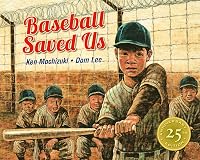
The story is well written, but the illustrations make this book timeless. All of the pictures are sepia toned show more leaving no doubts of the heat and dust of the internment camp. Pictures of the baseball diamond include the surrounding barbed wire fence and the guard tower. The best illustrations are close ups of the young Shorty at bat. (The narrator is never named. Shorty is a racist nickname that followed him even after the war.) His sheer determination to hit the ball over the wires and past the guard tower is written on his face. This book is a bit too long and wordy for me to have used it as a read aloud with kindergarteners, but the pictures tell the story and younger children responded to them. show less
5 stars
This is a classic picture book first published in 1993. The text, written at a third or fourth grade level, is a fictionalized first person memoir of Japanese American incarceration during WW2. The narrator is a school age child who begins the story with the stark reality of the relocation. The simple text conveys the shame, anger, and physical discomfort along with the disintegration of the family as life in the concentration camp becomes their reality. Realizing the need for constructive occupation and moral boosting, the boy’s father builds a baseball diamond and organizes a league.
The story is well written, but the illustrations make this book timeless. All of the pictures are sepia toned show more leaving no doubts of the heat and dust of the internment camp. Pictures of the baseball diamond include the surrounding barbed wire fence and the guard tower. The best illustrations are close ups of the young Shorty at bat. (The narrator is never named. Shorty is a racist nickname that followed him even after the war.) His sheer determination to hit the ball over the wires and past the guard tower is written on his face. This book is a bit too long and wordy for me to have used it as a read aloud with kindergarteners, but the pictures tell the story and younger children responded to them. show less
I can earnestly recommend this story of a Japanese boy in a U.S. internment camp finding comfort and purpose in improving his baseball skills while struggling with a bewildering set of circumstances no child should have to face.
I love stories of the resilience of Japanese families during their WWII internment. This book celebrates the baseball teams the elders formed on the camp, and the way it gave people courage, self-respect, and connection.
Throughout American history, some citizens have had more rights and privileges than others.
When the Japanese bombed Pearl Harbor on December 7, 1941, fear and prejudice towards the Japanese reached a fever pitch. These attitudes extended to both citizens and non-citizens of Japanese descent living in the United States.
In 1942 Roosevelt signed Executive Order 9066. Under the terms of the Order, approximately 110,000 people of Japanese descent living in the US were removed from their homes and placed in internment camps. The US justified its' action by claiming that there was a danger of those of Japanese descent spying for the Japanese. However more than two thirds of those interned were American citizens and half of them were children. show more None had ever shown evidence of disloyalty.
The internees were transported to one of ten relocation centers in California, Utah, Arkansas, Arizona, Idaho, Colorado, and Wyoming for up to 4 years, without due process of law or any factual basis, in bleak, remote camps surrounded by barbed wire and armed guards. Families were crammed into 20- by 25-foot rooms and forced to use communal bathrooms. No razors, scissors, or radios were allowed. Children attended War Relocation Authority schools.
In 1988, the U.S. Government admitted it had been wrong. Although restitution payments were authorized to the survivors, as President Reagan admitted:
"Yet no payment can make up for those lost years. So, what is most important in this bill has less to do with property than with honor. For here we admit a wrong; here we reaffirm our commitment as a nation to equal justice under the law.”
This book tells the story of a young Japanese-American internee nicknamed Shorty, who was trying to develop his own sense of honor even though they had been sent to a "camp" in the middle of nowhere behind a barbed-wire fence.
He was keenly aware that they were not free:
"Soldiers with guns made sure we stayed there, and the man in the tower saw everything we did, no matter where we were."
His dad organized the kids to make a baseball field, and moms used mattress covers to make the boys uniforms. Shorty wasn’t that good, but in one of the last games of the year he got motivated:
"I glanced at the guardhouse behind the left field foul line and saw the man in the tower, leaning on the rail with the blinding sun glinting off his sunglasses. He was always watching, always staring. It suddenly made me mad. ... I was gonna hit the ball past the guardhouse even if it killed me.”
He succeeds, and is a hero for awhile, but when the family is released from the camp, things got bad again. Even though the war was over, no one would talk to him because he was Japanese. When baseball season came, he felt inadequate all over again, hearing people in the crowd yelling “Jap.”
But he didn’t back down, and then, when he stepped up to the plate, he looked at the pitcher: "The sun glinted off his glasses as he stood on the mound, like the guard in the tower.”
You can guess what happens next: Shorty belts that ball with a solid whack, and once again, gains not only self-respect but the respect of others, who see that being Japanese doesn’t mean he won’t be as brave or as talented as the rest of them.
The illustrations by Dom Lee are excellent, and were inspired in part by photographs taken by Ansel Adams at California’s Manzanar internment camp in 1943. Lee uses the bleak colors of the desert while the family is in the camp, adding color when they are finally back home.
Evaluation: This book has won a number of awards, and in my opinion, most definitely deserves them. It is important to remember that the focus of this story is on United States citizens. Thus, this is a highly recommended way to teach children critical thinking about political actions, and about the dire consequences of prejudice. Children will get a very good feel for what it means to walk in someone else’s shoes. Lee & Low provides an excellent guide for further discussion, here.
Winner, Parents' Choice Award
Winner, Washington State Governor's Writers Award
Best Multicultural Title, "Cuffies Award" - Publishers Weekly
"Editors' Choice" - San Francisco Chronicle
"Choices," Cooperative Children's Book Center (CCBC)
"Pick of the Lists," - American Bookseller
Washington State Children's Choice Award Finalist show less
When the Japanese bombed Pearl Harbor on December 7, 1941, fear and prejudice towards the Japanese reached a fever pitch. These attitudes extended to both citizens and non-citizens of Japanese descent living in the United States.
In 1942 Roosevelt signed Executive Order 9066. Under the terms of the Order, approximately 110,000 people of Japanese descent living in the US were removed from their homes and placed in internment camps. The US justified its' action by claiming that there was a danger of those of Japanese descent spying for the Japanese. However more than two thirds of those interned were American citizens and half of them were children. show more None had ever shown evidence of disloyalty.
The internees were transported to one of ten relocation centers in California, Utah, Arkansas, Arizona, Idaho, Colorado, and Wyoming for up to 4 years, without due process of law or any factual basis, in bleak, remote camps surrounded by barbed wire and armed guards. Families were crammed into 20- by 25-foot rooms and forced to use communal bathrooms. No razors, scissors, or radios were allowed. Children attended War Relocation Authority schools.
In 1988, the U.S. Government admitted it had been wrong. Although restitution payments were authorized to the survivors, as President Reagan admitted:
"Yet no payment can make up for those lost years. So, what is most important in this bill has less to do with property than with honor. For here we admit a wrong; here we reaffirm our commitment as a nation to equal justice under the law.”
This book tells the story of a young Japanese-American internee nicknamed Shorty, who was trying to develop his own sense of honor even though they had been sent to a "camp" in the middle of nowhere behind a barbed-wire fence.
He was keenly aware that they were not free:
"Soldiers with guns made sure we stayed there, and the man in the tower saw everything we did, no matter where we were."
His dad organized the kids to make a baseball field, and moms used mattress covers to make the boys uniforms. Shorty wasn’t that good, but in one of the last games of the year he got motivated:
"I glanced at the guardhouse behind the left field foul line and saw the man in the tower, leaning on the rail with the blinding sun glinting off his sunglasses. He was always watching, always staring. It suddenly made me mad. ... I was gonna hit the ball past the guardhouse even if it killed me.”
He succeeds, and is a hero for awhile, but when the family is released from the camp, things got bad again. Even though the war was over, no one would talk to him because he was Japanese. When baseball season came, he felt inadequate all over again, hearing people in the crowd yelling “Jap.”
But he didn’t back down, and then, when he stepped up to the plate, he looked at the pitcher: "The sun glinted off his glasses as he stood on the mound, like the guard in the tower.”
You can guess what happens next: Shorty belts that ball with a solid whack, and once again, gains not only self-respect but the respect of others, who see that being Japanese doesn’t mean he won’t be as brave or as talented as the rest of them.
The illustrations by Dom Lee are excellent, and were inspired in part by photographs taken by Ansel Adams at California’s Manzanar internment camp in 1943. Lee uses the bleak colors of the desert while the family is in the camp, adding color when they are finally back home.
Evaluation: This book has won a number of awards, and in my opinion, most definitely deserves them. It is important to remember that the focus of this story is on United States citizens. Thus, this is a highly recommended way to teach children critical thinking about political actions, and about the dire consequences of prejudice. Children will get a very good feel for what it means to walk in someone else’s shoes. Lee & Low provides an excellent guide for further discussion, here.
Winner, Parents' Choice Award
Winner, Washington State Governor's Writers Award
Best Multicultural Title, "Cuffies Award" - Publishers Weekly
"Editors' Choice" - San Francisco Chronicle
"Choices," Cooperative Children's Book Center (CCBC)
"Pick of the Lists," - American Bookseller
Washington State Children's Choice Award Finalist show less
I thought this was a great multicultural book that provides insight into the lives of Japanese-Americans during World War II. The historical context allows for the reader to learn about another ethnic group affected by WWII, which is often overlooked. It also pushes the reader to think about issues of discrimination in America. The author did a wonderful job describing the hardships of the Japanese staying in the internment camps, even when they were let out. One boy was made fun of and ignored in school and on the baseball field. The hatred he faced motivated him to hit a homerun and win the big game. The book also demonstrates the importance of community during struggles. All of the Japanese-Americans worked on building a baseball show more field together and either watched or participated in every baseball game. I also really liked the mysterious man in the tower. He represents an oppressive American who looks down upon the Japanese-Americans. His character could be used to ask thought provoking questions to students about his role in the story. The big message of the story is to rise above prejudices and use others hatred as motivation to achieve greatness. show less
A picture book of serious matter, treated through a narrow focus that is more light in character and therefore more approachable to children. The setting is an internment camp for Japanese Americans, set up in our own country during the second world war, and the characters are father and son who decide that their people need a diversion to distract them from anger and fear and boredom.
They build a baseball field, and soon the boy is playing ball all the time, improving under the eyes of the other prisoners and the tower guard. When the boy finally does leave camp, only to return to a world that has grown suspicious and hateful towards him, he relies on his skill in baseball to carry him through the challenging times.
The story show more approaches the serious matter of our internment of our own people and doesn't hide from the injustice of the act or the ambiguities, but it also focuses on the human dignity that is possible even in horrible conditions. This book makes me remember that we need to constantly be aware of the equal rights of all people, and to stand against such injustices as these that were perpetrated in our past. It also lauds the spirit of Japanese Americans who persevered through this era of intolerance, and highlights their dignity and resourcefulness.
Stories about bravery during tribulation are great reads for both children and the adults reading to them. They are inspirations, and serve as a counter to the corruption that is also presented within. Mochizuki's book is a great example, as it doesn't shy from the truth, and it doesn't exaggerate in the opposite direction, either - for instance, he doesn't portray all the Caucasian Americans as evil, but allows that some were good while others were responsible for hatred and bigotry. This picture book presents a clear picture of social injustice, and the humane response that can cure it. show less
They build a baseball field, and soon the boy is playing ball all the time, improving under the eyes of the other prisoners and the tower guard. When the boy finally does leave camp, only to return to a world that has grown suspicious and hateful towards him, he relies on his skill in baseball to carry him through the challenging times.
The story show more approaches the serious matter of our internment of our own people and doesn't hide from the injustice of the act or the ambiguities, but it also focuses on the human dignity that is possible even in horrible conditions. This book makes me remember that we need to constantly be aware of the equal rights of all people, and to stand against such injustices as these that were perpetrated in our past. It also lauds the spirit of Japanese Americans who persevered through this era of intolerance, and highlights their dignity and resourcefulness.
Stories about bravery during tribulation are great reads for both children and the adults reading to them. They are inspirations, and serve as a counter to the corruption that is also presented within. Mochizuki's book is a great example, as it doesn't shy from the truth, and it doesn't exaggerate in the opposite direction, either - for instance, he doesn't portray all the Caucasian Americans as evil, but allows that some were good while others were responsible for hatred and bigotry. This picture book presents a clear picture of social injustice, and the humane response that can cure it. show less
Members
- Recently Added By
Published Reviews
ThingScore 75
Grade 1-4–During World War II the author's parents were sent to an internment camp in Idaho. That family history led to this poignant story about a young Japanese-American boy in an internment camp and the baseball diamond that gave the internees a purpose in life and a way of passing the time. The young boy's triumph in a game played while in captivity helps him when he returns home and show more continues his baseball career. The baseball heading over the fence on the last page tugs at the heart of readers as it symbolizes freedom lost, and regained. Author Ken Mochizuki reads his award-winning book (Lee & Low, 1993). There is some soft background music, and a few gentle sound effects, but the power of the words need little embellishment. Young students will be made aware of the overt racism Japanese-Americans faced during this period of history. This treasure of a book is well-treated in this format. show less
Lists

Children's Books about World War II (1939-1945)
143 works; 12 members

Florida's Book Bans and Challenges
311 works; 4 members
Author Information

11+ Works 2,834 Members
Ken Mochizuki was born in Seattle, Washington in 1954. He grew up in the Beacon Hill neighborhood of south Seattle. He graduated from the University of Washington in 1976 with a BA in Communications. Mochizuki was a journalist and actor for many years before writing his picture books and novel, Beacon Hill Boys. (Bowker Author Biography)
All Editions
Some Editions
Awards and Honors
Awards
Common Knowledge
- Important events
- World War II (1939 | 1945); World War II, Pacific Theater (1941-12-07 | 1945-09-02); Japanese-American Internment (1942 | 1945)
Classifications
Statistics
- Members
- 1,806
- Popularity
- 12,134
- Reviews
- 150
- Rating
- (4.26)
- Languages
- English, French, Spanish
- Media
- Paper, Audiobook, Ebook
- ISBNs
- 24
- ASINs
- 4