On This Page
Description
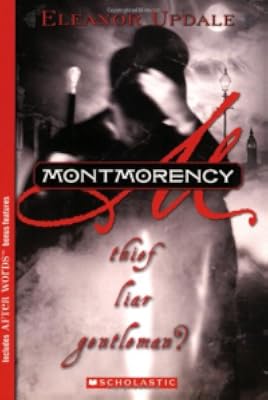
In Victorian London, after his life is saved by a young physician, a thief utilizes the knowledge he gains in prison and from the scientific lectures he attends as the physician's case study exhibit to create a new, highly successful, double life for himself.Tags
Recommendations
















Member Recommendations
Member Reviews
When we meet Montmorency (not his real name), he's in a London prison for thieving: caught during his getaway when he crashed through a glass roof. Dr. Robert Farcett used Montmorency as an experiment - to see if he could be saved, and to see how much the human body could recover from. When Montmorency is freed from prison, he is set on living the high life, and he has a plan. He decides that he cannot trust anyone to be his accomplice, but will play both necessary roles himself: as "Scarper," he will use London's new sewer system to make quick escapes from the shops and homes he robs, and as "Montmorency" he will reap the benefits of this plunder.
Montmorency/Scarper displays much cunning and cleverness, but little empathy or even show more sympathy for others. When London police catch "Freakshow Frank," his cellmate (who was released soon after he was), they blame all of Scarper's thefts on him (the "Hopping Horror" - Frank has only one leg), and Frank goes to the gallows. Montmorency's conscience pricks slightly, but the instinct to save his own skin is much stronger than the urge to save Frank. However, as the novel progresses, Montmorency does develop more of a conscience, and even experiences different emotions depending on whether he is Scarper or Montmorency at the time (adopting different clothing, mannerisms, and even addresses for each).
Montmorency makes a friend - Lord George Fox-Selwyn - and becomes drawn into a matter of national intrigue, using the sewer system to sneak into the "Mauramanian" embassy. He succeeds, and feels a measure of personal and national pride. At the end of the book, he "found himself acting in unusual ways" - that is, displaying generosity (e.g. to Scarper's old landlord) and making restitution (e.g. returning Dr. Farcett's bag, giving Scarper's old clothes to a tramp from whom he had stolen clothes in the past, returning a valuable book to a man he respects). Thus, the story is concluded and Montmorency is "set for a career of travel and espionage in the service of his country."
Overall I quite enjoyed this book. Without focusing on a well-known historical figure, it evokes the lives of lower- and upper-class Londoners circa 1875 in vivid detail. It differs from many YA novels in that the main character is not himself a young adult, but he does grow and change. The ending is neat, while still leaving open the possibility of more books featuring this character. show less
Montmorency/Scarper displays much cunning and cleverness, but little empathy or even show more sympathy for others. When London police catch "Freakshow Frank," his cellmate (who was released soon after he was), they blame all of Scarper's thefts on him (the "Hopping Horror" - Frank has only one leg), and Frank goes to the gallows. Montmorency's conscience pricks slightly, but the instinct to save his own skin is much stronger than the urge to save Frank. However, as the novel progresses, Montmorency does develop more of a conscience, and even experiences different emotions depending on whether he is Scarper or Montmorency at the time (adopting different clothing, mannerisms, and even addresses for each).
Montmorency makes a friend - Lord George Fox-Selwyn - and becomes drawn into a matter of national intrigue, using the sewer system to sneak into the "Mauramanian" embassy. He succeeds, and feels a measure of personal and national pride. At the end of the book, he "found himself acting in unusual ways" - that is, displaying generosity (e.g. to Scarper's old landlord) and making restitution (e.g. returning Dr. Farcett's bag, giving Scarper's old clothes to a tramp from whom he had stolen clothes in the past, returning a valuable book to a man he respects). Thus, the story is concluded and Montmorency is "set for a career of travel and espionage in the service of his country."
Overall I quite enjoyed this book. Without focusing on a well-known historical figure, it evokes the lives of lower- and upper-class Londoners circa 1875 in vivid detail. It differs from many YA novels in that the main character is not himself a young adult, but he does grow and change. The ending is neat, while still leaving open the possibility of more books featuring this character. show less
Wasn't expecting to like this as much as I did. Montmorency is definitely an interesting guy. I liked reading about his struggle with going straight. Very glad that Scarper was ditched at the end of the book as I felt it was running the risk of hitting split personality territory.
I'm not 100% sure what makes this a children's book. They never allude to Montmorency's age although it's clear he's considered an adult by the time period standards and all the flirtations make me think this might be more of a tween work maybe? Planning on reading the rest of the series eventually.
I'm not 100% sure what makes this a children's book. They never allude to Montmorency's age although it's clear he's considered an adult by the time period standards and all the flirtations make me think this might be more of a tween work maybe? Planning on reading the rest of the series eventually.
Wasn't expecting to like this as much as I did. Montmorency is definitely an interesting guy. I liked reading about his struggle with going straight. Very glad that Scarper was ditched at the end of the book as I felt it was running the risk of hitting split personality territory.
I'm not 100% sure what makes this a children's book. They never allude to Montmorency's age although it's clear he's considered an adult by the time period standards and all the flirtations make me think this might be more of a tween work maybe? Planning on reading the rest of the series eventually.
I'm not 100% sure what makes this a children's book. They never allude to Montmorency's age although it's clear he's considered an adult by the time period standards and all the flirtations make me think this might be more of a tween work maybe? Planning on reading the rest of the series eventually.
He was born in prison and grew up to become a petty thief. In 1875, when he was eventually caught, injured by a fall when on the run, he was sewn back together by a doctor eager to try out his skills and to display them. At seminars where the healed scars were exhibited, the prisoner is able to sit in on lectures about London's new sewer system. Prisoner 493 puts the information to use and plans his future while awaiting release. He used the sewer system - more malodorous than he expected - to gain access to the doctor's house where, among other items, he pinched the necessary clothing to dress like a gentleman. He wrote a letter to a smart hotel announcing that they should provide him with a suite for long term occupation. He was now show more set to live a double life as Montmorency the master and Scarper the servant. The servant steals from the wealthy and the gentleman is able to sell the pickings to jewelers who assume it is to pay for a gambling debt.
This was a very entertaining tale, and yes, the plot was full of holes, but it worked. The historical aspect of 19th century surgery as well as London's underworld was interesting. I enjoyed it very much. I'm not sure why it has been classified YA, I found it quite acceptable reading.
When I found the book wasn't on the shelf at the library, I borrowed an audiobook read by Stephen Fry which was hilarious in parts. I'm not quite sold on audiobooks, and in the end was able to read the book as well, which served as a comparison. I prefer reading. show less
This was a very entertaining tale, and yes, the plot was full of holes, but it worked. The historical aspect of 19th century surgery as well as London's underworld was interesting. I enjoyed it very much. I'm not sure why it has been classified YA, I found it quite acceptable reading.
When I found the book wasn't on the shelf at the library, I borrowed an audiobook read by Stephen Fry which was hilarious in parts. I'm not quite sold on audiobooks, and in the end was able to read the book as well, which served as a comparison. I prefer reading. show less
“But it is time for you to go. Your possessions will be returned to you downstairs. You have been given the chance of life, 493. I hope you will take the opportunity to make that life one of industry and law-abiding behavior.”
So says the warden to Prisoner 493–also known as Montmorency also known as Scarper. While languishing for three years in the bowels of a Victorian England prison, Montmorency vows to reinvent himself–multiple reinventions really–as a thief, a liar, and a gentleman.
Montmorency’s time in jail is the result of his having been caught as a thief. During his capture, he suffers grievous physical injuries. In fact, Montmorency’s injuries are so grave that an up-and-coming London doctor, Doctor Farcett, is show more permitted to perform experimental treatments on him.
The treatments save Montmorency’s life and begin to heal of his physical injuries but, simultaneously, they augment his emotional pain over life’s inequities. As a part of his treatments, Montmorency attends meetings of the Scientific Society where he is humiliated as a specimen under examination but also where he learns about the underground sewage system of London. The seeds of a plan for revenge against society’s upper classes begin to sprout.
Montmorency resolves to create dual identities—he will enter London’s underground as Scarper, a sewer navigator who uses the routes to accomplish his thefts and to pave the way for the success of his above-ground persona, Montmorency. Using the goods he attains as Scarper, Montmorency lives the life of a refined gentleman and, in so doing, he defies the seemingly insurmountable Victorian class divisions of his day.
Updale fills her story with secret identities, complex characters, period details, scatological references, daring deeds, narrow escapes, and more vice than virtue. Social and economic disparities drive much of the action–while wealthy gentlemen spend the days at their club, the poorer classes spend the days doing what it takes (legal or no) to survive. Montmorency’s dual identities begin to foster identity confusion, and Montmorency/Scarper finds himself facing choices as to which version of himself he wants to control of his life–the thief, the liar, or the gentleman.
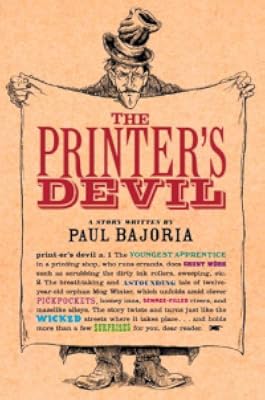
As a work for young adults, Montmorency: Thief, Liar, Gentleman is unusual as its characters are not young adults (the same holds true for the subsequent works in the series), and its main character is more antihero than hero. Montmorency: Thief, Liar, Gentleman harkens back to Robert Louis Stevenson’s Dr. Jekyll and Mr. Hyde in which one man confronts some unpleasant facts about the conflicting parts of his nature. More modern offerings that contain elements of history, mystery, adventure, and crime in historical England can be found in works by authors such as Chris Priestley, Iain Lawrence, Avi (Traitors Gate), and Paul Bajoria (Printer’s Devil). Montmorency: Thief, Liar, Gentleman is the first book in the series starring Montmorency. show less
So says the warden to Prisoner 493–also known as Montmorency also known as Scarper. While languishing for three years in the bowels of a Victorian England prison, Montmorency vows to reinvent himself–multiple reinventions really–as a thief, a liar, and a gentleman.
Montmorency’s time in jail is the result of his having been caught as a thief. During his capture, he suffers grievous physical injuries. In fact, Montmorency’s injuries are so grave that an up-and-coming London doctor, Doctor Farcett, is show more permitted to perform experimental treatments on him.
The treatments save Montmorency’s life and begin to heal of his physical injuries but, simultaneously, they augment his emotional pain over life’s inequities. As a part of his treatments, Montmorency attends meetings of the Scientific Society where he is humiliated as a specimen under examination but also where he learns about the underground sewage system of London. The seeds of a plan for revenge against society’s upper classes begin to sprout.
Montmorency resolves to create dual identities—he will enter London’s underground as Scarper, a sewer navigator who uses the routes to accomplish his thefts and to pave the way for the success of his above-ground persona, Montmorency. Using the goods he attains as Scarper, Montmorency lives the life of a refined gentleman and, in so doing, he defies the seemingly insurmountable Victorian class divisions of his day.
Updale fills her story with secret identities, complex characters, period details, scatological references, daring deeds, narrow escapes, and more vice than virtue. Social and economic disparities drive much of the action–while wealthy gentlemen spend the days at their club, the poorer classes spend the days doing what it takes (legal or no) to survive. Montmorency’s dual identities begin to foster identity confusion, and Montmorency/Scarper finds himself facing choices as to which version of himself he wants to control of his life–the thief, the liar, or the gentleman.
As a work for young adults, Montmorency: Thief, Liar, Gentleman is unusual as its characters are not young adults (the same holds true for the subsequent works in the series), and its main character is more antihero than hero. Montmorency: Thief, Liar, Gentleman harkens back to Robert Louis Stevenson’s Dr. Jekyll and Mr. Hyde in which one man confronts some unpleasant facts about the conflicting parts of his nature. More modern offerings that contain elements of history, mystery, adventure, and crime in historical England can be found in works by authors such as Chris Priestley, Iain Lawrence, Avi (Traitors Gate), and Paul Bajoria (Printer’s Devil). Montmorency: Thief, Liar, Gentleman is the first book in the series starring Montmorency. show less
Eleanor Updale's ripping yarn about a hideously scarred ex-convict who turns himself into Montmorency, dashing gentleman about town, via London's brand new sewer system, rattles along at such breakneck speed you almost forget to draw breath. There are some terrific settings for Montmorency's adventures - my favourites being the Mauramanian Embassy and Bargles, the ultimate gentleman's club. Updale's Victorian London is full of intriguing moral grey areas - the Foriegn Office is subtly re-phrasing the Balkan Question behind closed doors, generally good-hearted characters can still look down on their social inferiors, and Montmorency's rise is at the expense of at least one person's fall. But equally, there are tarts with hearts, nameless show more good samaritans and men of science dedicated to improving public life. It's touching to see Montmorency grow a conscience as the story unfolds (not to mention a love of opera and a desire to use his gifts for altruistic reasons) - I can't wait to see what he gets up to in the next three books available. show less
This sucked me in just as fast as it did when I was a kid! The tension throughout the book is really great, and it's a nice easy heist read (maybe good for kids who like heists but are not ready yet for Six of Crows.) The ending does feel pretty rushed, but given that there is now an entire series (!!!) that did not exist when I first read this 10+ years ago, that rushed ending may not be as big a deal. I am definitely interested in what goes on in the other books in the series!
Members
- Recently Added By
Author Information

12+ Works 1,943 Members
Eleanor Updale studied history at St. Anne's College in Oxford, England, before becoming a producer of television and radio current affairs programs for the BBC. She is studying for a Ph.D. at the new Centre for Editing Lives and Letters at Queen Mary, University of London. She is also a trustee of the charity Listening Books. Ms. Updale lives in show more England. show less
Awards and Honors
Awards
Distinctions
Notable Lists
Series

Common Knowledge
- Original title
- Thief, Liar, Gentleman?
- Original publication date
- 2004
- People/Characters
- Montmorency; Scarper; Mrs. Evans; Doctor Robert Farcett; Cissie Longman
- Important places
- London, England, UK
- Dedication
- To Jim, Andrew, Catherine and Flora - Montmorancy's oldest friends
- First words
- The pain woke him again.
- Last words
- (Click to show. Warning: May contain spoilers.)Just in case.
Classifications
- Genres
- Fiction and Literature, Tween, Kids, Teen, Young Adult
- DDC/MDS
- 823.92 — Literature & rhetoric English & Old English literatures English fiction 1900- 2000-
- LCC
- PZ7 .U4447 .M — Language and Literature Fiction and juvenile belles lettres Fiction and juvenile belles lettres Juvenile belles lettres
- BISAC
Statistics
- Members
- 1,063
- Popularity
- 24,029
- Reviews
- 37
- Rating
- (3.75)
- Languages
- English, French, German, Italian
- Media
- Paper, Audiobook, Ebook
- ISBNs
- 32
- ASINs
- 7