The Four Feathers
by A. E. W. Mason
On This Page
Description
For centuries, presenting a comrade-in-arms with a feather was the ultimate censure and a stinging symbol of cowardice. When British soldier Harry Feversham decides to resign his post and leave the military, he is subjected to this humiliating ritual. Will his reputation ever be redeemed? Read The Four Feathers to find out.Tags
Recommendations



















Member Recommendations
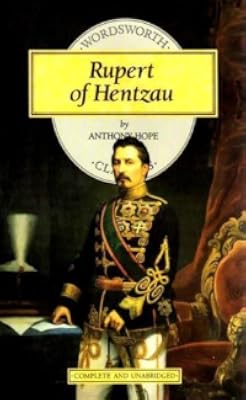
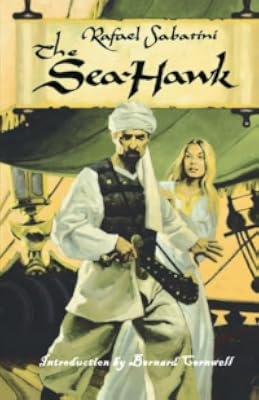
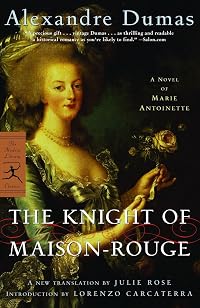
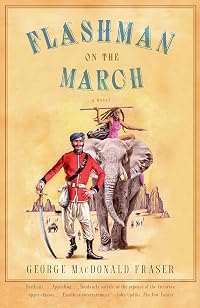
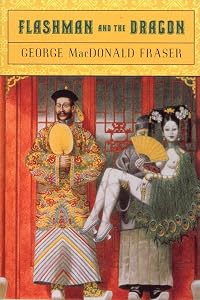
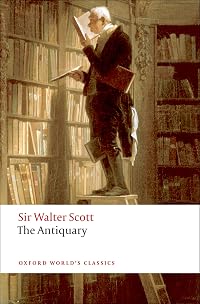
AdonisGuilfoyle Both novels are great examples of Victorian adventure/romance stories.
Member Reviews
The classic 1939 film adaptation, although the plot is slightly different and more action based than the original source, has long ingrained the gist of A.E.W. Mason’s The Four Feathers on my imagination, but I was still slightly apprehensive before reading the novel. Although the story sounds like a boy’s own adventure – a soldier accused of cowardice travels incognito into battle to restore his honour – the book was written in 1902, and Victorian prose can be difficult to digest. However, I was pleasantly surprised by Mason’s style, which is plainly phrased for the most part, but also poetic in places – the symbolic device of Ethne’s violin – and modestly romantic.
Harry Feversham’s future seems determined – he will show more become a soldier, like his father and a long line of Feversham ancestors before him, and marry his beautiful Irish fiancée, Ethne Eustace. Yet Harry is haunted by his father’s stories of cowards during the Crimean War and the harsh treatment meted out to them by fellow soldiers, and on the eve of his regiment being sent into battle in the Sudan, Harry resigns his commission. He is sent three white feathers – the sign of a coward – and then Ethne adds the final insult to make up the four feathers of the title. Shamed by his former friends, and rejected by Ethne and his proud father, Harry decides to atone for his moment of weakness by winning back the respect of those who labelled him a coward.
The largest presence in the story is not Harry, or the war in Egypt, but honour, or at least an inflated Victorian concept of male pride. The question I was asking myself throughout is not why Harry resigns – whether for Ethne’s sake, or because his mother died and his father doesn’t understand him – but rather why he joined up in the first place! Basically, Harry’s problem is that he thinks too much. Instead of facing his fears by going to Egypt with his friends, he backs out because he’s afraid of letting everyone down. His Pimpernel-esque quest to prove his honour is both entertaining and satisfying, but ultimately unnecessary if he had only been honest with himself and his father.
A secondary thread of the story, similarly confusing, is the tangled affair of Harry, Ethne and Harry’s best friend, Jack Durrance. Jack met and fell in love with Ethne first, but stepped aside when Harry also fell for her, thanks to the machinations of an interfering third party. With Harry away in Egypt, fighting for his lost honour, Jack tries again with Ethne. They become friends and write to each other, but when Jack returns home wounded, Ethne takes pity on him and agrees to marry him, because ‘two lives should not be spoiled because of her’. I was ready to hate Ethne for hurting both men, but Mason’s characters are so believable that I finished with conflicting sympathies, wanting all three to be happy!
My knowledge of the historical battles described in The Four Feathers is slim to non-existent, but Mason crafts an evocative and disturbing background of heat, sand and incredible endurance. The ‘House of Stone’, where Harry meets up with Trench, nearly gave me claustrophobia!
Distinct from the film version, the novel is definitely worth a read. show less
Harry Feversham’s future seems determined – he will show more become a soldier, like his father and a long line of Feversham ancestors before him, and marry his beautiful Irish fiancée, Ethne Eustace. Yet Harry is haunted by his father’s stories of cowards during the Crimean War and the harsh treatment meted out to them by fellow soldiers, and on the eve of his regiment being sent into battle in the Sudan, Harry resigns his commission. He is sent three white feathers – the sign of a coward – and then Ethne adds the final insult to make up the four feathers of the title. Shamed by his former friends, and rejected by Ethne and his proud father, Harry decides to atone for his moment of weakness by winning back the respect of those who labelled him a coward.
The largest presence in the story is not Harry, or the war in Egypt, but honour, or at least an inflated Victorian concept of male pride. The question I was asking myself throughout is not why Harry resigns – whether for Ethne’s sake, or because his mother died and his father doesn’t understand him – but rather why he joined up in the first place! Basically, Harry’s problem is that he thinks too much. Instead of facing his fears by going to Egypt with his friends, he backs out because he’s afraid of letting everyone down. His Pimpernel-esque quest to prove his honour is both entertaining and satisfying, but ultimately unnecessary if he had only been honest with himself and his father.
A secondary thread of the story, similarly confusing, is the tangled affair of Harry, Ethne and Harry’s best friend, Jack Durrance. Jack met and fell in love with Ethne first, but stepped aside when Harry also fell for her, thanks to the machinations of an interfering third party. With Harry away in Egypt, fighting for his lost honour, Jack tries again with Ethne. They become friends and write to each other, but when Jack returns home wounded, Ethne takes pity on him and agrees to marry him, because ‘two lives should not be spoiled because of her’. I was ready to hate Ethne for hurting both men, but Mason’s characters are so believable that I finished with conflicting sympathies, wanting all three to be happy!
My knowledge of the historical battles described in The Four Feathers is slim to non-existent, but Mason crafts an evocative and disturbing background of heat, sand and incredible endurance. The ‘House of Stone’, where Harry meets up with Trench, nearly gave me claustrophobia!
Distinct from the film version, the novel is definitely worth a read. show less
This is a great book. This is typically billed as an adventure novel, and yes there is adventure, but it is the characters that make this book.
The story structure kind of reminds me of Count of Monte Cristo in that something crucial happens and the rest of the book follows the characters in the aftermath while the main character has an epic quest to fulfill. The crux of this story is that the protagonist Harry quits the military because he is afraid that he will be a coward and disgrace his family and fiancé.
I found this to be an excellent and insightful premise. Harry quits not because he is afraid of dying but because he is unsure of himself and how he will react when in danger. I think this is a feeling everyone can relate to. Often show more when we are about to face a challenge or large change in life our own insecurities can make us afraid and think it would be better just to avoid it entirely.
Also, part of why Harry commits his error is because he is surrounded by men who do not understand him. This is a position many young men find themselves in. In male culture fear, insecurity, and just emotions in general are not easily discussed which is very hard on young men, especially those that are more introspective like Harry.
In addition to Harry’s journey there is his fiancé (Ethne) who is trying to make the best decision in a difficult scenario and there is his best friend Durrance whose life is not going how he wanted it to and has to make choice’s between what he wants and what’s good for everyone else. The core characters of Harry, Ethne, and Durrance are largely compelling and there are plenty of memorable side characters.
I recommend this book to anyone looking for an adventure with a little more emotion and food for thought. show less
The story structure kind of reminds me of Count of Monte Cristo in that something crucial happens and the rest of the book follows the characters in the aftermath while the main character has an epic quest to fulfill. The crux of this story is that the protagonist Harry quits the military because he is afraid that he will be a coward and disgrace his family and fiancé.
I found this to be an excellent and insightful premise. Harry quits not because he is afraid of dying but because he is unsure of himself and how he will react when in danger. I think this is a feeling everyone can relate to. Often show more when we are about to face a challenge or large change in life our own insecurities can make us afraid and think it would be better just to avoid it entirely.
Also, part of why Harry commits his error is because he is surrounded by men who do not understand him. This is a position many young men find themselves in. In male culture fear, insecurity, and just emotions in general are not easily discussed which is very hard on young men, especially those that are more introspective like Harry.
In addition to Harry’s journey there is his fiancé (Ethne) who is trying to make the best decision in a difficult scenario and there is his best friend Durrance whose life is not going how he wanted it to and has to make choice’s between what he wants and what’s good for everyone else. The core characters of Harry, Ethne, and Durrance are largely compelling and there are plenty of memorable side characters.
I recommend this book to anyone looking for an adventure with a little more emotion and food for thought. show less
A young officer, disgraced by a single & aberrant act of cowardice, struggles via a foolhardy undercover path to regain his honour & the respect of the woman (strong-willed but frankly odious) whom he loves. Oddly on the cusp between popular moral fiction & "higher" literature, & immensely appreciated in its day, it was published a year after Queen Victoria's death & might arguably stand as the last Victorian classic.
Still, Brontë, Kipling, or (similar-themed) Lord Jim it ain't. & many modern readers may judge the hero would have done better forgetting, not his honour, but at least the lady in question.
A slight waste of my time tbh.
Still, Brontë, Kipling, or (similar-themed) Lord Jim it ain't. & many modern readers may judge the hero would have done better forgetting, not his honour, but at least the lady in question.
A slight waste of my time tbh.
I picked up this Kindle book back in 2012 when I first discovered the wonders of public domain ebooks & Project Gutenberg based on positive memories of the 1939 film adaptation (which can be seen here: https://archive.org/details/TheFourFeathers1939).
Thus I read this already knowing the basic plot but found that the book, slightly different in mood & details from the film, was a little less exciting adventure but much realistic. In particular, Ethne & Durrance were different andthe relationships between Harry, Ethne & Durrance were more tragic. I am glad I finally got around to reading this classic!
Thus I read this already knowing the basic plot but found that the book, slightly different in mood & details from the film, was a little less exciting adventure but much realistic. In particular, Ethne & Durrance were different and
Summary: Harry Feversham resigns from his military posting before it is sent into duty. His three friends send him white feathers, symbols of cowardice. When his fianceé finds out, she adds a fourth and breaks off their engagement. Harry must then redeem himself and his courage to each of the people who gave him feathers. Meanwhile, his fiance is being wooed by his former friend, and must choose where her loyalties truly lie.
Review: I was surprised - this book was originally published in 1902, and I ordinarily have a hard time getting into and staying interested in literature from that time period. However, this read pretty easily, and relatively quickly; not as quickly as modern literature where the language is more familiar, but the show more language and the tone was modern-feeling enough not to be off-putting. I also was surprised with the way the story was structured - I was under the impression that most of the book was about Harry's attempts to reclaim his honor. However, about 80% of the book is from the point of view of Ethne (the fianceé) and Durrance (Harry's friend). That doesn't really detract from it being an adventure story, oddly enough. The morals about honor and courage and pride also manage to make their point without being overly saccarhine or bludgeoning.
Recommendation: If you're in the mood to read a turn-of-the-century classic, you could do much worse than this entertaining adventure story. show less
Review: I was surprised - this book was originally published in 1902, and I ordinarily have a hard time getting into and staying interested in literature from that time period. However, this read pretty easily, and relatively quickly; not as quickly as modern literature where the language is more familiar, but the show more language and the tone was modern-feeling enough not to be off-putting. I also was surprised with the way the story was structured - I was under the impression that most of the book was about Harry's attempts to reclaim his honor. However, about 80% of the book is from the point of view of Ethne (the fianceé) and Durrance (Harry's friend). That doesn't really detract from it being an adventure story, oddly enough. The morals about honor and courage and pride also manage to make their point without being overly saccarhine or bludgeoning.
Recommendation: If you're in the mood to read a turn-of-the-century classic, you could do much worse than this entertaining adventure story. show less
The mood of this story was quite different from anything else I have read. It deals with cowardice and courage, love and hate, hope and despair. It captures a lot of the hypocrisy of the times, the obsession with honour and class and the sense of superiority of the British just about everywhere. The love story binding the tale seemed rather remote. It is hard to imagine the characters living happily ever after.
I didn't realize (before stumbling upon this book) that The Four Feathers movie (the Heath Ledger version - swoon) was actually based off of a book. I stumbled upon this book at a used bookstore for a couple of bucks and grabbed it. This was the second book in a row that I read with a storyline whose setting takes place during a time when the British Empire began to wane, when "conflicts all ended in British victories, but the moral or material costs were high in each case ..." (and another book written by a white European man).
All of those historical things in consideration, I did enjoy the storyline itself and did enjoy the characters. This is a book that I think would've been harder for me to read had I not already seen the movie. I show more saw the movie when I was younger when it had first came out - head over heels for Heath Ledger and adored Kate Hudson - and I just loved it all and the story it told of friendship, love, and overcoming obstacles. I appreciated that the movie showed a stronger bond between Harry and Abou Fatma than what the book did - that they were entirely different people from different places, yet still the same in many other ways.
So I think ultimately because I felt I had so much extra 'background' in my head going into this book, images of characters, the setting, relationships, etc., it really actually added to my reading experience rather than 'spoil it' for me.
Ultimately, I enjoyed this read, in some ways because of the old world, Indiana Jones atmosphere of the book, and also in spite of that old world thinking (though something to definitely be mindful of in reading the book). show less
All of those historical things in consideration, I did enjoy the storyline itself and did enjoy the characters. This is a book that I think would've been harder for me to read had I not already seen the movie. I show more saw the movie when I was younger when it had first came out - head over heels for Heath Ledger and adored Kate Hudson - and I just loved it all and the story it told of friendship, love, and overcoming obstacles. I appreciated that the movie showed a stronger bond between Harry and Abou Fatma than what the book did - that they were entirely different people from different places, yet still the same in many other ways.
So I think ultimately because I felt I had so much extra 'background' in my head going into this book, images of characters, the setting, relationships, etc., it really actually added to my reading experience rather than 'spoil it' for me.
Ultimately, I enjoyed this read, in some ways because of the old world, Indiana Jones atmosphere of the book, and also in spite of that old world thinking (though something to definitely be mindful of in reading the book). show less
Members
- Recently Added By
Lists

Books mentioned in Julian Symons’ Bloody Murder
438 works; 6 members

Best War Stories
87 works; 16 members
Author Information

76+ Works 1,845 Members
Some Editions
Awards and Honors
Series
Belongs to Publisher Series
Work Relationships
Common Knowledge
- Canonical title
- The Four Feathers
- Original title
- The Four Feathers
- Original publication date
- 1902
- People/Characters
- Harry Feversham; Ethne Eustace; Jack Durrance (Captain); Abou Fatma; Lieutenant Sutch; Lieutenant Willoughby (show all 10); Lieutenant Castleton; Captain Trench; General Feversham; Sir Desmond Eustace
- Important places
- Africa; Sudan
- Related movies
- The Four Feathers (1915 | IMDb); The Four Feathers (1921 | IMDb); The Four Feathers (1929 | IMDb); The Four Feathers (1939 | Zoltan Korda | IMDb); The Four Feathers (1978 | IMDb); The Four Feathers (2002 | Shekhar Kapur | IMDb)
- Dedication
- This Book is Dedicated to
MISS ELSPETH ANGELA CAMPBELL - First words
- Lieutenant Sutch was the first of General Feversham’s guests to reach Broad Place.
- Last words
- (Click to show. Warning: May contain spoilers.)But of one other figure in this story a final word must be said. That night, when the invitations had been sent out from Broad Place, and no longer a light gleamed from any window of the house, a man leaned over the rail of a steamer anchored at Port Said and listened to the song of the Arab coolies as they tramped up and down the planks with their coal baskets between the barges and the ship’s side. The clamour of the streets of the town came across the water to his ears. He pictured to himself the flare of braziers upon the quays, the lighted port-holes, and dark funnels ahead and behind in the procession of the anchored ships. Attended by a servant, he had come back to the East again. Early the next morning the steamer moved through the canal, and towards the time of sunset passed out into the chills of the Gulf of Suez. Kassassin, Tel-el-Kebir, Tamai, Tamanieb, the attack upon McNeil’s zareeba—Durrance lived again through the good years of his activity, the years of plenty. Within that country on the west the long preparations were going steadily forward which would one day roll up the Dervish Empire and crush it into dust. Upon the glacis of the ruined fort of Sinkat, Durrance had promised himself to take a hand in that great work, but the desert which he loved had smitten and cast him out. But at all events the boat steamed southwards into the Red Sea. Three nights more, and though he would not see it, the Southern Cross would lift slantwise into the sky.
Classifications
Statistics
- Members
- 819
- Popularity
- 33,749
- Reviews
- 23
- Rating
- (3.70)
- Languages
- 8 — Danish, Dutch, English, French, German, Italian, Spanish, Swedish
- Media
- Paper, Audiobook, Ebook
- ISBNs
- 103
- ASINs
- 34