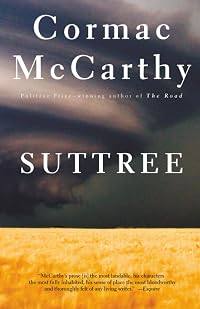
Suttree
by Cormac McCarthy
On This Page
Description
The story of Cornelius Suttree, who has forsaken a life of privilege with his prominent family to live in a dilapidated houseboat on the Tennessee River near Knoxville. Remaining on the margins of the outcast community there - a brilliantly imagined collection of eccentrics, criminals, and squatters - he rises above the physical and human squalor with detachment, humor, and dignity.Tags
Recommendations









Member Reviews
Not rating this, because I simply could not wade through any more of this crap. I made it to 17% in the audiobook, which is about 7% more than I give most books, but you know, it's this genius of McCarthy that I keep hearing about, but not really seeing.
So, here's my take on the first four books he wrote.
1 - He chooses poor, lower class, southern characters.
2 - Those characters say, "Well." a lot.
3 - He loves to show these characters in their most depraved light. Expect pages and pages of this.
4 - He'll also detail everything they do to death. Someone wants a smoke? Expect a page of them fishing the pack out, opening the pack, teasing out a cigarette, placing the cigarette between lips, fishing about for a match, lighting the match, show more bringing the flame to the cigarette, puffing on the cigarette, shaking the match out, discarding the match, and then smoking the cigarette. Expect effusive descriptions of all of the above, and also a circular, repetitive conversation to be going at the same time that means nothing, leads nowhere, and the smoker and whomever they're talking to will separate without the story moving forward a single inch.
Yes, his prose is pretty. He can absolutely turn a phrase. But what's it all mean? There's no story here, just a series of mostly meaningless anecdotes. By the time I got to Suttree puking, wiping it on the curtains, then falling asleep under a bed, all to virtually poetic phrasing, I was out.
Honestly, I feel like I've gone to one of those expensive, snooty restaurants where the menu is in a virtually foreign language and, after an interminable wait, my meal comes, but it's a large place with a paper-thin sliver of underdone meat, and an artfully carved curl of onion, with some sort of colourful sauce delicately arced over everything to hide the fact that there's basically nothing here. I'd leave feeling hungry and like I've invested far too much in far too little.
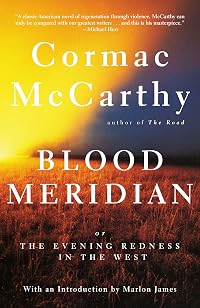
The next book in line is Blood Meridian, and I've heard better things about that (translation: this one may actually have a plot), so I'll give that one a shot. But if it's just more of the same, I'm out. show less
So, here's my take on the first four books he wrote.
1 - He chooses poor, lower class, southern characters.
2 - Those characters say, "Well." a lot.
3 - He loves to show these characters in their most depraved light. Expect pages and pages of this.
4 - He'll also detail everything they do to death. Someone wants a smoke? Expect a page of them fishing the pack out, opening the pack, teasing out a cigarette, placing the cigarette between lips, fishing about for a match, lighting the match, show more bringing the flame to the cigarette, puffing on the cigarette, shaking the match out, discarding the match, and then smoking the cigarette. Expect effusive descriptions of all of the above, and also a circular, repetitive conversation to be going at the same time that means nothing, leads nowhere, and the smoker and whomever they're talking to will separate without the story moving forward a single inch.
Yes, his prose is pretty. He can absolutely turn a phrase. But what's it all mean? There's no story here, just a series of mostly meaningless anecdotes. By the time I got to Suttree puking, wiping it on the curtains, then falling asleep under a bed, all to virtually poetic phrasing, I was out.
Honestly, I feel like I've gone to one of those expensive, snooty restaurants where the menu is in a virtually foreign language and, after an interminable wait, my meal comes, but it's a large place with a paper-thin sliver of underdone meat, and an artfully carved curl of onion, with some sort of colourful sauce delicately arced over everything to hide the fact that there's basically nothing here. I'd leave feeling hungry and like I've invested far too much in far too little.
The next book in line is Blood Meridian, and I've heard better things about that (translation: this one may actually have a plot), so I'll give that one a shot. But if it's just more of the same, I'm out. show less
“He lay down in his blankets. It was growing dark, long late mid-summer twilight in the woods. He wanted to go down to the river to bathe but he felt too bad. He turned over and looked at the small plot of ground in the crook of his arm. My life is ghastly, he told the grass.”
Set in Knoxville, Tennessee, in the early to mid-1950s, this book tells the story of six years in the life of “Bud” Suttree, a man who has left his wife and child to live on a houseboat on the edges of society. He ekes out a living as a fisherman.
It is a sprawling, fragmented narrative, filled with outcasts and misfits. A vast number of characters are mentioned, some for a single appearance, and others winding in and out, such as the goatman, the show more ragpicker, the street evangelist, and various prostitutes. There is no plot. It is about events and people in Suttree’s life. It is about time, life, and death. It explores the concepts of being and nothingness.
“How surely are the dead beyond death. Death is what the living carry with them. A state of dread, like some uncanny foretaste of a bitter memory. But the dead do not remember and nothingness is not a curse. Far from it.”
It is expressively written in long elaborate sentences and short irreverent dialogue. It is occasionally difficult to understand the characters’ motivations – perhaps just they are just doing their best to survive. The tone is dark. Unfortunate things happen to people who are already down on their luck. It is a lengthy book, so after a while, a series of one unhappy event after another gets to be a little depressing, but the writing is superb.
“Suttree stood among the screaming leaves and called the lightning down. It cracked and boomed about and he pointed out the darkened heart within him and cried for light. If there be any art in the weathers of this earth. Or char these bones to coal. If you can, if you can. A blackened rag in the rain.” show less
Set in Knoxville, Tennessee, in the early to mid-1950s, this book tells the story of six years in the life of “Bud” Suttree, a man who has left his wife and child to live on a houseboat on the edges of society. He ekes out a living as a fisherman.
It is a sprawling, fragmented narrative, filled with outcasts and misfits. A vast number of characters are mentioned, some for a single appearance, and others winding in and out, such as the goatman, the show more ragpicker, the street evangelist, and various prostitutes. There is no plot. It is about events and people in Suttree’s life. It is about time, life, and death. It explores the concepts of being and nothingness.
“How surely are the dead beyond death. Death is what the living carry with them. A state of dread, like some uncanny foretaste of a bitter memory. But the dead do not remember and nothingness is not a curse. Far from it.”
It is expressively written in long elaborate sentences and short irreverent dialogue. It is occasionally difficult to understand the characters’ motivations – perhaps just they are just doing their best to survive. The tone is dark. Unfortunate things happen to people who are already down on their luck. It is a lengthy book, so after a while, a series of one unhappy event after another gets to be a little depressing, but the writing is superb.
“Suttree stood among the screaming leaves and called the lightning down. It cracked and boomed about and he pointed out the darkened heart within him and cried for light. If there be any art in the weathers of this earth. Or char these bones to coal. If you can, if you can. A blackened rag in the rain.” show less
McCarthy has the most remarkable command of the English language, and he uses it to the max in every sentence in this book. It is the story of a few rather brutal years in the life of Cornelius Suttree, a man of uncertain age, who has left behind a "normal" life for reasons he does not fully share with the reader, and now lives in a houseboat along the Tennessee River in the harsh mythic underworld of 1950's Knoxville. McCarthy's writing is monstrously beautiful, as in this passage:
"It snowed that night. Flakes softly blown in the cold blue lamplight. Snow lay in pale boas along the black treelimbs down Forest Avenue and the snow in the street bore bands of branch and twig, dark fissures that would not snow full...Snow falling on show more Knoxville, sifting down over McAnally, hiding the rents in the roofing, draping the sashwork, frosting the coalpiles in the crabbed dooryards. It has covered up the blood and dirt and claggy sleech in gutterways and laid white lattice on the sewer grates...In the yards a switchengine is working and the white light of the headlamp bores down the rows of iron gray warehouses in a livid phosphorous tunnel through which the snow falls innocently and unburnt."
As the snow covers the black and the frozen, the grim and the ugly, McCarthy's words nearly bury the realities of the world he is showing us in a softening shroud, but never hide it completely. By the end of this rather too long novel, the reader and Suttree have both had enough, and need to move on. Where Suttree might be going, what he might have gained from this episode in his life, is no clearer than how he got there in the first place. That, I think is the greatest failure of this novel.
I loved parts of Suttree, the breathtaking word craft, the brilliant descriptions, the dark humor and often grotesque characters reminiscent of Faulkner's best. (I mean, a country boy shot and jailed for humping watermelons? Pappy surely gave McCarthy a commendatory nod for that one.) But it went on too long, sank a little too deeply into the mire too often, and made me grateful for its ending at last. Thankfully, McCarthy does not entice the reader into emotional involvement with his characters. As clearly as they are drawn, they remain at a safe distance from the heart; only one episode came close to touching my sympathy button, and it did so in part because it reminded me of another scene in another novel which was actually heart-rending. (I'm referring to The Dollmaker, a book I feel I need to read again, especially in this year of the American Author in the 75-Book Challenge group.) I don't mean to imply that McCarthy doesn't care for his creations; he does, obviously, but he does it in a totally unsentimental, no-BS, practical fashion, perhaps in the manner of a no-nonsense priest who runs a homeless shelter, or William Devane's prickly psychiatrist, Dr. Dix, from the Jesse Stone movies.
Suttree is a masterpiece, there's no denying it. It would surely benefit from re-reading, but I won't do that, because it's too damned difficult to live with for that long. show less
"It snowed that night. Flakes softly blown in the cold blue lamplight. Snow lay in pale boas along the black treelimbs down Forest Avenue and the snow in the street bore bands of branch and twig, dark fissures that would not snow full...Snow falling on show more Knoxville, sifting down over McAnally, hiding the rents in the roofing, draping the sashwork, frosting the coalpiles in the crabbed dooryards. It has covered up the blood and dirt and claggy sleech in gutterways and laid white lattice on the sewer grates...In the yards a switchengine is working and the white light of the headlamp bores down the rows of iron gray warehouses in a livid phosphorous tunnel through which the snow falls innocently and unburnt."
As the snow covers the black and the frozen, the grim and the ugly, McCarthy's words nearly bury the realities of the world he is showing us in a softening shroud, but never hide it completely. By the end of this rather too long novel, the reader and Suttree have both had enough, and need to move on. Where Suttree might be going, what he might have gained from this episode in his life, is no clearer than how he got there in the first place. That, I think is the greatest failure of this novel.
I loved parts of Suttree, the breathtaking word craft, the brilliant descriptions, the dark humor and often grotesque characters reminiscent of Faulkner's best. (I mean, a country boy shot and jailed for humping watermelons? Pappy surely gave McCarthy a commendatory nod for that one.) But it went on too long, sank a little too deeply into the mire too often, and made me grateful for its ending at last. Thankfully, McCarthy does not entice the reader into emotional involvement with his characters. As clearly as they are drawn, they remain at a safe distance from the heart; only one episode came close to touching my sympathy button, and it did so in part because it reminded me of another scene in another novel which was actually heart-rending. (I'm referring to The Dollmaker, a book I feel I need to read again, especially in this year of the American Author in the 75-Book Challenge group.) I don't mean to imply that McCarthy doesn't care for his creations; he does, obviously, but he does it in a totally unsentimental, no-BS, practical fashion, perhaps in the manner of a no-nonsense priest who runs a homeless shelter, or William Devane's prickly psychiatrist, Dr. Dix, from the Jesse Stone movies.
Suttree is a masterpiece, there's no denying it. It would surely benefit from re-reading, but I won't do that, because it's too damned difficult to live with for that long. show less
I have finally reached a point in my reading maturity where I understand deeply the appeal of Cormac McCarthy. It has been obvious to me for a long time that he is an aesthetic titan, a truly preternatural genius of imagery, word choice, setting, and tone, but the depth of his main themes (life and death, suffering, violence) are now clear to me in a way they were not before (and I guess my vocabulary is also just bigger now so that it’s easier to read through the stories without the distraction of constantly referencing a dictionary). In light of reading this novel I am retroactively changing my opinions on some of his other work, namely Blood Meridian—considering that I weighed nearly all its value as aesthetic, and none thematic show more (I also did not have as much fun reading it as I may have rightly allowed myself).
Suttree is the gloomy story of Cornelius Suttree, a man who renounced his well-off past to live the life of a drunken destitute, primarily making his meager living fishing along the Tennessee River running through Knoxville, Tennessee. I really like that description of this book being a “doomed Huckleberry Finn.”
This book was very fun to read. McCarthy is among the greatest poets of English prose writing, probably #1 among Americans. Seriously, try reading this stuff out loud, it’s beautiful: lyrical, full of potent imagery, alliteration, allusion. He is the veritable king of mot juste. I truly do not understand whence this man’s vocabulary has been built; it is astounding. It can be a little bit distracting at times to look up so many words, but that distraction should best be understood as fun, an opportunity to expand one’s own vocabulary, rather than an ongoing frustration. There is so much depth to this language we do not know.
This is not a full fledged review by my standards because I am a few days past finishing the book and didn’t keep good notes while reading, but oh well, all the more reason to reread it later.
I will end with some of my favorite quotes from the novel. They are split about 50/50 between prose pyrotechnics and thematic brilliance.
- Sot’s skull subsiding, sweet nothingness betide me. (p. 79)
- [About photographs of the dead] Blind moil in the earth’s nap cast up in an eyeblink between becoming and done. I am, I am. An artifact of prior races. (p. 129)
- How surely are the dead beyond death. Death is what the living carry with them. A taste of dread, like some uncanny foretaste of a bitter memory. But the dead do not remember and nothingness is not a curse. Far from it. (p. 153)
- But there are no absolutes in human misery and things can always get worse. (p. 372)
- Tilting back in his chair he framed questions for the quaking avoid of lamp light on the ceiling to post to him:
> Supposing there be any soul to listen and you died tonight?
> They’d listen to my death.
> No final word?
> Last words are only words.
> You can tell me, paradigm of your own sinister genesis construed by a flame in a glass bell.
> I’d say I was not unhappy.
> You have nothing.
> It may be the last shall be first.
> Do you believe that?
> No. What do you believe?
> I believe that the last and the first suffer equally. Pari passu.
> Equally?
> It is not alone in the dark of death that all souls are one soul.
> Of what would you repent?
> Nothing.
> Nothing?
> One thing. I spoke with bitterness about my life and I said that I would take my own part against the slander of oblivion and against the monstrous facelessness of it and that I would stand a stone in the very void where all would read my name. Of that vanity I recant all. (p. 414)
- In the toils of orgasm—she said, she said—she’d be whelmed in a warm green sea through which, dulled by the murk of it, pass a series of small suns like the footlights of a revolving stage, an electric carousel wheeling in a green ether. Envy‘s color is the color of her pleasuring, and what is the color of grief? Is it black as they say? And anger always read? The color of that sad shade of ennui called blue is blue but blue unlike the sky or sea, a bitter blue, rue-tinged, discolored at the edges. The color of a blind man’s noon is white, and is his nighttime too? And does he feel it with his skin like a fish? Does he have blues, are they bridal and serene, or yellows, sunlike or urionous, does he remember? Neural colors like the fleeting tones of dreams. The color of this life is water. (p. 415)
- Mr Suttree it is our understanding that at curfew rightly decreed by law and in that hour wherein night draws to its proper close and the new day commences and contrary to conduct befitting a person of your station you betook yourself to various low places within the shire of McAnally and there did squander several ensuing years in the company of thieves, derelicts, miscreants, pariahs, poltroons, spalpeens, curmudgeons, clotpolls, murderers, gamblers, bawds, whores, trulls, brigands, topers, tosspots, sots and archsots, lobcocks, smellsmocks, runagates, rakes, and other assorted and felonious debauchees.
> I was drunk, cried Suttree. (p. 457)
- Seized in a vision of the archetypal patriarch himself unlocking with enormous keys the gates of Hades. A floodtide of screaming fiends and assassins and thieves and hirsute buggers pours forth into the universe, tipping it slightly on its galactic axes. The stars go rolling down the void like redhot marbles. These simmering sinners with their cloaks smoking carry the Logos itself from the tabernacle and bear it through the streets while the absolute prebarbaric mathematick of the western world howls them down and shrouds their ragged biblical forms in oblivion. (pp. 457-458)
- I know all souls are one and all souls
lonely. (p. 459)
- Some eastern sea that lay heavily in the dawn. There stood on its farther rim a spire of smoke attended and crowned by a plutonic light where the waters have broke open. Erupting hot gouts of lava and great upended slabs of earth and a rain of small stones that hissed for miles in the sea. As we watched there reared out of the smoking brine a city of old bone coughed up from the sea's floor, pale attic bone delicate as shell and half melting, a chalken shambles coralgrown that slewed into shape of temple, column, plinth and cornice, and across the whole a frieze of archer and warrior and marblebreasted maid all listing west and moving slowly their stone limbs. As these figures began to cool and take on life Suttree among the watchers said that this time there are witnesses, for life does not come slowly. It rises in one massive mutation and all is changed utterly and forever. We have witnessed this thing today which prefigures for all time the way in which historic orders proceed. (p. 459) show less
Suttree is the gloomy story of Cornelius Suttree, a man who renounced his well-off past to live the life of a drunken destitute, primarily making his meager living fishing along the Tennessee River running through Knoxville, Tennessee. I really like that description of this book being a “doomed Huckleberry Finn.”
This book was very fun to read. McCarthy is among the greatest poets of English prose writing, probably #1 among Americans. Seriously, try reading this stuff out loud, it’s beautiful: lyrical, full of potent imagery, alliteration, allusion. He is the veritable king of mot juste. I truly do not understand whence this man’s vocabulary has been built; it is astounding. It can be a little bit distracting at times to look up so many words, but that distraction should best be understood as fun, an opportunity to expand one’s own vocabulary, rather than an ongoing frustration. There is so much depth to this language we do not know.
This is not a full fledged review by my standards because I am a few days past finishing the book and didn’t keep good notes while reading, but oh well, all the more reason to reread it later.
I will end with some of my favorite quotes from the novel. They are split about 50/50 between prose pyrotechnics and thematic brilliance.
- Sot’s skull subsiding, sweet nothingness betide me. (p. 79)
- [About photographs of the dead] Blind moil in the earth’s nap cast up in an eyeblink between becoming and done. I am, I am. An artifact of prior races. (p. 129)
- How surely are the dead beyond death. Death is what the living carry with them. A taste of dread, like some uncanny foretaste of a bitter memory. But the dead do not remember and nothingness is not a curse. Far from it. (p. 153)
- But there are no absolutes in human misery and things can always get worse. (p. 372)
- Tilting back in his chair he framed questions for the quaking avoid of lamp light on the ceiling to post to him:
> Supposing there be any soul to listen and you died tonight?
> They’d listen to my death.
> No final word?
> Last words are only words.
> You can tell me, paradigm of your own sinister genesis construed by a flame in a glass bell.
> I’d say I was not unhappy.
> You have nothing.
> It may be the last shall be first.
> Do you believe that?
> No. What do you believe?
> I believe that the last and the first suffer equally. Pari passu.
> Equally?
> It is not alone in the dark of death that all souls are one soul.
> Of what would you repent?
> Nothing.
> Nothing?
> One thing. I spoke with bitterness about my life and I said that I would take my own part against the slander of oblivion and against the monstrous facelessness of it and that I would stand a stone in the very void where all would read my name. Of that vanity I recant all. (p. 414)
- In the toils of orgasm—she said, she said—she’d be whelmed in a warm green sea through which, dulled by the murk of it, pass a series of small suns like the footlights of a revolving stage, an electric carousel wheeling in a green ether. Envy‘s color is the color of her pleasuring, and what is the color of grief? Is it black as they say? And anger always read? The color of that sad shade of ennui called blue is blue but blue unlike the sky or sea, a bitter blue, rue-tinged, discolored at the edges. The color of a blind man’s noon is white, and is his nighttime too? And does he feel it with his skin like a fish? Does he have blues, are they bridal and serene, or yellows, sunlike or urionous, does he remember? Neural colors like the fleeting tones of dreams. The color of this life is water. (p. 415)
- Mr Suttree it is our understanding that at curfew rightly decreed by law and in that hour wherein night draws to its proper close and the new day commences and contrary to conduct befitting a person of your station you betook yourself to various low places within the shire of McAnally and there did squander several ensuing years in the company of thieves, derelicts, miscreants, pariahs, poltroons, spalpeens, curmudgeons, clotpolls, murderers, gamblers, bawds, whores, trulls, brigands, topers, tosspots, sots and archsots, lobcocks, smellsmocks, runagates, rakes, and other assorted and felonious debauchees.
> I was drunk, cried Suttree. (p. 457)
- Seized in a vision of the archetypal patriarch himself unlocking with enormous keys the gates of Hades. A floodtide of screaming fiends and assassins and thieves and hirsute buggers pours forth into the universe, tipping it slightly on its galactic axes. The stars go rolling down the void like redhot marbles. These simmering sinners with their cloaks smoking carry the Logos itself from the tabernacle and bear it through the streets while the absolute prebarbaric mathematick of the western world howls them down and shrouds their ragged biblical forms in oblivion. (pp. 457-458)
- I know all souls are one and all souls
lonely. (p. 459)
- Some eastern sea that lay heavily in the dawn. There stood on its farther rim a spire of smoke attended and crowned by a plutonic light where the waters have broke open. Erupting hot gouts of lava and great upended slabs of earth and a rain of small stones that hissed for miles in the sea. As we watched there reared out of the smoking brine a city of old bone coughed up from the sea's floor, pale attic bone delicate as shell and half melting, a chalken shambles coralgrown that slewed into shape of temple, column, plinth and cornice, and across the whole a frieze of archer and warrior and marblebreasted maid all listing west and moving slowly their stone limbs. As these figures began to cool and take on life Suttree among the watchers said that this time there are witnesses, for life does not come slowly. It rises in one massive mutation and all is changed utterly and forever. We have witnessed this thing today which prefigures for all time the way in which historic orders proceed. (p. 459) show less
Despite the well-deserved praise that Cormac McCarthy has earned with his string of 'Western' novels beginning with the epic "Blood Meridian" in 1985, for me it's still his 1979 novel "Suttree" that towers over them all, and the one book of his that's drawn me back to it time and again. I read it when it first came out in 1979, recall that I liked it, though I also remember being a bit puzzled at times by its theme and structure, but then I hadn't yet read "Ulysses" either, so I guess that set of parallels flew right over my head back then. I do remember there was a particularly rancid review of it in the local paper, and the great Shelby Foote publicly responded, scolding the poor(dense) critic in a fireball of a scathing letter to the show more editor that only made me promise myself that one day I'd read it again.
I picked it up again in the early 90s and was just totally mesmerized by it, had read Joyce by then too, easily catching the numerous and sundry references of course, and wound up just floored by McCarthy's language, his 'man talk', and the sense of spiritual striving I found laced throughout the entire story of Cornelius Suttree. At the time I thought it one of the two or three greatest novels I'd ever read.
I found it once more in May of this year, just like an old friend still waiting for me to catch up to it, and "Suttree" somehow worked its undeniable magic on me once again, but having become over the years a fairly seasoned reader, I think that only now have I finally come to fully appreciate this glorious American novel for all the right reasons, and yet again it just broke my heart to turn that last page. show less
I picked it up again in the early 90s and was just totally mesmerized by it, had read Joyce by then too, easily catching the numerous and sundry references of course, and wound up just floored by McCarthy's language, his 'man talk', and the sense of spiritual striving I found laced throughout the entire story of Cornelius Suttree. At the time I thought it one of the two or three greatest novels I'd ever read.
I found it once more in May of this year, just like an old friend still waiting for me to catch up to it, and "Suttree" somehow worked its undeniable magic on me once again, but having become over the years a fairly seasoned reader, I think that only now have I finally come to fully appreciate this glorious American novel for all the right reasons, and yet again it just broke my heart to turn that last page. show less
The city is Knoxville, the river is the Tennessee, and the story is about Cornelius Suttree. Suttree is a fisherman who lives on and off the river. We meet him as he lays prone "With his jaw cradled in the crook of his arm" as he "watched idly surface phenomena, gouts of sewage faintly working, gray clots of nameless waste and yellow condoms roiling slowly out of the murk like some giant form of fluke or tapeworm."(p 7) This is the milieu of Suttree and he does not stray from it very far throughout his picaresque journey chronicled in Cormac McCarthy's fine novel. His city is made of a "Curious marble architecture, stele and obelisk and cross and little rainworn stones where names grow dim with years."(p 3) His world is "a world within show more the world . In these alien reaches these maugre sinks and interstitial wastes that the righteous see from carriage and car another life dreams."(p 4)
As the novel opens Suttree, who comes from a prominent family, has abandoned his wife and infant son and has chosen to live on a houseboat near McAnally Flats, among the drifters and derelicts of the town. He keeps himself alive by fishing in the filth of the Tennessee River, but his existence is apparently meaningless, given over to destructive drinking, fighting, and carousing. As the narrator explains in the introduction to the story,
“We are come to a world within the world. In these alien reaches, these maugre sinks and interstitial wastes that the righteous see from carriage and car another life dreams. Ill-shapen or black or deranged, fugitive of all order, strangers in everyland.”(p 4)
Suttree has been accepted as part of this other world. He shares bottles, stories, and jail cells with the “ruder forms” that inhabit the region. They recognize that Suttree is different, has had opportunities denied them, but they never question his decision to live among them. To them, he is simply “old Sut.”
The reader follows him through apparently random experiences. The book is thus constructed in episodic fashion and depends on the cumulative effect of these episodes to develop its structure and identify its theme. Some characters come and go, touching Suttree only for the moment. Others, however, form a constant in his life, forcing him to come out of his self-imposed isolation and renew, in however meager a fashion, his connections with humanity. The themes hold the book together as they recur from time to time. Most prominent among these is McCarthy's ability to use his Faulknerian prose to capture the essence of death. The book opens with a horrifying realistic scene of a suicide in the river - "as Suttree passed he noticed with a feeling he could not name that the dead man's watch was still running."(p 10) This reminder that 'life goes on' will be brought home again as Suttree passes through the "alien reaches" that he inhabits. In a later scene as he visits a cemetery he sees an old vault that nature as begun to dismantle. "Inside there is nothing. No bones, no dust. How surely are the dead beyond death. Death is what the living carry with them. A state of dread, like some uncanny foretaste of a bitter memory. But the dead do not remember and nothingness is not a curse. Far from it."(p 153)
Although the book is large and its contents rich and varied, several episodes do stand out as significant events in the sweep of Suttree’s life. While in prison for having taken part, unintentionally, in a robbery, Suttree meets Gene Harrogate, a foolish country boy who later follows Suttree back to Knoxville to become part of the marginal world of the outcasts. Although Suttree tries to avoid being involved with Harrogate, he often finds himself drawn into the boy’s irrational schemes, and on occasion has to rescue the boy. A couple of these scenes provide a broad sort of humor that I have not encountered in McCarthy's other novels. Other characters also place demands on Suttree’s humanity despite his best attempts to deny them, and he forms special relationships with a number of the doomed inhabitants of the region. Among them are Ab Jones, a giant black man who fights constantly with the police; an old ragpicker, whose wisdom and stoicism Suttree admires; the Indian named Michael, who offers Suttree a quiet and dignified friendship; and the pathetic catamite Leonard, who involves Suttree in a grotesque scheme to dispose of the decaying body of Leonard’s long-dead father. The longest episode in the book tells the story of a man named Reese and his bizarre family of shellfishermen who entice Suttree, despite his better judgment, away from Knoxville to the French Broad River with the promise of pearls and adventure.
This is a mighty epic in a modern sense and I recommend it to all readers who want to challenge their perspective through a visit to the "alien reaches" seldom seen from the comfort of their reading rooms. show less
As the novel opens Suttree, who comes from a prominent family, has abandoned his wife and infant son and has chosen to live on a houseboat near McAnally Flats, among the drifters and derelicts of the town. He keeps himself alive by fishing in the filth of the Tennessee River, but his existence is apparently meaningless, given over to destructive drinking, fighting, and carousing. As the narrator explains in the introduction to the story,
“We are come to a world within the world. In these alien reaches, these maugre sinks and interstitial wastes that the righteous see from carriage and car another life dreams. Ill-shapen or black or deranged, fugitive of all order, strangers in everyland.”(p 4)
Suttree has been accepted as part of this other world. He shares bottles, stories, and jail cells with the “ruder forms” that inhabit the region. They recognize that Suttree is different, has had opportunities denied them, but they never question his decision to live among them. To them, he is simply “old Sut.”
The reader follows him through apparently random experiences. The book is thus constructed in episodic fashion and depends on the cumulative effect of these episodes to develop its structure and identify its theme. Some characters come and go, touching Suttree only for the moment. Others, however, form a constant in his life, forcing him to come out of his self-imposed isolation and renew, in however meager a fashion, his connections with humanity. The themes hold the book together as they recur from time to time. Most prominent among these is McCarthy's ability to use his Faulknerian prose to capture the essence of death. The book opens with a horrifying realistic scene of a suicide in the river - "as Suttree passed he noticed with a feeling he could not name that the dead man's watch was still running."(p 10) This reminder that 'life goes on' will be brought home again as Suttree passes through the "alien reaches" that he inhabits. In a later scene as he visits a cemetery he sees an old vault that nature as begun to dismantle. "Inside there is nothing. No bones, no dust. How surely are the dead beyond death. Death is what the living carry with them. A state of dread, like some uncanny foretaste of a bitter memory. But the dead do not remember and nothingness is not a curse. Far from it."(p 153)
Although the book is large and its contents rich and varied, several episodes do stand out as significant events in the sweep of Suttree’s life. While in prison for having taken part, unintentionally, in a robbery, Suttree meets Gene Harrogate, a foolish country boy who later follows Suttree back to Knoxville to become part of the marginal world of the outcasts. Although Suttree tries to avoid being involved with Harrogate, he often finds himself drawn into the boy’s irrational schemes, and on occasion has to rescue the boy. A couple of these scenes provide a broad sort of humor that I have not encountered in McCarthy's other novels. Other characters also place demands on Suttree’s humanity despite his best attempts to deny them, and he forms special relationships with a number of the doomed inhabitants of the region. Among them are Ab Jones, a giant black man who fights constantly with the police; an old ragpicker, whose wisdom and stoicism Suttree admires; the Indian named Michael, who offers Suttree a quiet and dignified friendship; and the pathetic catamite Leonard, who involves Suttree in a grotesque scheme to dispose of the decaying body of Leonard’s long-dead father. The longest episode in the book tells the story of a man named Reese and his bizarre family of shellfishermen who entice Suttree, despite his better judgment, away from Knoxville to the French Broad River with the promise of pearls and adventure.
This is a mighty epic in a modern sense and I recommend it to all readers who want to challenge their perspective through a visit to the "alien reaches" seldom seen from the comfort of their reading rooms. show less
“He lay down in his blankets. It was growing dark, long late mid-summer twilight in the woods. He wanted to go down to the river to bathe but he felt too bad. He turned over and looked at the small plot of ground in the crook of his arm. My life is ghastly, he told the grass.”
Set in Knoxville, Tennessee, in the early to mid-1950s, this book tells the story of six years in the life of “Bud” Suttree, a man who has left his wife and child to live on a houseboat on the edges of society. He ekes out a living as a fisherman.
It is a sprawling, fragmented narrative, filled with outcasts and misfits. A vast number of characters are mentioned, some for a single appearance, and others winding in and out, such as the goatman, the show more ragpicker, the street evangelist, and various prostitutes. There is no plot. It is about events and people in Suttree’s life. It is about time, life, and death. It explores the concepts of being and nothingness.
“How surely are the dead beyond death. Death is what the living carry with them. A state of dread, like some uncanny foretaste of a bitter memory. But the dead do not remember and nothingness is not a curse. Far from it.”
It is expressively written in long elaborate sentences and short irreverent dialogue. It is occasionally difficult to understand the characters’ motivations – perhaps just they are just doing their best to survive. The tone is dark. Unfortunate things happen to people who are already down on their luck. It is a lengthy book, so after a while, a series of one unhappy event after another gets to be a little depressing, but the writing is superb.
“Suttree stood among the screaming leaves and called the lightning down. It cracked and boomed about and he pointed out the darkened heart within him and cried for light. If there be any art in the weathers of this earth. Or char these bones to coal. If you can, if you can. A blackened rag in the rain.” show less
Set in Knoxville, Tennessee, in the early to mid-1950s, this book tells the story of six years in the life of “Bud” Suttree, a man who has left his wife and child to live on a houseboat on the edges of society. He ekes out a living as a fisherman.
It is a sprawling, fragmented narrative, filled with outcasts and misfits. A vast number of characters are mentioned, some for a single appearance, and others winding in and out, such as the goatman, the show more ragpicker, the street evangelist, and various prostitutes. There is no plot. It is about events and people in Suttree’s life. It is about time, life, and death. It explores the concepts of being and nothingness.
“How surely are the dead beyond death. Death is what the living carry with them. A state of dread, like some uncanny foretaste of a bitter memory. But the dead do not remember and nothingness is not a curse. Far from it.”
It is expressively written in long elaborate sentences and short irreverent dialogue. It is occasionally difficult to understand the characters’ motivations – perhaps just they are just doing their best to survive. The tone is dark. Unfortunate things happen to people who are already down on their luck. It is a lengthy book, so after a while, a series of one unhappy event after another gets to be a little depressing, but the writing is superb.
“Suttree stood among the screaming leaves and called the lightning down. It cracked and boomed about and he pointed out the darkened heart within him and cried for light. If there be any art in the weathers of this earth. Or char these bones to coal. If you can, if you can. A blackened rag in the rain.” show less
Members
- Recently Added By
Published Reviews
ThingScore 75
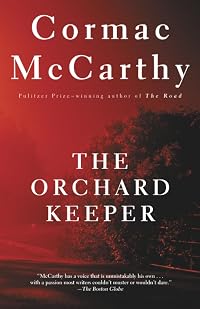
"Suttree" is a fat one, a book with rude, startling power and a flood of talk. Much of it takes place on the Tennessee River, and Cormac McCarthy, who has written "The Orchard Keeper" and other novels, gives us a sense of river life that reads like a doomed "Huckleberry Finn."
added by eereed
Lists

Novels from The Guardian's Great American Novelist Tournament
148 works; 24 members

Recommend the 20 best books you've read in the last five years
2,168 works; 606 members

Favourite Books
1,817 works; 308 members

Books That Changed Me
157 works; 46 members

Top Five Books of 2015
811 works; 241 members

Five star books
1,755 works; 108 members

Books Read in 2023
5,547 works; 145 members


Llibres que he llegit el 2012
28 works; 1 member

Books Read in 2017
4,249 works; 130 members

Best Books on Fisheries, Fishing Fleets and Fish
42 works; 3 members

Recommended Literary Books
111 works; 1 member

N.T. McQueen's Inspiration List
23 works; 1 member
Canon de la narrativa universal del s. XX (cicutadry)
499 works; 3 members

Books That Changed Our Perspective
423 works; 168 members
Harold Bloom - The Western Canon: D. The Chaotic Age
833 works; 24 members

Fiction With Familiar Settings
280 works; 93 members

Cormac McCarthy books
13 works; 1 member
Talk Discussions
Past Discussions
GROUP READ: Suttree by Cormac McCarthy in The 12 in 12 Category Challenge (September 2012)
Author Information

Awards and Honors
Awards
Notable Lists
Series
Belongs to Publisher Series
Work Relationships
Common Knowledge
- Canonical title*
- Suttree
- Original title
- Suttree
- Original publication date
- 1979
- People/Characters
- Cornelius "Buddy" Suttree; Gene Harrogate; Carl Suttree; "Bearhunter"; "Nigger"; Kenneth "Worm" Hazelwood (show all 21); Bobbyjohn; Jimmy Smith; Jim "J-Bone"; Oceanfrog Frazer; Gatemouth; Trippin Through The Dew; Howard Clevenger; Ab Jones; Billy Ray "Red" Callahan; Reese; Byrd Slusser; John, the uncle; Nelson; Earl Solomon; Richard Harper
- Important places
- Knoxville, Tennessee, USA; Sevierville, Tennessee, USA; Tennessee, USA
- Dedication
- The author wishes to express his gratitude to The American Academy of Arts and Letters, The Rockefeller Foundation, and The John Simon Guggenheim Memorial Foundation.
- First words
- Dear friend now in the dusty clockless hours of the town when the streets lie black and steaming in the wake of he watertrucks and now when the drunk and the homeless have washed up in the lee of walls in alleys or abadoned l... (show all)ots and cats go forth highshouldered and lean in the grim perimeters about, now in these soothblacked brick or cobbled corridors where lightwire shadows make a gothic harp of cellar doors no soul shall walk save you.
- Quotations
- They are not rooks in those obsidian winter trees, but stranger fowl, pale, lean and salamandrine birds that move by night unburnt through the moon's blue crucible.
How surely are the dead beyond death. Death is what the living carry with them. A state of dread, like some uncanny foretaste of a bitter memory. But the dead do not remember and nothingness is not a curse. Far from it. - Last words
- (Click to show. Warning: May contain spoilers.)Fly them.
*Some information comes from Common Knowledge in other languages. Click "Edit" for more information.
Classifications
Statistics
- Members
- 3,573
- Popularity
- 4,571
- Reviews
- 78
- Rating
- (4.19)
- Languages
- 12 — Czech, Dutch, English, French, German, Hungarian, Italian, Norwegian, Polish, Portuguese, Serbian, Spanish
- Media
- Paper, Audiobook, Ebook
- ISBNs
- 41
- ASINs
- 18