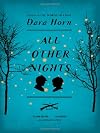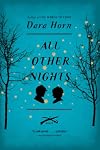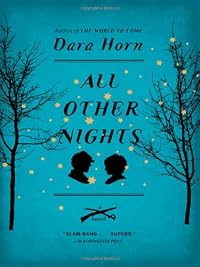
All Other Nights
by Dara Horn 
On This Page
Description
How is tonight different from all other nights? For Jacob Rappaport, a Jewish soldier in the Union army, it is a question his commanders have answered for him: on Passover in 1862, he is ordered to murder his own uncle, who is plotting to assassinate President Lincoln.After that night, will Jacob ever speak for himself? The answer comes when his commanders send him on another mission-this time not to murder a spy but to marry one.A compelling novel rich with romance and the history of show more America (North and South), this is a book only Dara Horn could have written. Full of insight and surprise, layered with meaning, it is a brilliant parable of the moral divide that still haunts us: between those who value family first and those who are dedicated, at any cost, to social and racial justice for all. show lessTags
Recommendations















Member Recommendations
Member Reviews
A very good look at stories seldom told during the American Civil War: that of Jewish life, and that of assassins. The young protagonist, Jacob Rappaport, flees from his boring life learning his father's business in order to join up with the fascinating, exciting life of war. Instead, he finds himself assigned as an assassin to his uncle, wanted by the North, and must choose between family and religious honor vs. his direct orders. The characters Horn develops are richly assigned personalities and histories all their own, and the backdrop of the war is ever-present. Jacob has his happy moments, then tragedy strikes as it often does, and then his real character that he has built over the years comes to the front of the action. The show more burning of Richmond, VA, at the end of the war is also well-crafted and the desperation of those left in the city is palpable. A great reference for students of American Civil War history, Jewish studies, and the Jewish way of life in the mid-1800's in the United States. show less
Sergeant Jacob Rappaport is a young and innocent Jewish soldier knee-deep in espionage working for the North as one of the Union's most talented spies. Reporting for a new assignment, he is informed that there is a plot to assassinate President Lincoln, and that the man behind it must be eliminated. Unfortunately for Jacob, that man is his uncle. In the line of duty, for his country, he is to ingratiate himself into the family home and in cold blood murder his mother's brother! If his assignment is successful, he is to then continue on swiftly to his next mission that will take him into Southern enemy territory across Confederate lines.
Running for his life with the image of a noose around his neck if caught, Jacob's next appointed task show more is to stop a group of female spies, ascertain which of the devious ladies is the ring leader, and marry her in order to stop her secret subterfuge. He finds himself in a home of odd inhabitants with a father lost on how to manage four daughters alone after the hideous recent murder of his wife. Amongst four delightfully alluring women who are creatively combining their individual talents to create a most ingenious method of getting coded messages to their Confederates spy network, Jacob soon falls in love with Jeannie whose talent is magic and slight of hand. Her sister Phoebe is a skilled carver of unusual objects that hide the secret notes that travel from North to South. Rose, the youngest daughter is gifted with words and is in charge of ciphering and decoding the messages, while Lottie, the oldest, collects fiancé's using her charms to uncover much needed information.
Knowing that this assignment is imminent, and that he must marry into the Levy family like it or not, he selects Jeannie as his bride to be. As the two unlikely spies turn lovers, a plot of intrigue, espionage, family feuds, shocking betrayals, and a romance that will glue readers to the pages, offers up an exceptional literary novel of the trials of war. As the newlyweds begin their turbulent new marriage, each fully knowing they are both spies for the other side, the author begins their story of a sultry and seductive life of passion and fear as they endure life, death, and a daughter born in the midst of conflict. They watch their life around them unfold into crisis as the issues of racial bigotry have black slaves and Hebrew Jews fighting for their freedom, and see their world turned upside down as flames of glory and the fires of hell put darkness and light in their paths many times over before their story ends.
Friends, foes, enemy's and lovers, all cross paths in All Other Nights and will have readers totally riveted to this book that is undoubtedly superbly written, and brings characters so alive on the page you can hear them breathing as they hide from enemies in pursuit. Readers will listen to their whispered promises as they arrange their secret liaisons, and will feel their teardrops falling when their passions can not be denied. Turning the pages slowly you will hear their gut wrenching sobs when loved ones are thrown into rat infested prisons, and will stop breathing along with them when clandestine messages are passed on in hope that they will be delivered safely.
Murder, action, romance, espionage. This is a tale of war not to be forgotten. Dara Horn's evocative civil war story will leave a stamp on the readers' memory for a long time to come after closing the finale page. I loved this book. I felt so much compassion for each and every character involved, and I enjoyed the fact that I never knew what path the story would take and wondered right up until the end, how it would all turn out. Bravo to Dara Horn, All Other Nights is an astonishing polished achievement. Hollywood should find this, Book Club discussion groups should choose this. This incredible book totally left me breathless! show less
Running for his life with the image of a noose around his neck if caught, Jacob's next appointed task show more is to stop a group of female spies, ascertain which of the devious ladies is the ring leader, and marry her in order to stop her secret subterfuge. He finds himself in a home of odd inhabitants with a father lost on how to manage four daughters alone after the hideous recent murder of his wife. Amongst four delightfully alluring women who are creatively combining their individual talents to create a most ingenious method of getting coded messages to their Confederates spy network, Jacob soon falls in love with Jeannie whose talent is magic and slight of hand. Her sister Phoebe is a skilled carver of unusual objects that hide the secret notes that travel from North to South. Rose, the youngest daughter is gifted with words and is in charge of ciphering and decoding the messages, while Lottie, the oldest, collects fiancé's using her charms to uncover much needed information.
Knowing that this assignment is imminent, and that he must marry into the Levy family like it or not, he selects Jeannie as his bride to be. As the two unlikely spies turn lovers, a plot of intrigue, espionage, family feuds, shocking betrayals, and a romance that will glue readers to the pages, offers up an exceptional literary novel of the trials of war. As the newlyweds begin their turbulent new marriage, each fully knowing they are both spies for the other side, the author begins their story of a sultry and seductive life of passion and fear as they endure life, death, and a daughter born in the midst of conflict. They watch their life around them unfold into crisis as the issues of racial bigotry have black slaves and Hebrew Jews fighting for their freedom, and see their world turned upside down as flames of glory and the fires of hell put darkness and light in their paths many times over before their story ends.
Friends, foes, enemy's and lovers, all cross paths in All Other Nights and will have readers totally riveted to this book that is undoubtedly superbly written, and brings characters so alive on the page you can hear them breathing as they hide from enemies in pursuit. Readers will listen to their whispered promises as they arrange their secret liaisons, and will feel their teardrops falling when their passions can not be denied. Turning the pages slowly you will hear their gut wrenching sobs when loved ones are thrown into rat infested prisons, and will stop breathing along with them when clandestine messages are passed on in hope that they will be delivered safely.
Murder, action, romance, espionage. This is a tale of war not to be forgotten. Dara Horn's evocative civil war story will leave a stamp on the readers' memory for a long time to come after closing the finale page. I loved this book. I felt so much compassion for each and every character involved, and I enjoyed the fact that I never knew what path the story would take and wondered right up until the end, how it would all turn out. Bravo to Dara Horn, All Other Nights is an astonishing polished achievement. Hollywood should find this, Book Club discussion groups should choose this. This incredible book totally left me breathless! show less
Dara Horn sets her outstanding new novel, All Other Nights, during the Civil War. The story opens when Jacob Rappoport, escaping complications in his own family by joining the Union army, is ordered to murder his own uncle who is suspected of a plot to assassinate Lincoln. Despite his misgivings, Jacob carries out the order during the Passover seder at his uncle’s house in New Orleans in 1861. In so doing, he sets in motion his tragic quest for atonement. More than the traditional seder question, “Why is tonight different from all other nights?” the novel asks the question: Does the person you are one night shape who you are for all other nights?
Jacob’s next assignment is more complicated. He is to marry a young woman suspected show more of being a Confederate spy and who is the daughter of a business associate of Jacob’s father. Not surprisingly, Jacob and Eugenia fall in love. But the outcome isn’t at all as expected and through the course of the rest of the novel Jacob faces what he believes to be the retribution he deserves.
Horn explores many themes in this complex novel. The little known story of Jewish Americans and their role in the Civil War is central, the irony of a people that were themselves enslaved coming to the defense of slavery and even owning slaves. And yet, as with other American families, their families too were torn by war, as witnessed in Jacob’s own family. One of the key characters in the novel is Judah Benjamin, the real-life Secretary of State under Jefferson Davis and one of the most loyal defenders of the Confederacy. Jacob is pitted against Benjamin during the final denouement in the ultimate test of loyalty to a cause.
Throughout the book, the characters struggle with their deceptions and the decisions they make. Spying and subterfuge bring out the best and the worst, and time and again the characters realize that they could have simply said no to what was asked of them. Horn gives her characters depth and dimension in their anguish and remorse over how to do what is right in a time of war. What begins as a seemingly straightforward story takes many twists and turns before coming to its satisfying conclusion.
Well researched and well told, All Other Nights is a literary page turner that will keep you on the edge of your seat while you’re reading it and that will keep you thinking long after it is finished. Highly recommended. show less
Jacob’s next assignment is more complicated. He is to marry a young woman suspected show more of being a Confederate spy and who is the daughter of a business associate of Jacob’s father. Not surprisingly, Jacob and Eugenia fall in love. But the outcome isn’t at all as expected and through the course of the rest of the novel Jacob faces what he believes to be the retribution he deserves.
Horn explores many themes in this complex novel. The little known story of Jewish Americans and their role in the Civil War is central, the irony of a people that were themselves enslaved coming to the defense of slavery and even owning slaves. And yet, as with other American families, their families too were torn by war, as witnessed in Jacob’s own family. One of the key characters in the novel is Judah Benjamin, the real-life Secretary of State under Jefferson Davis and one of the most loyal defenders of the Confederacy. Jacob is pitted against Benjamin during the final denouement in the ultimate test of loyalty to a cause.
Throughout the book, the characters struggle with their deceptions and the decisions they make. Spying and subterfuge bring out the best and the worst, and time and again the characters realize that they could have simply said no to what was asked of them. Horn gives her characters depth and dimension in their anguish and remorse over how to do what is right in a time of war. What begins as a seemingly straightforward story takes many twists and turns before coming to its satisfying conclusion.
Well researched and well told, All Other Nights is a literary page turner that will keep you on the edge of your seat while you’re reading it and that will keep you thinking long after it is finished. Highly recommended. show less
 This review was written for LibraryThing Early Reviewers.
Dara Horn’s books not only pull you in with their compelling plots, but force you to confront, along with the characters, issues of morality, values, and faith.
All Other Nights is a book about slavery and freedom, and how difficult it can be to distinguish one from the other in certain ways. It is set during the American Civil War, and takes its title from part of the ritual during the Jewish holiday of Passover. On the first night of the holiday, a supper called a Seder is held during which family members gather and collectively retell the Exodus story about the escape of Jews from slavery in Ancient Egypt. The youngest son initiates the process by asking ""Why is this night different from all other nights?"
Jacob Rappaport, a show more nineteen-year-old Union soldier, answers this question in a way that will affect the entire rest of his life. He is assigned by his commanders to attend his southern uncle’s Passover Seder and poison him during the meal; the commanders believe the uncle is part of a plot to assassinate Lincoln. Jacob would not be in favor of such a plot, and certainly he finds appalling irony in the spectacle of Jews celebrating the end of slavery while being served by slaves. But he also loves his uncle and thinks he is a good man. Still, Jacob believes he has no choice but to obey the instructions, and he may be correct. Nevertheless, he knows what he has been asked to do is wrong. Indeed, throughout the story, the entire trajectory of Jacob’s life is shaped by his inability to disobey others and to listen to his heart. As the author explains in an interview appended to the story, in this book she is exploring the many ways in which freedom can be understood; those who are physically enslaved but true to themselves can be seen as more free than those who have given up their mental liberty (whether for ambition or love or fear).
Jacob receives another assignment, not understanding that his obedience inspires contempt rather than admiration, and is once again commanded to take advantage of love and family to betray those who trust him. But this time, he falls in love with the woman he has been sent to destroy. Jacob is not let off easy by the author; there is no facile epiphany allowing Jacob to answer to his better angels, and no perfect ending in store for him. Equivocation and attempts at atonement fail to prevent his Biblical-like punishment. Only when Jacob truly gains the courage to be true to himself will he realize any sort of redemption.
Discussion: This novel was exceptionally absorbing, reminding me of the biblical stories that weave in and out of the plot. Jacob is tried and tested, tempted and tortured; he cries out for forgiveness, but doesn’t know how to find it. His journey toward redemption takes him through a wilderness of battles and blood and betrayal and passions, and between families split down the middle by a shocking conflict over the ownership and control of human bodies. Through Jacob’s eyes we experience the horror of being attracted toward something repellant; the self-hatred that comes from realizing you are only human; and the inexorable hand of the Old Testament God, never mentioned directly, but always there: asking for righteousness, and meting out justice when righteousness is denied. This is a book that won’t fail to animate a book club, because nothing that happens lacks moral complexity.
Evaluation: This deeply imagined tale uses the setting of the Civil War to pose questions about the morality of obeying the State when you are asked to do something you consider immoral; the role of trust and honesty in creating enduring relationships; and above all, the sometimes slippery distinctions between slavery and freedom. I think this award-winning author is quite deserving of the many accolades accorded to her. show less
All Other Nights is a book about slavery and freedom, and how difficult it can be to distinguish one from the other in certain ways. It is set during the American Civil War, and takes its title from part of the ritual during the Jewish holiday of Passover. On the first night of the holiday, a supper called a Seder is held during which family members gather and collectively retell the Exodus story about the escape of Jews from slavery in Ancient Egypt. The youngest son initiates the process by asking ""Why is this night different from all other nights?"
Jacob Rappaport, a show more nineteen-year-old Union soldier, answers this question in a way that will affect the entire rest of his life. He is assigned by his commanders to attend his southern uncle’s Passover Seder and poison him during the meal; the commanders believe the uncle is part of a plot to assassinate Lincoln. Jacob would not be in favor of such a plot, and certainly he finds appalling irony in the spectacle of Jews celebrating the end of slavery while being served by slaves. But he also loves his uncle and thinks he is a good man. Still, Jacob believes he has no choice but to obey the instructions, and he may be correct. Nevertheless, he knows what he has been asked to do is wrong. Indeed, throughout the story, the entire trajectory of Jacob’s life is shaped by his inability to disobey others and to listen to his heart. As the author explains in an interview appended to the story, in this book she is exploring the many ways in which freedom can be understood; those who are physically enslaved but true to themselves can be seen as more free than those who have given up their mental liberty (whether for ambition or love or fear).
Jacob receives another assignment, not understanding that his obedience inspires contempt rather than admiration, and is once again commanded to take advantage of love and family to betray those who trust him. But this time, he falls in love with the woman he has been sent to destroy. Jacob is not let off easy by the author; there is no facile epiphany allowing Jacob to answer to his better angels, and no perfect ending in store for him. Equivocation and attempts at atonement fail to prevent his Biblical-like punishment. Only when Jacob truly gains the courage to be true to himself will he realize any sort of redemption.
Discussion: This novel was exceptionally absorbing, reminding me of the biblical stories that weave in and out of the plot. Jacob is tried and tested, tempted and tortured; he cries out for forgiveness, but doesn’t know how to find it. His journey toward redemption takes him through a wilderness of battles and blood and betrayal and passions, and between families split down the middle by a shocking conflict over the ownership and control of human bodies. Through Jacob’s eyes we experience the horror of being attracted toward something repellant; the self-hatred that comes from realizing you are only human; and the inexorable hand of the Old Testament God, never mentioned directly, but always there: asking for righteousness, and meting out justice when righteousness is denied. This is a book that won’t fail to animate a book club, because nothing that happens lacks moral complexity.
Evaluation: This deeply imagined tale uses the setting of the Civil War to pose questions about the morality of obeying the State when you are asked to do something you consider immoral; the role of trust and honesty in creating enduring relationships; and above all, the sometimes slippery distinctions between slavery and freedom. I think this award-winning author is quite deserving of the many accolades accorded to her. show less
All Other Nights is an absorbing page-turner about Jewish life during the American Civil War by Dara Horn, author of The World To Come, which is sitting on my bookshelf, positively begging me to take it down. But first things first.
Young Jacob Rappaport, scion of a wealthy New York family, runs away from home when his father arranges a marriage between Jacob and the daughter of a business associate. Jacob joins the Union Army and is soon dispatched to New Orleans, assigned to assassinate a would-be assassin of Abraham Lincoln; the assassin happens to be Jacob's uncle. Following the successful completion of this assignment, Jacob is sent back to the South, this time faced with insinuating himself into the Levy family, an eccentric band show more of Confederates, and marrying Levy daughter Eugenia a.k.a. Jeannie, an actress who the Union suspects is a spy. From here to the last page, it's game on.
All Other Nights is a big, intimidating-looking book, but it's packed back to front with action and reads very quickly. Horn writes with dizzying effeciency; each chapter could be its own television episode. Remember back when there were these things called mini-series on television? For a week or so, a network would put all of its regular programming on hold and viewers would be treated to an epic, multi-part drama, usually historical or romantic- or both. North and South. Roots. The Winds of War. All Other Nights is that kind of story- sweeping, dramatic and full of action, romance, intrigue and hustle and bustle.
I would describe the style of writing as light historical fiction; Horn concentrates on action and plot over character and other considerations, although Jacob is especially well-drawn and the Levy sisters have distinct, if roughly sketched, personalities. The real star of the book is the Civil War itself and the chaos it wreacked on America. Jacob gets caught up in all kinds of machinations and plots and counter-plots; following his adventures made for compulsively readable fun. It was fascinating to learn about some of the real-life American Jews who were important in the Civil War, like Judah Benjamin, Jefferson Davis's second in command, and to get a little glimpse into early American Jewish culture through the stories of the book's fictional families. Everyone has their own story, and it was great fun to see how it all turned out.
All Other Nights is at once a reference to the first of the Four Questions traditionally asked and answered at the Passover seder ("Why is this night different from all other nights?") and a reference to something Judah Benjamin says close to his last appearance in the book- a statement to the effect that people can't change, and that the person you are tonight is the person you are on all other nights. In other words, this night may be different from all other nights, but we are the same. But is that the case? Can people change? One of the questions haunting the background of the book is the question of character, motivation and the essence of personality. Do our actions define us? Do we have good reasons for the bad things we do? Do those bad things make us bad people? Is it possible to recover, or to forgive? The end, which comes abruptly, offers no easy answers but still leaves the possibility of hope and a better future.
You can also read my review on my blog at http://www.bostonbibliophile.com/2009/04/review-all-other-nights-by-dara-horn.ht... show less
Young Jacob Rappaport, scion of a wealthy New York family, runs away from home when his father arranges a marriage between Jacob and the daughter of a business associate. Jacob joins the Union Army and is soon dispatched to New Orleans, assigned to assassinate a would-be assassin of Abraham Lincoln; the assassin happens to be Jacob's uncle. Following the successful completion of this assignment, Jacob is sent back to the South, this time faced with insinuating himself into the Levy family, an eccentric band show more of Confederates, and marrying Levy daughter Eugenia a.k.a. Jeannie, an actress who the Union suspects is a spy. From here to the last page, it's game on.
All Other Nights is a big, intimidating-looking book, but it's packed back to front with action and reads very quickly. Horn writes with dizzying effeciency; each chapter could be its own television episode. Remember back when there were these things called mini-series on television? For a week or so, a network would put all of its regular programming on hold and viewers would be treated to an epic, multi-part drama, usually historical or romantic- or both. North and South. Roots. The Winds of War. All Other Nights is that kind of story- sweeping, dramatic and full of action, romance, intrigue and hustle and bustle.
I would describe the style of writing as light historical fiction; Horn concentrates on action and plot over character and other considerations, although Jacob is especially well-drawn and the Levy sisters have distinct, if roughly sketched, personalities. The real star of the book is the Civil War itself and the chaos it wreacked on America. Jacob gets caught up in all kinds of machinations and plots and counter-plots; following his adventures made for compulsively readable fun. It was fascinating to learn about some of the real-life American Jews who were important in the Civil War, like Judah Benjamin, Jefferson Davis's second in command, and to get a little glimpse into early American Jewish culture through the stories of the book's fictional families. Everyone has their own story, and it was great fun to see how it all turned out.
All Other Nights is at once a reference to the first of the Four Questions traditionally asked and answered at the Passover seder ("Why is this night different from all other nights?") and a reference to something Judah Benjamin says close to his last appearance in the book- a statement to the effect that people can't change, and that the person you are tonight is the person you are on all other nights. In other words, this night may be different from all other nights, but we are the same. But is that the case? Can people change? One of the questions haunting the background of the book is the question of character, motivation and the essence of personality. Do our actions define us? Do we have good reasons for the bad things we do? Do those bad things make us bad people? Is it possible to recover, or to forgive? The end, which comes abruptly, offers no easy answers but still leaves the possibility of hope and a better future.
You can also read my review on my blog at http://www.bostonbibliophile.com/2009/04/review-all-other-nights-by-dara-horn.ht... show less
This review was written for LibraryThing Early Reviewers.A fast paced historical thriller and love story set among Jewish spies in the Civil War. It is also witty, well written and reads more like literary fiction than genre fiction, for some undefinable reason.
It begins on Passover in 1862 New Orleans with a young New York Jew named Jacob Rappaport sent to murder his uncle who is suspected of plotting to murder Lincoln. It ends in April 1865 in Richmond with events linked to the assassination of President Lincoln. And the connection between the two is Jacob's second major mission as a Federal spy: marrying a Southern Jewish woman to infiltrate the spy ring she has set up with her three young sisters.
As the endnotes make clear, All Other Nights is meticulously researched. But it wears its show more historical erudition lightly and does just enough to bring to life a long dead world. The main real historical figure in the book is the Confederate Secretary of State Judah P. Benjamin, but there are some brief walk-on appearances by some other lesser known figures. And it is historical fiction that tries to stay true to the known facts of history while presenting a secret story underlying them.
By picking Jews as her subject, Dara Horn effectively illustrates the strange way in which the Civil War literally tore families as the end up on either side of the line. And by focusing on spies, she finds a way to tell the story that is not only interesting but allows a lot of interaction between the characters from the different sides and questions about what is and is not true.
Horn is at her strongest in creating four unique, quirky sisters that form the putative Virginia spy ring, each of whom has their own vividly drawn quirks. And a scene near the end of a "starvation ball" just before the fall of Richmond where dirty water is served in wine glasses, empty platters are circulated, and an escape artist performs for a charity function in particularly vivid and strong.
Altogether enjoyable and very interesting. show less
It begins on Passover in 1862 New Orleans with a young New York Jew named Jacob Rappaport sent to murder his uncle who is suspected of plotting to murder Lincoln. It ends in April 1865 in Richmond with events linked to the assassination of President Lincoln. And the connection between the two is Jacob's second major mission as a Federal spy: marrying a Southern Jewish woman to infiltrate the spy ring she has set up with her three young sisters.
As the endnotes make clear, All Other Nights is meticulously researched. But it wears its show more historical erudition lightly and does just enough to bring to life a long dead world. The main real historical figure in the book is the Confederate Secretary of State Judah P. Benjamin, but there are some brief walk-on appearances by some other lesser known figures. And it is historical fiction that tries to stay true to the known facts of history while presenting a secret story underlying them.
By picking Jews as her subject, Dara Horn effectively illustrates the strange way in which the Civil War literally tore families as the end up on either side of the line. And by focusing on spies, she finds a way to tell the story that is not only interesting but allows a lot of interaction between the characters from the different sides and questions about what is and is not true.
Horn is at her strongest in creating four unique, quirky sisters that form the putative Virginia spy ring, each of whom has their own vividly drawn quirks. And a scene near the end of a "starvation ball" just before the fall of Richmond where dirty water is served in wine glasses, empty platters are circulated, and an escape artist performs for a charity function in particularly vivid and strong.
Altogether enjoyable and very interesting. show less
This lengthy novel follows Jacob Rappaport, a young Jewish man in Civil War America. Jacob has grown up in New York, but runs away from an arranged marriage and enlists in the Union Army. There, he is given an assignment: to murder his New Orleans-based uncle, who is planning to assassinate Abraham Lincoln, by joining him at the Passover Seder and poisoning him.
His first assignment is concluded quickly, but he is given another- to infiltrate a Jewish family of Confederate spies in Virginia by marrying one of them. Troubles ensue, and Jacob struggles with is conscience and his growing love for his bride. There is a lengthy detour to the western theater of the war for Jacob, before an attempt at redemption after he suffers a disfiguring show more injury. The historical fiction weaves in Judah Benjamin, the notorious Jewish right hand man of Jefferson Davis, and notes the antisemitism of the time including US Grant's shameful expulsion of the Jews from the territory he captures in the west.
I greatly enjoy all of Horn's work (with this novel, I have read all of her books), though this isn't my favorite. As I've noted before, her books get better as they go- this is the third one, and I found it a bit long and meandering at times- it would have benefited from more economy. The protagonist is not my favorite either- Jacob is frustratingly passive and incompetent, and his bride and her sisters are running rings around him in terms of spycraft.
Still, a good read and a satisfying book. show less
His first assignment is concluded quickly, but he is given another- to infiltrate a Jewish family of Confederate spies in Virginia by marrying one of them. Troubles ensue, and Jacob struggles with is conscience and his growing love for his bride. There is a lengthy detour to the western theater of the war for Jacob, before an attempt at redemption after he suffers a disfiguring show more injury. The historical fiction weaves in Judah Benjamin, the notorious Jewish right hand man of Jefferson Davis, and notes the antisemitism of the time including US Grant's shameful expulsion of the Jews from the territory he captures in the west.
I greatly enjoy all of Horn's work (with this novel, I have read all of her books), though this isn't my favorite. As I've noted before, her books get better as they go- this is the third one, and I found it a bit long and meandering at times- it would have benefited from more economy. The protagonist is not my favorite either- Jacob is frustratingly passive and incompetent, and his bride and her sisters are running rings around him in terms of spycraft.
Still, a good read and a satisfying book. show less
Members
- Recently Added By
Author Information

14+ Works 3,441 Members
Dara Horn is a LibraryThing Author, an author who lists their personal library on LibraryThing.
Awards and Honors
Common Knowledge
- Canonical title
- All Other Nights
- Original title
- All Other Nights
- Original publication date
- 2009-04-02
- People/Characters
- Jacob Rappaport (aka Jacob Samuels); Eugenia Levy; Lottie Levy; Judah P. Benjamin
- Important places
- New Orleans, Louisiana, USA; Washington, D.C., USA; New York, New York, USA; Holly Springs, Mississippi, USA; Virginia, USA
- Important events
- American Civil War (1861 | 1865)
- Dedication
- For Maya and Ari, the cause
- First words
- Inside a barrel in the bottom of a boat, with a canteen of water wedged between his legs and a packet of poison concealed in his pocket, Jacob Rappaport felt a knot tightening in his stomach - not because he was about to do s... (show all)omething dangerous, but because he was about to do something wrong.
- Last words
- (Click to show. Warning: May contain spoilers.)For the first time in his life, as he held his daughter's hand, Jacob Rappaport knew too.
- Publisher's editor
- Mason, Alane Salierno
- Blurbers
- Roiphe, Anne
- Original language
- English
Classifications
Statistics
- Members
- 566
- Popularity
- 52,000
- Reviews
- 46
- Rating
- (3.83)
- Languages
- English, German
- Media
- Paper, Audiobook, Ebook
- ISBNs
- 15
- ASINs
- 2