On This Page
Description
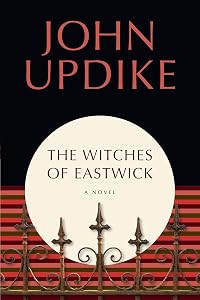
“John Updike is the great genial sorcerer of American letters [and] The Witches of Eastwick [is one of his] most ambitious works. . . . [A] comedy of the blackest sort.”—The New York Times Book ReviewToward the end of the Vietnam era, in a snug little Rhode Island seacoast town, wonderful powers have descended upon Alexandra, Jane, and Sukie, bewitching divorcées with sudden access to all that is female, fecund, and mysterious. Alexandra, a sculptor, summons thunderstorms; Jane, a show more cellist, floats on the air; and Sukie, the local gossip columnist, turns milk into cream. Their happy little coven takes on new, malignant life when a dark and moneyed stranger, Darryl Van Horne, refurbishes the long-derelict Lenox mansion and invites them in to play. Thenceforth scandal flits through the darkening, crooked streets of Eastwick—and through the even darker fantasies of the town’s collective psyche.
“A great deal of fun to read . . . fresh, constantly entertaining . . . John Updike [is] a wizard of language and observation.”—The Philadelphia Inquirer
“Vintage Updike, which is to say among the best fiction we have.”—Newsday
. show less
Tags
Recommendations


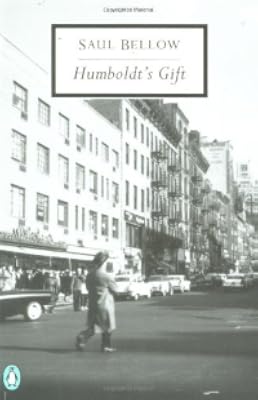


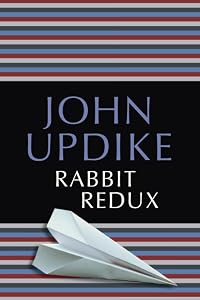
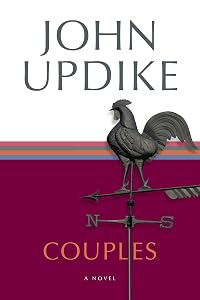
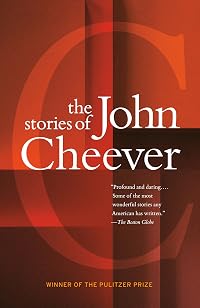



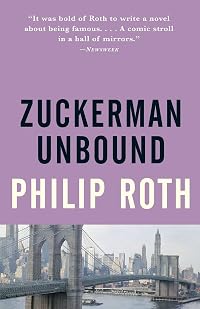


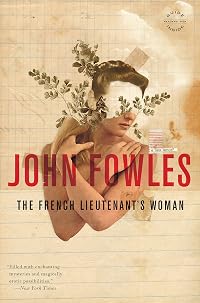

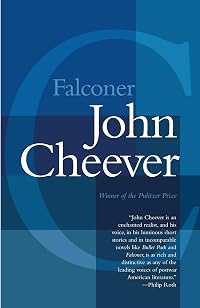
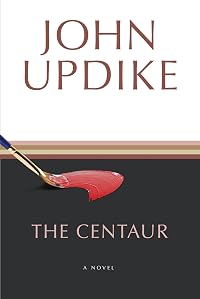

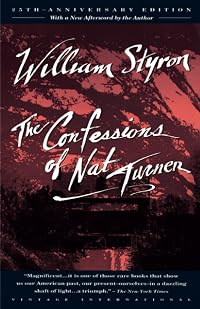


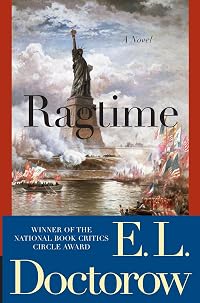
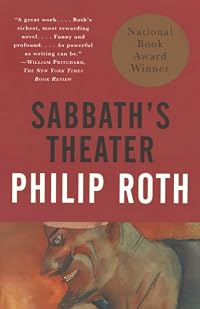
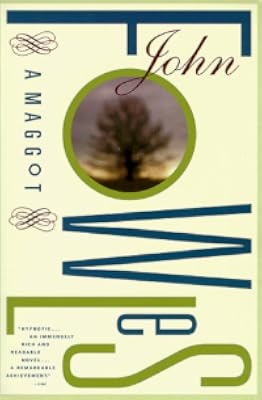




Member Recommendations
by KayCliff
Member Reviews
I literally THREW this book when I finally finished it.
GAH! LAWD have mercy on my soul. It took me over a MONTH to read this book!
How I failed myself:
Step 1: I went into this with very high expectations
Step 2: I ignored reviews – they warned me.
Step 3: I forced myself to be miserable and finish the book when I should have quit!
Step 4: This was a VERY poor choice for an October read.
(please note I rarely curse in my reviews, but I am literally this mad)
Please rename this book to the Bitches of Eastwick. They are not Witches. Not in the least! The title is very misleading. Sure, yeah, they are supposed to be witches so there were like 2 spells thru out the book. But in reality, they are just plain nasty miserable women, past their show more prime, who are the sort of jaded shallow human being that I despise in real life. Im sick of them!
So why am I giving this two stars, instead of 1? Well despite me loathing the characters and the content, and the entire concept of this book…
Its Updike, and he has beautiful language twined up in the middle of the bullshit. grr. So you have to struggle neck deep in bullshit to pull out these tiny little gems.
Example: (Ill probably add plenty more examples at a later time)
“The universe is a pointless, self-running machine, and we are insignificant by-products, whom death will tuck back into oblivion, with or without holy fanfare.”
But this beautiful language was bogged down by really disgusting shit! Too many innocent animals died, too many visuals of disgusting disease ridden penises, really nasty attitudes and then the very explicit detailed murder of an innocent woman for me to enjoy anything.
I think Updike is quite pleased with himself for making us all suffer and squirm.
Updike, I literally hate you right now for this crap you made us suffer thru! I was SO excited to read this. And VERY let down. I read Brazil, and it is STILL one of my all-time favorite books.
No, I will not read the sequel to this book. I would rather sit in a bathtub full of ice in the middle of the coldest day in January, thank you.
Moving onto more pleasurable things.
GOOD RIDDANCE! show less
GAH! LAWD have mercy on my soul. It took me over a MONTH to read this book!
How I failed myself:
Step 1: I went into this with very high expectations
Step 2: I ignored reviews – they warned me.
Step 3: I forced myself to be miserable and finish the book when I should have quit!
Step 4: This was a VERY poor choice for an October read.
(please note I rarely curse in my reviews, but I am literally this mad)
Please rename this book to the Bitches of Eastwick. They are not Witches. Not in the least! The title is very misleading. Sure, yeah, they are supposed to be witches so there were like 2 spells thru out the book. But in reality, they are just plain nasty miserable women, past their show more prime, who are the sort of jaded shallow human being that I despise in real life. Im sick of them!
So why am I giving this two stars, instead of 1? Well despite me loathing the characters and the content, and the entire concept of this book…
Its Updike, and he has beautiful language twined up in the middle of the bullshit. grr. So you have to struggle neck deep in bullshit to pull out these tiny little gems.
Example: (Ill probably add plenty more examples at a later time)
“The universe is a pointless, self-running machine, and we are insignificant by-products, whom death will tuck back into oblivion, with or without holy fanfare.”
But this beautiful language was bogged down by really disgusting shit! Too many innocent animals died, too many visuals of disgusting disease ridden penises, really nasty attitudes and then the very explicit detailed murder of an innocent woman for me to enjoy anything.
I think Updike is quite pleased with himself for making us all suffer and squirm.
Updike, I literally hate you right now for this crap you made us suffer thru! I was SO excited to read this. And VERY let down. I read Brazil, and it is STILL one of my all-time favorite books.
No, I will not read the sequel to this book. I would rather sit in a bathtub full of ice in the middle of the coldest day in January, thank you.
Moving onto more pleasurable things.
GOOD RIDDANCE! show less
I've never seen the movie, but after finishing this I wasnt able to envisage Cher, Pfeiffer and Kidman as the characters therein. This is an absolutely stunning read, as Updike takes his usual (but always brilliantly crafted) themes of sex and dalliance in a New England setting...and adds a touch of Halloween.
Three divorcees - mothers in their 30s with jobs and kids and dogs in a small Rhode Island town- meet up for drinks, gossip and a bit of witchcraft. There's earth-mother Alexandra, with her sculpture, health fears and flabby thighs, sparky red-head journalist Sukie and the most unknowable and dark cellist Jane.
Then one day wealthy stranger Darryl van Horne moves into town; his scientific interests make him something of a wizard show more and all three make a play for him.
Updike can't write a bad novel; I gravitate more to his tales of real people, but this was unputdownable. Emphatically not about comedy or special effects (I think of the movie and feel unmotivated to watch it) with themes of murder, suicide, death-wishing and orgiastic playtimes at Mr Horne's mansion. All set to read the sequel.... show less
Three divorcees - mothers in their 30s with jobs and kids and dogs in a small Rhode Island town- meet up for drinks, gossip and a bit of witchcraft. There's earth-mother Alexandra, with her sculpture, health fears and flabby thighs, sparky red-head journalist Sukie and the most unknowable and dark cellist Jane.
Then one day wealthy stranger Darryl van Horne moves into town; his scientific interests make him something of a wizard show more and all three make a play for him.
Updike can't write a bad novel; I gravitate more to his tales of real people, but this was unputdownable. Emphatically not about comedy or special effects (I think of the movie and feel unmotivated to watch it) with themes of murder, suicide, death-wishing and orgiastic playtimes at Mr Horne's mansion. All set to read the sequel.... show less
I was struck throughout reading this book how the author, a man, wrote a story about women and primarily narrated through women's POV so intimately. This book is definitely not another cookie cutter witch story; it's characters and plot details will be with me for a long time. However, I am disturbed by the overall plot arc.
This story begins with a group of women who gain the power of witches when they rid themselves of their husbands. They spend the majority of the book misusing that power, doing some very evil or just creepy things, yet never rising above the need to have one pathetic man or another in their lives. The story ends when they give up their powers and marry again. I'm really not sure what the author is saying here - that show more women can't rise above or be something good independent of a man? That even being a witch, which has always (for good or ill) symbolized female empowerment, doesn't make a woman less than petty and needy? This remains a fascinating story painted in all kinds of grays, but the lack of a strong or good woman in the story bothers me. Still can't rate it less than 4 stars, for its utter uniqueness. show less
This story begins with a group of women who gain the power of witches when they rid themselves of their husbands. They spend the majority of the book misusing that power, doing some very evil or just creepy things, yet never rising above the need to have one pathetic man or another in their lives. The story ends when they give up their powers and marry again. I'm really not sure what the author is saying here - that show more women can't rise above or be something good independent of a man? That even being a witch, which has always (for good or ill) symbolized female empowerment, doesn't make a woman less than petty and needy? This remains a fascinating story painted in all kinds of grays, but the lack of a strong or good woman in the story bothers me. Still can't rate it less than 4 stars, for its utter uniqueness. show less
It has been a while since I was so unsure how exactly I felt about a book. Updike is obviously very smart and dang the guy can turn a phrase -- he has pages and pages of heavy lifting sentences composed of phrase after descriptive phrase, long paragraphs describing houses, yards, the town of Eastwick, and the bodies and mannerisms of our three protagonist witches and the banal and slightly-magical world in which they live. Interspersed with these grand paragraphs are fast-paced conversations, rambling dialogue, and meandering thoughts. Plus more than a little sex, often suddenly and roughly introduced after the reader was lulled into the pacing of the aforementioned rigorous descriptions. The three witches are all divorcees living in show more the small Rhode Island city of Eastwick in the Vietnam-era. They have kids that they mostly resent and ignore, and ex-husbands that were sacrificed for their wives' independence. You see, breaking free from their traditional roles as housewives unleashed witchy powers, sexual urges, and a real dislike for conventionality. Mostly they use their magic for small acts of revenge (untying shoelaces, killing barking dogs, making bugs and leaves come out of their enemies mouths), or convenience (turning milk into cream in a diner, messing up each other's tennis games). The three of them have formed a little coven and get together once a week to gossip, drink, and make passes at each other. Then a mysterious stranger, Daryl Van Horne, moves to town and shakes things up for all three witches. It soon becomes clear that he is also a bit magical and.... weird. And soon the weekly get togethers move to Daryl's house with lots of hot tubbing, sexuality, and witchy jealousy, especially when non-witch (or is she?) Jenny comes on the scene. There are some interesting, but also confusing shifts in point of view. The book is generally told in third person through the perspective of one of the three witches, but a couple (very disturbing) scenes follow a local man who one of them is having an affair with and his wife. And at the mid-point of the novel and briefly towards the end we also get a "we" perspective from the town itself, apparently looking back at the events in the novel. Finally, the ending is not what I wanted at all from these characters and, this is a me problem only, there is a lot of cancer stuff in the book that I could have done without. And yet I didn't hate it! Although I also didn't really like it. I never saw the movie version of the book, but from what I gather, the book is pretty different. I want to watch it now to see exactly how -- plus I love me some Cher.... show less
Originally, I told myself I'd give this book to the 10% mark to grab me, and then I'd DNF it. I did make it to 40%! But as I reflected on it this weekend, I realized I still couldn't say I was actually enjoying it at all on pretty much any level. Time to cut my losses.
Turn-Offs, in order of irritation:
- a male author writing female characters rhapsodizing about their newfound embrace of womanhood as they got older, got divorced, became witches. Bold move, Cotton. WORSE, there were 2 different places in which a female character muses on that natural healing nature/instinct of women... sexual healing, natch. The more a guy is a depressed, useless, schlubby, unattractive loser, the more they just want to open their bodies to him to show more provide him that sexual healing. Of course. That screams male wish-fulfillment waaaaaaaaaaaaaaaay more than it does female sexual empowerment!
At least 2/3 of the women are sleeping with married men (not their first time doing that, either...) with no compunctions about it, but neither do they seem especially happy or fulfilled by it. And then they all sort of compete for/share in the "affections" of the newcomer to the town, who is this abrasive, overbearing, mansplaining dick.
- hard to catch any of the historicity of the setting. Peak sexual revolution and social upheaval, and none of it more than barely mentioned in passing a couple times. What's the point?
- sentences for days. I don't think of myself as the kind of person typically bothered by superfluous details in books (I like all the food descriptions in ASoIaF!), but damn, those were a lot of words to say not a lot about nothing very important, over and over. So many semicolons.
- it was hard to get a grip on how said magic existed. I'm willing to give some leeway on this, but this is an otherwise real-life historical ("Vietnam era") setting with otherwise normal life crap going on, but their magic is definitely real, apparently. It's just taken for granted that they found this outlet, which... if this is an integral part to their new identities... And I mean, I'm cool with unexplained magic, and authors/creators often go wrong in trying to justify or explain the inexplicable. But this is not set up necessarily as "the world is magic, deal with it," so it's just this odd choice that's not even the point of anything, so why...? show less
Turn-Offs, in order of irritation:
- a male author writing female characters rhapsodizing about their newfound embrace of womanhood as they got older, got divorced, became witches. Bold move, Cotton. WORSE, there were 2 different places in which a female character muses on that natural healing nature/instinct of women... sexual healing, natch. The more a guy is a depressed, useless, schlubby, unattractive loser, the more they just want to open their bodies to him to show more provide him that sexual healing. Of course. That screams male wish-fulfillment waaaaaaaaaaaaaaaay more than it does female sexual empowerment!
At least 2/3 of the women are sleeping with married men (not their first time doing that, either...) with no compunctions about it, but neither do they seem especially happy or fulfilled by it. And then they all sort of compete for/share in the "affections" of the newcomer to the town, who is this abrasive, overbearing, mansplaining dick.
- hard to catch any of the historicity of the setting. Peak sexual revolution and social upheaval, and none of it more than barely mentioned in passing a couple times. What's the point?
- sentences for days. I don't think of myself as the kind of person typically bothered by superfluous details in books (I like all the food descriptions in ASoIaF!), but damn, those were a lot of words to say not a lot about nothing very important, over and over. So many semicolons.
- it was hard to get a grip on how said magic existed. I'm willing to give some leeway on this, but this is an otherwise real-life historical ("Vietnam era") setting with otherwise normal life crap going on, but their magic is definitely real, apparently. It's just taken for granted that they found this outlet, which... if this is an integral part to their new identities... And I mean, I'm cool with unexplained magic, and authors/creators often go wrong in trying to justify or explain the inexplicable. But this is not set up necessarily as "the world is magic, deal with it," so it's just this odd choice that's not even the point of anything, so why...? show less
This book ends less happily than the movie; in fact, the book and the movie go in very different directions after a certain event.
What I will mainly remember about this book is its unsympathetic treatment of the main characters, who are all women. It is not that the characters are inherently dislikable, though some become dislikable in the course of the story (while others do not, or do so to a lesser degree). It is that the writing is, somehow, disparaging towards them; regardless of what about them is being described, the words and sentences suggest an air of foolishness or absurdity or ridiculousness. (The men don't escape unscathed, but they aren't developed nearly as much, either.) Literary archetypes of women (virgin, whore, show more bitch, &c.) are strongly invoked, but the overall effect is to create caricatures of those archetypes rather than to provide any serious insight into Woman or women. About the only affirmative aspect of the main characters' portrayal is their strength of character: though the unpleasantnesses in their characters vitiate that to a greater or lesser extent. In a sort of a inversion, it seems that the men characters are weak and merely responsive, whereas almost all of the women characters (main or not) are quite strong and self-willed, but this does not redound to their credit.
In a similar connection, the other thing I am likely to remember is the sex. It's not a pornographic book, but sex is one of (if not the) main motifs. The writing about sex-the-act, about characters' attitudes towards sex, about characters' own sexuality, and about the sexual relations between characters all, to me, sound very 1970s, which is perfectly understandable given the date of publication. In this respect it has a sort of anthropological or historical interest, at least to one who didn't experience 1970s sexual environment first-hand. In another respect, though, given the emphasis on women characters, the prominence of sex is unsurprising but trite, and contributes to the general air of disrespect towards the characters.
What I still, for the moment, remember about this book was its interesting rendering of witchcraft, which is mostly implied through concrete, witchy actions, but there are enough to draw some conclusions about the witchcraft generally.
Overall, the book seems mainly to be a character study. The plot is quite simple, and seems to exist mainly to provide situations around which the characters can be developed. The tone reminds me somewhat of Salinger's The Catcher in the Rye. show less
What I will mainly remember about this book is its unsympathetic treatment of the main characters, who are all women. It is not that the characters are inherently dislikable, though some become dislikable in the course of the story (while others do not, or do so to a lesser degree). It is that the writing is, somehow, disparaging towards them; regardless of what about them is being described, the words and sentences suggest an air of foolishness or absurdity or ridiculousness. (The men don't escape unscathed, but they aren't developed nearly as much, either.) Literary archetypes of women (virgin, whore, show more bitch, &c.) are strongly invoked, but the overall effect is to create caricatures of those archetypes rather than to provide any serious insight into Woman or women. About the only affirmative aspect of the main characters' portrayal is their strength of character: though the unpleasantnesses in their characters vitiate that to a greater or lesser extent. In a sort of a inversion, it seems that the men characters are weak and merely responsive, whereas almost all of the women characters (main or not) are quite strong and self-willed, but this does not redound to their credit.
In a similar connection, the other thing I am likely to remember is the sex. It's not a pornographic book, but sex is one of (if not the) main motifs. The writing about sex-the-act, about characters' attitudes towards sex, about characters' own sexuality, and about the sexual relations between characters all, to me, sound very 1970s, which is perfectly understandable given the date of publication. In this respect it has a sort of anthropological or historical interest, at least to one who didn't experience 1970s sexual environment first-hand. In another respect, though, given the emphasis on women characters, the prominence of sex is unsurprising but trite, and contributes to the general air of disrespect towards the characters.
What I still, for the moment, remember about this book was its interesting rendering of witchcraft, which is mostly implied through concrete, witchy actions, but there are enough to draw some conclusions about the witchcraft generally.
Overall, the book seems mainly to be a character study. The plot is quite simple, and seems to exist mainly to provide situations around which the characters can be developed. The tone reminds me somewhat of Salinger's The Catcher in the Rye. show less
The Witches of Eastwick – John Updike
4 stars
This is Updike’s 1984 novel about three divorced, suburban women who happen to be witches. The story is set in an imaginary Rhode Island town during the early 70’s. Updike paints a gossipy picture of the private and not so private interactions of Eastwick’s inhabitants. I was immediately attracted to the wry humor of Updike’s descriptions. Each of these witches discovered their powers upon separating from their husbands. They each have the remains of a husband preserved in some diabolical and symbolic way. I loved the humor of the spells cast to sabotage the opposing teams while they played doubles tennis with the town’s new and mysterious bachelor. The whole town of Eastwick lives show more and breathes in the many descriptive passages. I couldn’t help enjoying the rich quality of the language. I just didn’t like any of the characters and I didn’t really want to know the intimate details of their sordid affairs. My 4 star rating for the book doesn’t reflect how much I enjoyed the story. I didn’t really like it, but like it or not, I have to acknowledge the skill and beauty of the writing. show less
4 stars
This is Updike’s 1984 novel about three divorced, suburban women who happen to be witches. The story is set in an imaginary Rhode Island town during the early 70’s. Updike paints a gossipy picture of the private and not so private interactions of Eastwick’s inhabitants. I was immediately attracted to the wry humor of Updike’s descriptions. Each of these witches discovered their powers upon separating from their husbands. They each have the remains of a husband preserved in some diabolical and symbolic way. I loved the humor of the spells cast to sabotage the opposing teams while they played doubles tennis with the town’s new and mysterious bachelor. The whole town of Eastwick lives show more and breathes in the many descriptive passages. I couldn’t help enjoying the rich quality of the language. I just didn’t like any of the characters and I didn’t really want to know the intimate details of their sordid affairs. My 4 star rating for the book doesn’t reflect how much I enjoyed the story. I didn’t really like it, but like it or not, I have to acknowledge the skill and beauty of the writing. show less
Members
- Recently Added By
Published Reviews
ThingScore 100
Mr. Updike takes ''sisterhood is powerful'' at its word and imagines it literally. What if sisterhood really is powerful? What will the sisters use their ''powers'' for? And what - given human nature, of which Mr. Updike takes not too bright a view - what then? Luckily these witches are only interested in the ''personal,'' rather than the ''political''; otherwise they might have done something show more unfrivolous, like inventing the hydrogen bomb.... ''The Witches of Eastwick'' is an excursion rather than a destination. Like its characters, it indulges in metamorphoses, reading at one moment like Kierkegaard, at the next like Swift's ''Modest Proposal,'' and at the next like Archie comics, with some John Keats thrown in. This quirkiness is part of its charm, for, despite everything, charming it is. As for the witches themselves, there's a strong suggestion that they are products of Eastwick's - read America's - own fantasy life. show less
added by Lemeritus
Lists

The Guardian's 1000 Novels Everyone Must Read
1,005 works; 551 members

Read the book and saw the movie
1,170 works; 192 members

Magic Realism
371 works; 52 members

Books I've Read More Than Once
602 works; 49 members

Best Books Involving Satan
63 works; 26 members

1980s
356 works; 23 members

New England Books
101 works; 10 members

100 Best Thrillers of All Time
100 works; 6 members

Harold Bloom - The Western Canon: D. The Chaotic Age
833 works; 24 members

75 Books Challenge Halloween Read "Official" Selections
71 works; 7 members

Rory Gilmore Book Club
193 works; 5 members

Literary Travelogue of the United States Challenge
133 works; 6 members

Books Set in Small Towns and Villages
278 works; 16 members

Books Read in 2006
422 works; 8 members
American Lit for Eng 11 Research Project
368 works; 6 members

Witches and Wizards Oh My
135 works; 12 members
Books in Riverdale
123 works; 3 members

The Complete Rory Gilmore Reading List
506 works; 5 members

Devilish Books
15 works; 3 members

Lucy's Long List
69 works; 1 member

Nightmares Not Included
175 works; 3 members

Witchy Fiction
253 works; 126 members

David Pringle's Modern Fantasy: The 100 Best Novels
100 works; 5 members

The "A" List
67 works; 8 members
Talk Discussions
Past Discussions
What's your vote for the worst movie made of a good book? in Jo's Book Group (September 2022)
Author Information

342+ Works 53,771 Members
American novelist, poet, and critic John Updike was born in Reading, Pennsylvania on March 18, 1932. He received an A.B. degree from Harvard University, which he attended on a scholarship, in 1954. After graduation, he accepted a one-year fellowship to study painting at the Ruskin School of Drawing and Fine Art in Oxford, England. After returning show more from England in 1955, he worked for two years on the staff of The New Yorker. This marked the beginning of a long relationship with the magazine, during which he has contributed numerous short stories, poems, and book reviews. Although Updike's first published book was a collection of verse, The Carpentered Hen and Other Tame Creatures (1958), his renown as a writer is based on his fiction, beginning with The Poorhouse Fair (1959). During his lifetime, he wrote more than 50 books and primarily focused on middle-class America and their major concerns---marriage, divorce, religion, materialism, and sex. Among his best-known works are the Rabbit tetrology---Rabbit, Run (1960), Rabbit Redux (1971), Rabbit Is Rich (1981), and Rabbit at Rest (1988). Rabbit, Run introduces Harry "Rabbit" Angstrom as a 26-year-old salesman of dime-store gadgets trapped in an unhappy marriage in a dismal Pennsylvania town, looking back wistfully on his days as a high school basketball star. Rabbit Redux takes up the story 10 years later, and Rabbit's relationship with representative figures of the 1960s enables Updike to provide social commentary in a story marked by mellow wisdom and compassion in spite of some shocking jolts. In Rabbit Is Rich, Harry is comfortably middle-aged and complacent, and much of the book seems to satirize the country-club set and the swinging sexual/social life of Rabbit and his friends. Finally, in Rabbit at Rest, Harry arrives at the age where he must confront his mortality. Updike won the Pulitzer Prize for both Rabbit Is Rich and Rabbit at Rest. Updike's other novels range widely in subject and locale, from The Poorhouse Fair, about a home for the aged that seems to be a microcosm for society as a whole, through The Court (1978), about a revolution in Africa, to The Witches of Eastwick (1984), in which Updike tries to write from inside the sensibilities of three witches in contemporary New England. The Centaur (1963) is a subtle, complicated allegorical novel that won Updike the National Book Award in 1964. In addition to his novels, Updike also has written short stories, poems, critical essays, and reviews. Self-Consciousness (1989) is a memoir of his early life, his thoughts on issues such as the Vietnam War, and his attitude toward religion. He was elected to the American Academy of Arts and Letters in 1977. He died of lung cancer on January 27, 2009 at the age of 76. (Bowker Author Biography) John Updike was born in 1932, in Shillington, Pennsylvania. Since 1957 he has lived in Massachusetts. His novels have won the Pulitzer Prize, the National Book Award, the National Book Critics Circle Award, & the Howells Medal. (Publisher Provided) John Updike was born in 1932 and attended Harvard College and the Ruskin School of Drawing and Fine Art in Oxford, England. Form 1955 to 1957 he was a staff member of The New Yorker, which he contributed numerous writings. Updike's art criticism has appeared in publications including Arts and Antiques, The New Republic, The New York Times Book Review, and Realites, among many others. He is the author of such best-selling novels as Rabbit Run and Rabbit is Rich. His many works of fiction, poetry and criticism have been awarded the Pulitzer Prize, the National Book Award, the American Book Award, and the National Book Critics Circle Award. For the past 40 years he has lived in Massachusetts. (Publisher Provided) John Updike is the author of some 50 books, including collections of short stories, poems, & criticism. His novels have won the Pulitzer Prize, the National Book Award, the National Book Critics Circle Award, & the Howells Medal. Born in Shillington, Pennsylvania, in 1932, he has lived in Massachusetts since 1957. (Publisher Provided) show less
Some Editions
Awards and Honors
Awards
Distinctions
Series

Belongs to Publisher Series
Work Relationships
Is contained in
Has the adaptation
Common Knowledge
- Canonical title*
- Az eastwicki boszorkányok
- Original title
- The Witches of Eastwick
- Original publication date
- 1984
- People/Characters
- Alexandra Spofford; Jane Smart; Sukie Rougemont; Darryl Van Horne
- Important places
- Eastwick, Rhode Island, USA; Rhode Island, USA
- Related movies
- The Witches of Eastwick (1987 | IMDb); The Witches of Eastwick (1992 | IMDb); Eastwick (2002 | IMDb); Eastwick (2009 | IMDb)
- Epigraph
- He was a meikle blak roch man, werie cold.
—Isobel Gowdie, in 1662
Now efter that the deuell had endit his admonitions, he cam down out of the pulpit, and caused all the company to com and kiss his ers, quihilk they said was cauld lyk yce; his body was hard lyk yrn, as they thocht that handl... (show all)ed him.
—Agnes Sampson, in 1590 - First words
- "And oh yes," Jane Smart said in her hasty yet purposeful way; each s seemed the black tip of a just-extinguished match held in a playful hurt, as children do, against the skin. "Sukie said a man has bought the Lenox m... (show all)ansion."
- Quotations
- For the last time...the exact blue of such a July day falls into my eyes. My lids lift, my corneas admit the light, my lenses focus it, my retinas and optic nerve report it to the brain. Tomorrow the Earth's poles will tilt... (show all) a day more toward August and autumn, and a slightly different tincture of light and vapor will be distilled.
- Last words
- (Click to show. Warning: May contain spoilers.)We meet it turning the corner where Hemlock meets Oak; it is there when we walk the beach in off-season and the Atlantic in its blackness mirrors the dense packed gray of the clouds: a scandal, life like smoke rising twisted into legend.
- Publisher's editor
- Horváth, Gy László; Jones, Judith
- Original language*
- English
- Canonical DDC/MDS
- 813.54
- Canonical LCC
- PS3571.P4
*Some information comes from Common Knowledge in other languages. Click "Edit" for more information.
Classifications
Statistics
- Members
- 3,542
- Popularity
- 4,661
- Reviews
- 51
- Rating
- (3.28)
- Languages
- 20 — Chinese, Czech, Danish, Dutch, English, Finnish, French, German, Greek, Hungarian, Italian, Norwegian (Bokmål), Norwegian, Polish, Romanian, Russian, Serbian, Spanish, Swedish, Portuguese (Portugal)
- Media
- Paper, Audiobook, Ebook
- ISBNs
- 64
- ASINs
- 30