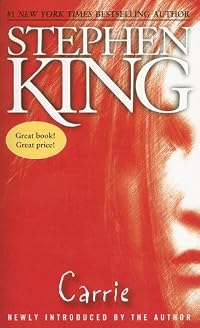
Carrie
by Stephen King
On This Page
Description
An unpopular teenage girl whose mother is a religious fanatic is tormented and teased to the breaking point by her more popular schoolmates and uses her hidden telekinetic powers to inflict a terrifying revenge.Tags
Recommendations

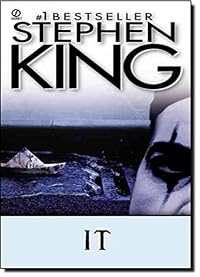
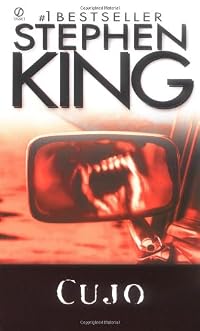
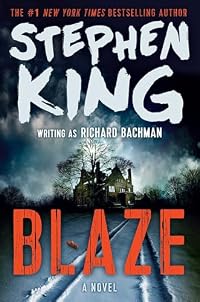
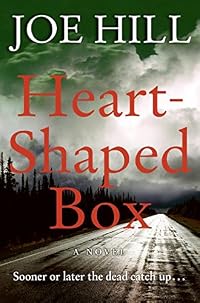
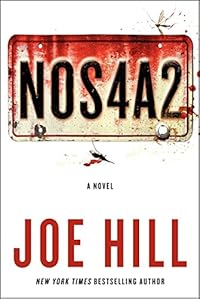
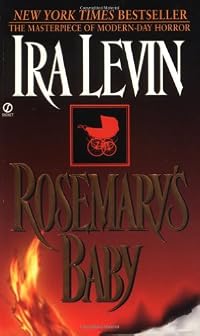
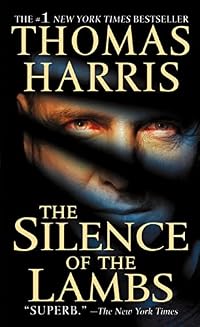
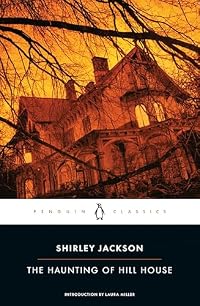








Member Recommendations
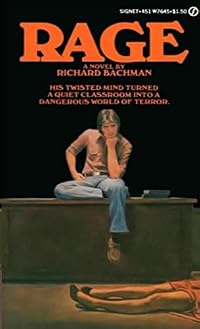
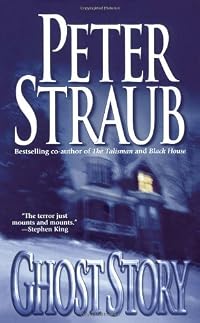
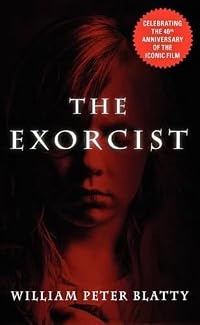
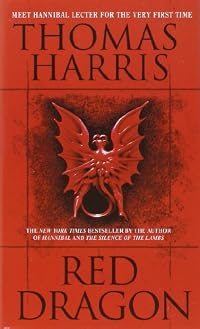
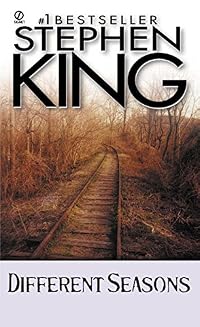
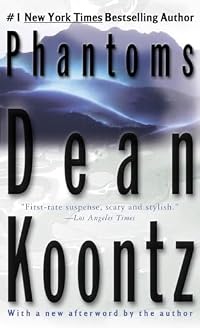
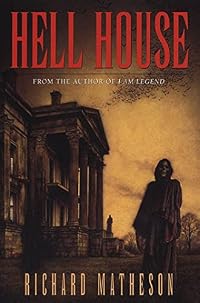
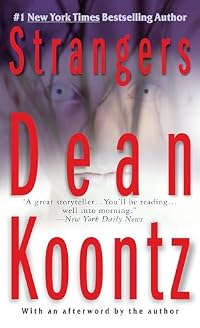
akblanchard Carrie White has much in common with Jackson's shy, bullied heroine Eleanor Vance.
20
lquilter If you like tortured pyrokinetics with tragic endings, and don't mind radical changes in mood and style ... try Stephen King's Carrie for the horror take, and Mercedes Lackey's Brightly Burning for the fantasy take.
Member Reviews
I read Carrie in middle school--it was probably my fourth Stephen King book, after It and Night Shift and Eyes of the Dragon--and although I enjoyed it, this second read made me realize that much of the nuance and impact went over my head. Back then, I didn't have a real understanding of extremist religion or the impact of bullying. Carrie herself was so naive that she as a character felt unbelievable because she was so outside my experience, and I didn't understand how sheltered an extremist parent *could* keep their child if they so desired. It was the same with the religion--it was so extreme, so outside my experience, it felt unbelievable. Thirty years later, reading this book as an adult who's well aware of all of these factors and show more how painfully believable the character and situation are, telekinesis aside, made for a very different read, even when I went in knowing what to expect. The sheer power of the everyday horror, of the bullying and extremism and lack of love even between family, has such an impact, and although I felt the hatred in the story as a child reading the book, it hits much differently now.
I think this is probably a book everyone should read, to be honest, horror lover or not. There's a power to the story and to the humanity of it that goes beyond the story, uncomfortable as it may be. show less
I think this is probably a book everyone should read, to be honest, horror lover or not. There's a power to the story and to the humanity of it that goes beyond the story, uncomfortable as it may be. show less
'Carrie' was Stephen King's first published novel (1974) although his fourth to be written. It is an act of exorcism of teenage shame as becomes clear if you read King's own introduction to this edition. It is as not so much about bullying but the emotional result of doing nothing about bullying.
You can come down in your sympathies on one of two sides. For Carrie as lumpenproletariat scapegoat and victim of the viciousness that is the American High School or for a largely innocent town and youth destroyed by her vengeful rage. This moral ambiguity makes this a major first horror novel.
King himself tends to squirm a bit, recognising his own past cowardice and that of others, but countering that this is just what happens when you are an show more undeveloped human, a teenager. His instincts are towards the small town and all the lives lost -consequentialist to the core.
But he knows he is on shaky moral ground. It is the honesty of his writing that shines through - Carrie destroys because she has been destroyed. The world as she sees it has done nothing (whether family or school) but been other than active or complicit in her destruction.
One could say, against conventional morality, that her violence is heroic. She has been pushed into it by society (whether a lousy upbringing or 'normie' cruelty). The alternative to her existentialist revolt would be lonely suicide as was the outcome for one of King's own adolescent models.
Given that Carrie is essentially super-normal 'psycho-kinetic' (which might stand in for any other apparent 'abnormality' like autism or sexual difference), the bullying of the adolescent school girls that drives her into extremity looks like the final effort at survival of her essential self.
So, while King comes down clearly on the side of the small town and normality (as he does more obviously and cleanly in 'Salem's Lot' against the more obviously inhuman), he has the courage here to lay out choices for us - the freak's survival (though she be human) or ours (as the normal).
This is not a trivial matter because the mentality and revolt of Carrie could be read back easily enough into the conditions that lead to at least some acts of terrorism. The book stops us short, forcing us to make some awkward and defining judgements on the nature of good and evil.
If you do not end up with some sympathy for the dying Carrie after all she has gone through and do not despise the adolescent cruelty that led her to her murderous rage then you are implicitly complicit not only in the cruelty wreaked on her but on all similar cruelties on similar social scapegoats.
The most interesting aspect of the novel thus lies not in understanding Carrie or the cruelty of adolescent High School girls but in the presentation of the 'good' normal people - Susan Snell, Tommy Ross, the gym teacher Rita Desjarfin.
These people have all the right sentiments but their empathy tends to be retrospective, introspective and redolent of cowardice. They try to make things better only to make things worse. Whether intentionally or not, King has encapsulated the weakness of the American liberal.
This is psychological horror at its best. The apocalyptic end far exceeds what any film version could do with the story but the reader's discomfort comes not from the cathartic death rate but from the way King weaves his fingers into our reservoirs of personal guilt and shame.
The result is an odd mix of fatalism and implicit moral instruction. The reader is really being asked to absolve themselves because they are weak and can be no other than they are. Little can be done about endemic bullying and literary sympathy is about as far as we can go in dealing with it.
There is conservatism and despair in this positioning. There is no questioning here of scapegoating or of the American High School system, only a vague implicit appeal to withdraw from direct complicity or engagement lest you make things worse. Maybe start by being kind from the beginning if you can.
There is one flaw in the book that detracts from the whole. King (still at the start of his career) periodically introduces a tentative bit of literary experimentation that jars by splitting paragraphs with bracketed 'thoughts'. This is a shame because it works at the point of crisis but not otherwise.
Fortunately, in Salem's Lot, King gave up on trying to be literary (the curse of culture) and went for what he was to do best - be a story teller of genius who writes extremely well. Otherwise, Carrie has all the hall marks of King - readable prose that wants you to keep reading.
We can see why the book has been filmed three times. It meets the twin needs of exorcising Americans' ambiguous relationship to their formative adolescent high school experience and presenting an uncomfortable but decisive way of exorcising guilt and shame over 'normal' behaviours.
But, at the end of the day, I am sure I am not alone in seeing Carrie, the individual, as the focus of my sympathy and the flaccid, cowardly, unthinking if (mostly) 'innocent' small town victims as far less interesting and, ultimately, far less worthy of redemption. show less
You can come down in your sympathies on one of two sides. For Carrie as lumpenproletariat scapegoat and victim of the viciousness that is the American High School or for a largely innocent town and youth destroyed by her vengeful rage. This moral ambiguity makes this a major first horror novel.
King himself tends to squirm a bit, recognising his own past cowardice and that of others, but countering that this is just what happens when you are an show more undeveloped human, a teenager. His instincts are towards the small town and all the lives lost -consequentialist to the core.
But he knows he is on shaky moral ground. It is the honesty of his writing that shines through - Carrie destroys because she has been destroyed. The world as she sees it has done nothing (whether family or school) but been other than active or complicit in her destruction.
One could say, against conventional morality, that her violence is heroic. She has been pushed into it by society (whether a lousy upbringing or 'normie' cruelty). The alternative to her existentialist revolt would be lonely suicide as was the outcome for one of King's own adolescent models.
Given that Carrie is essentially super-normal 'psycho-kinetic' (which might stand in for any other apparent 'abnormality' like autism or sexual difference), the bullying of the adolescent school girls that drives her into extremity looks like the final effort at survival of her essential self.
So, while King comes down clearly on the side of the small town and normality (as he does more obviously and cleanly in 'Salem's Lot' against the more obviously inhuman), he has the courage here to lay out choices for us - the freak's survival (though she be human) or ours (as the normal).
This is not a trivial matter because the mentality and revolt of Carrie could be read back easily enough into the conditions that lead to at least some acts of terrorism. The book stops us short, forcing us to make some awkward and defining judgements on the nature of good and evil.
If you do not end up with some sympathy for the dying Carrie after all she has gone through and do not despise the adolescent cruelty that led her to her murderous rage then you are implicitly complicit not only in the cruelty wreaked on her but on all similar cruelties on similar social scapegoats.
The most interesting aspect of the novel thus lies not in understanding Carrie or the cruelty of adolescent High School girls but in the presentation of the 'good' normal people - Susan Snell, Tommy Ross, the gym teacher Rita Desjarfin.
These people have all the right sentiments but their empathy tends to be retrospective, introspective and redolent of cowardice. They try to make things better only to make things worse. Whether intentionally or not, King has encapsulated the weakness of the American liberal.
This is psychological horror at its best. The apocalyptic end far exceeds what any film version could do with the story but the reader's discomfort comes not from the cathartic death rate but from the way King weaves his fingers into our reservoirs of personal guilt and shame.
The result is an odd mix of fatalism and implicit moral instruction. The reader is really being asked to absolve themselves because they are weak and can be no other than they are. Little can be done about endemic bullying and literary sympathy is about as far as we can go in dealing with it.
There is conservatism and despair in this positioning. There is no questioning here of scapegoating or of the American High School system, only a vague implicit appeal to withdraw from direct complicity or engagement lest you make things worse. Maybe start by being kind from the beginning if you can.
There is one flaw in the book that detracts from the whole. King (still at the start of his career) periodically introduces a tentative bit of literary experimentation that jars by splitting paragraphs with bracketed 'thoughts'. This is a shame because it works at the point of crisis but not otherwise.
Fortunately, in Salem's Lot, King gave up on trying to be literary (the curse of culture) and went for what he was to do best - be a story teller of genius who writes extremely well. Otherwise, Carrie has all the hall marks of King - readable prose that wants you to keep reading.
We can see why the book has been filmed three times. It meets the twin needs of exorcising Americans' ambiguous relationship to their formative adolescent high school experience and presenting an uncomfortable but decisive way of exorcising guilt and shame over 'normal' behaviours.
But, at the end of the day, I am sure I am not alone in seeing Carrie, the individual, as the focus of my sympathy and the flaccid, cowardly, unthinking if (mostly) 'innocent' small town victims as far less interesting and, ultimately, far less worthy of redemption. show less
Okay, let's talk.
Spoiler alert, I'm not a Stephen King fan. I never have been. I've read The Body, I read Shawshank, I read Later. All novellas, all unbearably long-winded. Every couple of years, I try to give him another shot, and he's just not for me. If you like Stephen King, that's great! I'm happy for you! But I'm going to challenge you to think about why you like his work. Is it nostalgia? Is it shock value? Is it writing style?
I don't read a lot of books written by men, and that's because they're all written for other men. This book starts and ends with a teenage girl getting her period- an experience Mr. King has never had, and it's so obvious he has no idea what he's talking about. Stephen King got the idea for Carrie when he show more was in a girl's high school locker room, and he had a fantasy about the very situation that opens this novel. Sorry? He had a what? I know he wrote this book 50 years ago, but I think SK should be punished for this one. He should, at the very least, be psychoanalyzed.
If nothing else, Stephen King is so brave for writing about something he couldn't possibly know anything about. He's so brave for deciding to write his very first book and immediately jumping into a description of a vulnerable and naked teenage girl. He's so brave for describing her breasts over and over(and over) again. He's so brave for writing MORE THAN ONE description of rape in which the women change their mind and "enjoy it" halfway through. He's so brave because I can't think of any reason someone would ever do that other than to piss off every reader.
Overwhelming misogyny aside, this book was sooo boring. I didn't feel connected to the characters, their struggles, the story, or anything else. The pacing of the entire novel is slow but also panicked somehow?
I hated every second of this mess. King should have left this idea in the trash where it belongs. Next time you see me add a Stephen King to my CR, just go ahead and block me for a week so you don't have to hear the rant. show less
Spoiler alert, I'm not a Stephen King fan. I never have been. I've read The Body, I read Shawshank, I read Later. All novellas, all unbearably long-winded. Every couple of years, I try to give him another shot, and he's just not for me. If you like Stephen King, that's great! I'm happy for you! But I'm going to challenge you to think about why you like his work. Is it nostalgia? Is it shock value? Is it writing style?
I don't read a lot of books written by men, and that's because they're all written for other men. This book starts and ends with a teenage girl getting her period- an experience Mr. King has never had, and it's so obvious he has no idea what he's talking about. Stephen King got the idea for Carrie when he show more was in a girl's high school locker room, and he had a fantasy about the very situation that opens this novel. Sorry? He had a what? I know he wrote this book 50 years ago, but I think SK should be punished for this one. He should, at the very least, be psychoanalyzed.
If nothing else, Stephen King is so brave for writing about something he couldn't possibly know anything about. He's so brave for deciding to write his very first book and immediately jumping into a description of a vulnerable and naked teenage girl. He's so brave for describing her breasts over and over(and over) again. He's so brave for writing MORE THAN ONE description of rape in which the women change their mind and "enjoy it" halfway through. He's so brave because I can't think of any reason someone would ever do that other than to piss off every reader.
Overwhelming misogyny aside, this book was sooo boring. I didn't feel connected to the characters, their struggles, the story, or anything else. The pacing of the entire novel is slow but also panicked somehow?
I hated every second of this mess. King should have left this idea in the trash where it belongs. Next time you see me add a Stephen King to my CR, just go ahead and block me for a week so you don't have to hear the rant. show less
After being teased by her classmates when she gets her first menstrual cycle, Carrie White remembers and strengthens her telekinetic powers -- with deadly consequences when the bullying continues on prom night.
I did not realize until I had finished reading it that this was Stephen King's debut novel. I knew it was an earlier one and recognized themes and ideas that he's continued to play with and refine over the years, including telekinesis in minors, deadly fires, small towns upended by traumatic events, and -- most importantly -- that the true horror is not the supernatural, but people themselves. In this case, that takes the form of abusive religious zealotry and small-minded teens that won't stop teasing/pranking no matter how much show more harm they commit. Like the character of Sue Snell, I found myself pitying Carrie more than anything else. Yes, her reaction is outsized and she takes out innocent people alongside those who did her wrong, but she never really had a chance -- especially with her dangerously unwell mother.
The novel is a mix of typical narrative and bits of other (fictional) materials, such as court testimony and survivor memoirs. It makes for an interesting read that builds tension; you know something bad is coming as referenced by these materials. It's the kind of foreshadowing that King does so well. Even with a story as massively popular as this one that I knew most of the plot beforehand, I still felt the anticipation of waiting for the big 'reveal' of what would happen.
For the audiobook, Sissy Spacek does an excellent job as reader. There are parts of the book that haven't aged super great, but that's to be expected with an older title. Overall, it's still a good read worth the time. show less
I did not realize until I had finished reading it that this was Stephen King's debut novel. I knew it was an earlier one and recognized themes and ideas that he's continued to play with and refine over the years, including telekinesis in minors, deadly fires, small towns upended by traumatic events, and -- most importantly -- that the true horror is not the supernatural, but people themselves. In this case, that takes the form of abusive religious zealotry and small-minded teens that won't stop teasing/pranking no matter how much show more harm they commit. Like the character of Sue Snell, I found myself pitying Carrie more than anything else. Yes, her reaction is outsized and she takes out innocent people alongside those who did her wrong, but she never really had a chance -- especially with her dangerously unwell mother.
The novel is a mix of typical narrative and bits of other (fictional) materials, such as court testimony and survivor memoirs. It makes for an interesting read that builds tension; you know something bad is coming as referenced by these materials. It's the kind of foreshadowing that King does so well. Even with a story as massively popular as this one that I knew most of the plot beforehand, I still felt the anticipation of waiting for the big 'reveal' of what would happen.
For the audiobook, Sissy Spacek does an excellent job as reader. There are parts of the book that haven't aged super great, but that's to be expected with an older title. Overall, it's still a good read worth the time. show less
Carrie is King's first published novel. I tend to prefer King's earlier novels--they're tauter and nothing is scarier in my opinion than his next two novels, Salem's Lot and The Shining which display him at the top of his powers; it's those two novels I'd recommend as an introduction to King. That said, even though even King himself finds Carrie unskilled compared to his later work, he also called it "raw" in its "power to hurt and horrify" and I fully agree with that. The title character Carrie White is that girl in high school we all know. The one who being weird and isolated was the target for plenty of cruelty. Even those of us just plain nerdy at that age can often remember that horrific side of high school, the experience of being show more humiliated by bullies, and can identify with Carrie despite her weirdness; King taps into that adolescent experience vividly. Reading the description of everything from her awkward looks to how she's treated by her awful mother and her peers is at times exquisitely painful.
This is described as an "epistolary" novel and there are frequent extracts from newspapers, scholarly journals, as well as letters, together with touches of first person account. Epistolary is not usually a structure I find appealing, but most of the narrative is carried by the usual third person, and this novel fully pulled me in and gripped me from the start. I think the film was was terrific--Sissy Spacek made a very memorable Carrie--but read the book. I think it's even more horrifying and powerful. show less
This is described as an "epistolary" novel and there are frequent extracts from newspapers, scholarly journals, as well as letters, together with touches of first person account. Epistolary is not usually a structure I find appealing, but most of the narrative is carried by the usual third person, and this novel fully pulled me in and gripped me from the start. I think the film was was terrific--Sissy Spacek made a very memorable Carrie--but read the book. I think it's even more horrifying and powerful. show less
Stephen King is still alive and so I wonder at his not directly addressing the several instances of troubling racist language in this edition—likely an unfortunate stamp of the time, but would it be so hard to write a new foreword that says as much? The book itself is fine, very much a first-time author book, lots of cringey language in terms of cliches or slang that no longer make sense (if it ever did). The structure was interesting with the interspersed “excerpts” from court testimony, scientific papers, books, etc. I found it gimmicky at first but by the end I liked how all the various perspectives wove together and reached for something deeper than just the story of a girl trod down in horrible ways—compelling by itself, show more but reading an almost throwaway snippet about all the proposed ways to deal with others with telekinesis (eg locking them up) was far more chilling because hello—of course that is how we would handle it in the US. Why be nuanced and compassionate when you can instead destroy, imprison, or torture in the name of science and knowledge accrual? Carrie, very much a caricature at the book’s start, transforms into someone I feel genuine sympathy for by the end—not as someone who exacts relentless revenge, but as a little girl who could have thrived in love, who attempted to give the world a chance no matter how much it rebuffed her, and who ended up succumbing to the only recourse she saw left to her. show less
(I mentioned in my Matilda review the similarity between Dahl's book and Carrie, and I'd like to proceed in this vein, as if the latter were a sequel to the former). Miss Honey has died a miserable death and now Miss Trunchbull, a.k.a. Margaret White, has adopted Carrie, née Matilda, and they now hate each other more than ever. But it's not a game anymore of ghostly spirits and chalkboards: Carrie has just had her first period, and all the energy and bloodlust that she has had to bury inside all these years is ready to come rushing out. Margaret White, however, is not the only one in danger, because all the other children are growing up too and resent Carrie of her differences. Carrie has always had a stalwart heart, but everyone has a show more breaking point. Such a divine creation like a telekinetic girl can only have a disastrous ending. show less
Members
- Recently Added By
Lists

Read the book and saw the movie
1,170 works; 192 members

Best Horror Books
281 works; 85 members

75 Books Challenge Halloween Read "Official" Selections
71 works; 7 members
Stephen King Bibliography
77 works; 3 members

Must-Read Maine
146 works; 90 members
1970s Horror
28 works; 8 members

New England Books
101 works; 10 members
Horror: Top 10
10 works; 2 members

To Read - Horror
137 works; 14 members

Best Horror Mega-List
342 works; 6 members

Page Turners
185 works; 11 members
Banned Books Week 2014
268 works; 62 members

Books for Fans of Stranger Things
84 works; 7 members

Movie Adaptations
111 works; 4 members

Books Featured on Gilmore Girls
307 works; 21 members

mstrust's scary list
34 works; 1 member
Reedsydiscovery 100 Best Horror Books of All Time
100 works; 5 members

DELETE
48 works; 2 members

B-B to Get
131 works; 1 member

Mustich's 1000 Books to Read Before You Die: A Life Changing List
1,001 works; 18 members
Novels/Poems/Short Stories/Anything Storytelling Related
112 works; 2 members

Nightmares Not Included
175 works; 3 members

Stephen King books
81 works; 1 member

Favorite Epistolary Fiction
143 works; 144 members

The Complete Rory Gilmore Reading List
506 works; 5 members

READ IN 2020
172 works; 1 member

Horror Then & Now
44 works; 4 members

Eerie eTales
192 works; 3 members

Sinister AudioTales
65 works; 1 member
Our Favorite Banned Books
138 works; 122 members

The Worst Bestsellers Podcast
293 works; 5 members

Gen X Library
245 works; 4 members
Books in Riverdale
123 works; 3 members
2025 Books
19 works; 1 member
Books I Read Before The Invention Of The Internet.
144 works; 1 member
KING of Scare
48 works; 2 members
Overdue Podcast
803 works; 9 members

Books with a Character's Name as the Title
129 works; 9 members
Best Books of the 20th Century
193 works; 5 members

Epistolary Books
105 works; 25 members

1970s
657 works; 23 members
Best School Stories
219 works; 22 members

Best Revenge Stories
69 works; 9 members

20th Century Literature
1,161 works; 54 members
Female Protagonist
1,056 works; 56 members
New York Public Library's Books of the Century
120 works; 19 members

New York Public Library's Books of the Century - All
170 works; 13 members

Books Read in 2012
815 works; 34 members
Literature About Women and Girls
391 works; 39 members
Best Book and Movie Combos
70 works; 11 members
Reading List (Completed): Women Who Kick Butt
11 works; 1 member
American Lit for Eng 11 Research Project
368 works; 6 members
First Novels
373 works; 16 members

Recommend the 20 best books you've read in the last five years
2,168 works; 606 members
Fiction with Women's Names in the Title
378 works; 15 members
Literary Travelogue of the United States Challenge
133 works; 6 members

Top Five Books of 2017
757 works; 231 members

The Joe Rogan Experience Library
254 works; 3 members
Favourite Books
1,817 works; 308 members

Best Young Adult
399 works; 101 members

Books Tagged Abuse
152 works; 4 members

ScaredyKIT 2026
10 works; 1 member
Author Information

966+ Works 867,771 Members
Stephen King was born in Portland, Maine, on September 21, 1947. After graduating with a Bachelor's degree in English from the University of Maine at Orono in 1970, he became a teacher. His spare time was spent writing short stories and novels. King's first novel would never have been published if not for his wife. She removed the first few show more chapters from the garbage after King had thrown them away in frustration. Three months later, he received a $2,500 advance from Doubleday Publishing for the book that went on to sell a modest 13,000 hardcover copies. That book, Carrie, was about a girl with telekinetic powers who is tormented by bullies at school. She uses her power, in turn, to torment and eventually destroy her mean-spirited classmates. When United Artists released the film version in 1976, it was a critical and commercial success. The paperback version of the book, released after the movie, went on to sell more than two-and-a-half million copies. Many of King's other horror novels have been adapted into movies, including The Shining, Firestarter, Pet Semetary, Cujo, Misery, The Stand, and The Tommyknockers. Under the pseudonym Richard Bachman, King has written the books The Running Man, The Regulators, Thinner, The Long Walk, Roadwork, Rage, and It. He is number 2 on the Hollywood Reporter's '25 Most Powerful Authors' 2016 list. King is one of the world's most successful writers, with more than 100 million copies of his works in print. Many of his books have been translated into foreign languages, and he writes new books at a rate of about one per year. In 2003, he received the National Book Foundation Medal for Distinguished Contribution to American Letters. In 2012 his title, The Wind Through the Keyhole made The New York Times Best Seller List. King's title's Mr. Mercedes and Revival made The New York Times Best Seller List in 2014. He won the Edgar Allan Poe Award in 2015 for Best Novel with Mr. Mercedes. King's title Finders Keepers made the New York Times bestseller list in 2015. Sleeping Beauties is his latest 2017 New York Times bestseller. (Bowker Author Biography) Stephen King is the author of more than thirty books, all of them worldwide bestsellers. Among his most recent are "Hearts in Atlantis", "The Girl Who Loved Tom Gordon", "Bag of Bones", & "The Green Mile". "On Writing" is his first book of nonfiction since "Danse Macabre", published in 1981. He served as a judge for Prize Stories: The Best of 1999, The O. Henry Awards. He lives in Bangor, Maine with his wife, novelist Tabitha King. King's book, The Bazaar of Bad Dreams: Stories, made the 2015 New York Times bestseller list. (Publisher Provided) show less
Some Editions
Awards and Honors
Distinctions
Notable Lists
Series
Belongs to Publisher Series
Work Relationships
Is contained in
Has the adaptation
Common Knowledge
- Canonical title*
- Carrie
- Original title
- Carrie
- Alternate titles*
- Carrie
- Original publication date
- 1974
- People/Characters
- Carrie White (Carietta N. "Carrie" White); Tommy Ross; Susan 'Sue' Snell; Margaret White; Christine 'Chris' Hargensen; Rita Desjardin (show all 8); Billy Nolan; Henry Grayle
- Important places
- Chamberlain, Maine, USA; Thomas Ewen High School (Fictional); Maine, USA
- Important events
- 1970s
- Related movies
- Carrie (1976 | IMDb); Carrie (2002 | IMDb); The Rage: Carrie 2 (1999 | IMDb); Carrie (2013 | IMDb); Singing 'Carrie': Carrie - The Musical (2001 | IMDb)
- Dedication
- This is for Tabby, who got me into it—and then bailed me out of it.
- First words
- News item from the Westover (Me.) weekly Enterprise, August 19, 1966: RAIN OF STONES REPORTED
- Quotations
- Sometimes, like now, the ivy looked like a grotesque giant hand ridged with great veins which had sprung up out of the ground to grip the building. She approached it with dragging feet.
She wished forlornly and constantly that Ewan High had individual - and thus private - showers like the ones at Andover or Boxford. They stared. They always stared.
Jesus watches from the wall, but his face is cold as stone. And if he loves me - as she tells me - why do I feel so all alone?
Your pimples are the Lord's way of chastising you.
"Red," Momma murmured. "I might have known it would be red."
Boys. Yes, boys come next. After the blood the boys come. Like sniffing dogs, grinning and slobbering, trying to find out where that smell is. That...smell! (show all 9)
But sorry is the Kool-Aid of human emotions. It's what you say when you spill a cup of coffee or throw a gutterball when you're bowling with the girls in the league. True sorrow is as rare as true love.
God had turned His face away and why not? This horror was as much His doing as hers.
People don't get better, they just get smarter. When you get smarter you don't stop pulling the wings off flies, you just think of better reasons for doing it. - Last words
- (Click to show. Warning: May contain spoilers.)I bet she'll be a worldbeeter someday. All my love, Melia
- Original language
- English
- Canonical DDC/MDS
- 813.54
- Canonical LCC
- PS3561.I483
*Some information comes from Common Knowledge in other languages. Click "Edit" for more information.
Classifications
Statistics
- Members
- 17,181
- Popularity
- 384
- Reviews
- 341
- Rating
- (3.75)
- Languages
- 27 — Bulgarian, Catalan, Chinese, Czech, Danish, Dutch, English, Estonian, Finnish, French, German, Greek, Hungarian, Indonesian, Italian, Lithuanian, Norwegian (Bokmål), Norwegian, Polish, Romanian, Russian, Slovak, Spanish, Swedish, Turkish, Vietnamese, Portuguese (Portugal)
- Media
- Paper, Audiobook, Ebook
- ISBNs
- 226
- UPCs
- 1
- ASINs
- 74