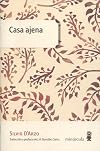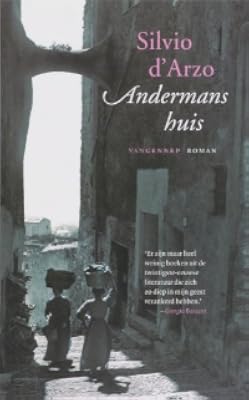
The House of Others
by Silvio d'Arzo
On This Page
Description
Called "a perfect story" by Nobel Prize-winning poet Eugenio Montale, The House of Others (Casa d'altri) is the title story in the best-known work by twentieth-century Italian author Ezio Comparoni, writing under the name Silvio d'Arzo, one of his numerous pseudonyms. In a desolate mountain village an old woman visits the parish priest, ostensibly to ask about dissolving a marriage. Gradually, as she probes for information on "special cases"--cases in which what is obviously wrong can show more also be irrefutably right--it becomes clear her true question is whether or not she might take her own life. The question is metaphysical, involving not only the woman's life but the priest's; and to it he has no answer. Collected here with the short stories "Elegy for Signora Nodier," "The Old Couple," "A Moment of This Sort," and "Our Monday, A Preface," The House of Others is among the scant translations in English of this highly acclaimed Italian author. show lessTags
Recommendations





























Member Recommendations

Member Reviews
Short novella applying near perfect suspense, set in a small village in the Italian Apennines. It opens with a scene describing six lamenting women and a pastor, sitting beside a corpse (unclear whose). Next it briefly describes the uneventful life of the village which contains 7 houses, and many sheep that are herded in the mountains during the day. Next a mysterious woman appears each end of day, washing clothes in the canal. The pastor waits, assuming she will come to him. But then she doesn’t. So he sends out his little spy. Next she comes with an odd question about the Church’s ruling on divorces – can exceptions be made? This intrigues the pastor, because he (rightly) suspects it was a dummy question to test the waters for show more the real question that bothers her. A game of cat and mouse evolves. The pastor wants to know, she rebuffs or ignores his advances. The woman is caught by young boys pestering her about her (supposed) marriage, the pastor tries to wean them off by jokingly coming out of his house as the supposed bridegroom. The woman drops a letter for him, but recollects it before he returns home to read it. Finally the pastor can take it no longer and forces her more or less to ask her question. She laments her hard life. She has never blamed the Gods for anything. Still, would the church grant her wish for suicide? The pastor is dumb folded. She claims she knew he would react that way. This is the end of their interaction. A couple of weeks later she is dead. The pastor meticulously takes care of the funeral, against the standard custom for suicide victims.
This novella is written in such a crafty manner with short sentences and crisp characterisations of things like the light fall, seasons, and day-to-day activities of the villagers and the ecclesiastic practices throughout the year. And the reader is urged on and on, because s/he wants to know. In one word: crafty. Pity the writer died young. show less
This novella is written in such a crafty manner with short sentences and crisp characterisations of things like the light fall, seasons, and day-to-day activities of the villagers and the ecclesiastic practices throughout the year. And the reader is urged on and on, because s/he wants to know. In one word: crafty. Pity the writer died young. show less
De achterflap noemt dit boek een sober en ingehouden poëtisch meesterwerk uit de Italiaanse literatuur, en dat wil ik niet tegenspreken. d'Arzo maakte verschillende versies van dit verhaal waarmee hij de vertalers een hele kluif bezorgde. De openingspagina van Andermans huis komt ook heel erg overeen met het begin van één van zijn verhalen uit de bundeling Avondlucht. De hoofdpersoon is priester in een minuscuul bergdorpje in de Apennijnen waar hij op een dag een oude vrouw ontmoet die hem een vraag stelt die hem niet meer loslaat. De inhoud van het verhaal (of de vraag) is hier van ondergeschikt belang. d'Arzo schildert meesterlijk het proces van aantrekken en afstoten tussen twee mensen. Net zoals in muziek de stiltes of niet show more gespeelde noten soms sterker doorwegen in de luisterervaring, zo droeg hetgeen d'Arzo niet schreef voor mij meer bij tot de poëtische sfeer van het boek. show less
Aug 6, 2011Dutch
1
★★★½
Oct 28, 2015Dutch
La vida en un poble aïllat a la muntanya, explica les trobades d'una dona amb el capellà del poble.
Jan 16, 2017Catalan
taai
Oct 11, 2009Dutch
Ratings
Members
- Recently Added By
Lists

I 100 migliori libri italiani degli ultimi 200 anni -- Opere fuori lista
40 works; 1 member
Author Information
47+ Works 234 Members
Some Editions
Awards and Honors
Awards
Notable Lists
Work Relationships
Is contained in
Common Knowledge
- Canonical title
- The House of Others
- Original title
- Casa d'altri
- Alternate titles*
- Huis van anderen
- Original publication date
- 1952
- Important places*
- Apennijnen, Italië
- First words*
- Plotseling klonk er vanaf het pad door de weilanden, maar nog van heel ver, het blaffen van een hond.
- Last words*
- (Click to show. Warning: May contain spoilers.)Dit is allemaal nogal eentonig, hè?
- Original language*
- Italiaans
*Some information comes from Common Knowledge in other languages. Click "Edit" for more information.
Classifications
- Genres
- Fiction and Literature, General Fiction
- DDC/MDS
- 853.914 — Literature & rhetoric Italian, Romanian & related literatures Italian fiction 1900- 20th Century 1945-1999
- LCC
- PQ4864 .A78 .C3713 — Language and Literature French, Italian, Spanish and Portuguese literatures Italian literature Individual authors, 1961-2000
- BISAC
Statistics
- Members
- 95
- Popularity
- 339,515
- Reviews
- 5
- Rating
- (3.64)
- Languages
- 5 — Dutch, English, French, Italian, Spanish
- Media
- Paper, Audiobook
- ISBNs
- 22