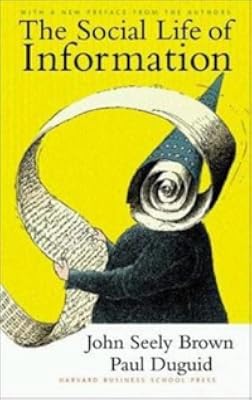
The Social Life of Information
by John Seely Brown, Paul Duguid
On This Page
Description
"Should be read by anyone interested in understanding the future," The Times Literary Supplement raved about the original edition of The Social Life of Information. We're now living in that future, and one of the seminal books of the Internet Age is more relevant than ever. The future was a place where technology was supposed to empower individuals and obliterate social organizations. Pundits predicted that information technology would obliterate the need for almost everything--from mass show more media to bureaucracies, universities, politics, and governments. Clearly, we are not living in that future. The Social Life of Information explains why. John Seely Brown and Paul Duguid show us how to look beyond mere information to the social context that creates and gives meaning to it. Arguing elegantly for the important role that human sociability plays, even--perhaps especially--in the digital world, The Social Life of Information gives us an optimistic look beyond the simplicities of information and individuals. It shows how a better understanding of the contribution that communities, organizations, and institutions make to learning, working, and innovating can lead to the richest possible use of technology in our work and everyday lives. With a new introduction by David Weinberger and reflections by the authors on developments since the book's first publication, this new edition is essential reading for anyone seeking to understand the human place in a digital world.-- show lessTags
Recommendations



















Member Recommendations
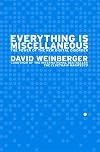
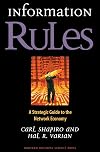
Member Reviews
Good stories of how Xerox repair people actually did their work, involving gossip after hours and idle chit-chat.
A book for class, and this one wasn't that great. The central thesis is that information cannot be looked at separately from the social context it exists in. There is a tendency among "technology people" to look at information in isolation, and often even to redefine the world in info-centric ways that trivialize the social networks that support it. An example is tech support in offices: everything only runs smoothly because when the new program crashes your computer, Ted three cubicles down had that happen to him last week, and can help you with it. Overall it's a good point and an interesting look at what I'm going to call the "sociology of technology."
The book didn't grab me, though, and might have worked better as an article. Also show more (and this isn't really the author's fault, but it did majorly contribute to my opinion) the book was written in 2000 and it's about technology. Most of the points it makes are still relevant, but almost all of its examples were out of kilter with the way things actually work these days. Assumptions about what was going to "stick" that didn't, and so on. It's unfortunate, I guess, since the book was on an interesting subject and didn't really rely on totally up-to-date technology, but tech books just date really quickly and none of the examples seemed quite relevant anymore.
Oh well. If you can get past the dating, I'd say this book was 4 stars. If not, maybe 2 1/2 or 3? show less
The book didn't grab me, though, and might have worked better as an article. Also show more (and this isn't really the author's fault, but it did majorly contribute to my opinion) the book was written in 2000 and it's about technology. Most of the points it makes are still relevant, but almost all of its examples were out of kilter with the way things actually work these days. Assumptions about what was going to "stick" that didn't, and so on. It's unfortunate, I guess, since the book was on an interesting subject and didn't really rely on totally up-to-date technology, but tech books just date really quickly and none of the examples seemed quite relevant anymore.
Oh well. If you can get past the dating, I'd say this book was 4 stars. If not, maybe 2 1/2 or 3? show less
This book touches on many aspects of information and knowledge in organisations and education that we covered as part of my Information Management degree so I'm actually surprised I never came to read it then. Despite being published in the late 1990s, it still feels relevant— in some aspects things haven't really changed much after fifteen years of technological advances.
This book reports on ethnographic studies about how people use, share, and store information at work. While the book is comprehensive, and discusses interesting concepts like the the office go to person (and what to do when they leave), it is not as engagingly written as many of the books on this list, and as such not as highly rated.
This book is one the most referenced books today when it comes to the future of the information society. The authors present an understanding of the new digital technology and of information that is based on the notion of the social networks. Information can not be seen as free from their social networks. The authors’ claim, that information has a »social life«, changes the preconditions for how we should develop new information technology. The book will help anyone involved in the world of information to reflect on the role and nature of information and technology.
Even though this book is written before the big web 2.0 boost, the book is still a must for every new media professional interested in developing information technology for social purposes.
John Seely Brown was Director of the Xerox Palo Alto Research Center (PARC) where the first personal computers and operating systems were developed, and Paul Duguid is currently a Visiting Scholar at the University of California, Berkeley. Their book’s main theme is that information cannot be separated from a social context. They refute common digital revolutionary thought of the late 1990’s.
It is recommended reading for an entry-level graduate class at the University of Pittsburgh’s Department of Library and Information Science.
It is recommended reading for an entry-level graduate class at the University of Pittsburgh’s Department of Library and Information Science.
Members
- Recently Added By
Author Information

10+ Works 1,769 Members
1+ Work 1,307 Members
Common Knowledge
- Canonical title
- The Social Life of Information
- Original publication date
- 2000-02
- Dedication
- For Susan and Laura
- First words
- Introduction: Tunneling ahead: "Living in the information age can occasionally feel like being driven by someone with tunnel vision. This unfortunate disability cuts off the peripheral visual field, allowing sufferers to see... (show all) where they want to go, but little besides. For drivers, this full attention to the straight ahead may seem impressively direct. For passengers who can see what the driver does not it makes for a worrisome journey."
- Last words
- (Click to show. Warning: May contain spoilers.)We only know that solutions will be much harder to find if we drive at the problem with tunnel vision - if, to repeat our long list, peripheries and margins, practices and communities, organizations and institutions are left out or swept out of consideration.
- Blurbers
- Saffo, Paul; Schmidt, Eric; Fukayama, Francis; Hagel, John; Arthur, W. Brian; Atkins, Daniel E. (show all 16); Hamel, Gary; Houghton, James R.; Smith, Jack; Fanton, Jonathan; Wulf, William; Putnam, Robert D.; Mitchell, William J.; Kogut, Bruce; Duderstadt, James; Davidow, William H.
Classifications
- Genres
- Sociology, Technology, Nonfiction, General Nonfiction, Business
- DDC/MDS
- 303.4833 — Society, government, & culture Social sciences, sociology & anthropology Social processes Social change Causes of change Development of science and technology Communication
- LCC
- HM851 .B76 — Social sciences Sociology (General) Sociology Social change
- BISAC
Statistics
- Members
- 1,307
- Popularity
- 18,535
- Reviews
- 14
- Rating
- (3.62)
- Languages
- Dutch, English, Italian, Spanish
- Media
- Paper, Audiobook, Ebook
- ISBNs
- 12
- UPCs
- 1
- ASINs
- 2
