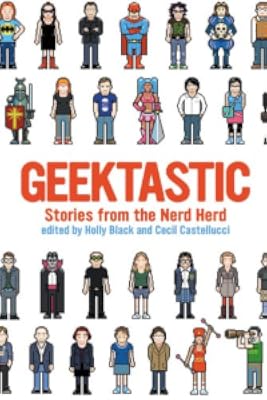
Geektastic: Stories from the Nerd Herd
by Holly Black (Editor), Cecil Castellucci (Editor)
On This Page
Description
A collection of twenty-nine short stories about geeks.Tags
Recommendations
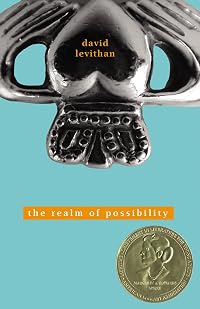
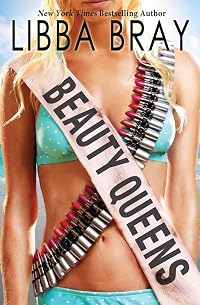
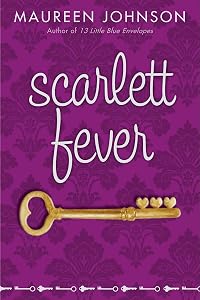
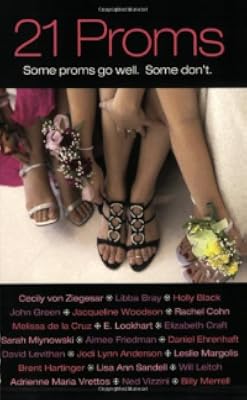
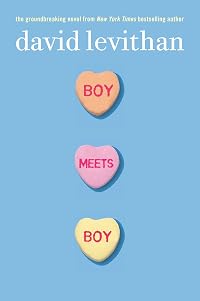

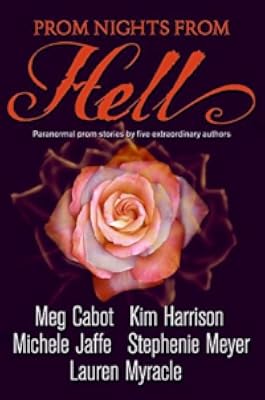
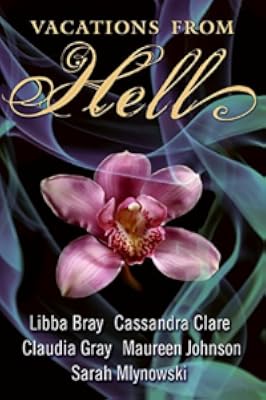
Member Recommendations
Member Reviews
My question is this: How can you not want to read this book? Even if your interest in (any) fandom is casual to the point of 'I kind of remember that blond chick with a pointy stick' this book will have you in stitches, tears or ready to be a more active member of some wonderful community. Whether you are a Trekkie (or is it Trekker now?), Star Wars fan, Whedonite, Otaku or a more obscure fandom (Blake's 7? Does anyone remember that show?) you'll enjoy this book.
It's not perfect, I sometimes wondered if some of the stories rely too heavily on some prior knowledge of the geeky topic at hand or took some of the examples to extremes (though to be fair I knew a guy who literally grew up Klingon. It was the first language he learned--yes show more before English--started 'developing' forehead ridges around the age of five and who's parents left him out in the wilderness at the age of 13 for a month in the summer for his 'Rite of Passage' ceremony--since beating him with sticks is considered illegal of course. By the time he was twenty-one, you'd be hard-pressed to know that he was human underneath all the make-up, Klingon cursing and bloodwine guzzling), but the book made me feel less odd.
I grew up in a school where sports were #1, academics #2 and theater #3. Geeky things like Star Trek or D&D or comic books came in distant distant last place. Golf was considered cooler then Star Trek or comic book reading. The rare few who were part of the 'Nerd Herd' with me did so in severe secrecy--our school's QB for my 9th and 10th grade years would trade X-Men cards with me under the pretense of me tutoring him in english. The leading 'brain' of the school played Q-Bert down at the shore (a good hour and half away from us) twice a week--far away from anyone who would know him. I was out in the open about my interests, mostly because I had long since given up caring about my image. I got teased, taunted, ridiculed and scorned at (and these were my friends), but I couldn't help that I couldn't fake interest in how badly our school's football team sucked (it was pretty bad).
Some of the stories were simply hilarious, some were moving and some took itself as seriously as a Jedi Master takes going to the dark side. As to be expected of a Compendium of Geekness, pop culture references abound. Subtle (Mr. Pointy for example), not so subtle (pretty much elvish or Klingon word uttered throughout) and the convention oriented (Jedis vs. Klingons vs. Stormtroopers vs. Peacekeepers vs. Cylons....with some Starfleet Cadets/Officers thrown in for good measure).
For anyone who has ever been to a major (or even small) convention you'll probably appreciate the humor behind Holly Black and Cecil Castellucci's story about cosplayers who take things to the extreme, gamers will definitely fall in line with Scott Westerfield's story and Tracy Lynn's story about a cheerleader trying to learn Geek is wonderful. It hits all the fandoms, all the stereotypes and then presents them differently without being insulting.
As I won a copy of the ARC edition, some of the art pages and at least one story was missing. Regardless I think that Geektastic is a great anthology with its own pitfalls, but for the casual Geeky young adult (or hell even an adult) its the perfect gift--either to show them that they aren't that alone in the world or hey you could always be that kid who wears his Jedi robes to school and tries to use the Force to get passing grades. show less
It's not perfect, I sometimes wondered if some of the stories rely too heavily on some prior knowledge of the geeky topic at hand or took some of the examples to extremes (though to be fair I knew a guy who literally grew up Klingon. It was the first language he learned--yes show more before English--started 'developing' forehead ridges around the age of five and who's parents left him out in the wilderness at the age of 13 for a month in the summer for his 'Rite of Passage' ceremony--since beating him with sticks is considered illegal of course. By the time he was twenty-one, you'd be hard-pressed to know that he was human underneath all the make-up, Klingon cursing and bloodwine guzzling), but the book made me feel less odd.
I grew up in a school where sports were #1, academics #2 and theater #3. Geeky things like Star Trek or D&D or comic books came in distant distant last place. Golf was considered cooler then Star Trek or comic book reading. The rare few who were part of the 'Nerd Herd' with me did so in severe secrecy--our school's QB for my 9th and 10th grade years would trade X-Men cards with me under the pretense of me tutoring him in english. The leading 'brain' of the school played Q-Bert down at the shore (a good hour and half away from us) twice a week--far away from anyone who would know him. I was out in the open about my interests, mostly because I had long since given up caring about my image. I got teased, taunted, ridiculed and scorned at (and these were my friends), but I couldn't help that I couldn't fake interest in how badly our school's football team sucked (it was pretty bad).
Some of the stories were simply hilarious, some were moving and some took itself as seriously as a Jedi Master takes going to the dark side. As to be expected of a Compendium of Geekness, pop culture references abound. Subtle (Mr. Pointy for example), not so subtle (pretty much elvish or Klingon word uttered throughout) and the convention oriented (Jedis vs. Klingons vs. Stormtroopers vs. Peacekeepers vs. Cylons....with some Starfleet Cadets/Officers thrown in for good measure).
For anyone who has ever been to a major (or even small) convention you'll probably appreciate the humor behind Holly Black and Cecil Castellucci's story about cosplayers who take things to the extreme, gamers will definitely fall in line with Scott Westerfield's story and Tracy Lynn's story about a cheerleader trying to learn Geek is wonderful. It hits all the fandoms, all the stereotypes and then presents them differently without being insulting.
As I won a copy of the ARC edition, some of the art pages and at least one story was missing. Regardless I think that Geektastic is a great anthology with its own pitfalls, but for the casual Geeky young adult (or hell even an adult) its the perfect gift--either to show them that they aren't that alone in the world or hey you could always be that kid who wears his Jedi robes to school and tries to use the Force to get passing grades. show less
Overall Summary, Review, and Recommendation: How do you know if Geektastic is a book you should read? Let me toss out some names: Stormtroopers. Lothlorien. The Brontë sisters. Dr. Frank-n-Furter. Chaotic Neutral. Buffy Summers. Daleks. Wesley Crusher. James Watson. LARPers. Peacekeepers. The Green Lantern. Sue the Tyrannosaurus rex. Browncoats. Richard III. The Andromeda Galaxy. Cylons. If any of those terms elicit a reaction, you just might be a geek. This book is not only geared towards the comic-book-reading, convention-going, D&D-playing, Spock-ears-wearing variety of geek (although there's plenty for them as well.) Rather, this book takes a broader definition of geek, as "a person who is so passionate about a given subject or show more subjects as to occasionally cause annoyance among others." And, as the title suggests, this book is a celebration of geeks and geekdom in all its many and varied forms.
Still not convinced? Let me toss out some more names: John Green. Garth Nix. M. T. Anderson. Libba Bray. David Levithan. Scott Westerfeld. Interested yet? This anthology is populated with short stories by some of the best, funniest, smartest, and nerdiest YA authors out there. It's varied enough that every story isn't the same, but it's all united by a common sensibility that being smart and passionate about something isn't something to be ashamed of, but rather something that we should wear with pride.
Unsurprisingly, I enjoyed the heck out of this book. Some stories worked for me more than did others, but with only a few exceptions, they were all really well written, emotionally honest, and thoroughly, gleefully geeky. I got a little thrill any time I caught a reference to a fandom that I share, and even the stories that were based outside my own sphere of geekosity were relatable, plus they frequently had extraneous nerdy tidbits that I could pick up on and say "Hey, I know about that!"
I think geeks of all ages and persuasions will find something here they relate to, and something they will enjoy, particularly (but not limited to!) the sci-fi/fantasy geeks. (And, let's be honest with ourselves. You're reading book reviews on the internet in your spare time. You're a geek. Congratulations, and welcome to the party!) 4.5 out of 5 stars.
Individual Summaries and Reviews:
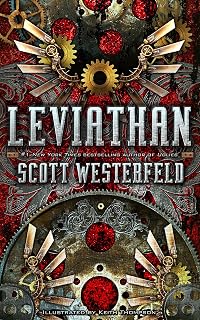
"Once You're a Jedi, You're a Jedi All the Way" by Holly Black and Cecil Castellucci is the story that sparked the idea for this collection, about what would happen if a Jedi (peace-loving Star Wars do-gooders) hooked up with a Klingon (ragewad Star Trek warriors) at a convention. I've never been to a Con, but I know enough about them, and enough about the various characters/groups of people involved, that this story made me giggle all the way through.
"One of Us" by Tracy Lynn. A cheerleader approaches a group of geeks, asking them to train her in all things geeky so that she will be better able to talk to her boyfriend, a football players who secretly likes sci-fi. A story that manages to be sweet without being sappy, which I appreciate. As a former cheerleader and current geek, I also thought the characterizations on all sides of this story were really well done.
"Definitional Chaos" by Scott Westerfeld. A guy tasked with delivering the rental money for a Con has a run-in with his ex-girlfriend on the way, in which they argue the finer points of morality, relationships, and D&D character alignments. Not what I was expecting from Westerfeld at all; which I guess once again goes to show his range. This story is kind of strangely neo-noir-ish and cerebral, and also the one that I think relies the most heavily on pre-existing geek knowledge (in this case, Dungeons and Dragons-based). However, despite my very limited understanding of D&D and the bizarreness of the story, I still found it an interesting read.
"I Never" by Cassandra Clare is the first of two stories in this volume that deal with meeting an online acquaintance in real life. It involves a girl who has been exchanging in-persona love letters with another character in an online role-playing game, but when she goes to a player meet-up, the boy on the other end is not exactly what she expected. I think this is my favorite story in the collection, as I'm apparently a sucker for teen romance. Pretty predictable, but sweet and with spot-on tone nevertheless.
In "The King of Pelinesse" by M. T. Anderson, a boy finds a letter from his favorite comic-book author... but it's a letter to his mother. He goes to visit the author, but what he finds when he meets him is not what he had expected. This one threw off a bit at first, since all of the other stories up to this point had been set in the present day, whereas this one is set in a time of pulp paperbacks and pay phones. It's also the only comics-geek story in here, and it's not what I was expecting. Well-written, just... surprising.
"The Wrath of Dawn" by Cynthia and Greg Leitich Smith is a war-cry for under-appreciated little siblings everywhere, a la Dawn Summers, Buffy's magically-appearing and much-reviled younger sister. I liked this one's concept, and its execution, but it was too short; things happened too quickly and without enough time to properly build them up.
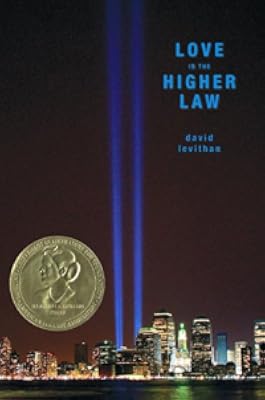
"Quiz Bowl Antichrist" by David Levithan is the story of the English geek who is on his school's Quiz Bowl team as an alternate to the regular players, who consider English questions beneath them. This may be an effect of reading this too soon after Will Grayson, Will Grayson, but ye gods, David Levithan sure can write bitchy, bitter, closeted gay boys, huh? The impressive thing is that as horrible as his main characters can be, you still can't help but cheer for them, and they always manage to find their redemption somehow.
"The Quiet Knight" by Garth Nix is about a LARPer who is more comfortable in his role-playing identity than he is in his real life. Another one that I liked a lot. It's short but to the point, and relatable to anyone who's ever wished they could be someone else for a little while.
"Everyone But You" by Lisa Yee involves a baton twirler who moves to a new school where school spirit is suddenly the opposite of cool. My least favorite story, by far. The writing didn't do anything for me, the characterizations and dialogue felt flat, and the whole thing just seemed unrealistic and overblown.
"Secret Identity" by Kelly Link is one of the longest stories in the book, and another one of my less-favorite entries. It's also about an online relationship meeting up in real life and not going as planned, but it's also the only story that's not set in the real world, but rather in a version of the real world in which superheroes are real. At least, I think so? This story left a lot of things unexplained, both in the worldbuilding and in the actual story itself, and it never really brought it all together satisfactorily, despite the many pages it had in which to do so.
"Freak the Geek" by John Green is by far the least John-Green-like piece of John Green's writing that I've ever read. For one, it's narrated by a GIRL! (I'll give you a minute to get over your shock...) Two unpopular girls have been marked as the targets of a school ritual called "Freak the Geek" by the rest of their classmates. It doesn't quite have the sparkle or the humor of Green's other work, but it certainly had the same emotional resonance and snappy dialogue as I've come to expect.
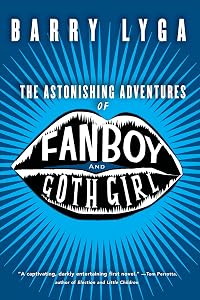
"The Truth About Dino Girl" by Barry Lyga is about a paleontology geek who just wants the cool kids - in particular, her biology lab partner and his perfect girlfriend - to like her, but only slowly realizes that the never will. I started out loving this story (I mean, she's a biology nerd! How can I resist?), and then the ending just utterly dropped the ball. Lessons in "How to turn a sympathetic character and relatable story into something awful and morally repellent," the line forms here.
"This Is My Audition Monologue" by Sara Zarr is what the title promises: an audition monologue from a drama geek who is sick of working tech, and just wants to be on the stage. This is one of those interesting pieces where I immediately recognize the main character, and also immediately want to throttle her a bit until she lightens the heck up already.
"The Stars at the Finish Line" by Wendy Mass is a story about two would-be astronauts who have been competing with each other since grade school... even though he would rather be her romantic interest than her academic rival. This is the story that cemented that the problems of geekdom are universally applicable. I can name maybe three or four constellations, total, and have next to no interest in astronomy, but I thought this story was great (however, see above re: my fondness for teen romance.)
"It's Just a Jump to the Left" by Libba Bray involves the trials and tribulations of being fourteen, set against the trials and tribulations of attending weekly showings of the Rocky Horror Picture Show. Like a lot of the other stories in here, this is very different than Libba Bray's other work. I spent part of it going "...really?" and "oh my god, they're fourteen!", but the other part of it remembering the pain and rawness of being fourteen, so in balance I think it worked.
In between each story there are cute one-page comics illustrated by Bryan Lee O'Malley and Hope Larson on topics like "How to Cheat Like a Nerd" ("Write own novel to write book report on") and "What Your Lunch Table Status Means." show less
Still not convinced? Let me toss out some more names: John Green. Garth Nix. M. T. Anderson. Libba Bray. David Levithan. Scott Westerfeld. Interested yet? This anthology is populated with short stories by some of the best, funniest, smartest, and nerdiest YA authors out there. It's varied enough that every story isn't the same, but it's all united by a common sensibility that being smart and passionate about something isn't something to be ashamed of, but rather something that we should wear with pride.
Unsurprisingly, I enjoyed the heck out of this book. Some stories worked for me more than did others, but with only a few exceptions, they were all really well written, emotionally honest, and thoroughly, gleefully geeky. I got a little thrill any time I caught a reference to a fandom that I share, and even the stories that were based outside my own sphere of geekosity were relatable, plus they frequently had extraneous nerdy tidbits that I could pick up on and say "Hey, I know about that!"
I think geeks of all ages and persuasions will find something here they relate to, and something they will enjoy, particularly (but not limited to!) the sci-fi/fantasy geeks. (And, let's be honest with ourselves. You're reading book reviews on the internet in your spare time. You're a geek. Congratulations, and welcome to the party!) 4.5 out of 5 stars.
Individual Summaries and Reviews:
"Once You're a Jedi, You're a Jedi All the Way" by Holly Black and Cecil Castellucci is the story that sparked the idea for this collection, about what would happen if a Jedi (peace-loving Star Wars do-gooders) hooked up with a Klingon (ragewad Star Trek warriors) at a convention. I've never been to a Con, but I know enough about them, and enough about the various characters/groups of people involved, that this story made me giggle all the way through.
"One of Us" by Tracy Lynn. A cheerleader approaches a group of geeks, asking them to train her in all things geeky so that she will be better able to talk to her boyfriend, a football players who secretly likes sci-fi. A story that manages to be sweet without being sappy, which I appreciate. As a former cheerleader and current geek, I also thought the characterizations on all sides of this story were really well done.
"Definitional Chaos" by Scott Westerfeld. A guy tasked with delivering the rental money for a Con has a run-in with his ex-girlfriend on the way, in which they argue the finer points of morality, relationships, and D&D character alignments. Not what I was expecting from Westerfeld at all; which I guess once again goes to show his range. This story is kind of strangely neo-noir-ish and cerebral, and also the one that I think relies the most heavily on pre-existing geek knowledge (in this case, Dungeons and Dragons-based). However, despite my very limited understanding of D&D and the bizarreness of the story, I still found it an interesting read.
"I Never" by Cassandra Clare is the first of two stories in this volume that deal with meeting an online acquaintance in real life. It involves a girl who has been exchanging in-persona love letters with another character in an online role-playing game, but when she goes to a player meet-up, the boy on the other end is not exactly what she expected. I think this is my favorite story in the collection, as I'm apparently a sucker for teen romance. Pretty predictable, but sweet and with spot-on tone nevertheless.
In "The King of Pelinesse" by M. T. Anderson, a boy finds a letter from his favorite comic-book author... but it's a letter to his mother. He goes to visit the author, but what he finds when he meets him is not what he had expected. This one threw off a bit at first, since all of the other stories up to this point had been set in the present day, whereas this one is set in a time of pulp paperbacks and pay phones. It's also the only comics-geek story in here, and it's not what I was expecting. Well-written, just... surprising.
"The Wrath of Dawn" by Cynthia and Greg Leitich Smith is a war-cry for under-appreciated little siblings everywhere, a la Dawn Summers, Buffy's magically-appearing and much-reviled younger sister. I liked this one's concept, and its execution, but it was too short; things happened too quickly and without enough time to properly build them up.
"Quiz Bowl Antichrist" by David Levithan is the story of the English geek who is on his school's Quiz Bowl team as an alternate to the regular players, who consider English questions beneath them. This may be an effect of reading this too soon after Will Grayson, Will Grayson, but ye gods, David Levithan sure can write bitchy, bitter, closeted gay boys, huh? The impressive thing is that as horrible as his main characters can be, you still can't help but cheer for them, and they always manage to find their redemption somehow.
"The Quiet Knight" by Garth Nix is about a LARPer who is more comfortable in his role-playing identity than he is in his real life. Another one that I liked a lot. It's short but to the point, and relatable to anyone who's ever wished they could be someone else for a little while.
"Everyone But You" by Lisa Yee involves a baton twirler who moves to a new school where school spirit is suddenly the opposite of cool. My least favorite story, by far. The writing didn't do anything for me, the characterizations and dialogue felt flat, and the whole thing just seemed unrealistic and overblown.
"Secret Identity" by Kelly Link is one of the longest stories in the book, and another one of my less-favorite entries. It's also about an online relationship meeting up in real life and not going as planned, but it's also the only story that's not set in the real world, but rather in a version of the real world in which superheroes are real. At least, I think so? This story left a lot of things unexplained, both in the worldbuilding and in the actual story itself, and it never really brought it all together satisfactorily, despite the many pages it had in which to do so.
"Freak the Geek" by John Green is by far the least John-Green-like piece of John Green's writing that I've ever read. For one, it's narrated by a GIRL! (I'll give you a minute to get over your shock...) Two unpopular girls have been marked as the targets of a school ritual called "Freak the Geek" by the rest of their classmates. It doesn't quite have the sparkle or the humor of Green's other work, but it certainly had the same emotional resonance and snappy dialogue as I've come to expect.
"The Truth About Dino Girl" by Barry Lyga is about a paleontology geek who just wants the cool kids - in particular, her biology lab partner and his perfect girlfriend - to like her, but only slowly realizes that the never will. I started out loving this story (I mean, she's a biology nerd! How can I resist?), and then the ending just utterly dropped the ball. Lessons in "How to turn a sympathetic character and relatable story into something awful and morally repellent," the line forms here.
"This Is My Audition Monologue" by Sara Zarr is what the title promises: an audition monologue from a drama geek who is sick of working tech, and just wants to be on the stage. This is one of those interesting pieces where I immediately recognize the main character, and also immediately want to throttle her a bit until she lightens the heck up already.
"The Stars at the Finish Line" by Wendy Mass is a story about two would-be astronauts who have been competing with each other since grade school... even though he would rather be her romantic interest than her academic rival. This is the story that cemented that the problems of geekdom are universally applicable. I can name maybe three or four constellations, total, and have next to no interest in astronomy, but I thought this story was great (however, see above re: my fondness for teen romance.)
"It's Just a Jump to the Left" by Libba Bray involves the trials and tribulations of being fourteen, set against the trials and tribulations of attending weekly showings of the Rocky Horror Picture Show. Like a lot of the other stories in here, this is very different than Libba Bray's other work. I spent part of it going "...really?" and "oh my god, they're fourteen!", but the other part of it remembering the pain and rawness of being fourteen, so in balance I think it worked.
In between each story there are cute one-page comics illustrated by Bryan Lee O'Malley and Hope Larson on topics like "How to Cheat Like a Nerd" ("Write own novel to write book report on") and "What Your Lunch Table Status Means." show less
This will come as a big surprise, I'm sure, but I was a pretty big geek in high school. Now, I wasn't into all of the different things that are represented in this book - it hits a lot of bases, from Star Trek and Star Wars through LARPing and Rocky Horror and on to quiz bowl and biology - but I knew at least something about pretty much all of them, and this was quite the fun book for me. It's a whole lot of stories, mostly about teens, in a variety of situations. Yes, there are largely geeky ones, but people have to make their ways through life either way, and it's not all focused on sci-fi cons and LARP outings; no, you have awkward meetings and navigations of who you are, the way it probably should.
Like most short-story collections, show more this has its ups and downs in terms of quality, but on the whole, it's pretty high. For me, the highlights were David Levithan's "Quiz Bowl Antichrist" (a caustic teen doing quiz bowl, with his team going a long way, and the interactions between the members), Cassandra Clare's "I Never" (a number of people meeting up from an online RPG that covers any fictional character out there, and the awkwardness of that), and Garth Nix's "The Quiet Knight" (a short-even-for-this-collection story about a large LARPer). I didn't particularly like Libba Bray's entry on Rocky Horror, although I've never really gotten her writing, so perhaps that's not a surprise, and Lisa Yee's Everyone But You, a baton twirler moving to Hawaii and trying to fit in, also really did very little for me, feeling flat and not well characterized. And there's a special place of badness for Barry Lyga's story "The Truth about Dino Girl," where the ending left me feeling just appalled with the lead character. That one's so bad I'm taking a half-star off just for that piece. Sigh.
But overall, this is a book coming from a good place, amusing and sweet and caring about the people it portrays, and the little one-page comics by Hope Larson and Bryan Lee O'Malley keep the tone light and fun. This is not the best short story collection out there, no, but it's pretty fun and fast reading, overall, and its plusses outweigh its minuses by a good margin. show less
Like most short-story collections, show more this has its ups and downs in terms of quality, but on the whole, it's pretty high. For me, the highlights were David Levithan's "Quiz Bowl Antichrist" (a caustic teen doing quiz bowl, with his team going a long way, and the interactions between the members), Cassandra Clare's "I Never" (a number of people meeting up from an online RPG that covers any fictional character out there, and the awkwardness of that), and Garth Nix's "The Quiet Knight" (a short-even-for-this-collection story about a large LARPer). I didn't particularly like Libba Bray's entry on Rocky Horror, although I've never really gotten her writing, so perhaps that's not a surprise, and Lisa Yee's Everyone But You, a baton twirler moving to Hawaii and trying to fit in, also really did very little for me, feeling flat and not well characterized. And there's a special place of badness for Barry Lyga's story "The Truth about Dino Girl," where the ending left me feeling just appalled with the lead character. That one's so bad I'm taking a half-star off just for that piece. Sigh.
But overall, this is a book coming from a good place, amusing and sweet and caring about the people it portrays, and the little one-page comics by Hope Larson and Bryan Lee O'Malley keep the tone light and fun. This is not the best short story collection out there, no, but it's pretty fun and fast reading, overall, and its plusses outweigh its minuses by a good margin. show less
This YA collection was pretty enjoyable, with fan-friendly geekiness of all sorts, and even a Kelly Link story about a girl who goes to meet a man she met online (at a hotel that happens to be hosting a dentist convention and a superhero convention) that I loved, which never happens. Scott Westerfeld, Cassandra Clare, M.T. Anderson, Garth Nix, and Lisa Yee, among others, also contributed. Except then there was this terrible slut-shaming story by Barry Lyga. Maybe he meant to write a cautionary tale about revenge fantasies and geeks being capable of horrific behavior, but it didn’t read that way and I suspect he really thought that it was awesome revenge for the humiliated geek girl to distribute a picture of her enemy’s breasts and show more destroy her reputation by suggesting that she liked sex. The illustrations in between the stories lean hard on broad stereotypes, while the stories are generally more nuanced. Skip the Lyga, and it’s worth checking out. show less
It probably says more about me than about the book that the first, most important thing I need to say about it is that John Green, in his story 'Freak the Geek' got his facts about Aragorn and Arwen from LotR wrong. The story of their wedding is not told in the appendix, but rather in the final book. The story of their lives together is what's told in the appendix. Also, it's spelled orc, not ork. Ahem.
Now that I've qualified myself as one of the herd this book was aimed at, let me tell you how much I enjoyed it, nitpicking aside. There are some real stand-out stories here and only a few clunkers. M.T. Anderson's tale is perhaps the most nuanced, while Libba Bray's resonated with my own personal adolescence. David Leviathan's offering show more was poignant and sweet- just like his books. My favorite story, though, was the very first one, by Holly Black and Cecil Castelluci, which made me whoop with laughter. Highly recommended for the crowd I used to stand around awkwardly with. Running is for jocks, man. show less
Now that I've qualified myself as one of the herd this book was aimed at, let me tell you how much I enjoyed it, nitpicking aside. There are some real stand-out stories here and only a few clunkers. M.T. Anderson's tale is perhaps the most nuanced, while Libba Bray's resonated with my own personal adolescence. David Leviathan's offering show more was poignant and sweet- just like his books. My favorite story, though, was the very first one, by Holly Black and Cecil Castelluci, which made me whoop with laughter. Highly recommended for the crowd I used to stand around awkwardly with. Running is for jocks, man. show less
I enjoyed this enormously, with the notable (notable enough to reduce this from a 4 star review to a three star) exception of the Barry Lyga story, "The Truth about Dino Girl" which I thought was sexist, juvenile, and annoying, and which showed a geek taking revenge on a popular kid in a way that turned the geek into someone exactly as unlikable. Reprehensible, I thought, in a book that's meant to be empowering and celebratory of geek culture.
Overall, dreary and disappointing. Though there are a few funny and creative stories, especially early on, I found most of them cliched, depressing or both. Some of the characters are really unlikeable, and their creators seem to have confused two kinds of people:
-- folks of all ages who love nerding out on books, movies, technology, etc., who can come off as socially awkward because they don’t happen to have people skills and/or really don’t care about boring chitchat or looking cool
-- teenagers who are pathetic, maladjusted, angst-ridden and/or completely divorced from reality, some of whom see nothing wrong with lying, stealing or being generally horrible to other people.
It’s not that geeks can’t also be jerks. But it’s the show more same way that Catholics can also be motorcycle enthusiasts; membership in one group doesn’t automatically mean membership in another. So to find such stereotypical and downright unpleasant characters in an anthology named “Geektastic” is off-putting and, at least for this geek, not worth the read. show less
-- folks of all ages who love nerding out on books, movies, technology, etc., who can come off as socially awkward because they don’t happen to have people skills and/or really don’t care about boring chitchat or looking cool
-- teenagers who are pathetic, maladjusted, angst-ridden and/or completely divorced from reality, some of whom see nothing wrong with lying, stealing or being generally horrible to other people.
It’s not that geeks can’t also be jerks. But it’s the show more same way that Catholics can also be motorcycle enthusiasts; membership in one group doesn’t automatically mean membership in another. So to find such stereotypical and downright unpleasant characters in an anthology named “Geektastic” is off-putting and, at least for this geek, not worth the read. show less
Members
- Recently Added By
Lists

Florida
366 works; 3 members
Author Information

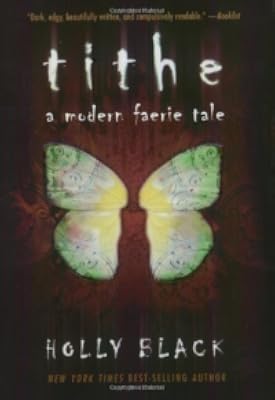
Holly Black was born in West Long Branch, New Jersey on November 10, 1971. She graduated with a B.A. in English from The College of New Jersey in 1994. Her first book, Tithe: A Modern Faerie Tale was published in 2002 and was included in the American Library Association's Best Books for Young Adults. Her other works include The Spiderwick show more Chronicles written with Tony DiTerlizzi, Ironside, Poison Eaters and Other Stories, The Coldest Girl in Coldtown, The Iron Trial (Magisteruim Book 1) and The Copper Gauntlet (Magisteruim Book 2) written with Cassandra Clare, and The Darkest Part of the Forest. Valiant won the Andre Norton Award for Excellence in Young Adult Literature. She also won the Young-Adult Prize in the Indies Choice Book Awards 2015 for The Darkest Part of the Forest. Black and Clare's Magisterium Series has received both critical and popular acclaim appearing on numerous bestseller lists including The New York Times bestseller list in the Young Adult category. (Bowker Author Biography) show less

All Editions
Awards and Honors
Notable Lists
Work Relationships
Contains
Common Knowledge
- Canonical title
- Geektastic: Stories from the Nerd Herd
- Original publication date
- 2009-08-01
- First words
- I awake tangled up in scratchy sheets with my head pounding and the taste of cheap alcohol and Tabasco still in my mouth.
- Last words
- (Click to show. Warning: May contain spoilers.)As Agnes's words became softer and fewer, fading at last to a light snore, Leta stared at the glittery flecks in the ceiling and imagined they were stars winking out a message only she could understand.
Classifications
- Genres
- Fiction and Literature, Teen, Young Adult
- DDC/MDS
- 813.010806 — Literature & rhetoric American literature in English American fiction in English By type Short fiction
- LCC
- PZ5 .G319 — Language and Literature Fiction and juvenile belles lettres Fiction and juvenile belles lettres Juvenile belles lettres
- BISAC
Statistics
- Members
- 1,200
- Popularity
- 20,763
- Reviews
- 65
- Rating
- (3.58)
- Languages
- English
- Media
- Paper, Ebook
- ISBNs
- 7
- ASINs
- 4