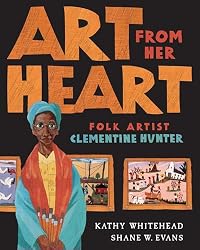
Art From Her Heart: Folk Artist Clementine Hunter
by Kathy Whitehead
On This Page
Description
Clementine Hunter's paintings went from hanging on her clothesline to hanging in museums, yet because of the color of her skin, a friend had to sneak her in when the gallery was closed.Tags
Recommendations
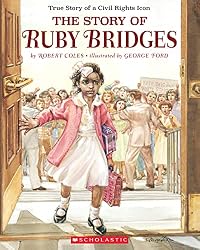
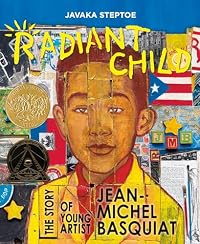
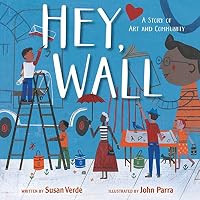
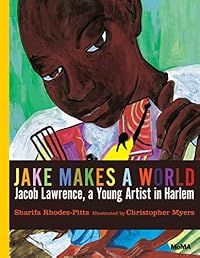





Member Recommendations
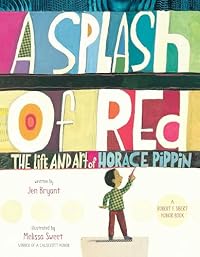
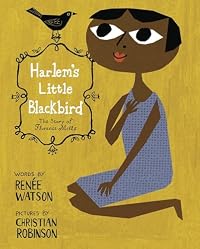
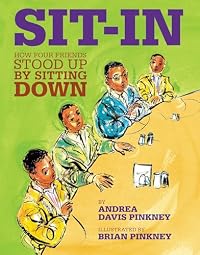
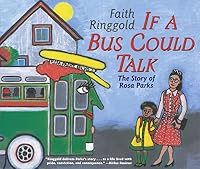
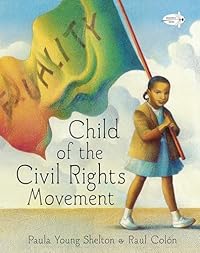
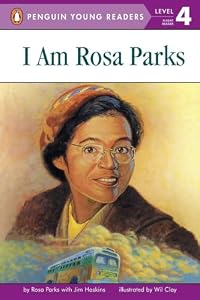
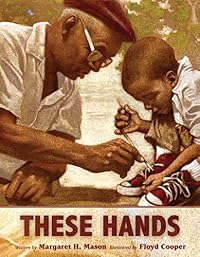
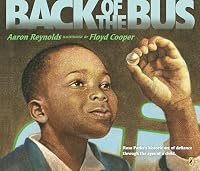
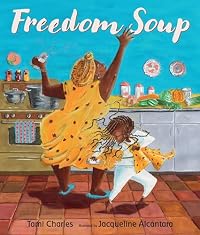
kthomp25 Another story of a woman who becomes an artist later in life.
Member Reviews
I enjoyed hearing this story read aloud. Clementine Hunter was an amazing artist who lived in a time period that did not treat black people fairly. Because of this, she wasn't even allowed to see her own art hanging in a gallery without sneaking in after hours. While I can't even begin to identify with the struggles she faced, this book pushed me to think about tough issues such as racism and broadened my perspective. The illustrations in this book were also captivating. The colorful and vibrant drawings really set the mood of the whole story. There is one page where Clementine is selling her art out of a shack outside. This helped me picture the setting in my head. The only thing that kind of upset me was that the illustrations were show more not actually by Clementine, which I find strange considering she was a great artist. The big point of this book is to discuss the life accomplishments and struggles of Clementine Hunter and to make the reader think about life outside of their own. show less
"Art from Her Heart: Folk Artist Clementine Hunter" is a beautifully written and illustrated book about the artistic history of the folk artist Clementine Hunter. This book has an almost calm and serine feel to it with the flow of the words and the pictures. It seems odd to me because her view of plantation life that I am being taught was so horrible, she found to be inspiring to beautiful piece of folk art. I am upset but not surprised due to our nation's history that she was shown in museums and not allowed to go in and view her own exhibits.
Art from her Heart was a good book to teach history but was lacking in many ways at telling the reader about Clementine Hunters life. I really enjoyed the history in this book. Throughout the book the reader could see the struggles of an African- American growing up during segregation and the extent that was gone to keep African-Americans out of places even at art shows in which they are the painter. It also shows the poverty throughout the African -American community through pointing out that most of Clementine's supplies were donated to her. Although these are all great things to teach students in the classroom I believe the book truly left out a lot of information about Clementine's life and how she started out. The author informed show more the reader about how she started painting using left over supplies on old boards but she didn't start painting until she was in her 50's. What was her life like before she began to paint? Was Clementine given the opportunity to go to school? Did she always admire painting? These are a few questions the book never answered and I believe they are important because many artist, especially Clementine Hunter, paint about their own lives. The book truly taught the readers about perseverance, but I found it to be lacking in many ways. show less
This book powerfully demonstrates the life of Clementine Hunter, and the fact that she never waited for perfect timing to accomplish great things. Not only do readers learn about an important figure, but they learn about going after what you want, and a glimpse of civil rights in history. The illustrations added to the power of the book by integrating Clementine's own work with the art of Shane Evans.
Art From Her Heart is a picture biography about the life of Clementine Hunter. Clementine Hunter was a slave who taught herself how to paint using leftover materials. The book illustrations depict Hunter's expressful artworks of life in the South and her preserverance to do a hobby she loved. During her first art exhibit, she charged twenty-five cents for people to view her work and earn a profit. Then, she was able to showcase her artwork in a museum. But she had to stand outside due to segregation. The book does a nice job at telling Clementine Hunter's struggles, such as her life as a slave and her progress towards fame. Overall, the book shows readers that they should pursue what they love.
Clementine Hunter began her art after years of working on a plantation and wound up becoming a well-known artist. I enjoyed both the book and the illustrations. However, her story itself is inspiring. After reading this, I realized a family I have nannied for have one of her paintings hung in their house. They also named their daughter Clementine. I'm happy to be able to tie this together finally!
I really liked this book, and it was eye opening. Clementine Hunter really inspired me, because she didn't let the fact that she didn't have materials stop her from painting. Because of Clementine's drive, her paints were in a gallery and she couldn't believe it. I think this is a good book for children because it shows that if they really want to do something they can do it if they set their mind to it.
Members
- Recently Added By
Published Reviews
ThingScore 100
Kirkus (Kirkus Reviews, August 1, 2008 (Vol. 76, No. 15))
Hunter started painting on scraps and gourds at age 50, using paints left by artists who frequented the Louisiana plantation where she worked. She depicted what she saw around her, cementing her legacy as a chronicler of soon-to-disappear plantation life when she became the first African-American artist to have a solo exhibition at major show more museum. Evans's images echo Hunter's nanve style, his bright palette paying homage to Hunter's own vivid colors. Collage elements on highly textured backgrounds incorporate reproductions of her work. While the story of Hunter's success as an untrained artist will inspire students, they will not be as impressed with Whitehead's narrative. Too many sentence fragments and backward shifts recalling the incidents that inspired Hunter's work detract from the narrative flow. A concluding author's note for adults provides the background necessary to fully understand Hunter's life. Although not outstanding, it is undeniably useful as the only picture-book biography of the self-taught Hunter, who died in 1988 at the age of 101. (thumbnail reproductions, bibliography) 2008, Putnam, 32p, $16.99. Category: Picture book/biography. Ages 6 to 9. show less
Hunter started painting on scraps and gourds at age 50, using paints left by artists who frequented the Louisiana plantation where she worked. She depicted what she saw around her, cementing her legacy as a chronicler of soon-to-disappear plantation life when she became the first African-American artist to have a solo exhibition at major show more museum. Evans's images echo Hunter's nanve style, his bright palette paying homage to Hunter's own vivid colors. Collage elements on highly textured backgrounds incorporate reproductions of her work. While the story of Hunter's success as an untrained artist will inspire students, they will not be as impressed with Whitehead's narrative. Too many sentence fragments and backward shifts recalling the incidents that inspired Hunter's work detract from the narrative flow. A concluding author's note for adults provides the background necessary to fully understand Hunter's life. Although not outstanding, it is undeniably useful as the only picture-book biography of the self-taught Hunter, who died in 1988 at the age of 101. (thumbnail reproductions, bibliography) 2008, Putnam, 32p, $16.99. Category: Picture book/biography. Ages 6 to 9. show less
added by kthomp25
Deborah Stevenson (The Bulletin of the Center for Children’s Books, October 2008 (Vol. 62, No. 2))
Louisiana artist Clementine Hunter worked as manual laborer on a plantation, using the evenings to make art from leftover paints and found materials. This picture-book biography briefly describes her art and its representation of her plantation life, including both bad times and good times. The show more prose is measured and simple, but the text is sketchy on both her artistic work and her biography, and some of the phrasing is unclear (does “she didn’t wait to travel and seek inspiration in foreign lands” mean that later on she did travel?); ultimately, there’s little indication here of why kids should care about either Hunter’s life or art. Reproductions of Hunter’s work are limited to a tiny closing gallery with images almost literally thumbnail-sized, but Evans’ double-page spreads are arresting mixed-media images; painted brushstrokes give a silky texture to skin and objects, pencil lines have a folklike crudeness in textures yet outline borders with a crispness that gives the figures collage-like distinctness. This would be most effective coupled with a more concrete look at Hunter’s work, so that audiences could get a clear picture of the art as well as a view of the artist. A brief bibliography is appended, and an author’s note gives more detail about Hunter’s life Review Code: Ad -- Additional book of acceptable quality for collections needing more material in the area. (c) Copyright 2006, The Board of Trustees of the University of Illinois. 2008, Putnam, 32p., $16.99. Ages 5-8 yrs. show less
Louisiana artist Clementine Hunter worked as manual laborer on a plantation, using the evenings to make art from leftover paints and found materials. This picture-book biography briefly describes her art and its representation of her plantation life, including both bad times and good times. The show more prose is measured and simple, but the text is sketchy on both her artistic work and her biography, and some of the phrasing is unclear (does “she didn’t wait to travel and seek inspiration in foreign lands” mean that later on she did travel?); ultimately, there’s little indication here of why kids should care about either Hunter’s life or art. Reproductions of Hunter’s work are limited to a tiny closing gallery with images almost literally thumbnail-sized, but Evans’ double-page spreads are arresting mixed-media images; painted brushstrokes give a silky texture to skin and objects, pencil lines have a folklike crudeness in textures yet outline borders with a crispness that gives the figures collage-like distinctness. This would be most effective coupled with a more concrete look at Hunter’s work, so that audiences could get a clear picture of the art as well as a view of the artist. A brief bibliography is appended, and an author’s note gives more detail about Hunter’s life Review Code: Ad -- Additional book of acceptable quality for collections needing more material in the area. (c) Copyright 2006, The Board of Trustees of the University of Illinois. 2008, Putnam, 32p., $16.99. Ages 5-8 yrs. show less
added by kthomp25
Author Information
2 Works 152 Members
Awards and Honors
Common Knowledge
- People/Characters
- Clementine (pronounced "Clementeen")
- Important places
- Melrose Plantation; Natchitoches Parish, Louisiana, USA
Classifications
Statistics
- Members
- 137
- Popularity
- 236,253
- Reviews
- 17
- Rating
- (4.13)
- Languages
- English
- Media
- Paper
- ISBNs
- 2
- ASINs
- 2