On This Page
Description
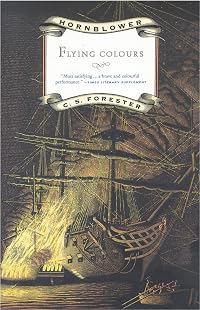
A prisoner of the French after he was forced to surrender his ship, Captain Horatio Hornblower faces a trial by his captor, if he can escape, a court-martial back in England.Tags
Recommendations














Member Reviews
This is the last of the Hornblower books that I own-- obviously it's time to make another trip to the used bookstore. Overall, this one was honestly something of a disappointment. Hornblower doesn't really succeed in this one because of his natural brilliance; he succeeds mostly because of a series of unlikely coincidences. The house he takes refuge in in France just happens to host someone sympathetic to his cause, the harbor he visits just happens to have a captured English ship there, the harbor also just happens to have a passing group of prisoners he can liberate and enlist (somewhat less egregious than in the film, though, where the prisoners just happen to be British to boot), and his wife and Lady Barbara's husband just happen show more to die in time for a marriage. Hornblower's various marital indiscretions, though probably realistic, make him less than sympathetic, and I just don't like Lady Barbara. (God, the scene where his learning that she's taken his son in makes him feel a rush of affection aggravated me to no end. His wife taking care of the kids never seemed to do much for his feelings for her!) Still, the seafaring bits (rare though they are in this volume) never fail to disappoint as always. My least favorite book in the series so far.
added April 2019:
This time I liked it more, and I would definitely rate it above some of the books Forester wrote later, like Hornblower and the Atropos. Yes, a lot of things go in Hornblower's favor, but the thing that makes Hornblower succeed isn't those opportunities, it's the way he seizes hold of them. He's lucky with what happens to his carriage in the snow, but taking hold of that opportunity and getting Bush and Brown out of there requires genius and determination. It's a harrowing, thrilling sequence. Though one wants some good naval adventures in a Hornblower novel, I actually felt the contrast between this book and the previous ones worked very well. It's a tragic notion that Hornblower, Bush, and Brown actually have the best time of their life while hiding in Napoleonic France-- it's a much less hard life than that in the Royal Navy. I like the different side to all three characters we get here. Brown was in the previous book, but not up to much of note; here he pops. I always like Bush's stolidness; here he puts up with an awful lot!
As always, I have thoughts on Hornblower's relationships. Here my theory that Laby Barbara is meant to show how duty constrains his personal life as much as his professional one breaks down because here Hornblower totally has an affair with Marie, which means he's cheating on Maria and on Lady Barbara! He has neither respect for the commitment he's made to Maria, nor for the torch he supposedly carries for Barbara. What is up with you, dude, except that you will take sex and affection where you can get it? (The novel carefully makes him not an initiator... it just kind of "happens.") It's weird that a man who twists himself into knots with self-control in other aspects of his life has none here, and I just don't quite know how to reconcile it with my mental image of Hornblower.
Well, I kind of do. The main thing we know about Hornblower is that Hornblower Must Suffer. He accomplishes much, but he never quite succeeds. His battle in Beat to Quarters was an amazing success that went relatively unheralded due to circumstances. So keeping him apart from Lady Barbara adds to his suffering. Though then at the end of the book, Hornblower gets everything he ever wanted, including Lady Barbara. I wasn't really into this, because I think Hornblower works best when he's scrapping, trying to make the best of a bad situation. Making him successful, rich, renowned, and loved undermines what makes Hornblower Hornblower (as we'll see in Commodore Hornblower). But Forester thought this would be his last Hornblower novel, so I can forgive a happy ending; the issue isn't really with Flying Colours, then, but with the fact that three more novels followed it chronologically. show less
added April 2019:
This time I liked it more, and I would definitely rate it above some of the books Forester wrote later, like Hornblower and the Atropos. Yes, a lot of things go in Hornblower's favor, but the thing that makes Hornblower succeed isn't those opportunities, it's the way he seizes hold of them. He's lucky with what happens to his carriage in the snow, but taking hold of that opportunity and getting Bush and Brown out of there requires genius and determination. It's a harrowing, thrilling sequence. Though one wants some good naval adventures in a Hornblower novel, I actually felt the contrast between this book and the previous ones worked very well. It's a tragic notion that Hornblower, Bush, and Brown actually have the best time of their life while hiding in Napoleonic France-- it's a much less hard life than that in the Royal Navy. I like the different side to all three characters we get here. Brown was in the previous book, but not up to much of note; here he pops. I always like Bush's stolidness; here he puts up with an awful lot!
As always, I have thoughts on Hornblower's relationships. Here my theory that Laby Barbara is meant to show how duty constrains his personal life as much as his professional one breaks down because here Hornblower totally has an affair with Marie, which means he's cheating on Maria and on Lady Barbara! He has neither respect for the commitment he's made to Maria, nor for the torch he supposedly carries for Barbara. What is up with you, dude, except that you will take sex and affection where you can get it? (The novel carefully makes him not an initiator... it just kind of "happens.") It's weird that a man who twists himself into knots with self-control in other aspects of his life has none here, and I just don't quite know how to reconcile it with my mental image of Hornblower.
Well, I kind of do. The main thing we know about Hornblower is that Hornblower Must Suffer. He accomplishes much, but he never quite succeeds. His battle in Beat to Quarters was an amazing success that went relatively unheralded due to circumstances. So keeping him apart from Lady Barbara adds to his suffering. Though then at the end of the book, Hornblower gets everything he ever wanted, including Lady Barbara. I wasn't really into this, because I think Hornblower works best when he's scrapping, trying to make the best of a bad situation. Making him successful, rich, renowned, and loved undermines what makes Hornblower Hornblower (as we'll see in Commodore Hornblower). But Forester thought this would be his last Hornblower novel, so I can forgive a happy ending; the issue isn't really with Flying Colours, then, but with the fact that three more novels followed it chronologically. show less
This was a nostalgia read. I read and re-read this as a teenager and loved it: easily my favourite Hornblower book because of its ending. It was odd to read it again as a mature person. I found Hornblower less admirable than I did as a teen. Perhaps because his moodiness seems so selfish. In fact, he generally comes across as very selfish in this book: taking advantage of poor Marie and generally assuming that everyone will fall in love with him. Funny how one's own maturity affects one's liking for and tolerance for a character. I was one of Hornblower's conquests as a teenager, but am not sure that the love affair has lasted for me.
Rating the book on its nostalgia value. Though I'm sure the teenaged me would have given it a 5.
Rating the book on its nostalgia value. Though I'm sure the teenaged me would have given it a 5.
Following the suicide mission at the end of Ship of the Line, Hornblower and company attempt escape from their French Captors.
The action really slows down in this book as it only follows Hornblower’s escape attempt which includes months of waiting. What makes this novel special is how much it focuses on Hornblower the character.
This is a somewhat darker story as the self doubting hero becomes truly embittered at himself and the world around him. For much of the book he is surrounded by friends and lovers but he still cannot be happy. It is sad to see his downward emotional trajectory but it rings very true. While the series as a whole devotes much time to Hornblower’s inner trappings, this book is the deepest character study of the show more saga.
Regardless of the darker elements, what adventure there is on display here, is as exciting as ever. Also, Forester’s rich description takes the reader into the setting and breathes life into the history. A look into the past through the eyes of a tortured individual. show less
The action really slows down in this book as it only follows Hornblower’s escape attempt which includes months of waiting. What makes this novel special is how much it focuses on Hornblower the character.
This is a somewhat darker story as the self doubting hero becomes truly embittered at himself and the world around him. For much of the book he is surrounded by friends and lovers but he still cannot be happy. It is sad to see his downward emotional trajectory but it rings very true. While the series as a whole devotes much time to Hornblower’s inner trappings, this book is the deepest character study of the show more saga.
Regardless of the darker elements, what adventure there is on display here, is as exciting as ever. Also, Forester’s rich description takes the reader into the setting and breathes life into the history. A look into the past through the eyes of a tortured individual. show less
Hornblower was the inspiration for Star Trek's Captain James Kirk, as well as Cornwell's Sharpe. Hornblower is more cerebral and socially awkward than Kirk, more educated and refined than Sharpe. In his own right, Hornblower is certainly an engaging and complex character and the series is an interesting study in leadership, and a fascinating portrait of life at sea in the age of sail.
I think the best books in the series run from Hornblower and the Hotspur to Flying Colours when he captained ships of his own. Hornblower has his faults, his moments of self doubt, and his dealings with women... well. But especially in the course of reading several books he begins to feel real in a way few fictional characters do. I'd say he's easily as show more indelible and remarkable a literary creation as Sherlock Holmes--and just as brilliant in his field as Holmes was as a detective. And if I had to name a favorite novel within the series--well, it would probably be a tie between this and Hornblower and the Hotspur and this novel. The first because it was the first in the series I read. This one--well, because it's hard to think of a more satisfying ending than the close of this book ending the arc from The Happy Return (Beat to Quarters.) show less
I think the best books in the series run from Hornblower and the Hotspur to Flying Colours when he captained ships of his own. Hornblower has his faults, his moments of self doubt, and his dealings with women... well. But especially in the course of reading several books he begins to feel real in a way few fictional characters do. I'd say he's easily as show more indelible and remarkable a literary creation as Sherlock Holmes--and just as brilliant in his field as Holmes was as a detective. And if I had to name a favorite novel within the series--well, it would probably be a tie between this and Hornblower and the Hotspur and this novel. The first because it was the first in the series I read. This one--well, because it's hard to think of a more satisfying ending than the close of this book ending the arc from The Happy Return (Beat to Quarters.) show less
Captured by the French after the conclusion of "Ship of the Line", Hornblower languishes in a French prison awaiting the transfer to Paris that will see him shot for 'violating the laws of war'. Hornblower daringly escapes from his captors, but the perils of travel through central France plus the court martial which invariably awaits him should he return to England keep the stakes in Hornblower's adventures higher than ever. Either capture or his prior surrender could lead to his death.
Aside from his unfortunate meanderings about women, this is the best Hornblower yet. He is, for a time, genuinely happy in the company of his men, and he must bend all his considerable wit and daring upon making his escape. A fantastic adventure with no show more less cunning for all that only a chapter or two take place on the seas. The plot arc continues to drive inexorably forward in regards to his loves, his children, his future in the service.
As usual, I can't wait to get my hands on the next one. show less
Aside from his unfortunate meanderings about women, this is the best Hornblower yet. He is, for a time, genuinely happy in the company of his men, and he must bend all his considerable wit and daring upon making his escape. A fantastic adventure with no show more less cunning for all that only a chapter or two take place on the seas. The plot arc continues to drive inexorably forward in regards to his loves, his children, his future in the service.
As usual, I can't wait to get my hands on the next one. show less
This book follows up on the heels of Ship of the Line. As far as naval adventures go, it's an odd one. Captain Hornblower doesn't sail on the sea until page 175. Instead he gets a taste of imprisonment--the fallout from the disaster he faced at the end of the last volume--and faces his own mortality. Rather than worrying for himself, however, he thinks of his loved ones, his crew and his reputation. Of course, when danger and opportunity arises, Hornblower plunges in and comes through with... (nah, too easy) Like the rest of the series, it was a very enjoyable read. I wasn't entirely satisfied with the ending of this, the original Hornblower trilogy, however. It tied up the loose ends a little too nicely. Still, it's a small flaw in a show more remarkable series.
--J. show less
--J. show less
This is the second half of the adventure begun in C.S. Forester's previous novel about British sea captain Horatio Hornblower, "A Ship of the Line." While not quite as spellbinding as that one, it's still a splendid book. I'm more than halfway through the Hornblowers, and I don't want them to end. This one spends more time on land than at sea, detailing Hornblower's adventures after being captured by the French at the end of the previous book. Hornblower is a wonderful character, his self-doubts and painful stoicism giving color and richness to what would have been a pretty wonderful character anyway. Highly recommended, like all the Hornblower novels.
Members
- Recently Added By
Lists

Best Historical Fiction
620 works; 258 members

Favourite Books
1,820 works; 308 members

Form line of battle - Best historical naval fiction
15 works; 2 members

Huxley's Reading Log 2020
24 works; 1 member
Author Information

Born Cecil Louis Troughton Smith on August 27, 1899, in Cairo, Egypt, where his father was a government official, C. S. Forester grew up mainly in England. He was educated at Dulwich College, studying medicine briefly before decidint to become a writer. Forester moved to the United States before the start of World War II, and lived in Berkeley, show more California, until his death in 1966. Although Forester was a journalist, a novelist and a Hollywood scriptwriter, he is probably best known for his historical fiction, particularly the series of novels that feature Horatio Hornblower. The eleven-book series begins with Mr. Midshipmen Hornblower, in which the seventeen-year old Hornblower joins the British navy in 1793, just as the Napoleonic Wars are about to begin. Hornblower's continuing adventures, as well as his advancement to the highest ranks of the navy, are chronicled in further books, including Beat to Quarters, Flying Colours, Commodore Hornblower, Lord Hornblower, The Happy Return, and A Ship of the Line, for which Forester recived the James Tait Black Memorial Prize in 1939. Several of Forester's novels were made into films, most notably Payment Deferred (his first novel published in 1926), Eagle Squadron, The Commandos (the movie title was The Commandos Strike at Dawn), Captain Horatio Hornblower, Sink the Bismarck!, and The African Queen, starring Katharine Hepburn and Humphrey Bogart. Forester's nonfiction includes The Age of Fighting Sail: The Story of the Naval War of 1812, as well as biographies of Lord Nelson, Napoleon, Josephine, and King Louis XIV. He also wrote an autobiography, Long Before Forty. (Bowker Author Biography) show less
Some Editions
Awards and Honors
Awards
Notable Lists
Series


Belongs to Publisher Series
Work Relationships
Is contained in
Admiral Hornblower Omnibus: Flying Colours / The Commodore / Lord Hornblower / Hornblower in the West Indies by C. S. Forester
Is abridged in
ARGOSY COMBINED WITH ALL-AMERICAN FICTION MAGAZINE DECEMBER 24, 1938 VOLUME 287 NUMBER 1 by Chandler H. Whipple
Has as a student's study guide
Common Knowledge
- Canonical title
- Flying Colours
- Original title
- Flying Colours
- Alternate titles
- Flying Colors
- Original publication date
- 1938
- People/Characters
- Horatio Hornblower (Captain); William Bush (Lieutenant); Brown; Barbara Wellesley; Henry John Temple, 3rd Viscount Palmerston; Jean-Baptiste Caillard (show all 9); Lucien Antoine de Ladon, Comte de Graçay; Marie de Ladon, Vicomtesse de Graçay; Hookham Frere
- Important places
- Loire Valley, France; Rosas, Catalonia, Spain; Loire River, France
- Important events
- Age of Sail; Napoleonic Wars
- Related movies
- Captain Horatio Hornblower (1951 | IMDb)
- First words
- Captain Hornblower was walking up and down along that sector of the ramparts of Rosas, delimited by two sentries with loaded muskets, which the commandant had granted to him for exercise.
- Last words
- (Click to show. Warning: May contain spoilers.)He remembered how Marie had said he was a man whom women loved easily, and he felt uncomfortable at being reminded of her.
- Original language
- English
Classifications
Statistics
- Members
- 1,827
- Popularity
- 11,967
- Reviews
- 26
- Rating
- (4.16)
- Languages
- 14 — Czech, Dutch, English, French, German, Japanese, Norwegian (Bokmål), Norwegian, Polish, Russian, Spanish, Swedish, Portuguese (Portugal), Portuguese (Brazil)
- Media
- Paper, Audiobook, Ebook
- ISBNs
- 44
- ASINs
- 49