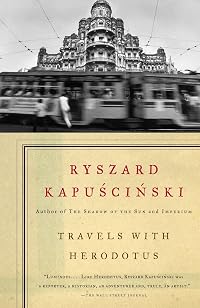
Travels with Herodotus
by Ryszard Kapuściński
On This Page
Description
Herodotus, the 5th century chronicler, scarcely figured in the curriculum when famed Polish writer and traveler Ryszard Kapuscinski attended university in the 1950s. After he finished college, Ryszard became a foreign correspondent who hoped to go abroad, perhaps to Czechoslovakia. Instead, he was sent to India - the first stop on a decades-long tour of the world that took him from Iran to El Salvador, from Angola to Armenia. His only companion on his travels was a volume of Herodotus, a show more gift from his first boss. In his journey across continents, Kapuscinski discovers his life's work: to understand and describe the non-Western world in its remotest reaches, in all its variety, through his still-virginal Western eyes. Throughout his travels, the journalist tests and emulates Herodotus' methods - to wander, look, talk, and listen - so that he can later recount what he saw and learned. show lessTags
Recommendations

















Member Recommendations
Member Reviews
Written by a Polish journalist this is a book in two strands. In one he reviews some of his past assignments, in the other he reviews his reading and relationship to Herodotus and his Histories. I enjoyed both. The fish out of water beginner who is entranced by every country he visits becomes a seasoned journalist but still retains some of that wonder. His interpretation of Herodotus was equally fascinating. He examines his technique as well as the content and proposes that Herodotus should be know n as the first journalist and The Histories would be better called The Investigation and is the first piece of reportage. I liked both strands and they way the interlinked.
I must re-read Herodotus.
I must re-read Herodotus.
"Herodotus is by turns surprised, astounded, delighted, terrified by things. To some he simply gives no credence, knowing how easily people can be carried away by fantasy."(p 182)
This was my introduction to the world of Ryszard Kapuscinski. And what an introduction. I was impressed and intrigued with his fine writing style and the way that he was able to interpolate his companion, The Histories of Herodotus, with his youthful travels in India, China, and beyond. Having read Herodotus' work fairly recently this was even more a delight as I marveled at the interpretations Kapuscinski shares with the reader as he travels the world. He comes full circle back to the Mediterranean Sea that was central to Herodotus and the Greeks. Ending with show more a visit to Halicarnassus where Herodotus was born he bridges the time that has passed since that day with a meditation on the meaning of history. I subsequently read his The Shadow of the Sun and look forward to other of Kapuscinski's books show less
This was my introduction to the world of Ryszard Kapuscinski. And what an introduction. I was impressed and intrigued with his fine writing style and the way that he was able to interpolate his companion, The Histories of Herodotus, with his youthful travels in India, China, and beyond. Having read Herodotus' work fairly recently this was even more a delight as I marveled at the interpretations Kapuscinski shares with the reader as he travels the world. He comes full circle back to the Mediterranean Sea that was central to Herodotus and the Greeks. Ending with show more a visit to Halicarnassus where Herodotus was born he bridges the time that has passed since that day with a meditation on the meaning of history. I subsequently read his The Shadow of the Sun and look forward to other of Kapuscinski's books show less
The world-traveled Polish journalist Ryszard Kapuścinśki had a special affinity for the ancient Greek historian Herodotus. Herodotus, in Kapuścinśki’s estimation, was himself a world-traveled journalist by the time he wrote his famous Histories. It’s an audacious move to write a memoir in parallel to such a venerable book, but that, thankfully, is just what Kapuścinśki has done in Travels with Herodotus.
Travels with Herodotus is a marvel of concise, open-ended insight—or “outsight,” more accurately, since both Kapuścinśki and Herodotus are concerned more with anthropology than psychology. Travels is also that rare book that teaches writing as it entertains. For teachers, Travels is a curricular field day, bringing show more structure and focus to a wide array of subjects, from science to art, from the ethics of violence to the perplexities of love. For lovers of travel writing, Kapuścinśki has created an engine of armchair transportation that moves through both time and space. For students of the reporter’s craft, Kapuścinśki is patient and profound.
“We depend on others,” he writes: “reportage is perhaps the form of writing most reliant on the collective.” Travels is an unpacking of this idea through a reading of Herodotus, of “how he gathered his raw material and then wove from it his immense and rich tapestry.” This is “precisely the point worth delving into,” and Kapuścinśki’s years of experience as a foreign correspondent give him an immense and rich perspective with which to draw lessons of concise imagination from Herodotus.
What I most admire about this book is the way in which Kapuścinśki doesn’t just respect difference but actively engages with it. Until he died in 2007, Kapuścinśki studied dozens of languages, literatures, folk ways and political systems—cultures—and developed a mature, rational, soulful style capable of bringing the masses to the particular.
Here’s an example from “a small Congolese town” where he reported on life under the gendarmes who practiced “all manner of villainy, brutishness, and bestiality.” Conducting interviews with a group of gendarmes, he thought about what else was present: “a huge swath of world history, which already set us against one another many centuries ago.” Slavery and colonialism have left scars “passed down for years in tribal stories, and the men whom I am about to encounter would have been reared… on legends ending with a promise of a day of retribution.” What happens? Kapuścinśki whips out a pack of cigarettes and they “smoke the entire pack, right away, until not a puff of smoke is left!”
Kapuścinśki writes for learners and with the faith that art, as writing, has the power to transform lives through empathy and shared experience. Such persons are rare, though: “The average person is not especially curious about the world.” The world is a “condition” best dealt with with as little effort as possible. “Whereas learning about the world is labor, and a great, all-consuming one at that.” Whether it’s by way of “curiosity,” “a hunger for experience,” or “an addiction to wonderment,” Kapuścinśki weaves two worlds together, his own twentieth century with Herodotus’s fifth-century B.C., and brings them both to life.
Originally published on Curled Up With A Good Book.
Of related interest: The Landmark Herodotus. show less
Travels with Herodotus is a marvel of concise, open-ended insight—or “outsight,” more accurately, since both Kapuścinśki and Herodotus are concerned more with anthropology than psychology. Travels is also that rare book that teaches writing as it entertains. For teachers, Travels is a curricular field day, bringing show more structure and focus to a wide array of subjects, from science to art, from the ethics of violence to the perplexities of love. For lovers of travel writing, Kapuścinśki has created an engine of armchair transportation that moves through both time and space. For students of the reporter’s craft, Kapuścinśki is patient and profound.
“We depend on others,” he writes: “reportage is perhaps the form of writing most reliant on the collective.” Travels is an unpacking of this idea through a reading of Herodotus, of “how he gathered his raw material and then wove from it his immense and rich tapestry.” This is “precisely the point worth delving into,” and Kapuścinśki’s years of experience as a foreign correspondent give him an immense and rich perspective with which to draw lessons of concise imagination from Herodotus.
What I most admire about this book is the way in which Kapuścinśki doesn’t just respect difference but actively engages with it. Until he died in 2007, Kapuścinśki studied dozens of languages, literatures, folk ways and political systems—cultures—and developed a mature, rational, soulful style capable of bringing the masses to the particular.
Here’s an example from “a small Congolese town” where he reported on life under the gendarmes who practiced “all manner of villainy, brutishness, and bestiality.” Conducting interviews with a group of gendarmes, he thought about what else was present: “a huge swath of world history, which already set us against one another many centuries ago.” Slavery and colonialism have left scars “passed down for years in tribal stories, and the men whom I am about to encounter would have been reared… on legends ending with a promise of a day of retribution.” What happens? Kapuścinśki whips out a pack of cigarettes and they “smoke the entire pack, right away, until not a puff of smoke is left!”
Kapuścinśki writes for learners and with the faith that art, as writing, has the power to transform lives through empathy and shared experience. Such persons are rare, though: “The average person is not especially curious about the world.” The world is a “condition” best dealt with with as little effort as possible. “Whereas learning about the world is labor, and a great, all-consuming one at that.” Whether it’s by way of “curiosity,” “a hunger for experience,” or “an addiction to wonderment,” Kapuścinśki weaves two worlds together, his own twentieth century with Herodotus’s fifth-century B.C., and brings them both to life.
Originally published on Curled Up With A Good Book.
Of related interest: The Landmark Herodotus. show less
I discovered Kapuscinski many years ago through an issue of Granta and told myself I must read more... Not disappointed by this one, though I approached it with some trepidation, thanks to the dreadful Mr Kilner, my soporific history teacher at grammar school when I was 12, when Ancient Greece was on the curriculum. If only we could have had someone like Kapuscinski, who highlights all the juicy bits. Here he relates his early travels as a reporter, sent out raw from Poland to China, Africa and elsewhere, always accompanied by The Histories, which inspired and intrigued him. The writing flows from his pen like an easy-running stream, brilliantly translated (one would never guess it is a translation). Next time I travel I will go with show more Kapuscinski.
This edition (Folio Society) is illustrated with the author's black and white photos. For some reason, American spelling is used, and there are several typos, which I always find annoying in these "fine" editions. show less
This edition (Folio Society) is illustrated with the author's black and white photos. For some reason, American spelling is used, and there are several typos, which I always find annoying in these "fine" editions. show less
One of the magical things about reading is that it puts the reader directly in touch with the mind of the writer. Unfortunately, this is only a one-way street. But Ryszard Kapuscinski has seemingly performed the impossible: He somehow got Herodotus to answer questions about himself that he never directly addressed in his monumental The Histories. We know next to nothing of the facts of Herodotus' life: He came from Halicarnassus, an ancient seaport in western Asia Minor, now Bodrum, Turkey; he abided for a time in Athens where he was unable to obtain citizenship, so he eventually settled in an obscure Greek colony in the inner arch of the foot of Italy called Thurii.
To American readers, at least, Ryszard Kapuscinski (1932-2007) isn't show more exactly a household name. But it turns out that he was one of the most respected international journalists around. In addition to Travels with Herodotus, he wrote books on some very interesting subjects including, for example, The Emperor, about the decline of Emperor Haile Selassie of Ethiopia; Shah of Shahs, about the last days of the Shah of Iran; and Imperium, about the fall of the Soviet Union.
Kapuscinski first heard of Herodotus while attending university in 1951 Poland. This was a time when books were not readily available as they are now, and even something as seemingly innocuous as a Polish translation of Herodotus' Histories was locked away in a closet before it even got printed. As Kapuscinski wrote:
. . . all of our thinking, our looking and reading, was governed during those years by an obsession with allusion. Each word brought another one to mind; each had a double meaning, a false bottom, a hidden significance; each contained something secretly encoded, cunningly concealed. Nothing was ever plain, literal, unambiguous — from behind every gesture and word peered some referential sign, gazed a meaningfully winking eye. The man who wrote had difficulty communicating with the man who read, not only because the censor could confiscate the text en route, but also because when the text finally reached him, the latter read something utterly different from what was clearly written, constantly asking himself: What did this author really want to tell me?
Herodotus — the Polish version — was finally published in 1955 when a "thaw" was beginning to take place. Kapuscinski got a job with a newspaper and eventually was sent to India as a foreign correspondent. He was given "a present, for the road." It was a copy of Herodotus, The Histories.
Kapuscinski not only carried the book with him, but he actually began to read it! And thus began a lifelong collaboration with the author of this ancient text. Judging from Kapuscinski's manner of storytelling, it would appear that his journalism mimics that of Herodotus in many subtle ways. Some critics who weren't all that enamored of his style of journalism probably didn't understand how it evolved from his study of Herodotus. One writer even dubbed his style "magic journalism," sort of a nonfiction variation on Gabriel Garcia Marquez's magic realism. This is amusing but it entirely misses the point. As Kapuscinski says: "Herodotus's book arose from travel; it is world literature's first great work of reportage. Its author has reportorial instincts, a journalistic eye and ear." Kapuscinski's career as a newspaper's foreign correspondent also arose from travel, and it probably didn't take him long to realize that in Herodotus he had serendipitously been handed access to the perfect prototype of his own budding craft. For him The Histories served as a reporter's handbook.
He began to ask questions: How does Herodotus work? As a diplomat, a spy, a tourist, a wanderer? No. Herodotus was "a reporter, an anthropologist, an ethnographer, a historian." What is the goal of Herodotus' journeys? How does he travel? By analyzing the book from a writer's standpoint, he began to gain insights into his own writing. And here was the key:
One must read Herodotus's book — and every great book — repeatedly; with each reading it will reveal another layer, previously overlooked themes, images and meanings. For within every great book there are several others.
While Kapuscinski had been given the book as a traveling companion, he found eventually that he had been on two journeys — first, as a foreign correspondent; and second, as a traveler with Herodotus on his various journeys of inquiry. In a similar way, through Travels with Herodotus, we are getting to know two fascinating writers and their work. Kapuscinski presents the broad outlines of The Histories in the contexts of his various foreign assignments — among others, in India and China, Congo in the midst of civil war and Algiers in the aftermath of a coup. The circumstances in each locale inform Kapuscinski's reading of Herodotus and conversely, Herodotus' enquiries inform Kapuscinski's reporting of unfolding events.
Through his travels — mostly in the third world — Kapuscinski often found himself in situations that were as primitive as those Herodotus encountered, and this is probably one reason why The Histories resonated for him. But traveling, whether as a reporter or as a mere tourist, has much in common with reading great literature and has profound effects:
A journey, after all, neither begins in the instant we set out, nor ends when we have reached our doorstep once again. It starts much earlier and is never really over, because the film of memory continues running on inside us long after we have come to a physical standstill. Indeed, there exists something like a contagion of travel, and the disease is essentially incurable.
If one finds the prospect of reading The Histories too daunting, one cannot go wrong by dipping a toe into the waters through Travels with Herodotus. This is one of those books . . . show less
To American readers, at least, Ryszard Kapuscinski (1932-2007) isn't show more exactly a household name. But it turns out that he was one of the most respected international journalists around. In addition to Travels with Herodotus, he wrote books on some very interesting subjects including, for example, The Emperor, about the decline of Emperor Haile Selassie of Ethiopia; Shah of Shahs, about the last days of the Shah of Iran; and Imperium, about the fall of the Soviet Union.
Kapuscinski first heard of Herodotus while attending university in 1951 Poland. This was a time when books were not readily available as they are now, and even something as seemingly innocuous as a Polish translation of Herodotus' Histories was locked away in a closet before it even got printed. As Kapuscinski wrote:
. . . all of our thinking, our looking and reading, was governed during those years by an obsession with allusion. Each word brought another one to mind; each had a double meaning, a false bottom, a hidden significance; each contained something secretly encoded, cunningly concealed. Nothing was ever plain, literal, unambiguous — from behind every gesture and word peered some referential sign, gazed a meaningfully winking eye. The man who wrote had difficulty communicating with the man who read, not only because the censor could confiscate the text en route, but also because when the text finally reached him, the latter read something utterly different from what was clearly written, constantly asking himself: What did this author really want to tell me?
Herodotus — the Polish version — was finally published in 1955 when a "thaw" was beginning to take place. Kapuscinski got a job with a newspaper and eventually was sent to India as a foreign correspondent. He was given "a present, for the road." It was a copy of Herodotus, The Histories.
Kapuscinski not only carried the book with him, but he actually began to read it! And thus began a lifelong collaboration with the author of this ancient text. Judging from Kapuscinski's manner of storytelling, it would appear that his journalism mimics that of Herodotus in many subtle ways. Some critics who weren't all that enamored of his style of journalism probably didn't understand how it evolved from his study of Herodotus. One writer even dubbed his style "magic journalism," sort of a nonfiction variation on Gabriel Garcia Marquez's magic realism. This is amusing but it entirely misses the point. As Kapuscinski says: "Herodotus's book arose from travel; it is world literature's first great work of reportage. Its author has reportorial instincts, a journalistic eye and ear." Kapuscinski's career as a newspaper's foreign correspondent also arose from travel, and it probably didn't take him long to realize that in Herodotus he had serendipitously been handed access to the perfect prototype of his own budding craft. For him The Histories served as a reporter's handbook.
He began to ask questions: How does Herodotus work? As a diplomat, a spy, a tourist, a wanderer? No. Herodotus was "a reporter, an anthropologist, an ethnographer, a historian." What is the goal of Herodotus' journeys? How does he travel? By analyzing the book from a writer's standpoint, he began to gain insights into his own writing. And here was the key:
One must read Herodotus's book — and every great book — repeatedly; with each reading it will reveal another layer, previously overlooked themes, images and meanings. For within every great book there are several others.
While Kapuscinski had been given the book as a traveling companion, he found eventually that he had been on two journeys — first, as a foreign correspondent; and second, as a traveler with Herodotus on his various journeys of inquiry. In a similar way, through Travels with Herodotus, we are getting to know two fascinating writers and their work. Kapuscinski presents the broad outlines of The Histories in the contexts of his various foreign assignments — among others, in India and China, Congo in the midst of civil war and Algiers in the aftermath of a coup. The circumstances in each locale inform Kapuscinski's reading of Herodotus and conversely, Herodotus' enquiries inform Kapuscinski's reporting of unfolding events.
Through his travels — mostly in the third world — Kapuscinski often found himself in situations that were as primitive as those Herodotus encountered, and this is probably one reason why The Histories resonated for him. But traveling, whether as a reporter or as a mere tourist, has much in common with reading great literature and has profound effects:
A journey, after all, neither begins in the instant we set out, nor ends when we have reached our doorstep once again. It starts much earlier and is never really over, because the film of memory continues running on inside us long after we have come to a physical standstill. Indeed, there exists something like a contagion of travel, and the disease is essentially incurable.
If one finds the prospect of reading The Histories too daunting, one cannot go wrong by dipping a toe into the waters through Travels with Herodotus. This is one of those books . . . show less
18/2021. This is a travel book describing how Ryszard Kapuscinski's reading of ancient Greek author Herodotus influenced his perceptions and writing as a journalist. I've read plenty of travel writing and journalism by foreign correspondents but this book made me think and even provoked one entirely fresh perspective. Sometimes it's useful for journalists and historians to ask questions for curiosity's sake without necessarily expecting those questions to be fully answerable.
Quotes
On border walls, written before 2007: "That is how the world’s energy is wasted. In complete irrationality! Complete futility! For the Great Wall — and it is gigantic, a wall-fortress, stretching for thousands of kilometres through uninhabited mountains show more and wilderness, an object of pride and, as I have mentioned, one of the wonders of the world — is also proof of a kind of human weakness, of an aberration, of a horrifying mistake; it is evidence of a historical inability of people in this part of the planet to communicate, to confer and jointly determine how best to deploy enormous reserves of human energy and intellect."
On war: "In the realm of human affairs, admittedly, one also needs a pretext. It is important to give it the rank of a universal imperative or of a divine commandment. The range of choices is not great: either it is that we must defend ourselves, or that we have an obligation to help others, or that we are fulfilling heaven’s will. The optimal pretext would link all three of these motives. The attackers should appear in the glory of the anointed, in the role of those who have found favour in his chosen god’s eye."
In conclusion: "The past does not exist. There are only infinite renderings of it." show less
Quotes
On border walls, written before 2007: "That is how the world’s energy is wasted. In complete irrationality! Complete futility! For the Great Wall — and it is gigantic, a wall-fortress, stretching for thousands of kilometres through uninhabited mountains show more and wilderness, an object of pride and, as I have mentioned, one of the wonders of the world — is also proof of a kind of human weakness, of an aberration, of a horrifying mistake; it is evidence of a historical inability of people in this part of the planet to communicate, to confer and jointly determine how best to deploy enormous reserves of human energy and intellect."
On war: "In the realm of human affairs, admittedly, one also needs a pretext. It is important to give it the rank of a universal imperative or of a divine commandment. The range of choices is not great: either it is that we must defend ourselves, or that we have an obligation to help others, or that we are fulfilling heaven’s will. The optimal pretext would link all three of these motives. The attackers should appear in the glory of the anointed, in the role of those who have found favour in his chosen god’s eye."
In conclusion: "The past does not exist. There are only infinite renderings of it." show less
One of the finest travel narratives I've read, this book does justice to Herodotus' work with a broad scope, poetic language, and no fear to discover and examine the truths of humanity.
Members
- Recently Added By
Published Reviews
From the renowned journalist comes this intimate account of his years in the field, traveling for the first time beyond the Iron Curtain to India, China, Ethiopia, and other exotic locales.
In the 1950s, Ryszard Kapuscinski finished university in Poland and became a foreign correspondent, hoping to go abroad – perhaps to Czechoslovakia. Instead, he was sent to India – the first stop on a show more decades-long tour of the world that took Kapuscinski from Iran to El Salvador, from Angola to Armenia. Revisiting his memories of traveling the globe with a copy of Herodotus' Histories in tow, Kapuscinski describes his awakening to the intricacies and idiosyncrasies of new environments, and how the words of the Greek historiographer helped shape his own view of an increasingly globalized world. Written with supreme eloquence and a constant eye to the global undercurrents that have shaped the last half-century, Travels with Herodotus is an exceptional chronicle of one man's journey across continents. show less
In the 1950s, Ryszard Kapuscinski finished university in Poland and became a foreign correspondent, hoping to go abroad – perhaps to Czechoslovakia. Instead, he was sent to India – the first stop on a show more decades-long tour of the world that took Kapuscinski from Iran to El Salvador, from Angola to Armenia. Revisiting his memories of traveling the globe with a copy of Herodotus' Histories in tow, Kapuscinski describes his awakening to the intricacies and idiosyncrasies of new environments, and how the words of the Greek historiographer helped shape his own view of an increasingly globalized world. Written with supreme eloquence and a constant eye to the global undercurrents that have shaped the last half-century, Travels with Herodotus is an exceptional chronicle of one man's journey across continents. show less
added by Taphophile13
Twórczość Ryszarda Kapuścińskiego została poddana wielu próbom interpretacji. Na jej temat wypowiadali się również mistrzowie literatury tacy jak Gabriel Garcia Márquez czy John Updike, nie szczędząc Kapuścińskiemu pochwał .
Kazimierz Wolny-Zmorzyński w swojej wydanej w 1998 roku książce pod tytułem O twórczości Ryszarda Kapuścińskiego. Próba interpretacji przedstawia show more charakterystyczną dla autora metodę zestawiania tekstów takich jak biografie, cytaty z opracowań naukowych, fragmenty artykułów, fragmenty pamiętników z własna twórczością. Zastosowanie, metoda znajduje w takich utworach Kapuścińskiego jak Cesarz, Szachinszach i Imperium, a także w wydanych później, w 2004 roku, Podróżach z Herodotem, w których Ryszard Kapuściński wykorzystuje fragmenty Dziejów Herodota.
Jednym z recenzentów Podróży z Herodotem jest Paweł Urbaniak. W pracy Kapuściński- Uczeń Herodota pisze o refleksji i subiektywizmie Kapuścińskiego, który posiłkuje się cytatami zaczerpniętymi z Dziejów. Urbaniak ukazuje analogię występującą pomiędzy doświadczeniami autora recenzowanej książki a doświadczeniami Herodota.
Jarosław Mikołajewski, w badaniach nad Podróżami z Herodotem, zwraca uwagę na ponadgatunkowość utworu Kapuścińskiego, który łączy w sobie doznania reportera, podróżnika a także historyka.
Podróże z Herodotem stanowią symbiozę dwóch narracji, opowiadających o zjawiskach pozostających w polu bezpośrednich doświadczeń osób mówiących. Obydwa teksty przenoszą czytelnika w dwa różne pod względem przestrzennym i czasowym światy.
Poszedłem przez via Cavour aż do Pizza Venezia, a potem uliczkami, zaułkami z powrotem do Stawione Termini. Nie widziałem architektury, pomników i monumentów, fascynowały mnie tylko kawiarnie i bary. Wszędzie na chodnikach były rozstawione stoliki, przy których siedzieli ludzie, coś pijąc i rozmawiając, a nawet po prostu patrząc na ulicę i na przechodniów(…).W jednej z tych kawiarń wypatrzyłem pusty stolik. Po jakimś czasie zauważyłem, że ludzie spoglądają na mnie (…). Widocznie w moim wyglądzie i gestach, w sposobie siedzenia i poruszania się było coś, co zdradzało, skąd przybywam, z jakiego jestem odmiennego świata. (…) Choć miałem garnitur, nie mogłem ukryć pod nim tego, co mnie ukształtowało i naznaczyło. Byłem oto we wspaniałym świecie, który mi jednak przypominał, że stanowię w nim obcą cząstkę.
W przytoczonym fragmencie występuje narracja pierwszoosobowa. Jego akcja jest osadzona we współczesnym Rzymie. Opisuje doznania narratora-bohatera podczas pierwszej zagranicznej wyprawy. Architektura miasta ani inne jego elementy nie przemawiają do jego zainteresowań. Podróżnik zwraca uwagę na zachowanie ludzi, którzy go otaczają, zdając sobie sprawę za swojej odmienności w świecie, w którym się znalazł, a który tak bardzo go fascynuje. Drugim narratorem w książce jest pochodzący z epoki antycznej Grek. To jego rozmyślania zostają regularnie przytaczane przez pierwszego narratora.
W relacjonowaniu zdarzeń, drugi narrator używa specyficznych sformułowań. Ostrożnie formułuje swoje sądy na różne tematy, gdyż informacje na podstawie których je tworzy, pochodzą od napotkanych przypadkowo przechodniów. Ich źródło nie jest zatem do końca pewne.
Inni Indowie, którzy od nich na wschód mieszkają, są koczownikami i jadają surowe mięso. Nazywa się ich Padajami i mówi się, że praktykują takie obyczaje.
Podwójna narracja wprowadza czytelnika w dwa różne pod względem przestrzeni dziejowej światy. Utwór przedstawia przeżycia człowieka, żyjącego w wieku XX naszej ery, w kontekście doświadczeń pisarza pochodzącego z V wieku przed naszą erą. Dochodzi zatem do zderzenia wydarzeń politycznych i historycznych, autorów pochodzących z dwóch odległych sobie epok.
Dzieje, których fragmenty stanowią część książki, to dzieło poruszające tematykę walki Wschodu z Zachodem, odwiecznych wojen pomiędzy Grekami a Persami. Europejczycy XX wieku również zmagali się z nieustannymi bitwami pomiędzy dwoma mocarstwami, jakimi były Rosja i Niemcy. Kapuściński odnosi się do antycznego dzieła, ukazując na jego tle problemy świata współczesnego.
Herodot był podróżującym po świecie historykiem greckim, żyjącym w V w. p.n.e. . Dzieje, będące relacją z wojen grecko-perskich, są również opisem geograficznym krain, zwiedzonych przez ich autora. Zadziwiający jest fakt samego przemieszczania się Herodota po ogromnym obszarze od Syrakuz na Zachodzie do Midii na Wschodzie, od Elefantiny (w środkowym biegu Nilu) na Południu do Oliwii (przy ujściu zalewu Dniepr-Bug) na Północy. Dzieje zostały podzielone na dwie części strukturalne: rozszerzone wprowadzenie, w którym opisywane są kraje, który w mniejszym lub większym stopniu miały swój udział w wojnie grecko-perskiej, oraz część, która opisuje wydarzenia samej wojny. Na kartach książki Kapuścińskiego, Herodot nie tylko zostaje przedstawiony jako wszędobylski historyk, ale także urasta do rangi ówczesnego reportera, któremu poprzez dociekliwość, rozmowy przeprowadzone z przypadkowo napotkanymi ludźmi udaje się stworzyć dzieło o ponadczasowej tematyce. Dzięki niemu, autor pozostaje nieśmiertelny, realizuje motyw exegi monumentum, dając szansę korzystania ze swoich osobistych doświadczeń i refleksji, pisarzom następnych epok. Jednym z nich staje się narrator książki Podróże z Herodotem.
Narratorem, wprowadzającym czytelnika w interpretacje współczesnych zdarzeń jest autor Podróży z Herodotem, Ryszard Kapuściński. Świadczy o tym fragment tekstu, zamieszczona w utworze informacja narratora:
Ukończyłem studia i zacząłem pracować w gazecie. Nazywała się Sztandar Młodych. Byłem początkującym reporterem, jeździłem śladem nadesłanych do redakcji listów.
Wiadomo, że w 1956 roku, po ukończeniu studiów na Wydziale Historycznym Uniwersytetu Warszawskiego. Rozpoczął pracę w redakcji Sztandaru Młodych. Podążając tokiem myśli Marii Jasińskiej-Wojtkowskiej zawartej w pracy Narrator w powieści, można identyfikować narratora z realnym pisarzem, jego przeżyciami i biografią. Wspomniane w przytoczonym fragmencie podróże Kapuścińskiego, rozpoczynają się od Nowej Huty. Właśnie dzięki nim powstaje cykl reportaży, uznanych za debiut autorski, za który otrzymuje od ówczesnych władz Złoty Krzyż Zasługi.
Przytoczone w książce informacje dotyczące współczesności, stanowią podsumowanie półwiecza. Narrator rozpoczyna swoją opowieść o zetknięciu się z twórczością Herodota od wspomnienia czasów uniwersyteckich. Właśnie wtedy słyszy o antycznym pisarzu po raz pierwszy. Porównując wydarzenia opisane w Dziejach wyjaśnia dlaczego utwór został opublikowany w Polsce z opóźnieniem.
Można się domyślać, dlaczego powstała taka przerwa między wysłaniem maszynopisu do drukarni a pojawieniem się Dziejów w księgarniach. Mianowicie przerwa ta przypada na okres poprzedzający śmierć Stalina i czas, jaki po niej bezpośrednio nastąpił. (…) Cenzorzy zdwoili czujność.
Ale Herodot? Jego książka napisana dwa i pół tysiąca lat temu? A jednak - tak. Tak, bo panowała wówczas, rządziła całym naszym myśleniem, całym sposobem patrzenia i czytania obsesja aluzji. (…)
I oto ktoś opętany, zadręczony obsesja aluzji sięga po Herodota. Ileż tam znajdzie skojarzeń! (…) Otwiera, czyta i dowiaduje się, że w Koryncie, po trzydziestu latach krwawych rządów, umarł tyran o nazwisku Kypselos(…).
Śmierć pierwszego tyrana Koryntu, Kypselosa, byłaby według autora postrzegana jako nawiązanie do śmierci tyrana Europy XX wieku, Józefa Stalina. Panująca w czasach komunizmu cenzura nie pozwalała na publikowanie treści, które mogłyby negatywnie wpłynąć na wizerunek dyktatora. Porównanie ważnej osobistości ZSRR do starożytnego tyrana nie byłaby pochlebstwem, mogłoby wywołać refleksje u czytających dzieło Herodota a w konsekwencji bunt. Stąd, cenzorzy nie ryzykując, wycofywali już istniejące i zakazywali publikacji nowych twórczości pisarskich, w których odnaleźli najmniejsze podejrzenie aluzji do zaistniałych wówczas wydarzeń.
Właśnie w tym momencie rozpoczyna się podróż Kapuścińskiego z Herodotem. Autor dostrzega związki pomiędzy wydarzeniami świata starożytnego i współczesnego. Obydwie przestrzenie czasowe są zdominowane przez rządy dyktatorskie. Rozpoczyna się walka o zbudowanie potężnych pod każdym względem mocarstw. Walka która toczy się pomiędzy bezwzględnymi i bezlitosnymi tyranami a ich przeciwnikami.
Zestawiając ze sobą czasy panowania Kypselosa z czasami, w których sprawował władzę Stalin, Kapuściński wskazuje na aktualność problematyki wojny, przedstawionej w Dziejach. Podróże z Herodotem stanowią swoisty monolog. Interpretują wydarzenia dzisiejszego świata w sposób analogiczny do wydarzeń z epoki antyku, jednocześnie próbując znaleźć odpowiedzi na pytania nurtujące współcześnie żyjących ludzi. Dzieje są swego rodzaju przewodnikiem pozwalającym zrozumieć i przeanalizować problemy świata, z którymi borykali się już starożytni. Owe podróże, dosłownie oznaczają podróże z dziełem napisanym przez Greka, który żył w starożytności, pozostawiając po sobie trwałe, kulturowe świadectwo swoich doświadczeń dla kolejnych pokoleń, a tym samym pomagając im zrozumieć pewne aspekty władzy.
Marzeniem Ryszarda Kapuścińskiego jest przekroczenie granic, podróż poza obręby własnego kraju. Określa swoje pragnienie jako ostry głód psychologiczny. Pragnie poczuć jak to jest wyruszyć w podróż tak odległą, przynoszącą ze sobą nowe doświadczenia. Nie przypuszcza jednak, że wyprawa w którą wkrótce wyruszy będzie miała inny charakter niż ktokolwiek mógłby się tego spodziewać. Kapuściński, otrzymując egzemplarz Dziejów Herodota, przemieszcza się w czasie. Wędruje wraz z ich autorem w odległe krainy starożytnego świata, równolegle przeżywając podróże po świecie współczesnym. Te dwa rodzaje podróży, w świecie realnym i świecie wyobraźni, tworzą całość, będącą dla pisarza bardzo cennym duchowym doświadczeniem.
Kapuściński dokonuje analizy warsztatu Greka. Rozmyśla nad sposobem w jaki autor gromadził informacje, pisząc Dzieje. Przemyślanom poddaje czas i warunki twórczości Herodota. Przysłuchiwanie się gawędom, przyglądanie się turniejom sprzyja poznawaniu nowych ludzi i historii, o których opowiadają. Ryszard Kapuściński dokonuje zestawienia postawy człowieka antycznego i człowieka współczesnego. Tego drugiego nazywa kaleką, która stale posługuje się zdobyczami techniki, podczas gdy epoka antyku była epoką pamięci. Człowiek chcąc spisać ważne wydarzenia, musiał ich doświadczyć lub też rozmawiać z innymi ludźmi, a później zapamiętać to czego był świadkiem. Dzięki temu człowiek człowiekowi stawał się bliższy. Uzewnętrzniając swój podziw, Kapuściński jednocześnie dokonuje analizy porównawczej dwóch światów pisarskich. Na tym między innymi polega jego podróż z Herodotem.
Podróż afrykańska trwa i trwa, po jakimś czasie miejsca i daty zaczynają się plątać, tyle tu bowiem wszystkiego, kontynent kłębi się i pęcznieje od wydarzeń, jeżdżę i piszę, mam poczucie, że wokół dzieją się rzeczy ważne i niepowtarzalne i że warto temu wszystkiemu dać, choćby chwilowe, świadectwo.(…).
Pomimo różnic dziejowych, pomiędzy autorami wyłania się podobieństwo. Kapuściński, podobnie jak starożytny Herodot, przemieszcza się, jest dociekliwy, uparcie dąży do celu rozwikłania wielu kwestii. Żadnego z wydarzeń nie potrafi zbagatelizować, wszystkie są dla niego ważne i wartościowe, każde z nich niesie ze sobą wartościowa treść.
Kolejny fragment jest odzwierciedleniem stosunku Kapuścińskiego do Herodota. Autor Podróży z Herodotem nazywa swoje uczucia, otwiera się przed czytelnikiem, pokazując jak wielkie znaczenie ma dla niego pisarz antyku.
Jeżeli nawet latami nie sięgałem do Dziejów, pamiętałem o ich autorze. Był postacią realną i rzeczywistą, potem na dwa tysiąclecia zapomnianą, a dziś, po wielu wiekach, dla mnie przynajmniej- znowu żywą. Obdarowałem ja teraz wyglądem i cechami, jakie chciałem jej nadać. Był to już mój Herodot, a przez to, że mój- szczególnie mi bliski, taki, z którym miałem wspólny język i mogłem porozumieć się w pół słowa.
Kapuściński nie postrzega Dziejów wyłącznie jako utworu napisanego wiele wieków temu. Stają się one łącznikiem pomiędzy odległymi sobie czasami, dzięki nim, autor ma okazje poznać kogoś kto jest podobny do niego samego, kogoś kto byłby w stanie zrozumieć jego rozmyślania. Dostrzega w utworze antycznym cząstkę samego autora. Sprawia to, że Herodot pozostaje żywy przez wieki. Nie umiera. Istnieje dla Kapuścińskiego dzięki ponadczasowej twórczości, żyje w jego wyobraźni.
W miarę jak płynął czas i coraz to wracałem do Dziejów, zacząłem odczuwać coś w rodzaju serdeczności, nawet przyjaźni z Herodotem. Trudno było mi się obyć nie tyle nawet bez książki, ile bez jej autora. Skomplikowane uczucie, którego nie umiałbym dokładnie opisać. Bo było to zbliżenie z człowiekiem, którego nie znamy osobiście, ale który ujmuje nas i pociąga takim stosunkiem do innych, takim sposobem bycia, że gdziekolwiek pojawi się jego osoba, od razu staje się ona zalążkiem, zaczynem międzyludzkiej wspólnoty, tworzy ją i spaja.
Kapuściński podróżuje z kimś, kogo darzy niezwykłą sympatią, kogo podziwia. Zadaje pytania Herodotowi, uzyskując na nie pisemne odpowiedzi. Odległa przestrzeń czasowa maleje, nie jest przeszkodą nie do pokonania. Pomiędzy autorami, starożytnym i współczesnym toczy się dialog. Tak przebiegają podróże z Herodotem. show less
Kazimierz Wolny-Zmorzyński w swojej wydanej w 1998 roku książce pod tytułem O twórczości Ryszarda Kapuścińskiego. Próba interpretacji przedstawia show more charakterystyczną dla autora metodę zestawiania tekstów takich jak biografie, cytaty z opracowań naukowych, fragmenty artykułów, fragmenty pamiętników z własna twórczością. Zastosowanie, metoda znajduje w takich utworach Kapuścińskiego jak Cesarz, Szachinszach i Imperium, a także w wydanych później, w 2004 roku, Podróżach z Herodotem, w których Ryszard Kapuściński wykorzystuje fragmenty Dziejów Herodota.
Jednym z recenzentów Podróży z Herodotem jest Paweł Urbaniak. W pracy Kapuściński- Uczeń Herodota pisze o refleksji i subiektywizmie Kapuścińskiego, który posiłkuje się cytatami zaczerpniętymi z Dziejów. Urbaniak ukazuje analogię występującą pomiędzy doświadczeniami autora recenzowanej książki a doświadczeniami Herodota.
Jarosław Mikołajewski, w badaniach nad Podróżami z Herodotem, zwraca uwagę na ponadgatunkowość utworu Kapuścińskiego, który łączy w sobie doznania reportera, podróżnika a także historyka.
Podróże z Herodotem stanowią symbiozę dwóch narracji, opowiadających o zjawiskach pozostających w polu bezpośrednich doświadczeń osób mówiących. Obydwa teksty przenoszą czytelnika w dwa różne pod względem przestrzennym i czasowym światy.
Poszedłem przez via Cavour aż do Pizza Venezia, a potem uliczkami, zaułkami z powrotem do Stawione Termini. Nie widziałem architektury, pomników i monumentów, fascynowały mnie tylko kawiarnie i bary. Wszędzie na chodnikach były rozstawione stoliki, przy których siedzieli ludzie, coś pijąc i rozmawiając, a nawet po prostu patrząc na ulicę i na przechodniów(…).W jednej z tych kawiarń wypatrzyłem pusty stolik. Po jakimś czasie zauważyłem, że ludzie spoglądają na mnie (…). Widocznie w moim wyglądzie i gestach, w sposobie siedzenia i poruszania się było coś, co zdradzało, skąd przybywam, z jakiego jestem odmiennego świata. (…) Choć miałem garnitur, nie mogłem ukryć pod nim tego, co mnie ukształtowało i naznaczyło. Byłem oto we wspaniałym świecie, który mi jednak przypominał, że stanowię w nim obcą cząstkę.
W przytoczonym fragmencie występuje narracja pierwszoosobowa. Jego akcja jest osadzona we współczesnym Rzymie. Opisuje doznania narratora-bohatera podczas pierwszej zagranicznej wyprawy. Architektura miasta ani inne jego elementy nie przemawiają do jego zainteresowań. Podróżnik zwraca uwagę na zachowanie ludzi, którzy go otaczają, zdając sobie sprawę za swojej odmienności w świecie, w którym się znalazł, a który tak bardzo go fascynuje. Drugim narratorem w książce jest pochodzący z epoki antycznej Grek. To jego rozmyślania zostają regularnie przytaczane przez pierwszego narratora.
W relacjonowaniu zdarzeń, drugi narrator używa specyficznych sformułowań. Ostrożnie formułuje swoje sądy na różne tematy, gdyż informacje na podstawie których je tworzy, pochodzą od napotkanych przypadkowo przechodniów. Ich źródło nie jest zatem do końca pewne.
Inni Indowie, którzy od nich na wschód mieszkają, są koczownikami i jadają surowe mięso. Nazywa się ich Padajami i mówi się, że praktykują takie obyczaje.
Podwójna narracja wprowadza czytelnika w dwa różne pod względem przestrzeni dziejowej światy. Utwór przedstawia przeżycia człowieka, żyjącego w wieku XX naszej ery, w kontekście doświadczeń pisarza pochodzącego z V wieku przed naszą erą. Dochodzi zatem do zderzenia wydarzeń politycznych i historycznych, autorów pochodzących z dwóch odległych sobie epok.
Dzieje, których fragmenty stanowią część książki, to dzieło poruszające tematykę walki Wschodu z Zachodem, odwiecznych wojen pomiędzy Grekami a Persami. Europejczycy XX wieku również zmagali się z nieustannymi bitwami pomiędzy dwoma mocarstwami, jakimi były Rosja i Niemcy. Kapuściński odnosi się do antycznego dzieła, ukazując na jego tle problemy świata współczesnego.
Herodot był podróżującym po świecie historykiem greckim, żyjącym w V w. p.n.e. . Dzieje, będące relacją z wojen grecko-perskich, są również opisem geograficznym krain, zwiedzonych przez ich autora. Zadziwiający jest fakt samego przemieszczania się Herodota po ogromnym obszarze od Syrakuz na Zachodzie do Midii na Wschodzie, od Elefantiny (w środkowym biegu Nilu) na Południu do Oliwii (przy ujściu zalewu Dniepr-Bug) na Północy. Dzieje zostały podzielone na dwie części strukturalne: rozszerzone wprowadzenie, w którym opisywane są kraje, który w mniejszym lub większym stopniu miały swój udział w wojnie grecko-perskiej, oraz część, która opisuje wydarzenia samej wojny. Na kartach książki Kapuścińskiego, Herodot nie tylko zostaje przedstawiony jako wszędobylski historyk, ale także urasta do rangi ówczesnego reportera, któremu poprzez dociekliwość, rozmowy przeprowadzone z przypadkowo napotkanymi ludźmi udaje się stworzyć dzieło o ponadczasowej tematyce. Dzięki niemu, autor pozostaje nieśmiertelny, realizuje motyw exegi monumentum, dając szansę korzystania ze swoich osobistych doświadczeń i refleksji, pisarzom następnych epok. Jednym z nich staje się narrator książki Podróże z Herodotem.
Narratorem, wprowadzającym czytelnika w interpretacje współczesnych zdarzeń jest autor Podróży z Herodotem, Ryszard Kapuściński. Świadczy o tym fragment tekstu, zamieszczona w utworze informacja narratora:
Ukończyłem studia i zacząłem pracować w gazecie. Nazywała się Sztandar Młodych. Byłem początkującym reporterem, jeździłem śladem nadesłanych do redakcji listów.
Wiadomo, że w 1956 roku, po ukończeniu studiów na Wydziale Historycznym Uniwersytetu Warszawskiego. Rozpoczął pracę w redakcji Sztandaru Młodych. Podążając tokiem myśli Marii Jasińskiej-Wojtkowskiej zawartej w pracy Narrator w powieści, można identyfikować narratora z realnym pisarzem, jego przeżyciami i biografią. Wspomniane w przytoczonym fragmencie podróże Kapuścińskiego, rozpoczynają się od Nowej Huty. Właśnie dzięki nim powstaje cykl reportaży, uznanych za debiut autorski, za który otrzymuje od ówczesnych władz Złoty Krzyż Zasługi.
Przytoczone w książce informacje dotyczące współczesności, stanowią podsumowanie półwiecza. Narrator rozpoczyna swoją opowieść o zetknięciu się z twórczością Herodota od wspomnienia czasów uniwersyteckich. Właśnie wtedy słyszy o antycznym pisarzu po raz pierwszy. Porównując wydarzenia opisane w Dziejach wyjaśnia dlaczego utwór został opublikowany w Polsce z opóźnieniem.
Można się domyślać, dlaczego powstała taka przerwa między wysłaniem maszynopisu do drukarni a pojawieniem się Dziejów w księgarniach. Mianowicie przerwa ta przypada na okres poprzedzający śmierć Stalina i czas, jaki po niej bezpośrednio nastąpił. (…) Cenzorzy zdwoili czujność.
Ale Herodot? Jego książka napisana dwa i pół tysiąca lat temu? A jednak - tak. Tak, bo panowała wówczas, rządziła całym naszym myśleniem, całym sposobem patrzenia i czytania obsesja aluzji. (…)
I oto ktoś opętany, zadręczony obsesja aluzji sięga po Herodota. Ileż tam znajdzie skojarzeń! (…) Otwiera, czyta i dowiaduje się, że w Koryncie, po trzydziestu latach krwawych rządów, umarł tyran o nazwisku Kypselos(…).
Śmierć pierwszego tyrana Koryntu, Kypselosa, byłaby według autora postrzegana jako nawiązanie do śmierci tyrana Europy XX wieku, Józefa Stalina. Panująca w czasach komunizmu cenzura nie pozwalała na publikowanie treści, które mogłyby negatywnie wpłynąć na wizerunek dyktatora. Porównanie ważnej osobistości ZSRR do starożytnego tyrana nie byłaby pochlebstwem, mogłoby wywołać refleksje u czytających dzieło Herodota a w konsekwencji bunt. Stąd, cenzorzy nie ryzykując, wycofywali już istniejące i zakazywali publikacji nowych twórczości pisarskich, w których odnaleźli najmniejsze podejrzenie aluzji do zaistniałych wówczas wydarzeń.
Właśnie w tym momencie rozpoczyna się podróż Kapuścińskiego z Herodotem. Autor dostrzega związki pomiędzy wydarzeniami świata starożytnego i współczesnego. Obydwie przestrzenie czasowe są zdominowane przez rządy dyktatorskie. Rozpoczyna się walka o zbudowanie potężnych pod każdym względem mocarstw. Walka która toczy się pomiędzy bezwzględnymi i bezlitosnymi tyranami a ich przeciwnikami.
Zestawiając ze sobą czasy panowania Kypselosa z czasami, w których sprawował władzę Stalin, Kapuściński wskazuje na aktualność problematyki wojny, przedstawionej w Dziejach. Podróże z Herodotem stanowią swoisty monolog. Interpretują wydarzenia dzisiejszego świata w sposób analogiczny do wydarzeń z epoki antyku, jednocześnie próbując znaleźć odpowiedzi na pytania nurtujące współcześnie żyjących ludzi. Dzieje są swego rodzaju przewodnikiem pozwalającym zrozumieć i przeanalizować problemy świata, z którymi borykali się już starożytni. Owe podróże, dosłownie oznaczają podróże z dziełem napisanym przez Greka, który żył w starożytności, pozostawiając po sobie trwałe, kulturowe świadectwo swoich doświadczeń dla kolejnych pokoleń, a tym samym pomagając im zrozumieć pewne aspekty władzy.
Marzeniem Ryszarda Kapuścińskiego jest przekroczenie granic, podróż poza obręby własnego kraju. Określa swoje pragnienie jako ostry głód psychologiczny. Pragnie poczuć jak to jest wyruszyć w podróż tak odległą, przynoszącą ze sobą nowe doświadczenia. Nie przypuszcza jednak, że wyprawa w którą wkrótce wyruszy będzie miała inny charakter niż ktokolwiek mógłby się tego spodziewać. Kapuściński, otrzymując egzemplarz Dziejów Herodota, przemieszcza się w czasie. Wędruje wraz z ich autorem w odległe krainy starożytnego świata, równolegle przeżywając podróże po świecie współczesnym. Te dwa rodzaje podróży, w świecie realnym i świecie wyobraźni, tworzą całość, będącą dla pisarza bardzo cennym duchowym doświadczeniem.
Kapuściński dokonuje analizy warsztatu Greka. Rozmyśla nad sposobem w jaki autor gromadził informacje, pisząc Dzieje. Przemyślanom poddaje czas i warunki twórczości Herodota. Przysłuchiwanie się gawędom, przyglądanie się turniejom sprzyja poznawaniu nowych ludzi i historii, o których opowiadają. Ryszard Kapuściński dokonuje zestawienia postawy człowieka antycznego i człowieka współczesnego. Tego drugiego nazywa kaleką, która stale posługuje się zdobyczami techniki, podczas gdy epoka antyku była epoką pamięci. Człowiek chcąc spisać ważne wydarzenia, musiał ich doświadczyć lub też rozmawiać z innymi ludźmi, a później zapamiętać to czego był świadkiem. Dzięki temu człowiek człowiekowi stawał się bliższy. Uzewnętrzniając swój podziw, Kapuściński jednocześnie dokonuje analizy porównawczej dwóch światów pisarskich. Na tym między innymi polega jego podróż z Herodotem.
Podróż afrykańska trwa i trwa, po jakimś czasie miejsca i daty zaczynają się plątać, tyle tu bowiem wszystkiego, kontynent kłębi się i pęcznieje od wydarzeń, jeżdżę i piszę, mam poczucie, że wokół dzieją się rzeczy ważne i niepowtarzalne i że warto temu wszystkiemu dać, choćby chwilowe, świadectwo.(…).
Pomimo różnic dziejowych, pomiędzy autorami wyłania się podobieństwo. Kapuściński, podobnie jak starożytny Herodot, przemieszcza się, jest dociekliwy, uparcie dąży do celu rozwikłania wielu kwestii. Żadnego z wydarzeń nie potrafi zbagatelizować, wszystkie są dla niego ważne i wartościowe, każde z nich niesie ze sobą wartościowa treść.
Kolejny fragment jest odzwierciedleniem stosunku Kapuścińskiego do Herodota. Autor Podróży z Herodotem nazywa swoje uczucia, otwiera się przed czytelnikiem, pokazując jak wielkie znaczenie ma dla niego pisarz antyku.
Jeżeli nawet latami nie sięgałem do Dziejów, pamiętałem o ich autorze. Był postacią realną i rzeczywistą, potem na dwa tysiąclecia zapomnianą, a dziś, po wielu wiekach, dla mnie przynajmniej- znowu żywą. Obdarowałem ja teraz wyglądem i cechami, jakie chciałem jej nadać. Był to już mój Herodot, a przez to, że mój- szczególnie mi bliski, taki, z którym miałem wspólny język i mogłem porozumieć się w pół słowa.
Kapuściński nie postrzega Dziejów wyłącznie jako utworu napisanego wiele wieków temu. Stają się one łącznikiem pomiędzy odległymi sobie czasami, dzięki nim, autor ma okazje poznać kogoś kto jest podobny do niego samego, kogoś kto byłby w stanie zrozumieć jego rozmyślania. Dostrzega w utworze antycznym cząstkę samego autora. Sprawia to, że Herodot pozostaje żywy przez wieki. Nie umiera. Istnieje dla Kapuścińskiego dzięki ponadczasowej twórczości, żyje w jego wyobraźni.
W miarę jak płynął czas i coraz to wracałem do Dziejów, zacząłem odczuwać coś w rodzaju serdeczności, nawet przyjaźni z Herodotem. Trudno było mi się obyć nie tyle nawet bez książki, ile bez jej autora. Skomplikowane uczucie, którego nie umiałbym dokładnie opisać. Bo było to zbliżenie z człowiekiem, którego nie znamy osobiście, ale który ujmuje nas i pociąga takim stosunkiem do innych, takim sposobem bycia, że gdziekolwiek pojawi się jego osoba, od razu staje się ona zalążkiem, zaczynem międzyludzkiej wspólnoty, tworzy ją i spaja.
Kapuściński podróżuje z kimś, kogo darzy niezwykłą sympatią, kogo podziwia. Zadaje pytania Herodotowi, uzyskując na nie pisemne odpowiedzi. Odległa przestrzeń czasowa maleje, nie jest przeszkodą nie do pokonania. Pomiędzy autorami, starożytnym i współczesnym toczy się dialog. Tak przebiegają podróże z Herodotem. show less
added by joan.ko
Lists

Best Travel Writing - Non-Fiction
110 works; 6 members

Antigua Grecia
43 works; 2 members

Morphy Pick!
24 works; 1 member

Read These Too
458 works; 9 members

Huxley's reading log 2016
84 works; 3 members

Books Read in 2016
4,666 works; 197 members
Folio Society
831 works; 48 members
Talk Discussions
Past Discussions
Folio Archives 289: Travels with Herodotus by Ryszard Kapuściński 2012 in Folio Society Devotees (October 2022)
Author Information

87+ Works 10,474 Members
Ryszard Kapuscinski was born in Pinsk, a city now in Belarus on March 4, 1932. He received a master's degree in history from the University of Warsaw. He worked for the Communist journal Sztandar Mlodych, The Flag of Youth. He wrote an article describing the misery and despair of steel workers at a new steel plant outside of Krakow that the party show more bosses had extolled as a showpiece of proletarian culture. He was fired and forced into hiding. Later his findings were confirmed by a blue-ribbon task force and he was awarded Poland's Golden Cross of Merit. In 1962, PAP, the Polish news agency, appointed him its only correspondent in the third world. His articles about third world conflicts eventually appeared in a series of books including The Emperor: Downfall of an Autocrat, about the lapsed life of Haile Selassie's imperial court; The Soccer War, which dealt with Latin American conflicts; Another Day of Life, about Angola's civil war; Shah of Shahs, about the rise and fall of Iran's last monarch; and Imperium, an account of his travels through Russia and its neighbors after the collapse of the Soviet Union. He also wrote for The New Yorker, The New York Times Magazine, and Granta. In 1981, the government of General Wojciech Jaruzelski stripped him of his journalistic credentials after he committed himself to the Solidarity trade union movement. He then began working with underground publishers, contributing poems, and supporting the dissident culture. He died January 23, 2007 at the age of 74. (Bowker Author Biography) show less
Some Editions
Awards and Honors
Distinctions
Series
Belongs to Publisher Series
Work Relationships
Is contained in
Was inspired by
Common Knowledge
- Canonical title
- Travels with Herodotus
- Original title
- Podróże z Herodotem
- Alternate titles
- Podroze z Herodotem
- Original publication date
- 2004
- People/Characters
- Ryszard Kapuściński; Herodotus
- Important places
- Warsaw, Poland; India; China; Iran; Congo; Egypt
- Epigraph
- I am like one of those old books that ends up moldering for lack of having been read. There's nothing to do but spin out the thread of memory and, from time to time, wipe away the dust building up there. - Seneca
I am like one of those old books that ends up moldering
for lack of having been read. There's nothing to do but
spin out the thread of memory and, from time to time,
wipe away the dust building up there.
... (show all); -SENECA
All memory is present. - Novalis
All memory is present.
-NOVALIS
We are, all of us, pilgrims who struggle along different paths toward the same destination. - Antoine de Saint-Exupery
We are, all of us, pilgrims who struggle along different
paths toward the same destination.
- ANTOINE DE SAINT-EXUPERY - First words
- Before Herodotus sets out on all his travels, ascending rocky paths, sailing a ship over the seas, riding on horseback through the wilds of Asia; before he happens upon the mistrustful Scythians, discovers the wonders of the ... (show all)Nile, before he experiences a hundred different places and sees a thousand inconceivable things, he will appear for a moment in a lecture on ancient Greece, which Professor Biezunska-Malowist delivers twice weekly to the first-year students in Warsaw University's department of history.
Before Herodotus sets out on his travels, ascending rocky paths, sailing a ship over the seas, riding on horseback through the wilds of Asia; before he happens upon the mistrustful Scythians, discovers the wonders of Babylon,... (show all) and plumbs the mysteries of the Nile; before he experiences a hundred different places and sees a thousand inconceivable things, he will appear for a moment in a lecture on ancient Greece, which Professor Biezunska-Malowist delivers twice weekly to the first-year students in Warsaw University's department of history. - Quotations
- That is how the world’s energy is wasted. In complete irrationality! Complete futility! For the Great Wall — and it is gigantic, a wall-fortress, stretching for thousands of kilometres through uninhabited mountains and wi... (show all)lderness, an object of pride and, as I have mentioned, one of the wonders of the world — is also proof of a kind of human weakness, of an aberration, of a horrifying mistake; it is evidence of a historical inability of people in this part of the planet to communicate, to confer and jointly determine how best to deploy enormous reserves of human energy and intellect.
In the realm of human affairs, admittedly, one also needs a pretext. It is important to give it the rank of a universal imperative or of a divine commandment. The range of choices is not great: either it is that we must defen... (show all)d ourselves, or that we have an obligation to help others, or that we are fulfilling heaven’s will. The optimal pretext would link all three of these motives. The attackers should appear in the glory of the anointed, in the role of those who have found favour in his chosen god’s eye.
The past does not exist. There are only infinite renderings of it. - Last words
- (Click to show. Warning: May contain spoilers.)When she saw me, she adjusted her facial expression so that the professional smile meant to invite and tempt tourists was tempered by tradition's injunction always to maintain a serious and indifferent mien toward a strange man.
- Original language
- Polish
Classifications
Statistics
- Members
- 1,869
- Popularity
- 11,520
- Reviews
- 43
- Rating
- (3.96)
- Languages
- 17 — Catalan, Chinese, Danish, Dutch, English, Estonian, French, German, Greek, Italian, Norwegian (Bokmål), Polish, Portuguese, Romanian, Russian, Spanish, Swedish
- Media
- Paper, Audiobook, Ebook
- ISBNs
- 48
- ASINs
- 15