On This Page
Description
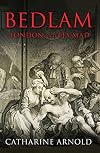
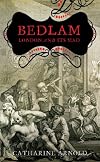
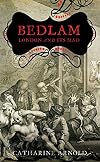
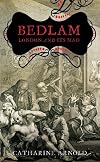
'Bedlam!' The very name conjures up graphic images of naked patients chained among filthy straw, or parading untended wards deluded that they are Napoleon or Jesus Christ. We owe this image of madness to William Hogarth, who, in plate eight of his 1735 Rake's Progress series, depicts the anti-hero in Bedlam, the latest addition to a freak show providing entertainment for Londoners between trips to the Tower Zoo, puppet shows and public executions. That this is still the most powerful image show more of Bedlam, over two centuries later, says much about our attitude to mental illness, although the Bedlam of the popular imagination is long gone. The hospital was relocated to the suburbs of Kent in 1930, and Sydney Smirke's impressive Victorian building in Southwark took on a new role as the Imperial War Museum. Following the historical narrative structure of her acclaimed Necropolis, BEDLAMwill examine the capital's treatment of the insane over the centuries, from the founding of Bethlehem Hospital in 1247 through the heyday of the great Victorian asylums to the more enlightened attitudes that prevail today. show lessTags
Recommendations
































Member Reviews
Like Catharine Arnold's other works, "Bedlam" is chock full of intimate detail, anecdotes, and personal histories while still maintaining a clear timeline. Most of the book takes place during the 18th century, but that was Bedlam's notorious, infamous, horrifying heyday. Also, unlike the other books I've read so far, this one actually touched on physiognomy and its role in "identifying" the insane.
The famous and the forgotten, are covered here, along with Bedlam's doctors, porters, surgeons, apothecaries and keepers. The author also touches on what is happening around Bedlam, not just inside. The Great Fire of 1666, an earthquake, Gordon's Riot, etc all of which would've affected the patients. There's so much history in such a quick show more read! My only quibble is that the post-Victorian thru WWI era was condensed into the very least chapter. Still, I thoroughly enjoyed this book. show less
The famous and the forgotten, are covered here, along with Bedlam's doctors, porters, surgeons, apothecaries and keepers. The author also touches on what is happening around Bedlam, not just inside. The Great Fire of 1666, an earthquake, Gordon's Riot, etc all of which would've affected the patients. There's so much history in such a quick show more read! My only quibble is that the post-Victorian thru WWI era was condensed into the very least chapter. Still, I thoroughly enjoyed this book. show less
This has been hovering on my radar for a while and on my wishlist for months, so when I spotted it in the library I had to pick it up. It's a terrifying book but I am so glad to have read it. As the title suggests, it is predominantly a history of the Bethlehem asylum in London, soon contracted to 'Bedlam' in local slang and quickly fixed in our language as a byword for chaos.
Bedlam's history is a horrifying tale swimming with chains and straitjackets, ice baths and purging, bleeding and starvation, mania and despair. Arnold draws the reader through the years from Bedlam's conception, into different locations and grand buildings, through the reigns of monarch after monarch. Doctors and superintendents come and go, treatments fluctuate show more and metamorphose, knowledge grows and changes for the better... eventually. Through the sweep of Bedlam's history, Arnold has included the stories of some of the saddest, quirkiest and most notorious patients to haunt its cells, as well as extending her research to offer the reader a wider historical context and a broader look at the treatment of madness across the country. There is also an interesting chapter on mad women as a cultural construct, including a look at Miss Havisham and Bertha Mason as literary representations of contemporary stereotypes.
As a mental health patient myself, all I can say is, thank heavens I'm not living my life any time but now. Right up the mid-20th century, people suffering from mental illness have been 'treated' with a host of remedies from the ridiculous to the barbaric to, just occasionally, the hopeful and enlightened. I found this book by turns sad, wry, mind-boggling, thoughtful and plain horrific. I feel like I've come away from it having been educated and enlightened, not to mention harbouring a profound feeling of gratefulness that today's medicine has, for the most part, finally rejected the attitudes and approaches to mental illness that made elements of this book so painful to read. Highly recommended! show less
Bedlam's history is a horrifying tale swimming with chains and straitjackets, ice baths and purging, bleeding and starvation, mania and despair. Arnold draws the reader through the years from Bedlam's conception, into different locations and grand buildings, through the reigns of monarch after monarch. Doctors and superintendents come and go, treatments fluctuate show more and metamorphose, knowledge grows and changes for the better... eventually. Through the sweep of Bedlam's history, Arnold has included the stories of some of the saddest, quirkiest and most notorious patients to haunt its cells, as well as extending her research to offer the reader a wider historical context and a broader look at the treatment of madness across the country. There is also an interesting chapter on mad women as a cultural construct, including a look at Miss Havisham and Bertha Mason as literary representations of contemporary stereotypes.
As a mental health patient myself, all I can say is, thank heavens I'm not living my life any time but now. Right up the mid-20th century, people suffering from mental illness have been 'treated' with a host of remedies from the ridiculous to the barbaric to, just occasionally, the hopeful and enlightened. I found this book by turns sad, wry, mind-boggling, thoughtful and plain horrific. I feel like I've come away from it having been educated and enlightened, not to mention harbouring a profound feeling of gratefulness that today's medicine has, for the most part, finally rejected the attitudes and approaches to mental illness that made elements of this book so painful to read. Highly recommended! show less
A very good and relatively concise history of Bedlam and some of its more famous inmates. Concentrating more on the 18th & 19th century this highly accessible popular history, reads easily and is never boring. Interesting in places but more often intriguing, this has a good overview feel to this. I doubt it's the most comprehensive study of the subject on the market but it must lay claim to being one of the most readable both to the professional reader and the lay reader. Recommended.
A fascinating history of London's long history of institutionalising both mad and allegedly mad people, from the medieval foundations of the Bethlehem Hospital (shortened in slang over time to Bethlem, then Bedlam), through the witch hunt era, the 18th Century Regency and into the electro-shock movement of the 20th century. Laced with facts, figures and anecdotes, this was obviously well research and interestingly put together. However, it did read a bit like a bad university thesis, in that there was little analysis, especially when quoting contemporary fiction. For example, I would question whether one can say 'Miss Havisham is the most memorable lunatic of nineteenth century fiction' without a bit more justification and analysis of show more Dickens's original character. This kind of anecdote...quote...figure...anecdote structure got a bit irritating towards the end, especially when quoting full pages of contemporary psychiatric or fictional texts. show less
The subject matter of this book interested me greatly: a study of how London treated its residents who had mental health issues over the centuries, with the focal point being Bethlehem Hospital. This place, of course, became known as Bethlem and later, in the vernacular, Bedlam. However, I found it difficult to focus on for some reason and kept finding excuses to not read it. This could be a case of right book, wrong time, though, so I would not necessarily discourage others from reading it. Maybe the better approach would be to skip through and read only the chapters that interest you (I never did get to the Victorian asylums, getting bogged down somewhere around Elizabethan times).
Catharine Arnold's Bedlam traces the treatment of the unstable from medieval diagnosis to the current condition of local establishments in London. As the title promises, the book covers many institutions, and not just the notorious Bethlem which has gifted the English language with the term "bedlam". Ever-conscious of her readers, Arnold presents the history of madness and treatment in an entertaining fashion, and skillfully supplies readers with all information they need to truly understand the institution and its history. Bedlam traces the evolving social stigmas attached to madness, the treatments used throughout the ages, and short biographies of the men who decided to make the mad their life's work. As promised, Arnold provides show more detailed descriptions of public hospitals such as Bethlem, and provides interesting anecdotes about the patients that once roamed (or sat manacled to) the halls.
I am rating the book as 4 out of 5 stars simply because I recently read Showalter's The Female Malady, and found it more engrossing. However, Bedlam is a highly enjoyable - and occasionally terrifying - history of London madness, and I would certainly recommend the book. show less
I am rating the book as 4 out of 5 stars simply because I recently read Showalter's The Female Malady, and found it more engrossing. However, Bedlam is a highly enjoyable - and occasionally terrifying - history of London madness, and I would certainly recommend the book. show less
I read Arnold's "City of Sin", on the history of London's vice side, and found it to be one of the most enjoyable books I've ever read, with its many salacious details of London's history. So, I was sure to chase down "Bedlam", with its study of Bethlam Hospital for those with mental health issues, and through this, a view of madness through the ages.
"Bedlam" lacks the salaciousness of "City of Sin", and for some reason it is more enjoyable to read of a politician's sex romp than the details of how poorly people with mental health issues were treated over the years. Still certainly worth a read, if only to learn of a humane side to King George III.
"Bedlam" lacks the salaciousness of "City of Sin", and for some reason it is more enjoyable to read of a politician's sex romp than the details of how poorly people with mental health issues were treated over the years. Still certainly worth a read, if only to learn of a humane side to King George III.
Members
- Recently Added By
Lists

In Our Time books
4,934 works; 2 members
Author Information

9 Works 2,139 Members
Series

Work Relationships
Is contained in
Common Knowledge
- Canonical title
- Bedlam: London and its Mad
- Original publication date
- 2008-08-04
- People/Characters
- Simon FitzMary; Dymphna (of Geel, 7th cent. Irish saint); Edward Atherton; Henry VI, King of England; John Arundell; Thomas Dekker (show all 52); Nicholas Breton; Thomas Harman; Thomas More (Sir); Reginald Scot; Helkiah Crooke; Edmund Franklin (of Bedford); Robert Burton; Richard Farnham; Lady Eleanor Davies; William Turner (Sir, Lord Mayor); Robert Hooke; Jonathan Swift; Samuel Pepys; James Carkesse; Thomas Allen (Dr); Nathaniel Lee; Edward Tyson (Dr); Richard Hale; Alexander Cruden; John Monro (Dr); William Battie; Tobias Smollett; Kit Smart; Samuel Johnson; William Blake; Lord George Gordon; George III, King of the United Kingdom; Francis Willis (Dr); Margaret Nicholson; James Hadfield; Edward Wakefield; James Tilley Matthews; Thomas Monro (Dr); Edward Thomas Monro (Dr); Ann Morley; William Charles Hood; Richard Dadd; Isaac Baker Brown (Dr); George Henry Savage (Dr); Antonia White; Lewis Yealland (Dr); Siegfried Sassoon; Wilfred Owen; Siemund Freud; Mary Barnes; Pete Shaughnessy
- Important places
- Bishopsgate, London, England, UK; St. Bartholomew's Hospital, Smithfield, London, England, UK; Bridewell, London, England, UK; St. Luke's Hospital, London, England, UK
- Important events
- Great Fire of London (1666); London Earthquake (1750-03-08); Gordon Riots (1780); Catholic Relief Act (1778); Madhouses Act (1828); Lunacy Act (1845) (show all 8); Matrimonial Clauses Act (1857); World War I (1914-1918)
- Dedication
- For my husband
- First words
- The mad, like the poor, have always been with us.
- Last words
- (Click to show. Warning: May contain spoilers.)His soul shall taste the sadness of her might, And be among her cloudy trophies hung.
Classifications
- Genres
- History, Nonfiction, General Nonfiction
- DDC/MDS
- 362.210942109 — Society, Government, and Culture Social problems and social services Social Welfare Mental illness Mental Health Facilities
- LCC
- RC450 .G72 .L722 — Medicine Internal medicine Internal medicine Neurosciences. Biological psychiatry. Neuropsychiatry Psychiatry
- BISAC
Statistics
- Members
- 403
- Popularity
- 76,820
- Reviews
- 10
- Rating
- (3.52)
- Languages
- English
- Media
- Paper, Ebook
- ISBNs
- 4
- ASINs
- 4