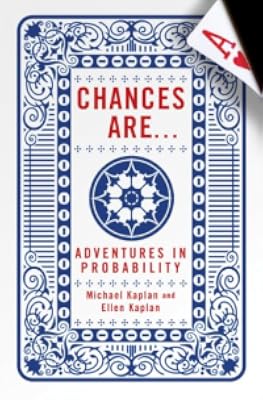
Chances Are . . .: Adventures in Probability
by Michael Kaplan, Ellen Kaplan (Author)
On This Page
Description
A layman's journey into the realm of probability. We search for certainty, but find only likelihood. All things are possible, only one thing actually happens; everything else is in the realm of probability. The twin disciplines of probability and statistics underpin every modern science and sketch the shape of all purposeful group activity--politics, economics, medicine, law, sports--giving humans a handle on the essential uncertainty of their existence. Yet while we are all aware of the show more hard facts, most of us still refuse to take account of probability--preferring to drive, not fly; buying into market blips; smoking cigarettes; denying we will ever age. There are some people, though--gamblers, risk buyers, forensic experts, doctors, strategists--who find probability's mass of incomplete uncertainties delightful and revelatory. This book is their story.--From publisher description. show lessTags
Recommendations




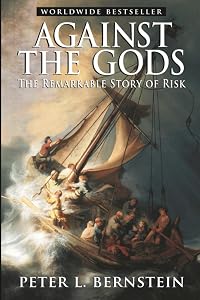
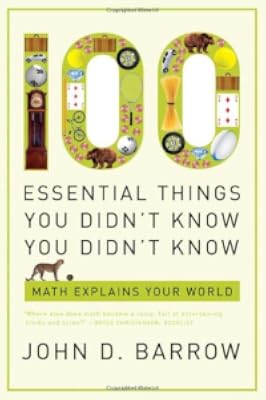
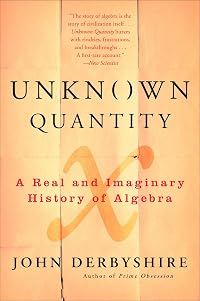
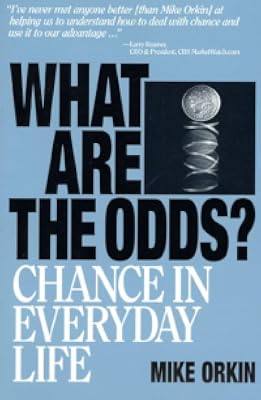







Member Reviews
Got this for my last birthday and thoughtI’d better finish it before my next birthday comes round! I started this after finishing Think and, appropriately, it pretty much picked up where that left off: mathematics and questions of life the universe and everything. It wasn’t as hard going as Think thankfully, in fact, some bits of it were very interesting.
The book deals with probability by first of all introducing it in the first couple of chapters and then discussing its influence on various contexts of our lives, namely: gambling, insurance, healthcare, law, weather forecasting, conflict, thought and statistics.
By far the most enjoyable chapter for me was gambling which showed that it’s pretty much a mug’s game no matter which show more way you look at it. There were bits that were engaging, particularly in the weather forecasting bit where we touched on, but didn’t really explore, the fascinating topic of chaos. The history of probability and statistics is presented through each of these topics so you get a good overview of each before moving on.
The Kaplans love mathematics a tad more than I’m comfortable with. “Even if your taste is not for formal mathematics, you have a glimpse here of its entrancing power.” Entrancing? Yeah, whatever… Thankfully, they don’t dwell on this after the first couple of chapters and, where they do mention it, you can read the book fine even if you don’t get it (which I didn’t.) I’d have liked a bit more detail of the lives and the people involved but on the whole, there are a lot of intresting characters in the history of chance and they do a good job of presenting them and the influence of chance on their areas of work.
And there are some choice morsels among the facts they present:
* non-life insurance claims in the US total over $1 billion a day
* when you release one photon of light towards two slots, the resulting image indicates that the photon goes through both slots at once, a seeming impossibility. However, if you attempt to measure this, the photon goes through only one.
* all the molecules in a sphere of radius 0.00001 cm will occupy the same position only once every 200,000,000,000,000,000,000,000,000,000,000,000,000,000,000,000 times the age of the universe
In fact, the book is cram full of stuff like this to keep your attention.
I wasn’t overwhelmed by their conclusions. They elaborate some amazing insights into order out of chaos (such as probability curves) but conclude that life, the universe and everything is all just a bit random anyway and that any order imposed on it is a product of our own philosophies and theories. Nope. I just can’t accept that. Life is just way too finely balanced. It speaks to me of some other order, inherent in it all, keeping us all in balance even though we attempt to head for hell in a handbasket. show less
The book deals with probability by first of all introducing it in the first couple of chapters and then discussing its influence on various contexts of our lives, namely: gambling, insurance, healthcare, law, weather forecasting, conflict, thought and statistics.
By far the most enjoyable chapter for me was gambling which showed that it’s pretty much a mug’s game no matter which show more way you look at it. There were bits that were engaging, particularly in the weather forecasting bit where we touched on, but didn’t really explore, the fascinating topic of chaos. The history of probability and statistics is presented through each of these topics so you get a good overview of each before moving on.
The Kaplans love mathematics a tad more than I’m comfortable with. “Even if your taste is not for formal mathematics, you have a glimpse here of its entrancing power.” Entrancing? Yeah, whatever… Thankfully, they don’t dwell on this after the first couple of chapters and, where they do mention it, you can read the book fine even if you don’t get it (which I didn’t.) I’d have liked a bit more detail of the lives and the people involved but on the whole, there are a lot of intresting characters in the history of chance and they do a good job of presenting them and the influence of chance on their areas of work.
And there are some choice morsels among the facts they present:
* non-life insurance claims in the US total over $1 billion a day
* when you release one photon of light towards two slots, the resulting image indicates that the photon goes through both slots at once, a seeming impossibility. However, if you attempt to measure this, the photon goes through only one.
* all the molecules in a sphere of radius 0.00001 cm will occupy the same position only once every 200,000,000,000,000,000,000,000,000,000,000,000,000,000,000,000 times the age of the universe
In fact, the book is cram full of stuff like this to keep your attention.
I wasn’t overwhelmed by their conclusions. They elaborate some amazing insights into order out of chaos (such as probability curves) but conclude that life, the universe and everything is all just a bit random anyway and that any order imposed on it is a product of our own philosophies and theories. Nope. I just can’t accept that. Life is just way too finely balanced. It speaks to me of some other order, inherent in it all, keeping us all in balance even though we attempt to head for hell in a handbasket. show less
This is an odd book: from the cover, it looks fascinating; from the first few pages, it seems much duller than anticipated; but by the end, it's a fascinating and surprisingly entertaining journey.
There's actually a little bit for everyone here, which is both the book's blessing and curse. The history and applications of probability are very well-detailed, which by necessity entails that some topics and chapters will be more interesting to some than will others. (I, for instance, loved the chapter on Gambling, but found the Figuring chapter to be rough going.)
All told, though a bit inconsistent, it's a fairly entertaining and certainly enlightening, educational read.
There's actually a little bit for everyone here, which is both the book's blessing and curse. The history and applications of probability are very well-detailed, which by necessity entails that some topics and chapters will be more interesting to some than will others. (I, for instance, loved the chapter on Gambling, but found the Figuring chapter to be rough going.)
All told, though a bit inconsistent, it's a fairly entertaining and certainly enlightening, educational read.
Authors explain probability theory and how it relates to our everyday life. They discuss the ways in which events that seem highly improbable actually are quite probable, even though much of probability theory is counter-intuitive to our everyday perceptions. The main problem I have with the book is that it is a bit difficult for a lay reader not already familiar with probability theory; there is a great deal of algebra and some rather convoluted reasoning that makes sense to those of us who have had multiple statistics courses, but would probably lose other readers, especially those uncomfortable with math. While this book has a lot of good in it, there are better books to recommend to the beginner, even though this book is addressed show more to the lay reader. show less
The authors are unusually brother and sister, with training in history and classics, not math. They write very well, however, and seem very intelligent in their presentation. The book is organized around professional areas, medicine, law, economics, etc, describing the issues in probability and statistics for each one. Bayes theorem remains a difficult area for understanding. The calculation of risk should be by absolute frequency, not relative risk, because of the difficulty in understanding Bayes analyses.
Rather more philosophically written than some other books. Well chosen quotations at the start of every chapter. The mathematics in some chapters is difficult enough that one may have to stop and think about it a bit.
Is reality deterministic or probabilistic? Do you believe that? This book will make you believe that even science is a modeling of probability.
It's tough to make probability interesting and understandable. This book doesn't quite get the balance right, although there are lots of interesting parts to it.
Members
- Recently Added By
Author Information
2 Works 608 Members

Classifications
Statistics
- Members
- 435
- Popularity
- 70,438
- Reviews
- 9
- Rating
- (3.46)
- Languages
- Czech, English, German
- Media
- Paper, Ebook
- ISBNs
- 5
- ASINs
- 4