The Pebbles on the Beach
by Clarence Ellis
On This Page
Description
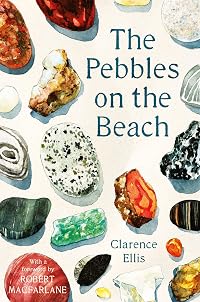
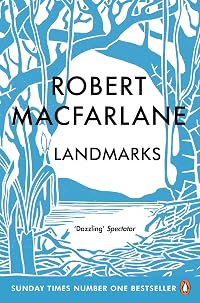
*Top 10 Sunday Times bestseller* The Pebbles on the Beach was first published in 1954. This newly reissued edition includes a foreword by Robert Macfarlane. There is a handy illustrated guide to identifying pebbles on the reverse of the book jacket. Pebble-hunting is a pleasant hobby that makes little demand upon one's patience and still less upon one's physical energy. (You may even enjoy the hunt from the luxurious sloth of a deck chair). One of the true delights of the pebble-seeker is to show more read the stories in the stones - to determine whence and by what means they came to be there. We must always bear in mind that a pebble is a transient thing. It is in the half-way stage of a long existence . . . This is a book about the simple pleasure of pebble spotting. Clarence Ellis is a charming, knowledgeable and witty guide to everything you didn't know there was to know about pebbles. He ruminates on what a pebble actually is, before showing us how they are formed, advising on the best pebble-spotting grounds in the UK, helping to identify individual stones, and giving tips on the necessary kit. You'll know your chert from your schist, your onyx from your agate, and will be on your guard for artificial intruders before you know it. Understanding the humble pebble makes a trip to the beach, lake-side or river bank simply that little bit more fascinating. show lessTags
Recommendations























Member Reviews
As a child, I spent a lot of time at Normans Bay in Sussex. The beach there was a mix of pebbles, shingles and sand when the tide was out. I swam, sailed, made sandcastles and I could not even begin to count the number of pebbles that I have picked up off a beach and thrown into the sea or scoured the shoreline looking for the flattest so I could skim them. Mostly they were just a there, I remember it was painful to walk across the mostly brown pebbles in bare feet to get to the sea. Every now and again I would find a shell or an unusually coloured stone which would be used on the sandcastles for decoration.
Until I picked this up it never even crossed my mind that you could learn so much from a single stone. There is a chapter on how a show more pebble is formed and a basic lesson on geology. There is another in depth on the kinds of pebbles that you are likely to find on which beaches around England. Ellis explains the meaning of terms swash and backwash, longshore drift and how shingle beaches behave with the relentless waves. He moves onto semi-precious stones and the types that you are likely to find around the UK.
It is a book that I wish I had first had as a child, something that Robert Macfarlane was fortunate to find on his grandparent's shelf when he was growing up as he explains in the new foreword to the book. The language is a little dated, but then it is a reprint of a classic book that is over 65 years old now, however, it is still a delight to read. Given that you are dealing with small items of geology, the details of what to look for are not going to be changing for a long time. The fold out cover is beautifully illustrated by the artist Eleanor Crow and it is worth buying just for that alone. show less
Until I picked this up it never even crossed my mind that you could learn so much from a single stone. There is a chapter on how a show more pebble is formed and a basic lesson on geology. There is another in depth on the kinds of pebbles that you are likely to find on which beaches around England. Ellis explains the meaning of terms swash and backwash, longshore drift and how shingle beaches behave with the relentless waves. He moves onto semi-precious stones and the types that you are likely to find around the UK.
It is a book that I wish I had first had as a child, something that Robert Macfarlane was fortunate to find on his grandparent's shelf when he was growing up as he explains in the new foreword to the book. The language is a little dated, but then it is a reprint of a classic book that is over 65 years old now, however, it is still a delight to read. Given that you are dealing with small items of geology, the details of what to look for are not going to be changing for a long time. The fold out cover is beautifully illustrated by the artist Eleanor Crow and it is worth buying just for that alone. show less
A fabulous book and an understated gem of geology. I feel like I have learnt so much and yearn to begin my pebble collection. I can’t wait to get out there and fail to find any interesting pebbles. At least I’m far better informed now about what I’m not finding. I’ve booked a holiday by a pebble beach to maximise my chances of not recognising the best ones.
It's a classic text, in that it's long-established and well-known.
But who's the audience for such a book today? It's a solid text-based book, with only a few illustrations, and it's not the most eye-catching read by modern standards. It also assumes at least a little mineral knowledge. Yet it's not the same as a writer like Dreghorn, who goes into so much more depth in a field guide.
At one time, this was the children's standard text as an introduction to geology and a popular gift before a trip to Scarborough or Brighton. Would it still engage younger readers? I'm just not so sure. Maybe what's needed is a real updated version, with a lot more illustration for one. There's good content in here that's still a good read, but will new show more geologists still be drawn to it? show less
But who's the audience for such a book today? It's a solid text-based book, with only a few illustrations, and it's not the most eye-catching read by modern standards. It also assumes at least a little mineral knowledge. Yet it's not the same as a writer like Dreghorn, who goes into so much more depth in a field guide.
At one time, this was the children's standard text as an introduction to geology and a popular gift before a trip to Scarborough or Brighton. Would it still engage younger readers? I'm just not so sure. Maybe what's needed is a real updated version, with a lot more illustration for one. There's good content in here that's still a good read, but will new show more geologists still be drawn to it? show less
A wonderful little book about UK beach pebbles, introduced excellently by Robert Macfarlane. I much look forward to getting back over there and looking at the beaches again someday!
Ratings
Members
- Recently Added By
Published Reviews
The Pebbles on the Beach: A Spotter’s Guide by Clarence Ellis review – a valuable reminder of simpler times
The geology of pebbles and the poetry of onshore phenomena in a beautifully produced guide, first published in 1954
If you are the sort of person who feels soothed by the shipping forecast, you’ll love this book about our shores. The Pebbles on the Beach was first published in 1954, show more and its tone of voice recalls postwar Britain, the Light Programme and trips to the seaside. But instead of Dogger, Fisher and German Bight, it introduces us to the poetry of onshore phenomena: longshore drift, fulls and swales, heliotrope, chalcedony, swash, backwash and fetch…
Clarence Ellis was born in 1889 and, after serving on the western front, worked in further education, but his passion was pebble collecting. He has a didactic approach, occasionally strict, and once or twice poignant about the relative brevity of human life, such as when he compares the formation of sandstone to “the ‘dust to dust’ cycle of man”.
He also makes certain demands of his reader, warning: “You should not dismiss the jasper with contempt because of its impurity and opaqueness”, but promising that “on the second, or perhaps the third, day of patient searching, you will suddenly become aware with a delicious thrill that you have gained the knack of piercing the disguises of the chalcedonic pebbles. Thenceforward your progress will be rapid and joyous.” The most basic kit of the casual pebble collector, he insists, must include a strong-bladed knife, a geological map of the district, a small hammer, a pocket lens and piece of flint with a sharp edge. There is no room for buckets and spades on this holiday.
Ellis’s account of the geology of pebbles – what they’re made of, where they come from, and how – is fascinating, and he offers a whistlestop tour of the English and Welsh coastline, describing what to look for where. Even if you never pick up a pebble (and you’ll find it hard not to), it’s a surprisingly satisfying beach read.
The book is beautifully produced, with a new introduction by Robert Macfarlane, a comprehensive index and a fold-out cover bearing an illustrated guide to pebble identification. Sometimes it is valuable to be reminded of simpler times, amid all the demands of 21st-century life. With a copy of this book and a pocket lens, you too can be beach ready.
From The Guardian show less
The geology of pebbles and the poetry of onshore phenomena in a beautifully produced guide, first published in 1954
If you are the sort of person who feels soothed by the shipping forecast, you’ll love this book about our shores. The Pebbles on the Beach was first published in 1954, show more and its tone of voice recalls postwar Britain, the Light Programme and trips to the seaside. But instead of Dogger, Fisher and German Bight, it introduces us to the poetry of onshore phenomena: longshore drift, fulls and swales, heliotrope, chalcedony, swash, backwash and fetch…
Clarence Ellis was born in 1889 and, after serving on the western front, worked in further education, but his passion was pebble collecting. He has a didactic approach, occasionally strict, and once or twice poignant about the relative brevity of human life, such as when he compares the formation of sandstone to “the ‘dust to dust’ cycle of man”.
He also makes certain demands of his reader, warning: “You should not dismiss the jasper with contempt because of its impurity and opaqueness”, but promising that “on the second, or perhaps the third, day of patient searching, you will suddenly become aware with a delicious thrill that you have gained the knack of piercing the disguises of the chalcedonic pebbles. Thenceforward your progress will be rapid and joyous.” The most basic kit of the casual pebble collector, he insists, must include a strong-bladed knife, a geological map of the district, a small hammer, a pocket lens and piece of flint with a sharp edge. There is no room for buckets and spades on this holiday.
Ellis’s account of the geology of pebbles – what they’re made of, where they come from, and how – is fascinating, and he offers a whistlestop tour of the English and Welsh coastline, describing what to look for where. Even if you never pick up a pebble (and you’ll find it hard not to), it’s a surprisingly satisfying beach read.
The book is beautifully produced, with a new introduction by Robert Macfarlane, a comprehensive index and a fold-out cover bearing an illustrated guide to pebble identification. Sometimes it is valuable to be reminded of simpler times, amid all the demands of 21st-century life. With a copy of this book and a pocket lens, you too can be beach ready.
From The Guardian show less
added by CarltonC
Lists

Best Beach Reads
99 works; 61 members
Author Information
3 Works 173 Members
Some Editions
Common Knowledge
- Original publication date
- 1954
- People/Characters
- Please note: none of the items in this list is a person or a character.; Amber - rock; Amethystine Quartz - rock; Ammonites; Backwash - wave movement; ballast (show all 95); Offshore Bars; Basalt - rock; Boulder Clay; Breakwaters - Sea defences; Carborundum - rock; Carnelian - rock; chalcedony; chalk; chert; Citrine - rock; clay; London Clay; concrete; conglomerate; coprolites; corals; Crinoids - Sea lilies; Dolerite - rock; Dykes - geological feature; Differential Erosion; Felspar - rock; Feldspar - rock; Fetch - length of stretch of windswept water over which waves travel; Flint - rock; fossils; Gabbro - rock; Geological Maps; glaciers; glass; Gneiss - rock; Granite - rock; Greensand - rock; Greenstone - rock; Grit - rock; Transportation by ice action; Jasper - stone; Jet - stone; Jetties; Lapidary - person who cuts stones; Lava - rock; Pillow Lava - geological formation; Limestone - rock; Longshore Drifting; Marble - rock; Marbodus, Bishop Of Rennes in the 11th century; Marl- rock; Metamorphism - geological term; Mica - rock; Millstone Grit - rock; Moraines - geological feature; Obsidian - stone; Onyx - stone; Pebbles; Pumice - rock; Quartz - rock; Quartzite - rock; Raised Beaches; Beaches; Transport by rivers - geological; Rock crystal - stone; Rocks; Igneous rocks; Metamorphic rocks; Plutonic rocks; Intrusive rocks; Sedimentary rocks; Volcanic rocks; Extrusive rocks; Romans; Sandstone - rock; Old Red Sandstone - rock; Sard - rock; Schist - rock; sea lillies; Sea walls; Serpentine - rock; Shale - rock; Silica - rock; Sills - geological formation; silt; Slate - rock; Spicula - fossil; Spits - geographical formation; sponges (fossils); Semi-precious stones; Striations - geological term; Swash - running water driven up beach when wave breaks; Topaz - stone; Dominant winds
- Important places
- Aldeburgh, Suffolk, England, UK; Anglesey, Wales; Babbacombe, Torquay, Devon, England, UK; Baltic Sea; Bideford Bay, Devon, England, UK (as Barnstaple Bay); Beachy Head, East Sussex, England, UK (show all 112); Berwick-upon-Tweed, Northumberland, England, UK; Blakeney Point, Norfolk, England, UK; Bognor Regis, West Sussex, England, UK; Poole Bay, Devon, England, UK (as Bournemouth Bay); Brazil; Bridport, Dorset, England, UK; Brighton, East Sussex, England, UK; Budleigh Salterton, Devon, England, UK; Caernarfonshire, Wales; Cape Cornwall, Cornwall, England, UK; Cardigan Bay, Wales; Chesil Beach, Dorset, England, UK; East Coast, UK; South Coast, UK; West Coast, UK; Colwyn Bay, Wales; River Coquet, Northumberland, England, UK; Cornish Peninsula, Cornwall, England, UK; Cornwall, England, UK; Criccieth, Gwynedd, Wales, UK; Cromer, Norfolk, England, UK; Crumbles, Eastbourne, Sussex, England, UK; Culver Down, Isle of Wight, England, UK; Cumbria, England, UK; Dartmoor, Devon, England, UK; Deal, Kent, England, UK; Devon, England, UK; Dover, Kent, England, UK; Dungeness, Kent, England, UK; Dunstanburgh Castle, Northumberland, England, UK; County Durham, England, UK; Eastbourne, East Sussex, England, UK; Egypt; English Channel; Essex, England, UK; Felixstowe, Suffolk, England, UK; France; Frinton-on-Sea, Essex, England, UK; Germany; glaciers; Gower, Swansea, Wales, UK; Hampshire, England, UK; Harwich, Essex, England, UK; Holy Island, Anglesey, Wales; Holy Island, Northumberland, England, UK; Hope's Nose, Torquay, Devon, England, UK; Hythe, Kent, England, UK; India; Ireland; Irish Sea; Kent, England, UK; Lake shores; Lancashire, England, UK; Land's End, Cornwall, England, UK; Lincolnshire, England, UK; Littlehampton, Sussex, England, UK; Lizard, Cornwall, England, UK; Llŷn Peninsula, Wales; London, England, UK; Menai Strait, Wales; Mersey estuary, England, UK; Mourne Mountains, Northern Ireland; Norfolk, England, UK; North Foreland, Kent, England, UK; North Sea; Northumberland, England, UK; Orford Ness, Suffolk, England, UK; Great Orme, Wales; Little Orme, Wales; River Otter, England, UK; Pembrokeshire, Wales; Penmaen Head, Gower, Wales; Pentire Head, Cornwall, England, UK; Pevensey, Sussex, England, UK; Plymouth, Devon, England, UK; Porthleven, Cornwall, England, UK; Isle of Portland, Dorset, England, UK; Isle of Purbeck, Dorset, England, UK; Ramsgate, Kent, England, UK; Red Crag, Suffolk, England, UK; St Bees Head, Cumbria, England, UK; Scandinavia; Scarborough, North Yorkshire, England, UK; River Scethin, Wales; Scotland; Sheringham, Norfolk, England, UK; Shoreham, Sussex, England, UK; Slapton Ley, Devon, England, UK; Snowdonia, Wales; The Solent, England, UK; Solway Firth, England/Scotland; Staffa, Argyll and Bute, Scotland, UK; Suffolk, England, UK; Sussex, England, UK; Tenby, Wales; River Thames, England, UK; Torquay, Devon, England, UK; Wales; Walney Island, Cumbria, England, UK; The Wash, East Anglia, England, UK; Westmorland, England, UK; Whitby, North Yorkshire, England, UK; Isle of Wight, England, UK; Worthing, Sussex, England, UK; Yarmouth, Isle of Wight, England, UK; Yorkshire, England, UK
Classifications
- Genres
- Science & Nature, Nonfiction, General Nonfiction
- DDC/MDS
- 552 — Natural sciences & mathematics Earth sciences; geology Petrology
- LCC
- QE432 — Science Geology Geology Petrology
- BISAC
Statistics
- Members
- 167
- Popularity
- 196,499
- Reviews
- 4
- Rating
- (4.08)
- Languages
- English
- Media
- Paper, Ebook
- ISBNs
- 4
- ASINs
- 2