On This Page
Description
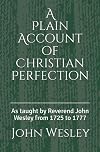
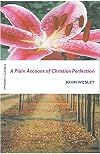
This edition is volume one in a projected three volume series. The Annotated Edition offers the following: The entire text has been divided into chapters and verses for detailed study and cross-referencing. The introduction examines in detail when and why Wesley wrote A Plain Account. The verse by verse commentary discusses the history and background behind the text, offering unsurpassed explanation of Wesley's doctrine of perfect love. Five end notes address Wesley's early doctrinal show more development, the impact of Aldersgate on his perfection doctrine, many testimonies of attaining perfection, and other relevant material from early Methodism. Over 150 quotations from Wesley's sermons, writings, and letters offer unlimited clarification to his views on perfection. The insights of many Wesley scholars are included: Albert Outler, Randy Maddox, Kenneth Collins, William Greathouse, Thomas Oden, Harold Lindstrom, Stephen Gunter, H. Ray Dunning, Theodore Runyon, plus many others. A timeline details every event in Wesley's lifetime corresponding to A Plain Account. Several exhaustive indexes are included: scripture, annotation, subject, author, Wesley quotations, and two synonym indexes from Wesley's Journal and A Plain Account. The Essential Reading Section further empowers the study of Wesley's theology of perfection. Included are: Twenty key sermons, along with their dates and locations in Wesley's Works (both the Jackson and Bicentennial editions). Wesley's most important writings on perfection, listing their date and location in his Works. 250 letters relevant to his theology of perfection. The index includes their date and location in Wesley's Works, with a brief description of their contents. Two additional volumes are planned in the series. John Wesley's Theology of Perfection will offer specialized studies for those wanting to dig deeper into Wesley's theology of perfection. The third volume, John Wesley's Doctrine of Christian Perfection, will present in systematic format every facet of Wesley's views on perfection. The projected release for both volumes is 2006 and 2007. Together, these three volumes will present one of the most thorough and exhaustive studies ever done on Wesley's most beloved, yet, most controversial doctrine. show lessTags
Recommendations






Member Reviews
Explicação clara da perfeição cristã é uma obra histórica e essencial para compreender a teologia de John Wesley, fundador do metodismo. Sua primeira edição data de 1766 e teve papel fundamental para deter a “controvérsia perfeccionista” que ameaçava a sobrevivência do avivamento metodista. Nesta edição especial, a Editora Mundo Cristão proporciona ao leitor o texto integral de Wesley, além de dois célebres sermões sobre o tema da perfeição cristã. Destaca-se, ainda, uma introdução escrita com a pena caprichosa e detalhada de Paulo Ayres, profundo conhecedor do metodismo, que situa a obra no contexto da história do movimento e oferece detalhes importantes da vida de seu fundador.
37th Edition - as Believed and Taught by Rev. Joh Wesley_ from 1725 to 1777.
Book size 3 1/2 X 5 inches. Small, very old and in good condition
Missing Title Page_ incomplete information
Ratings
Members
- Recently Added By
Author Information

545+ Works 6,820 Members
John Wesley, 1703 - 1791 English theologian John Wesley was born the 15th child, in the rectory at Epworth, Lincolnshire on June 17, 1703, to clergyman Samuel Wesley. He was also an evangelist and the founder of Methodism. He was educated at Charter House School and Christ Church, University of Oxford. He was ordained deacon in 1725 and admitted show more to the priesthood of the Church of England in 1728. In 1729, he went into residency at Oxford as a fellow of Lincoln College. While at Lincoln College, Wesley joined a group called the Holy Club, which included his brother Charles and George Whitefield, who later founded Calvinistic Methodism. It was a group of students that adhered strictly and methodically to religious precepts and practices by visiting prisons and comforting the sick, and their schoolmates called them "Methodists." In 1735, he went to Georgia as an Anglican missionary and met some German Moravians on the ship. He associated with them while in Savannah, Georgia and translated some of their hymns into English. While attending one of the Moravian's meetings on the return trip to England, he experienced a religious awakening. In 1739, Wesley joined George Whitefield in his evangelical endeavors. He preached an open-air sermon outside the church and received an enthusiastic reaction, which convinced him that this form of preaching was the most effective way to reach the masses. The Anglican Church frowned on revivalism. He attracted immense crowds because of his assurance that each person was accepted as a child of God, which was something the Anglican Church was unable to offer. On May 1, 1739, Wesley and a group of his followers formed the first Methodist society. Two similar societies were established in Bristol, and in late 1739, the London society began meeting in a building called the Foundry, which served as the headquarters of Methodism for many years. In 1740, Wesley parted with the Moravians and Whitefield because of doctrinal disagreements and the Calvinist doctrine of predestination. He also discarded many of the tenets of the Church of England, which made separation inevitable. In an effort for tighter organization of a growing Methodist movement, the societies were divided into classes, in 1742, with a leader for each class. Wesley called the first conference of the Methodist leaders in 1744 and the conferences were held annually thereafter. In 1751, he married Mary Vazeille who was a widow with four children. Their marriage eventually failed. In 1784, he issued the deed of declaration, which provided rules and regulations for the guidance of the Methodist societies, and appointed his aide Thomas Coke, an Anglican clergyman, superintendent of the Methodist organization in the United States. This empowered him to administer the sacraments with other ordinations following. The ordination was the largest step in breaking with the Anglican Church, but separation did not happen until after Wesley's death. Wesley compiled 23 collections of hymns, edited a monthly magazine, and translated Greek, Latin, and Hebrew works. He edited, under the title "The Christian Pattern," the medieval devotional work "De Imitatione Christi," generally ascribed to Thomas a` Kempis. In the latter part of Wesley's life, the hostility between the Anglican Church and Methodism had all but disappeared, and he was greatly admired. On March 2, 1791, Wesley died and was buried in the graveyard of City Road Chapel, London. In Westminster Abbey is a memorial plaque inscribed with his name. (Bowker Author Biography) show less
Some Editions
Series

Belongs to Publisher Series
Work Relationships
Has as a reference guide/companion
Common Knowledge
- First words
- What I purpose in the following pages is, to give a plain and distinct account of the steps by which I was led, during a course of many years, to embrace the doctrine of Christian Perfection.
- Quotations
- Beware of that daughter of pride, enthusiasm (88).
- Last words
- (Click to show. Warning: May contain spoilers.)Be less than nothing in my sight,
And feel that Christ is all in all.
Classifications
Statistics
- Members
- 660
- Popularity
- 43,511
- Reviews
- 4
- Rating
- (3.70)
- Languages
- English, Portuguese
- Media
- Paper, Audiobook, Ebook
- ISBNs
- 46
- ASINs
- 30