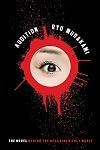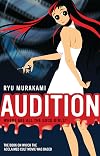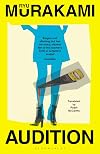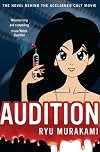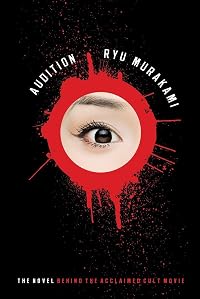
Audition
by Ryû Murakami
On This Page
Description
The long-awaited translation of the novel behind the cult classic Japanese movie. In this gloriously over-the-top tale, Aoyama, a widower who has lived alone with his son ever since his wife died seven years before, finally decides it is time to remarry. Since Aoyama is a bit rusty when it comes to dating, a filmmaker friend proposes that, in order to attract the perfect wife, they do a casting call for a movie they don't intend to produce. As the resumes pile up, only one of the applicants show more catches Aoyama's attention-Yamasaki Asami-a striking young former ballerina with a mysterious past. Blinded by his instant and total infatuation, Aoyama is too late in discovering that she is a far cry from the innocent young woman he imagines her to be. The novel's fast-paced, thriller conclusion doesn't spare the reader as Yamasaki takes off her angelic mask and reveals what lies beneath. Contains mature themes. show lessTags
Recommendations





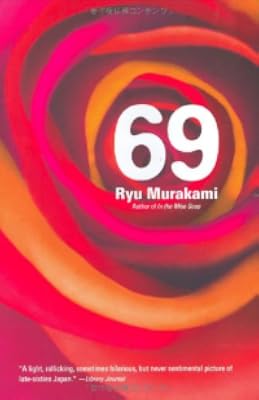
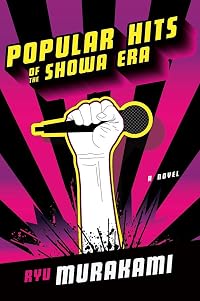
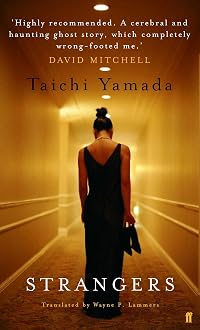
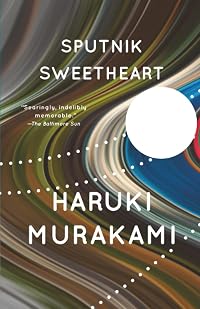
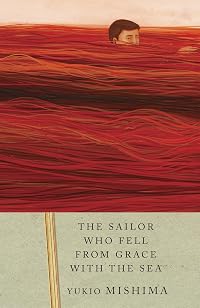
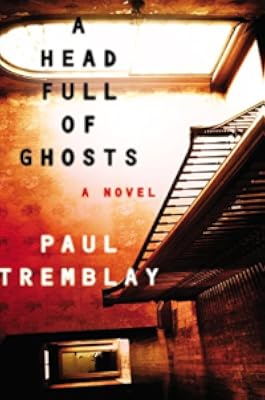
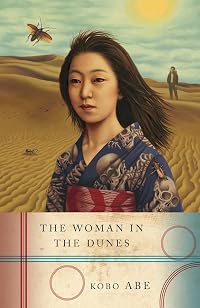
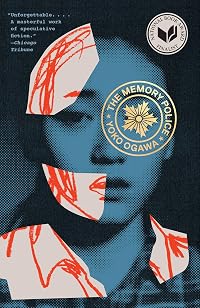
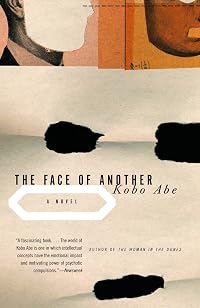
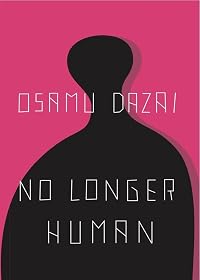
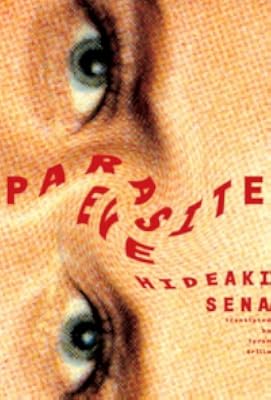
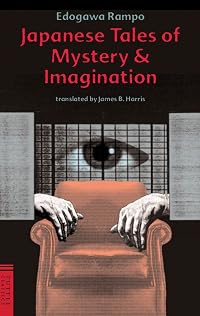
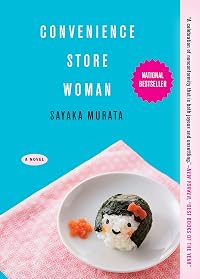



Member Recommendations
ivan.frade Same mix of realistic description with very explicit violence
02
Member Reviews
I came into Audition backwards: I’d already seen Miike’s film, so I assumed the extremity was mostly his doing. I was wrong. The book is colder, sharper, and somehow even more unsettling — not because it’s gorier, but because Murakami constructs a psychological trap long before the violence starts.
Aoyama is excruciating to spend time with. So is Yoshida. Their entire worldview is built on entitlement dressed up as gentleness, and the novel makes sure you feel every brittle, self-serving assumption they make about women. They aren’t monsters — that would be easier. They’re ordinary men with a blind spot the size of a crater, convinced their fantasies are harmless. By the time things begin to unravel, you’re definitely not show more rooting for Asami, but you can’t muster any sympathy for Aoyama either. He walks straight into danger because he insists on seeing only what flatters him.
What surprised me most is how much motivation the novel gives to Asami. The movie shows you the surface creep; the book shows you the internal logic. She isn’t random. She isn’t “mysterious.” She’s a person shaped in unbearably cruel ways, and her behavior — horrific as it is — follows its own awful consistency. Reading her backstory makes the film feel richer, not weaker.
And Murakami doesn’t cushion anything. The novel’s version of the infamous scenes is psychologically harsher, not because of graphic detail, but because he forces you to sit inside the inevitability of it. Aoyama’s illusions, his vanity, his insistence that he “knows” this woman — all of that becomes the machinery that destroys him.
Audition is extreme, but it’s extreme with purpose. It exposes the rot under the idea of the “perfect woman,” and it punishes Aoyama not for falling in love, but for never seeing Asami as a person in the first place.
A shocking, icy little book — and far more disturbing than I ever expected. show less
Aoyama is excruciating to spend time with. So is Yoshida. Their entire worldview is built on entitlement dressed up as gentleness, and the novel makes sure you feel every brittle, self-serving assumption they make about women. They aren’t monsters — that would be easier. They’re ordinary men with a blind spot the size of a crater, convinced their fantasies are harmless. By the time things begin to unravel, you’re definitely not show more rooting for Asami, but you can’t muster any sympathy for Aoyama either. He walks straight into danger because he insists on seeing only what flatters him.
What surprised me most is how much motivation the novel gives to Asami. The movie shows you the surface creep; the book shows you the internal logic. She isn’t random. She isn’t “mysterious.” She’s a person shaped in unbearably cruel ways, and her behavior — horrific as it is — follows its own awful consistency. Reading her backstory makes the film feel richer, not weaker.
And Murakami doesn’t cushion anything. The novel’s version of the infamous scenes is psychologically harsher, not because of graphic detail, but because he forces you to sit inside the inevitability of it. Aoyama’s illusions, his vanity, his insistence that he “knows” this woman — all of that becomes the machinery that destroys him.
Audition is extreme, but it’s extreme with purpose. It exposes the rot under the idea of the “perfect woman,” and it punishes Aoyama not for falling in love, but for never seeing Asami as a person in the first place.
A shocking, icy little book — and far more disturbing than I ever expected. show less
I should probably rewatch the movie, too. Murakami's take on the story feels both more intricate and clumsier; the themes of desire, empty consumtion and the hunt for something authentic is vintage Murakami, but at times Asami and her motivation feel too telegraphed, too straightforward, losing the ambiguity of Miike's movie. Still, that works for Murakami, and it's still a pretty powerful short-sharp-shock take on being careful what you wish for when you have the power both to make it happen and to forget that that "what" is actually a "who".
Seven years after the death of his wife, Aoyama's son Shige makes the suggestion -- "Why don't you find yourself a new wife, Pops?" He doesn't take his son too seriously, at first, but the idea takes root, and he tells his friend Yoshikawa about it. Yoshikawa, who works in the film industry, thinks that a new wife is just what Aoyama needs, and to help him find one, he pitches the idea of holding auditions for a fictional movie. He can screen each of the young women as a potential bride. Hesitant at first, Aoyama eventually gives in and goes with the idea.
With the project underway, the two men begin skimming through the responses to their call for actresses, and almost immediately, the picture and brief blurb from Yamasaki Asami catches show more Aoyama's eye. A one-time ballerina in training, she proffers just what he's looking for, and he becomes infatuated with her.
But Yamasaki isn't quite what she seems to be, as Aoyama finds out much too late.
It takes a bit too shock me, what with all the horror novels in my collection and movies I've seen, and Ryu Murakami's tale delivers. Even though hints appear throughout the story that something may not be quite right with Yamasaki, the last chapter of the book takes an unexpected and truly gruesome turn. And I couldn't put the book down once I started. "Audition" takes what should be an story of a man's search for love into a story of surprising horror. show less
With the project underway, the two men begin skimming through the responses to their call for actresses, and almost immediately, the picture and brief blurb from Yamasaki Asami catches show more Aoyama's eye. A one-time ballerina in training, she proffers just what he's looking for, and he becomes infatuated with her.
But Yamasaki isn't quite what she seems to be, as Aoyama finds out much too late.
It takes a bit too shock me, what with all the horror novels in my collection and movies I've seen, and Ryu Murakami's tale delivers. Even though hints appear throughout the story that something may not be quite right with Yamasaki, the last chapter of the book takes an unexpected and truly gruesome turn. And I couldn't put the book down once I started. "Audition" takes what should be an story of a man's search for love into a story of surprising horror. show less
I've been waiting years for an English translation of Ryu Murakami's Audition to be released. I became familiar with it through the Takashi Miike film, which has picked up the reputation of being one of the greatest horror movies ever. That's pretty well deserved too.
So I came into the book with certain expectations, and found it to be a bit less terrifying, but a better example of horror. Now this is a book that can't really be described without a spoiler, but its one that is pretty obvious based solely on the book jacket so I'm going to go for it.
The story is told from the perspective of Aoyama, a widowed single father who has just decided that he is ready to remarry. In order to find a wife he joins forces with a friend at a video show more production company to hold an audition for a film that will likely never be made. That way he can come in to the casting sessions as a producer and hopefully find the woman of his dreams amongst the runners-up. The plan works, and he becomes hopelessly infatuated with Yamasaki Asami, a former ballerina with an unknown past.
All of Aoyama's friends warn him away from her throughout the book, but he remains blinded by her, and as this book is told in the first person, so is the reader. It's a nice approach to take for the story, which makes the famed torture scene at the end of the book all the more horrifying. But unlike the film which gets its terror from the unexpected story twist, the book relies on the Aoyama's inability to comprehend the situation to achieve its horror. And this works admirably! Murakami takes love, which lets face it, can be pretty incomprehensible at times, and twists that into the sort of horror usually found in a Lovecraft story. Well done. show less
So I came into the book with certain expectations, and found it to be a bit less terrifying, but a better example of horror. Now this is a book that can't really be described without a spoiler, but its one that is pretty obvious based solely on the book jacket so I'm going to go for it.
The story is told from the perspective of Aoyama, a widowed single father who has just decided that he is ready to remarry. In order to find a wife he joins forces with a friend at a video show more production company to hold an audition for a film that will likely never be made. That way he can come in to the casting sessions as a producer and hopefully find the woman of his dreams amongst the runners-up. The plan works, and he becomes hopelessly infatuated with Yamasaki Asami, a former ballerina with an unknown past.
All of Aoyama's friends warn him away from her throughout the book, but he remains blinded by her, and as this book is told in the first person, so is the reader. It's a nice approach to take for the story, which makes the famed torture scene at the end of the book all the more horrifying. But unlike the film which gets its terror from the unexpected story twist, the book relies on the Aoyama's inability to comprehend the situation to achieve its horror. And this works admirably! Murakami takes love, which lets face it, can be pretty incomprehensible at times, and twists that into the sort of horror usually found in a Lovecraft story. Well done. show less
 This review was written for LibraryThing Early Reviewers.
This is my second Murakami book, and like the other one, Popular Hits of the Showa Era, it's lots of fun, but ultimately falls a bit short. A 42-year old widowed documentary maker, 7 years after the death of his wife, and spurred on by his son who thinks his current behavior (sitting around watching female marathons) is pretty pitiful, decides it may be time to seek a new wife. Following the suggestion of a friend, he agrees to use auditions (part of a radio program and potential film) to identify wife candidates. He immediately becomes obsessed with one of the applicants for the lead role, who is stunningly beautiful and meets his criteria of having some sort of serious training--she was a ballet student until forced to stop by an show more injury. Of course, we know this is not going to be a happy ever after story, but I won't get into the details. I'll just say that we kind of know where it is going all along, and the foreshadowing isn't too clever. There's an inevitability to it all--and a lack of fun--that makes this ultimately fall short. Along the way, however, we get some good vignettes and looks into Japanese culture, although the protagonist spends most of his time listening to western pop and classical music. I know there's a movie of this, and I assume the movie maker must have come up with some sort of twist to surprise readers of the novel, but at this point at least, I don't want to have to live through this story a second time! (The audio book is very well read.) show less
I saw the movie first so this little book held few surprises for me. The pace was perfect... a steady climb to near vertical. The movie actually contained more story content with additional scenes. The book had more explicit sex, a good thing, and the rough stuff was more intense than the screen version, another good thing. No kiri kiri kiri kiri in the book, a bad thing... for that I have to revisit the film.
As expected the book was deeply disturbing and graphic so made for a nice, light read. What I like about Ryu is his perverse, twisted imagination... his ability to create damaged people and put them together to inflict various damage to each other. His characters are always fresh, psychotic and have a tendency to carry sharp show more pointed objects wherever they go.
Moral of the story: if it looks too good to be true, it probably is... but it's still probably worth it for that moment of pleasure.
Ryu is one of my favorites. He even creeped-out Rob Zombie... that big wuss.
Movie responses:
Rob Zombie found the film very difficult to watch, given its grisly content and one enraged woman viewer confronted Miike (the director) by shouting at him: 'You're evil!'
Read the book. It's creepier. show less
As expected the book was deeply disturbing and graphic so made for a nice, light read. What I like about Ryu is his perverse, twisted imagination... his ability to create damaged people and put them together to inflict various damage to each other. His characters are always fresh, psychotic and have a tendency to carry sharp show more pointed objects wherever they go.
Moral of the story: if it looks too good to be true, it probably is... but it's still probably worth it for that moment of pleasure.
Ryu is one of my favorites. He even creeped-out Rob Zombie... that big wuss.
Movie responses:
Rob Zombie found the film very difficult to watch, given its grisly content and one enraged woman viewer confronted Miike (the director) by shouting at him: 'You're evil!'
Read the book. It's creepier. show less
There is no copyright date when this was originally released, at least on the advance copy, but I believe it came out first in 1999 or 2000. This is the long-awaited English translation release and I was really looking forward to it. Unfortunately, I don't think the translation is very good. It is hard to get past it in the beginning, the prose being very stilted, but as you get to a point of when the actual audition gets underway, you kind of overcome it. Another reason for getting though the plodding translation is the 2002 Takashi Miike film. It is really hard not to read this novel and think about the film constantly. Miike did such a creepily fantastic job with the material that getting an English language version of the novel show more which it is based, nearly 10 years after the fact, you find yourself (if you have seen the film) envisioning every scene like in the movie. It's nearly the opposite of what we usually expect to say as readers when we see a movie: "the book is way better than the movie". I think it would be hard to say the opposite considering the translation, but I would rather say that after seeing the film, then reading the book, it almost HELPS this book. Because of the uninspired translation, we can already fill the gaps with the Miike vision, and frankly that works well for me. Like most Ryu Murakami novels, there is always a dark side as you work your way through his story. Audition is perhaps his most realized slow creeper, and that partially must be from the cultural pulse of the Miike movie, which is quite excellent. I really am glad that this was finally issued in an English version, and I would put this up there as one of Murakami's best works for the style he does, but dock it a point for the length of time to get an English language release and the wooden translation. Great story though. show less
This review was written for LibraryThing Early Reviewers.Members
- Recently Added By
Lists

Paste's 50 Best Horror Novels of All time
50 works; 6 members

Biggest Disappointments
606 works; 164 members

Fiction: Thriller
78 works; 1 member
Author Information

Some Editions
Awards and Honors
Notable Lists
Work Relationships
Has the adaptation
Common Knowledge
- Canonical title
- Audition
- Original publication date
- 1997 (original Japanese) (original Japanese); 2009-01-05 (English: McCarthy) (English: McCarthy)
- People/Characters
- Yamasaki Asami; Aoyama
- Related movies
- Ôdishon (1999 | IMDb)
- First words
- 'Why don't you find yourself a new wife, Pops?'
- Last words
- (Click to show. Warning: May contain spoilers.)'I don't know,' he said. 'Nothing, really.'
- Original language
- Japanese
Classifications
- Genres
- Fiction and Literature, Horror
- DDC/MDS
- 895.635 — Literature & rhetoric Literatures of other languages Literatures of East and Southeast Asia Japanese Japanese fiction 1945–2000
- LCC
- PL856 .U696 .O3513 — Language and Literature Languages and literatures of Eastern Asia, Africa, Oceania Languages of Eastern Asia, Africa, Oceania Japanese language and literature Japanese literature Individual authors and works
- BISAC
Statistics
- Members
- 821
- Popularity
- 33,552
- Reviews
- 48
- Rating
- (3.30)
- Languages
- English, German, Japanese, Portuguese
- Media
- Paper, Audiobook, Ebook
- ISBNs
- 12
- ASINs
- 7