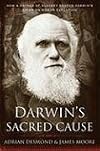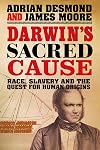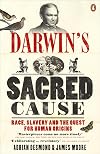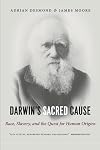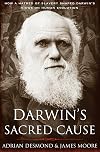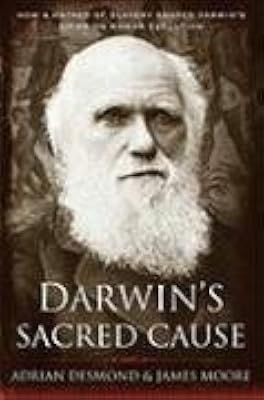
Darwin's Sacred Cause: How a Hatred of Slavery Shaped Darwin's Views on Human Evolution
by Adrian Desmond, James Moore
On This Page
Description
There is a mystery surrounding Darwin: How did this quiet, respectable gentleman, a pillar of his parish, come to embrace one of the most radical ideas in the history of human thought? Darwin risked a great deal in publishing his theory of evolution, so something very powerful--a moral fire--must have propelled him. That moral fire, argue authors Desmond and Moore, was a passionate hatred of slavery. They draw on a wealth of fresh manuscripts, correspondence, notebooks, diaries, and even show more ships' logs to show how Darwin's abolitionism had deep roots in his mother's family and was reinforced by his voyage on the Beagle as well as by events in America. Leading apologists for slavery in Darwin's time argued that blacks and whites were separate species, with whites created superior. Darwin believed that the races belonged to the same human family, and slavery was therefore a sin.--From publisher description. show lessTags
Recommendations
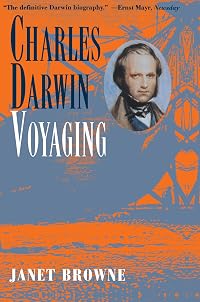
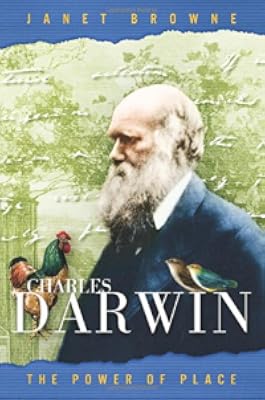
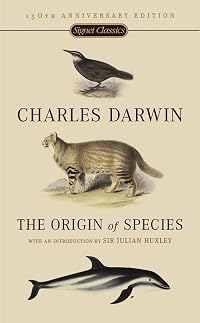
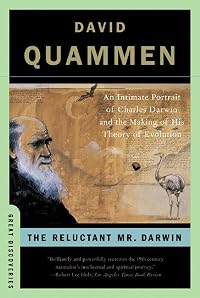












Member Recommendations
Member Reviews
Desmond and Moore's earlier biography, "Darwin", is one of my favourite books, so I was really looking forward to reading "Darwin's Sacred Cause". But I have to say that I am not convinced by the central thrust of this book.
Charles Darwin was very strongly opposed to slavery, and he argued, quite rightly, that all human beings are of one species with a common ancestry. He was very critical of the mistaken theory that the different "races" of humans came into existence separately as separate species.
What Desmond and Moore claim is that Darwin's theory of common HUMAN origins inspired the development of his view that ALL LIFE is related by common descent through evolution. The "sacred cause" of opposition to slavery inspired Darwin's show more science.
But in his autobiography, which was initially written for private, family consumption, Darwin nowhere says anything about his anti-slavery views influencing his evolutionary theories. In fact Darwin explicity says that it was the distribution of fossil and living species which he encountered on the Beagle voyage that first got him seriously thinking about evolution. (Though I suppose that Desmond and Moore would say there was an underlying, unstated influence.)
There is also the fact that even if Darwin's anti-slavery views influenced his theory of the common origins of all life, it certainly was not a factor in inspiring him to come up with his theory of natural selection as the mechanism for evolution. It was natural selection that was Darwin's most important idea, and both he and, later, Wallace were inspired to come up with the theory by reading Malthus on population. (It is ironic that Malthus could be so reactionary and wrong about human population and society, and yet inspire a correct theory of natural selection.)
I find it quite plausible that Darwin's anti-slavery views were ONE influence on his evolutionary theory of life's common ancestry. But Desmond and Moore are overstating their case when they argue that it was THE influence on his theory.
In their earlier biography Desmond and Moore did a wonderful job of putting Darwin in the context of Victorian society. In this book they have homed in on one aspect of Darwin's social and political world, made a lens out of it, and then looked at everything through that lens, thus giving a distorted picture of a more complex reality.
This book is certainly worth reading - but with a critical eye. And for an alternative view of how Darwin's ideas developed, I recommend Niles Eldredge's book, "Darwin: Discovering the Tree of Life". show less
Charles Darwin was very strongly opposed to slavery, and he argued, quite rightly, that all human beings are of one species with a common ancestry. He was very critical of the mistaken theory that the different "races" of humans came into existence separately as separate species.
What Desmond and Moore claim is that Darwin's theory of common HUMAN origins inspired the development of his view that ALL LIFE is related by common descent through evolution. The "sacred cause" of opposition to slavery inspired Darwin's show more science.
But in his autobiography, which was initially written for private, family consumption, Darwin nowhere says anything about his anti-slavery views influencing his evolutionary theories. In fact Darwin explicity says that it was the distribution of fossil and living species which he encountered on the Beagle voyage that first got him seriously thinking about evolution. (Though I suppose that Desmond and Moore would say there was an underlying, unstated influence.)
There is also the fact that even if Darwin's anti-slavery views influenced his theory of the common origins of all life, it certainly was not a factor in inspiring him to come up with his theory of natural selection as the mechanism for evolution. It was natural selection that was Darwin's most important idea, and both he and, later, Wallace were inspired to come up with the theory by reading Malthus on population. (It is ironic that Malthus could be so reactionary and wrong about human population and society, and yet inspire a correct theory of natural selection.)
I find it quite plausible that Darwin's anti-slavery views were ONE influence on his evolutionary theory of life's common ancestry. But Desmond and Moore are overstating their case when they argue that it was THE influence on his theory.
In their earlier biography Desmond and Moore did a wonderful job of putting Darwin in the context of Victorian society. In this book they have homed in on one aspect of Darwin's social and political world, made a lens out of it, and then looked at everything through that lens, thus giving a distorted picture of a more complex reality.
This book is certainly worth reading - but with a critical eye. And for an alternative view of how Darwin's ideas developed, I recommend Niles Eldredge's book, "Darwin: Discovering the Tree of Life". show less
The power of Darwinism fascinates. The theory of evolution through natural selection devastated every secular and sacred shibboleth held tightly for millennia. What has most impressed me is the utter victory of naturalism over super naturalism and, as logic inevitably demands, the complete redefinition of man's place in the universe. Even 150 years after its arrival on the intellectual stage the controversy rages, not among scientists certainly, but in the desperate and fragile efforts to disparage it by proponents of creationism and intellectual design. To my mind, the reality of naturalistic origins does not allow any foot hold for supernatural first causes. But, to me, this does not lead us to nihilism, but suggests a path of show more optimism for the future of the planet.
In On the Origins of Species, Darwin was cautious about explicitly expressing the implications of his theory on the matter of man's place in existence. He was certainly aware that such a conclusion would immediately be drawn and most certainly it was. Even such a stalwart scientific supporter as Asa Gray could not abandon the anchor of divinity as the ultimate first cause.
This fascinating book focuses on the relationship of Darwin's work to his strong abolitionist beliefs and to the debate raging on the morality of slavery. Darwin, his family and circle were among the staunchest abolitionists in England, advocating vigorously for emancipation in the Commonwealth and the Americas. Darwin's scientific logic compellingly supported the notion that the races of human kind had a unitary ancestor and were not distinct species. The so-called polygenisists held that the races were created separately and as species distinct from each other could be placed in a hierarchy of superiority without moral qualms. Great store was placed on the discernible differences among the races, but Darwin's work said these were not species differentiation but rather variations caused by environmental factors. The most obvious evidence for species commonality was the success of inter-racial reproduction.
In the context of the intense and ugly racism of the 19th century, Darwin's view was scorned by other scientists and polemicists who were determined to prove the racial superiority of Caucasians and, hence, the morality of subjugating the lesser species, principally blacks. America's renowned scientist, Louis Agassiz, was the foremost of the scientists making this claim. The aura of this pseudo science was eagerly grasped by those who sought to counter the growing intensity of moral opposition to slavery. This inevitably led its adherents down the primrose path of ascribing to genetic differences the futility of the "lessor" races ever being able to achieve the lofty heights of culture and progress achieved by the Anglo-Saxon race.
Thus to Darwin we owe another debt of gratitude. By impelling us to accept our less than divine status he has opened up the potential for diminishing the effects of our hubris on the earth. Recognizing the commonality of all humans points us toward a moral stance that best positions the perpetuation of our species. After all, isn't morality a successful and highly important evolutionary trait? show less
In On the Origins of Species, Darwin was cautious about explicitly expressing the implications of his theory on the matter of man's place in existence. He was certainly aware that such a conclusion would immediately be drawn and most certainly it was. Even such a stalwart scientific supporter as Asa Gray could not abandon the anchor of divinity as the ultimate first cause.
This fascinating book focuses on the relationship of Darwin's work to his strong abolitionist beliefs and to the debate raging on the morality of slavery. Darwin, his family and circle were among the staunchest abolitionists in England, advocating vigorously for emancipation in the Commonwealth and the Americas. Darwin's scientific logic compellingly supported the notion that the races of human kind had a unitary ancestor and were not distinct species. The so-called polygenisists held that the races were created separately and as species distinct from each other could be placed in a hierarchy of superiority without moral qualms. Great store was placed on the discernible differences among the races, but Darwin's work said these were not species differentiation but rather variations caused by environmental factors. The most obvious evidence for species commonality was the success of inter-racial reproduction.
In the context of the intense and ugly racism of the 19th century, Darwin's view was scorned by other scientists and polemicists who were determined to prove the racial superiority of Caucasians and, hence, the morality of subjugating the lesser species, principally blacks. America's renowned scientist, Louis Agassiz, was the foremost of the scientists making this claim. The aura of this pseudo science was eagerly grasped by those who sought to counter the growing intensity of moral opposition to slavery. This inevitably led its adherents down the primrose path of ascribing to genetic differences the futility of the "lessor" races ever being able to achieve the lofty heights of culture and progress achieved by the Anglo-Saxon race.
Thus to Darwin we owe another debt of gratitude. By impelling us to accept our less than divine status he has opened up the potential for diminishing the effects of our hubris on the earth. Recognizing the commonality of all humans points us toward a moral stance that best positions the perpetuation of our species. After all, isn't morality a successful and highly important evolutionary trait? show less
Fascinating account of Darwin's intellectual milieu and motivation. I knew of the Malthus stimulus and of Wallace's nearly scooping him, but the case here is that slavery was the driver. His family Unitarian background and first-hand experiences on the Beagle trip combined to form his thinking throughout. So the point was to prove mankind's origin was singular not plural, so "all men are brothers". Seems odd to think anything else, but there are still those who do.
The story is fascinating and detailed, including why he spent so much time on barnacles and pigeon-breeders, as well as why he left "Man" out of the Origin. the simultaneous US Civil War makes a dramatic part of the context. Sometimes a little hard to follow with its huge show more cast of twitcher-clerics, propagandists and profs. But well worth the effort.
Carlyle comes out as a prize s*** as well as such an awful prose-writer. For some reason he kept a place at the fringe of Darwin's circle despite being a rabid "niggerology" firebrand. show less
The story is fascinating and detailed, including why he spent so much time on barnacles and pigeon-breeders, as well as why he left "Man" out of the Origin. the simultaneous US Civil War makes a dramatic part of the context. Sometimes a little hard to follow with its huge show more cast of twitcher-clerics, propagandists and profs. But well worth the effort.
Carlyle comes out as a prize s*** as well as such an awful prose-writer. For some reason he kept a place at the fringe of Darwin's circle despite being a rabid "niggerology" firebrand. show less
This book shows how science and polical and cultural values are mixed togethier. Darwin hated slavery to undermind slavery he wanted to show how the different races had started as one. in other words blacks and whites are not in any way different. Darwin was a careful and through scientist that followed the facts, and those facts led to natural section and sexual section as the force behind evolution.
Ratings
Members
- Recently Added By
Published Reviews
ThingScore 100
Readers of Adrian Desmond and James Moore's earlier biography, Darwin (Michael Joseph, 1991) — and of Desmond's subsequent Huxley: From Devil's Disciple to Evolution's High Priest (Penguin, 1998) — will expect much from this new reading of Darwin's life and values. They will not be disappointed. In Darwin's Sacred Cause, Desmond and Moore assimilate the relevant secondary literature, but show more also go much further. They offer us a new reading of Darwin's life and scientific work, based on two well-known facts about him: he felt physical revulsion when confronted by cruelty and he loathed slavery. show less
added by jlelliott
Lists

John Carey's Sunday Best
82 works; 3 members
Author Information

10+ Works 1,616 Members
4 Works 1,067 Members
Some Editions
Common Knowledge
- Original title
- Darwin's Sacred Cause: How a Hatred of Slavery Shaped Darwin's Views on Human Evolution
- People/Characters
- Charles Darwin [Charles Robert: 1809-1882]
- Epigraph
- I was quite delighted ... to hear of all your varied accomplishments and knowledge, and of your higher attributes in the sacred cause of humanity. --- Darwin, writing in 1859 to the naturalist/anti-slavery activist Richard Hi... (show all)ll, the first gentleman "of colour" in the Jamaican magistracy, assigned to adjudicate between former slave-holders and slaves
- Original language
- English
Classifications
- Genres
- Science & Nature, Nonfiction, General Nonfiction, History, Biography & Memoir, Philosophy
- DDC/MDS
- 306.3 — Society, government, & culture Social sciences, sociology & anthropology Social Behavior - Dating, Marriage, Divorce Economic institutions
- LCC
- GN281.4 .D47 — Geography, Anthropology and Recreation Anthropology Anthropology Physical anthropology. Somatology Human evolution
- BISAC
Statistics
- Members
- 258
- Popularity
- 126,111
- Reviews
- 5
- Rating
- (3.87)
- Languages
- Dutch, English, Italian, Portuguese
- Media
- Paper, Ebook
- ISBNs
- 9
- ASINs
- 5