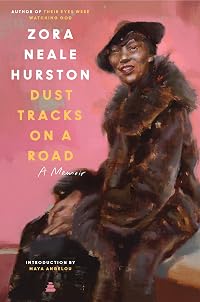
Dust Tracks on a Road
by Zora Neale Hurston
On This Page
Description
"Warm, witty, imaginative ... 'his is a rich and winning book."--The New Yorker Dust Tracks on a Road is the bold, poignant, and funny autobiography of novelist, folklorist, and anthropologist Zora Neale Hurston, one of American literature's most compelling and influential authors. Hurston's powerful novels of the South-including Jonah's Gourd Vine and, most famously, Their Eyes Were Watching God-continue to enthrall readers with their lyrical grace, sharp detail, and captivating show more emotionality. First published in 1942, Dust Tracks on a Road is Hurston's personal story, told in her own words. The Perennial Modern Classics Deluxe edition includes an all-new forward by Maya Angelou, an extended biography by Valerie Boyd, and a special section featuring the contemporary reviews that greeted the book's original publication. show lessTags
Recommendations


Member Reviews
“I have been in Sorrow's kitchen and licked out all the pots. Then I have stood on the peaky mountain wrapped in rainbows, with a harp and a sword in my hands.”
This audiobook performed by Bahni Turpin was great. Zora is a fantastic storyteller, the kind that grips your attention from the first word to the last and it was a wonderful to be immersed in her words as Turpin narrated of her life, from her beginnings as a precocious child in Eatonville, Florida to her work towards funding her way to school and the adventures she had in the process, to then school and later her work as an anthropologist and researcher, and as an artist and novelist.
This audiobook performed by Bahni Turpin was great. Zora is a fantastic storyteller, the kind that grips your attention from the first word to the last and it was a wonderful to be immersed in her words as Turpin narrated of her life, from her beginnings as a precocious child in Eatonville, Florida to her work towards funding her way to school and the adventures she had in the process, to then school and later her work as an anthropologist and researcher, and as an artist and novelist.
Even without a tutored read, I can wholeheartedly recommend Dust Tracks on a Road. Hurston is a phenomenal writer. I love the way she uses local and contemporaneous dialect seamlessly in her higher brow and lower brow stories within the autobiography.
Having read the introduction, I did feel like I could spot a few places where she was keeping distance from the reader. I also wished to learn more about the Harlem Renaissance than she includes (which I may try to do later). But I liked this regardless. Of particular note, in my opinion, are the chapters where she talks about her writing process (fascinating) and the story of her mother's death (wrenching).
Having read the introduction, I did feel like I could spot a few places where she was keeping distance from the reader. I also wished to learn more about the Harlem Renaissance than she includes (which I may try to do later). But I liked this regardless. Of particular note, in my opinion, are the chapters where she talks about her writing process (fascinating) and the story of her mother's death (wrenching).
This went beyond my expectations. I’d listened to an audiobook version of Hurston’s Their Eyes Were Watching God a number of years ago so I already knew about her strength as a storyteller and her expressive way with words. What I didn’t know was anything about the writer behind those words. As it turns out, her life story was as dramatic as anything in her fiction and it was written with the same rich cultural references and dialect as her fiction is, too.
There are several essays by Hurston at the end of this book, followed by a short biography that includes her struggles in later years and Alice Walker posthumously rekindling an interest in her work. It’s hard to think that someone as talented as she was could easily have show more slipped into obscurity. show less
There are several essays by Hurston at the end of this book, followed by a short biography that includes her struggles in later years and Alice Walker posthumously rekindling an interest in her work. It’s hard to think that someone as talented as she was could easily have show more slipped into obscurity. show less
This pioneer was lost (really lost, in an unmarked grave) and then found by Alice Walker, author of The Color Purple. Writer, anthropologist, domestic worker, and sharp observer of relations between the races and genders in the '30s - 50's, she is best known for her novel Their Eyes Were Watching God. Hurston was also inclined to strong narratives about heterosexual relationships, as influenced by her non-affectionate mother, who died when she was only nine; a bitter physical war with her stepmother; and her two ex-husbands. Also included in this memoir are three essays that define her stance on "race men" - she did not believe that any race should ever be judged as a single entity, but only as individuals. Hurston was also a show more non-believer, putting her at great odds with her community of Eatonville, FL, the only incorporated all-Black town in the country. Her stirring writings on "My People! My People!" will be puzzling to modern readers, who will be surprised at her seeming lack of interest in social justice and in reparations. Fore and afterwords by Maya Angelou and Henry Gates Jr provide context but do not make excuses for Hurston's courting of wealthy white patrons. Hurston is a folk writer in two senses of the word - she writes beautifully and understands "common" folk and speaks so evocatively in the vernacular of working class and poor people. Her loss of literati favor and her eventual obscurity are painful to discover, as surely it was for Hurston, perhaps due to falling out of favor with the white editors who helped her get started, and to her disagreements with other Black writers such as Langston Hughes and Richard Wright. This is as strong a coming-of-age story as has ever been told.
Quotes: “My grandmother glared at me like open-faced hell and snorted: I vominates a lying tongue.”
“There is an age when children are fit company for spirits. Before they have absorbed too many of earthly things to be able to fly with the unseen things that soar.”
“Rome, the eternal city, meant two different things to my parents. To Mama, it meant you must build it today so it could last through eternity. To Papa, it meant that you could plan to lay some bricks today and you have the rest of eternity to finish it. With all time, why hurry? God had made more time than anything else, anyway. Why act so stingy about it?”
“You cannot have knowledge and worship at the same time. Mystery is the essence of the divine. Gods must keep their distance from men.”
“I was careful to do my classwork. I felt the ladder under my feet.”
“It is one of the tragedies of life that one cannot have all the wisdom one is ever to possess in the beginning. “
“There is no agony like bearing an untold story inside you.”
“Niagara Falls was just like watching the ocean jump off Pike’s Peak.” show less
Quotes: “My grandmother glared at me like open-faced hell and snorted: I vominates a lying tongue.”
“There is an age when children are fit company for spirits. Before they have absorbed too many of earthly things to be able to fly with the unseen things that soar.”
“Rome, the eternal city, meant two different things to my parents. To Mama, it meant you must build it today so it could last through eternity. To Papa, it meant that you could plan to lay some bricks today and you have the rest of eternity to finish it. With all time, why hurry? God had made more time than anything else, anyway. Why act so stingy about it?”
“You cannot have knowledge and worship at the same time. Mystery is the essence of the divine. Gods must keep their distance from men.”
“I was careful to do my classwork. I felt the ladder under my feet.”
“It is one of the tragedies of life that one cannot have all the wisdom one is ever to possess in the beginning. “
“There is no agony like bearing an untold story inside you.”
“Niagara Falls was just like watching the ocean jump off Pike’s Peak.” show less
This was wonderful. ZNH tells her own story very engagingly, with plenty of reflections on race, self-determination, American culture, religion, friendship, publishing, the works. She's acerbic in her observations; I kept on writing them down. At the time she wrote the autobiography, she was at the height of her success; a few years later she was out of the public eye, and she ended her life in poverty and obscurity, which is a terrible shame. Well, no one should die alone and impoverished, though.
Here are her words on poverty:
and on justice:
But there were lighthearted moments, too, like this, from her childhood, which I shared on Livejournal:
I recommend it, especially if you're interested in ZNH's writing. It's both entertaining and thought provoking. show less
Here are her words on poverty:
There is something about poverty that smells like death. Dead dreams dropping off the heart like leaves in a dry season and rotting around the feet; impulses smothered too long in the fetid air of undergroundshow more
caves. The soul lives in a sickly air. People can be slave-ships in shoes.
and on justice:
I too yearn for universal justice, but how to bring it about is another thing. It is such a complicated thing, for justice, like beauty, is in the eye of the beholder. There is universal agreement of the principle, but the application brings on the fight.
But there were lighthearted moments, too, like this, from her childhood, which I shared on Livejournal:
I used to take a seat on top of the gate post and watch the world go by. One way to Orlando ran past my house, so the carriages and cars would pass before me. The movement made me glad to see it. Often the white travelers would hail me, but more often I hailed them, and asked, "Don't you want me to go a piece of the way with you?"
They always did. I know now that I must have caused a great deal of amusement among them, but my self-assurance must have carried the point, for I was always invited to come along. I'd ride up the road for perhaps a half mile, then walk back.
I recommend it, especially if you're interested in ZNH's writing. It's both entertaining and thought provoking. show less
This was wonderful. ZNH tells her own story very engagingly, with plenty of reflections on race, self-determination, American culture, religion, friendship, publishing, the works. She's acerbic in her observations; I kept on writing them down. At the time she wrote the autobiography, she was at the height of her success; a few years later she was out of the public eye, and she ended her life in poverty and obscurity, which is a terrible shame. Well, no one should die alone and impoverished, though.
Here are her words on poverty:
and on justice:
But there were lighthearted moments, too, like this, from her childhood, which I shared on Livejournal:
I recommend it, especially if you're interested in ZNH's writing. It's both entertaining and thought provoking. show less
Here are her words on poverty:
There is something about poverty that smells like death. Dead dreams dropping off the heart like leaves in a dry season and rotting around the feet; impulses smothered too long in the fetid air of undergroundshow more
caves. The soul lives in a sickly air. People can be slave-ships in shoes.
and on justice:
I too yearn for universal justice, but how to bring it about is another thing. It is such a complicated thing, for justice, like beauty, is in the eye of the beholder. There is universal agreement of the principle, but the application brings on the fight.
But there were lighthearted moments, too, like this, from her childhood, which I shared on Livejournal:
I used to take a seat on top of the gate post and watch the world go by. One way to Orlando ran past my house, so the carriages and cars would pass before me. The movement made me glad to see it. Often the white travelers would hail me, but more often I hailed them, and asked, "Don't you want me to go a piece of the way with you?"
They always did. I know now that I must have caused a great deal of amusement among them, but my self-assurance must have carried the point, for I was always invited to come along. I'd ride up the road for perhaps a half mile, then walk back.
I recommend it, especially if you're interested in ZNH's writing. It's both entertaining and thought provoking. show less
Her father was the mayor and also a minister. Her mother, a school teacher died while Zora was young and her father quickly remarried. Zora and her stepmother didn’t get along so Zora found herself cast off and very independent from her mid teen years.
She had a series of dream visions foretelling her future. At many points in her life, she was able to confirm what was occurring by one of these foretellings.
She began her career as an anthropologist, collecting black folk tales and songs from the south.
Fiercely independent, with an absolute gift for laugh out loud funny, but often acerbic words: (“My grandmother glared at me like open-faced hell and snorted: I vominates a lying tongue.”)
This memoir was written in 1942 when she was show more at the top of her game as a writer, and a leader in the Harlem Renaissance.
Besides the memoir, there are three of her essays, including her thoughts on being a ‘race man’. I cannot but wonder if some of these thoughts led to her eventual obscurity in a time when blacks were eager to claim their rightful place after centuries of being treated as lesser.
“Light came to me when I realized that I did not have to consider any racial group as a whole. God made them duck by duck and that was the only way I could see them. I learned that skins were no measure of what was inside people. So none of the Race cliché meant anything anymore. I began to laugh at both white and black who claimed special blessings on the basis of race. Therefore I saw no curse in being black, nor no extra flavor by being white."
Highly recommended. I will be reading more by Zora Neale Hurston. show less
She had a series of dream visions foretelling her future. At many points in her life, she was able to confirm what was occurring by one of these foretellings.
She began her career as an anthropologist, collecting black folk tales and songs from the south.
Fiercely independent, with an absolute gift for laugh out loud funny, but often acerbic words: (“My grandmother glared at me like open-faced hell and snorted: I vominates a lying tongue.”)
This memoir was written in 1942 when she was show more at the top of her game as a writer, and a leader in the Harlem Renaissance.
Besides the memoir, there are three of her essays, including her thoughts on being a ‘race man’. I cannot but wonder if some of these thoughts led to her eventual obscurity in a time when blacks were eager to claim their rightful place after centuries of being treated as lesser.
“Light came to me when I realized that I did not have to consider any racial group as a whole. God made them duck by duck and that was the only way I could see them. I learned that skins were no measure of what was inside people. So none of the Race cliché meant anything anymore. I began to laugh at both white and black who claimed special blessings on the basis of race. Therefore I saw no curse in being black, nor no extra flavor by being white."
Highly recommended. I will be reading more by Zora Neale Hurston. show less
Members
- Recently Added By
Lists

100 Biographies & Memoirs to Read in a Lifetime
42 works; 18 members

100 Biographies and Memoirs to Read in a (Single) Lifetime
98 works; 12 members

New York Public Library's Books of the Century
120 works; 20 members

New York Public Library's Books of the Century - All
170 works; 14 members

Literary Works Read in College
316 works; 15 members

Books Set in Florida
25 works; 8 members

Literary Witches
86 works; 4 members
Author Information

112+ Works 34,871 Members
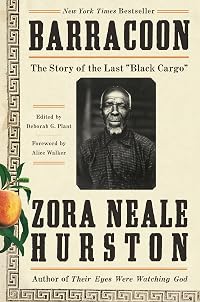
Zora Neale Hurston was born in 1901 in Eatonville, Fla. She left home at the age of 17, finished high school in Baltimore, and went on to study at Howard University, Barnard College, and Columbia University before becoming one of the most prolific writers in the Harlem Renaissance. Her works included novels, essays, plays, and studies in folklore show more and anthropology. Her most productive years were the 1930s and early 1940s. It was during those years that she wrote her autobiography Dust Tracks on a Road, worked with the Federal Writers Project in Florida, received a Guggenheim fellowship, and wrote four novels. She is most remembered for her novel Their Eyes Were Watching God, published in 1937. In 2018, her previously unpublished work, Barracoon: The Story of the Last Black Cargo, was published. She died penniless and in obscurity in 1960 and was buried in an unmarked grave. In 1973, her grave was rediscovered and marked and her novels and autobiography have since been reprinted. (Bowker Author Biography) show less
Some Editions
Awards and Honors
Series
Belongs to Publisher Series
Harper Perennial Olive Editions (2017 Olive)
Virago Modern Classics (713)
Work Relationships
Common Knowledge
- Canonical title
- Dust Tracks on a Road
- Original title
- Dust Tracks on a Road
- Alternate titles
- Dust Tracks on a Road: An Autobiography
- Original publication date
- 1942
- People/Characters
- Zora Neale Hurston
- Important places
- Florida, USA; New York, New York, USA; Harlem, New York, New York, USA; Jacksonville, Florida, USA; USA; New York, USA (show all 7); Duval County, Florida, USA
- Important events
- Harlem Renaissance
- First words
- Gleich scheinbar totem, kaltem Gestein trage ich in mir die Spuren der Materie, die einst daranging, mich zu machen.
Like the dead-seeming, cold rocks, I have memories within that came out of the materials that went to make me. Time and place have had their say.
[Foreword] There is an eerie, sometimes pathetic, ofttimes beautiful urge that prevails in Black American lore, lyrics and literature. - Quotations
- "Light came to me when I realized that I did not have to consider any racial group as a whole. God made them duck by duck and that was the only way I could see them. I learned that skins were no measure of what was inside peo... (show all)ple. So none of the Race cliché meant anything anymore. I began to laugh at both white and black who claimed special blessings on the basis of race. Therefore I saw no curse in being black, nor no extra flavor by being white."
- Last words
- (Click to show. Warning: May contain spoilers.)Vielleicht treffen sich all diejenigen von uns, die nicht das Glück haben, einander auf dieser Welt zu begegnen oder wiederzubegegnen, beim himmlischen Barbecue.
(Click to show. Warning: May contain spoilers.)[Foreword] But then all creativity is imperious, and Zora Neal Hurston was certainly creative.
(Click to show. Warning: May contain spoilers.)Maybe all of us who do not have the good fortune to meet or meet again, in this world, will meet at a barbecue. - Original language
- English
Classifications
Statistics
- Members
- 1,593
- Popularity
- 14,347
- Reviews
- 19
- Rating
- (4.05)
- Languages
- 5 — Czech, Dutch, English, French, German
- Media
- Paper, Audiobook, Ebook
- ISBNs
- 33
- ASINs
- 22