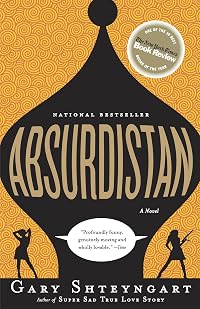
Absurdistan
by Gary Shteyngart
On This Page
Description
"With the enormous success of the critically acclaimed The Russian debutante's handbook, Gary Shteyngart established himself as one of the most talented writers of his generation. Open Absurdistan and meet our hero, the outsize Misha Vainberg, son of the 1,238th-richest man in Russia, lover of large portions of food and drink, lover and inept performer of rap music, and lover of a South Bronx Latina whom he longs to rejoin in New York City, if only the American INS will grant him a visa. It show more won't, because Misha's late beloved Papa whacked an Oklahoma businessman of some prominence; now Misha is paying the price of exile from his adopted American homeland. He's stuck in Russia, dreaming of his beloved Rouenna and the Oz of NYC. show lessTags
Recommendations






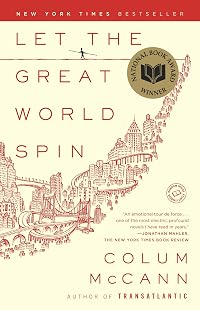

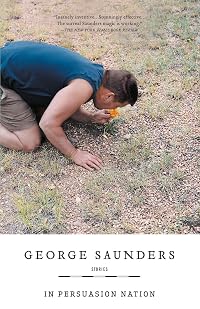
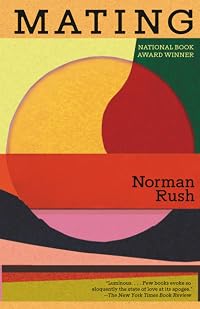
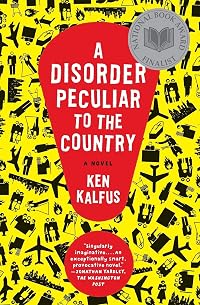

Member Recommendations

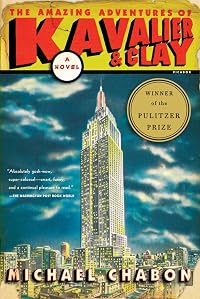
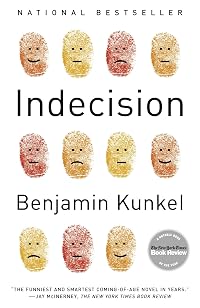
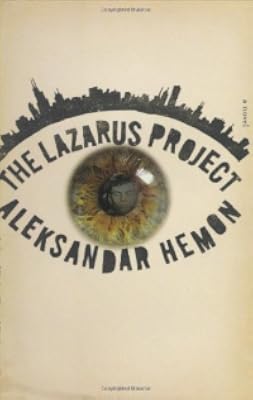
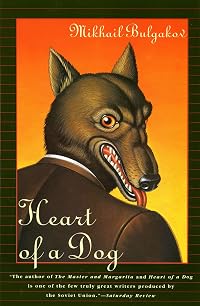
WSB7 The Maddow book delineates one way of getting to "absurdistan."
Member Reviews
It’s easy to get distracted by the satiric furbelows, but essentially this is the story of a man who comes to realize how impossible it is to be good – even to define “good” - in a corrupt world.
The author starts by challenging the reader to define what makes a “good” man. Misha, the massively overweight son of a Russian oligarch, has a whole set of repulsive personal habits: he’s obsessed with food, he treats his servant Timofy atrociously, he’s entitled, naive, and lazy. But he’s also been scarred by a botched circumcision, possible sexual abuse, and a culture that has inculcated warped values and dysfunctional behaviours. You want to hate him but … it’s complicated. Just like the world he is endeavoring to show more negotiate.
The book has an episodic feel to it. The first half, which focuses on Misha’s dysfunctional family, his career at an absurd liberal American university, and his relationship with his New York ghetto sweetheart, mostly focuses on lampooning American liberalism, multiculturalism, gold-digging women, Russian culture, moral relativism, and cultural appropriation. Some of the humor is obvious, but couldn’t help feeling like this section was a bit heavy on “inside jokes” – things that Russians (like the novel’s author, Gary Shteyngart, an ethnic Russian Jew) would doubtless find hilarious, but that I (an American) lacked the background knowledge to appreciate.
Things turn dark quickly in the second half, however, when Misha finds himself in the country of Absurdistan. He’s just passing through, but quickly becomes entangled in a civil war engineered by the US military-industrial complex (Halliburton is called out by name) in cahoots with greedy, morally-bankrupt Absurdi politicals. Bad news for the ethnic Svani and Sevo peasants that end up as fodder for rockets being launched from the roof of the Hyatt, but extremely profitable for the folks instigating the conflict. (I was reminded of a half-remembered quote from The Princess Bride: “I’ve hired you to help me start a war. It’s a prestigious line of work, with a long and glorious tradition.”) This section leans heavily into cynicism: you’ll definitely laugh, but you’ll hate yourself for doing so.
Meanwhile, Misha’s trying to abide by a moral compass that may or may not point true north. He understands that the women are exploiting him, but he treats them honorably. He understands that his father was a crook, but he remains loyal out of a sense of familial responsibility. When he eventually realizes he’s being manipulated by Absurdi politicos who are exploiting his American liberalism, he doesn’t blame them as much as he blames himself for his naivity. A wiser man, he attempts to leave the ethnic hatred and profiteering behind, but the final joke is on him, for the date of his escape to American? 10 Sep 2001.
Many in my book group hated this book. They found Misha loathsome and Shteyngart’s satire way too dark. I get where they’re coming from: the whole point of this form of satire is to go to dark places and then exaggerate them to the point where they become horrifying, a la Swift’s “A Modest Proposal” or Vonnegut’s “Slaughterhouse Five.” This was at times excruciating. But it was also inventive, thought-provoking, and surprisingly sincere. A worthy read, if not an easy or entirely pleasant one. show less
The author starts by challenging the reader to define what makes a “good” man. Misha, the massively overweight son of a Russian oligarch, has a whole set of repulsive personal habits: he’s obsessed with food, he treats his servant Timofy atrociously, he’s entitled, naive, and lazy. But he’s also been scarred by a botched circumcision, possible sexual abuse, and a culture that has inculcated warped values and dysfunctional behaviours. You want to hate him but … it’s complicated. Just like the world he is endeavoring to show more negotiate.
The book has an episodic feel to it. The first half, which focuses on Misha’s dysfunctional family, his career at an absurd liberal American university, and his relationship with his New York ghetto sweetheart, mostly focuses on lampooning American liberalism, multiculturalism, gold-digging women, Russian culture, moral relativism, and cultural appropriation. Some of the humor is obvious, but couldn’t help feeling like this section was a bit heavy on “inside jokes” – things that Russians (like the novel’s author, Gary Shteyngart, an ethnic Russian Jew) would doubtless find hilarious, but that I (an American) lacked the background knowledge to appreciate.
Things turn dark quickly in the second half, however, when Misha finds himself in the country of Absurdistan. He’s just passing through, but quickly becomes entangled in a civil war engineered by the US military-industrial complex (Halliburton is called out by name) in cahoots with greedy, morally-bankrupt Absurdi politicals. Bad news for the ethnic Svani and Sevo peasants that end up as fodder for rockets being launched from the roof of the Hyatt, but extremely profitable for the folks instigating the conflict. (I was reminded of a half-remembered quote from The Princess Bride: “I’ve hired you to help me start a war. It’s a prestigious line of work, with a long and glorious tradition.”) This section leans heavily into cynicism: you’ll definitely laugh, but you’ll hate yourself for doing so.
Meanwhile, Misha’s trying to abide by a moral compass that may or may not point true north. He understands that the women are exploiting him, but he treats them honorably. He understands that his father was a crook, but he remains loyal out of a sense of familial responsibility. When he eventually realizes he’s being manipulated by Absurdi politicos who are exploiting his American liberalism, he doesn’t blame them as much as he blames himself for his naivity. A wiser man, he attempts to leave the ethnic hatred and profiteering behind, but the final joke is on him, for the date of his escape to American? 10 Sep 2001.
Many in my book group hated this book. They found Misha loathsome and Shteyngart’s satire way too dark. I get where they’re coming from: the whole point of this form of satire is to go to dark places and then exaggerate them to the point where they become horrifying, a la Swift’s “A Modest Proposal” or Vonnegut’s “Slaughterhouse Five.” This was at times excruciating. But it was also inventive, thought-provoking, and surprisingly sincere. A worthy read, if not an easy or entirely pleasant one. show less
The runner-up of the 2007 Morning News Tournament of Books (https://themorningnews.org/tob/2007/) In my opinion, 'Absurdistan' was ROBBED from winning against the drab McCarthy confusion that is 'The Road'. I would have chosen Absurdistan! Could this match-up have been any different? I'm finding I like books about unlikable underdogs more than other readers seem to. Others just can't hang with Zebra from 'Call Me Zebra'. Misha here isn't quite unlikable but he would sometimes be a bit MUCH for others. Always talking about his squishy hands. Sometimes plotless, but I love a writer who is in love with words this much and will forgive such a plot, but I guess that is the norm for absurdist fiction. The "pizza resistance" mention was the show more pizza resistance of this entire book!!! I won't say more, as you'll either love this book or you won't.
This reminds me of so many, though none can have that Shteyngart sparkle:
Call Me Zebra - Azareen Van der Vliet Oloomi
A Confederacy of Dunces - John Kennedy Toole
Home Land - Sam Lipsyte
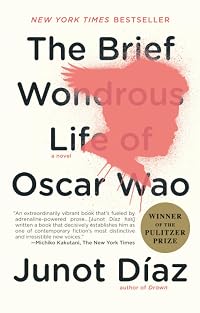
The Brief Wondrous Life of Oscar Wao - Junot Diaz
Wise Blood - Flannery O'Connor show less
This reminds me of so many, though none can have that Shteyngart sparkle:
Call Me Zebra - Azareen Van der Vliet Oloomi
A Confederacy of Dunces - John Kennedy Toole
Home Land - Sam Lipsyte
The Brief Wondrous Life of Oscar Wao - Junot Diaz
Wise Blood - Flannery O'Connor show less
Pode parecer estranho eu dar 4 estrelas para um romance comédia com personagens bizarros e muitas vezes incompetentes e despreparados para viver num mundo cínico e caótico, quando já dei 3 estrelas para romances clássicos de autores consagrados. Mas procuro analisar os livros comparando-os com outros do mesmo gênero, e voltados para públicos similares. Essa comédia cínica e caótica, será muitas vezes mais real e plausível que muitos romances clássicos que certamente tem suas qualidades em outro lugar. Podemos dizer que é um romance absurdista segundo a filosofia de Camus. Aqui acompanhamos a estória de um filho de um mafioso russo que viveu a margem da vida do pai, e se beneficiando do que a riqueza poderia proporcionar show more para ele. Tudo ia bem até que o pai é acusado de matar alguém nos EUA e faz o filho que a essa altura era um jovem bon vivant em Nova Iorque seja deportado de volta para a Rússia. O pai então morre num atentado a bomba, e deixa o filho rico mas sem maturidade e preparo para cuidar da própria vida. Dependente psicologicamente do seu terapeuta americano e de sua namorada o protagonista se vê no meio de uma revolução no Absurdistão quando tentava comprar um passaporte falso de cidadão Belga para voltar para Nova Iorque. Preso no país e sem seu secretário e faz tudo, ele tem que sobreviver e arranjar um jeito de voltar para casa.
Com muitas frases espirituosas e personagens inusitados o romance nos prende até o final, com muitas reviravoltas. A história toda é levada com humor, mas há um pano de fundo melancólico de um mundo cínico sem saída que interesses pessoais estão acima de ideologias, países, ou grupos.
Até o final ficamos pensando até que ponto o autor vai conseguir conduzir essa história que parece saiu do controle do próprio autor. show less
Com muitas frases espirituosas e personagens inusitados o romance nos prende até o final, com muitas reviravoltas. A história toda é levada com humor, mas há um pano de fundo melancólico de um mundo cínico sem saída que interesses pessoais estão acima de ideologias, países, ou grupos.
Até o final ficamos pensando até que ponto o autor vai conseguir conduzir essa história que parece saiu do controle do próprio autor. show less
The first third of this was relentlessly hilarious genius. I thought this was going to make it to best of the best status. Misha, our hero(?) is a walking, talking symbol of avarice, gluttony, selfishness, and preternatural laziness. God bless America. Our 400-pound culturally appropriative rich boy has come from Russia for his US liberal arts education and following NYC trust fund kid life. He becomes Snackdaddy, a citizen of nowhere, literally and metaphorically, due to factors beyond his control.
For a while, it was hilarious and tragic, sort of Augie March by way of St. Petersburg and Oberlin. Shteyngart is funny as hell, can paint a scene as well as any writer I have ever read, and there is an appealing controlled mania to it all. show more When the action heads out of the US to Russia, and then to Absudsvani, the titular Absurdistan, things started to get old. I think if I read an excerpt from those sections it would shine as brightly as anything in the first part, but the problem is that Sheteyngart hits the same themes and jokes over and over, the vulgarity, the rolls of fat and deformed penis, the truly disgusting sex, the slovenliness, the insensitivity, at that manic pace, and it starts to grate. The Absurdistan-set portion is way too long. I loved where he was going with it, and I thought the end was brilliant, but for a big chunk of the third quarter of the book I started to dread returning to a book I had loved completely.
At its best, this is world-class literature. I want this to be a 5-star, but for me it was a 10-star and for a long period a 3-star. I am going with 4. Flaws and all, this is the work of a great writer. show less
For a while, it was hilarious and tragic, sort of Augie March by way of St. Petersburg and Oberlin. Shteyngart is funny as hell, can paint a scene as well as any writer I have ever read, and there is an appealing controlled mania to it all. show more When the action heads out of the US to Russia, and then to Absudsvani, the titular Absurdistan, things started to get old. I think if I read an excerpt from those sections it would shine as brightly as anything in the first part, but the problem is that Sheteyngart hits the same themes and jokes over and over, the vulgarity, the rolls of fat and deformed penis, the truly disgusting sex, the slovenliness, the insensitivity, at that manic pace, and it starts to grate. The Absurdistan-set portion is way too long. I loved where he was going with it, and I thought the end was brilliant, but for a big chunk of the third quarter of the book I started to dread returning to a book I had loved completely.
At its best, this is world-class literature. I want this to be a 5-star, but for me it was a 10-star and for a long period a 3-star. I am going with 4. Flaws and all, this is the work of a great writer. show less
This book cracked me up at least once a paragraph.
It's broad farce brimming with intelligence.
Now I am going to have to read all the other Shteyngart books.
(I could have a worse burden, trust me.)
It's broad farce brimming with intelligence.
Now I am going to have to read all the other Shteyngart books.
(I could have a worse burden, trust me.)
I wish I could say I liked this one more than I did. Shteyngart puts on a virtuoso performance here in the funny, observational, hyper-referential and very contemporary mode of someone like, say, Zadie Smith. He's got Smith's transnational sensibility, too, building his novel around an obese, fabulously wealthy Russian Jew who feels American down to his very bones but finds himself marooned in a third-world backwater with a slightly improbable name. Shteygart's prose is so polished in gleams, his narrator's voice always rings true, and the book's soul is truly global. The author seems to understand both why so many young people around the world find the United States and its cultural products so alluring and why so many privileged young show more Americans are so fascinated by the hardscrabble existences of people further down the socioeconomic ladder, and that's no mean feat. Our millionaire protagonist eats caviar by the jarful and raps unselfconsciously while a young Russian he meets says he wants to travel to New York "to play basketball with blacks on the street." For Shteyngart, it's just another day on planet earth. Shyteyngart's novel is perhaps most touching when tracing these weird cultural mix-ups. Improbably enough, "Absurdistan has some of the most delicious descriptions of New York in the summertime that I've ever read, and Shteyngart has a keen eye for the weird, dissonant juxtapositions that unbridled global capitalism can create. I've been told that post-Soviet humor is surreal, and, if that's true, the author gets the tone just right. I wouldn't be surprised to learn that he did his own research by spending some time in go-go post-Lenin St. Petersburg, and I wouldn't be surprised to learn that he's got a genuine preference for voluptuous women of color. The two he includes here, Nana, an Absurdi beauty, and Rouenna, a Latina stunner from New York, are flat-out gorgeous, and perhaps the hottest fictional women I've met since I clapped eyes on Molly Bloom. You just can't fake a love like that.
Still, it's the novel's relentless physicality that more or less ruins it for me. The body in text is one of my personal obsessions, but even I found the author's frequent descriptions of Misha's elephantine, sweat-drenched body and unstoppable appetites hard to take. I don't, like some readers, have to necessarily like the characters I read about, but Misha's egotism and frankly adolescent worldview grew tiresome. The author probably made the right move when he chose to make this point by penning a clever satire instead of a ponderous, hand-wringing book of essays, but did he have to make it so grotesque? I don't know what I'm reading next, but I hope that none of its male characters refer to their "tits" half as often as Misha does. Eesh. I felt like I needed a shower and a diet plan after I reached the last page of "Absurdistan," and while that might mean that Shteyngart's book was effective, I'm still not sure that it was enjoyable as it should have been.
In the final analysis, "Absurdistan" isn't really about the fictional country it borrows its title from, or even about Russia. Shteygart's argument here is that thanks to globalization, we're all more or less citizens of Absurdistan, and that Misha's really much more American than he knows. What to do about it, though? At times, Shteyngart seems to be challenging the educated left-leaning readers that he knew would be his most likely audience: he mocks Misha's lazy, facile education in multiculturalism, for example. At the same time, I'm not sure that his caricatures of American contract workers and the book's twist ending are too far from the average MSNBC editorial. Shteyngart is, again, at his best when he writes about New York and considers what really being a global citizen might mean. The book ends with this line, and you might want to stop reading here if you haven't finished it: "Have faith in me. On these cruel, fragrant streets we will finish the difficult lives we were given." Now that there is some heart-stopping word-slinging. Misha, Gary – right on, brother. show less
Still, it's the novel's relentless physicality that more or less ruins it for me. The body in text is one of my personal obsessions, but even I found the author's frequent descriptions of Misha's elephantine, sweat-drenched body and unstoppable appetites hard to take. I don't, like some readers, have to necessarily like the characters I read about, but Misha's egotism and frankly adolescent worldview grew tiresome. The author probably made the right move when he chose to make this point by penning a clever satire instead of a ponderous, hand-wringing book of essays, but did he have to make it so grotesque? I don't know what I'm reading next, but I hope that none of its male characters refer to their "tits" half as often as Misha does. Eesh. I felt like I needed a shower and a diet plan after I reached the last page of "Absurdistan," and while that might mean that Shteyngart's book was effective, I'm still not sure that it was enjoyable as it should have been.
In the final analysis, "Absurdistan" isn't really about the fictional country it borrows its title from, or even about Russia. Shteygart's argument here is that thanks to globalization, we're all more or less citizens of Absurdistan, and that Misha's really much more American than he knows. What to do about it, though? At times, Shteyngart seems to be challenging the educated left-leaning readers that he knew would be his most likely audience: he mocks Misha's lazy, facile education in multiculturalism, for example. At the same time, I'm not sure that his caricatures of American contract workers and the book's twist ending are too far from the average MSNBC editorial. Shteyngart is, again, at his best when he writes about New York and considers what really being a global citizen might mean. The book ends with this line, and you might want to stop reading here if you haven't finished it: "Have faith in me. On these cruel, fragrant streets we will finish the difficult lives we were given." Now that there is some heart-stopping word-slinging. Misha, Gary – right on, brother. show less
I know plenty of upright citizens who would say this is the stupidest book they ever tried to read. However, if you have a dark, cynical, political sense of humor (which those same people would call twisted or sick), then you will probably think this book is as hilarious as I did.
Misha Vainburg is just trying to find a way back into America and the arms of his Bronx sweetheart, Rouenna. When the grossly rich, grossly obese (and all around gross) expat Jew travels to Absurdvani to buy a Belgian passport (of dubioius legality), he finds himself caught in a bloody revolution (of dubious political and social significance).
Misha Vainburg is just trying to find a way back into America and the arms of his Bronx sweetheart, Rouenna. When the grossly rich, grossly obese (and all around gross) expat Jew travels to Absurdvani to buy a Belgian passport (of dubioius legality), he finds himself caught in a bloody revolution (of dubious political and social significance).
Members
- Recently Added By
Published Reviews
ThingScore 50
Like a victorious wrestler, this novel is so immodestly vigorous, so burstingly sure of its barbaric excellence, that simply by breathing, sweating and standing upright it exalts itself.
added by jlelliott
In the end Misha gives new meaning to that archetype of Russian literature — the "superfluous man" — while Mr. Shteyngart's novel manages to seem equally beside the point.
added by jlelliott
Lists

Welcome to Ruritania!
22 works; 5 members

Books Read in 2012
816 works; 34 members

Books You Couldn't Finish
202 works; 32 members

Retrospective of 20th- and 21st-century literature
154 works; 1 member
Author Information

10+ Works 9,774 Members
Gary Shteyngart was born in Leningrad, which is now St. Petersburg, Russia, in 1972. He moved to the United States seven years later with his family. He received a bachelor's degree in politics from Oberlin College in Ohio and an MFA in creative writing from City University of New York. His debut novel, The Russian Debutante's Handbook, won the show more Stephen Crane Award for First Fiction and the National Jewish Book Award for Fiction. His other works include Absurdistan, Super Sad True Love Story, which won the Bollinger Everyman Wodehouse Prize, and Little Failure: A Memoir. He has taught writing at Hunter College, Columbia University, and Princeton University. (Bowker Author Biography) show less
Some Editions
Awards and Honors
Awards
Distinctions
Work Relationships
Common Knowledge
- Canonical title
- Absurdistan
- Original title
- Absurdistan
- Original publication date
- 2006-05-02
- People/Characters
- Misha Vainberg
- Important places
- New York, New York, USA; Central Asia; St. Petersburg, Russia
- First words
- This is a book about love.
- Last words
- (Click to show. Warning: May contain spoilers.)On these cruel, fragrant streets, we shall finish the difficult lives we were given.
- Original language*
- Anglais (Etats-Unis) (Etats-Unis)
- Canonical DDC/MDS
- 813.6
- Canonical LCC
- PS3619.H79
*Some information comes from Common Knowledge in other languages. Click "Edit" for more information.
Classifications
Statistics
- Members
- 2,570
- Popularity
- 7,406
- Reviews
- 87
- Rating
- (3.28)
- Languages
- 11 — Danish, English, Finnish, French, German, Italian, Portuguese, Romanian, Russian, Spanish, Swedish
- Media
- Paper, Audiobook, Ebook
- ISBNs
- 32
- ASINs
- 8