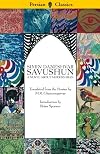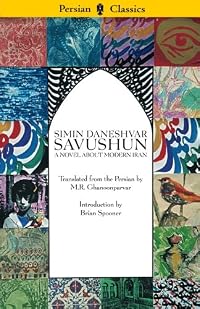
Savushun: A Novel About Modern Iran (Persian Classics)
by Simin Daneshvar
On This Page
Description
Set in the southern Persian town of Shiraz in the last years of World War II with the British army in occupation, the novel chronicles the life of Zari, a traditional, anxious and superstitious woman whose husband, Yusef is an idealistic feudal landlord. A web of political intrigue and hostility is created. In the background, tribal leaders are in open rebellion against the government and British occupation. In the midst of this turbulence Zari carries on normal life within the beautiful show more courtyard of her house, attempting to keep the family safe from external events. The corruption engendered by occupation is pervasive as Zari's family life is shattered and disaster strikes. An immensely moving story, the novel is a powerful indictment of colonization. show lessTags
Recommendations

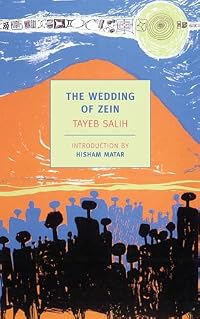
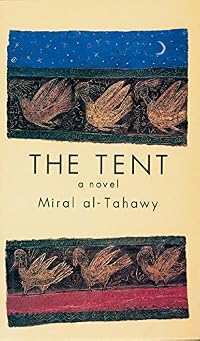
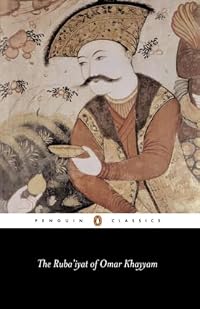


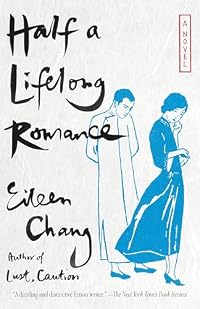






Member Reviews
Iran is a nation born of blood and stone, forged from thousands of years of toil and tension. In recent times, this struggle has continued. Iran’s modern history is defined by an enduring alliance between the people and their land as they grapple with the many predatory forces that labor to part them. Perhaps no other piece of literature quite captures this dynamic with the same visceral precision as Simin Daneshvar’s Savushun. Throughout the novel, Daneshvar illustrates that although occupation may strip a nation and its people of their identity, the path to liberation lies in channeling private grief toward a unified resistance.
Central to the dynamics that take place in Savushun are its historical underpinnings. Prior to the show more events of the novel, Iran had undergone a massive political transformation. From the mid-1920s until the early 1940s, Iran was ruled by Reza Shah, an authoritarian monarch who introduced an array of reforms ushering the country into the modern age. He sowed the seeds of a new national identity, using infrastructural improvements to integrate the country and the force of law to transform Iran into a secular, Western-style nation. Recognizing Iran’s history of subservience to Britain and Russia, he worked throughout his rule to balance and limit the influence of foreign nations. However, his efforts were short-lived. After World War II broke out, the Allied powers became increasingly wary of Iran’s ties to Germany despite its declaration of neutrality. The Allies also feared the Axis advance would soon penetrate Iran. Amid these conditions, Britain and Russia presented Reza Shah with an ultimatum to which he refused. Thereafter, British and Russian forces were launched in a full-scale invasion of Iran, leading to a foreign military occupation. Reza was ousted and his son, Mohammad Reza Pahlavi, was put into power by the Allies as the new shah.
Daneshvar weaves the external historical realities of occupied Iran throughout the internal narratives of Savushun. The novel chronicles the life of a middle-class family from the town of Shiraz. It is told through the perspective of Zari Khan, following the story of her home life, consisting of her three children, husband Yusof, and the various relatives, friends, and servants who ebb and flow through their doors. Although the story features a complex scheme of personalities, focus remains on Zari’s growing individuality, with her anxiety acting as a constant reminder of the uncertainty experienced by the Iranian people during this era. The novel is rich with themes of struggle against the imperial powers as personified by Yusof. Despite insistence from tribal leaders and others that he collaborate with the occupiers, Yusof refuses to sell them food during a period of starvation and instead opts to feed locals and peasants. This resistance is not without its costs however, as revealed in the novel's conclusion.
The family directly experiences subjugation to powerful foreigners on several occasions, as displayed by the symbols of her green earrings and their horse, Sahar. Though specific tensions with the British or Russians are sparsely mentioned, more pronounced is the inferiority and servitude felt by the Iranian people as their subjects. Indeed, some express their preference for battle and conflict over the passivity of the government and the people to occupation. Yusof, in conversation with war correspondent MacMahon—himself an Irishman sympathetic with the struggle against British colonization—states that occupiers “have emasculated their heroes” and “haven’t even left them with the possibility of struggle so that they can write an epic and sing a battle cry.” In short, it has “made a land devoid of heroes.” Yusof further states this disdain for the occupiers and anger with the lack of willpower from those around him while conversing with his brother Abolqasem Khan: “‘What I despise is the feeling of inferiority which has been instilled in all of you. In the blink of an eye, they make you all their dealers, errand boys, and interpreters. At least let one person stand up to them so they think to themselves, ‘Well, at last, we’ve found a real man.’” Daneshvar incorporates this theme of subservience as it tugs directly at the heartstrings of Iranians. Foreign intervention has, throughout Iranian history, accompanied loss, weakness, and embarrassment. Territorial concessions made throughout the 19th century by the then-ruling Qajar dynasty to Britain and Russia established an especially negative precedent that fueled anger toward foreign powers and redeemed nationalist demands for sovereignty. Yusof is driven to combat such national humiliation from recurring, tapping into images of masculinity and pride to do so.
Another coinciding tension is manifested through Zari: subservience and silence. Through the eyes of those leading the rebellion, including Yusof, Iranians have once again been emasculated, disenfranchised, stripped of their honor and pride. However, for the women of Iran, “emasculation” has never been a possibility. As Zari tends to her wifely duties and serves her husband, she increasingly questions her place within the resistance, yet has no outlet for expressing these thoughts. In this role, she overhears a conversation between Yusof and his guests about challenging the occupation and questions their willingness to dig their own graves, before thinking to herself: “What odd things come to women’s minds, and at what times!” Even in her own head she questions her divergence from the norms known to women. Throughout the story, readers are exposed to a Zari defined by fear and anxiety, framed as weak and cowardly by her husband and son, such as for having surrendered Sahar to the governor. Her place as mother, wife, caregiver—woman—further represses her ability to forge an individual identity while under occupation and join in the struggle against it. The expectation that she fulfill these roles eclipses any potential she may have for leading change.
In the end of this village novel, Zari manages to find her voice in the resistance movement, but it comes at a price. Although we cannot say whether she succeeds in this newfound role, MacMahon’s condolences to Zari tell of the future set for her and the people of Iran: “In your home, a tree shall grow, and others in your city, and many more throughout your country.” The tree he speaks of, of course, is the symbolic Tree of Independence, “A strange tree which draws its strength from soil and blood.” The soil from which this tree grows is Iranian soil, rich with cultural histories of resilience from the people who have groomed it over thousands of years. It is within this soil that the tree spreads its roots; however, not without blood: the people and their sacrifices as they resist, perhaps with their lives. Under the shade of this tree, people are relieved of their grief, and from its fruit, “pride, hope and self-confidence nestle in their hearts, replacing cowardice, suspicion and lies, and they all become men of courage and honor.” MacMahon foretells of considerable changes across Iran in the years to come. People may continue to toil under the siege of their homelands, but their acts of defiance are to sweep across the country, spreading through the people’s communities and urging them to action. Savushun’s conclusion tells of the continued resilience of Iranians and predicts a revolution against prolonged subjugation.
Daneshvar’s imaginative writing acts much like a sponge, soaking up the cultural and historical realities of Iran during this period and wringing them out such that even a modern Western audience may, with context, understand and sympathize with. The pain and politics of occupation as experienced by the Iranian people are glaringly evident and brought to life through heads of the Khan family and the many symbols included throughout the novel. Though the years succeeding this novel were joined by strife under the repressive rule of Mohammad Reza Shah and continued foreign control, Daneshvar assures her audience that Iranians will endure and that justice and honor will one day reign. show less
Central to the dynamics that take place in Savushun are its historical underpinnings. Prior to the show more events of the novel, Iran had undergone a massive political transformation. From the mid-1920s until the early 1940s, Iran was ruled by Reza Shah, an authoritarian monarch who introduced an array of reforms ushering the country into the modern age. He sowed the seeds of a new national identity, using infrastructural improvements to integrate the country and the force of law to transform Iran into a secular, Western-style nation. Recognizing Iran’s history of subservience to Britain and Russia, he worked throughout his rule to balance and limit the influence of foreign nations. However, his efforts were short-lived. After World War II broke out, the Allied powers became increasingly wary of Iran’s ties to Germany despite its declaration of neutrality. The Allies also feared the Axis advance would soon penetrate Iran. Amid these conditions, Britain and Russia presented Reza Shah with an ultimatum to which he refused. Thereafter, British and Russian forces were launched in a full-scale invasion of Iran, leading to a foreign military occupation. Reza was ousted and his son, Mohammad Reza Pahlavi, was put into power by the Allies as the new shah.
Daneshvar weaves the external historical realities of occupied Iran throughout the internal narratives of Savushun. The novel chronicles the life of a middle-class family from the town of Shiraz. It is told through the perspective of Zari Khan, following the story of her home life, consisting of her three children, husband Yusof, and the various relatives, friends, and servants who ebb and flow through their doors. Although the story features a complex scheme of personalities, focus remains on Zari’s growing individuality, with her anxiety acting as a constant reminder of the uncertainty experienced by the Iranian people during this era. The novel is rich with themes of struggle against the imperial powers as personified by Yusof. Despite insistence from tribal leaders and others that he collaborate with the occupiers, Yusof refuses to sell them food during a period of starvation and instead opts to feed locals and peasants. This resistance is not without its costs however, as revealed in the novel's conclusion.
The family directly experiences subjugation to powerful foreigners on several occasions, as displayed by the symbols of her green earrings and their horse, Sahar. Though specific tensions with the British or Russians are sparsely mentioned, more pronounced is the inferiority and servitude felt by the Iranian people as their subjects. Indeed, some express their preference for battle and conflict over the passivity of the government and the people to occupation. Yusof, in conversation with war correspondent MacMahon—himself an Irishman sympathetic with the struggle against British colonization—states that occupiers “have emasculated their heroes” and “haven’t even left them with the possibility of struggle so that they can write an epic and sing a battle cry.” In short, it has “made a land devoid of heroes.” Yusof further states this disdain for the occupiers and anger with the lack of willpower from those around him while conversing with his brother Abolqasem Khan: “‘What I despise is the feeling of inferiority which has been instilled in all of you. In the blink of an eye, they make you all their dealers, errand boys, and interpreters. At least let one person stand up to them so they think to themselves, ‘Well, at last, we’ve found a real man.’” Daneshvar incorporates this theme of subservience as it tugs directly at the heartstrings of Iranians. Foreign intervention has, throughout Iranian history, accompanied loss, weakness, and embarrassment. Territorial concessions made throughout the 19th century by the then-ruling Qajar dynasty to Britain and Russia established an especially negative precedent that fueled anger toward foreign powers and redeemed nationalist demands for sovereignty. Yusof is driven to combat such national humiliation from recurring, tapping into images of masculinity and pride to do so.
Another coinciding tension is manifested through Zari: subservience and silence. Through the eyes of those leading the rebellion, including Yusof, Iranians have once again been emasculated, disenfranchised, stripped of their honor and pride. However, for the women of Iran, “emasculation” has never been a possibility. As Zari tends to her wifely duties and serves her husband, she increasingly questions her place within the resistance, yet has no outlet for expressing these thoughts. In this role, she overhears a conversation between Yusof and his guests about challenging the occupation and questions their willingness to dig their own graves, before thinking to herself: “What odd things come to women’s minds, and at what times!” Even in her own head she questions her divergence from the norms known to women. Throughout the story, readers are exposed to a Zari defined by fear and anxiety, framed as weak and cowardly by her husband and son, such as for having surrendered Sahar to the governor. Her place as mother, wife, caregiver—woman—further represses her ability to forge an individual identity while under occupation and join in the struggle against it. The expectation that she fulfill these roles eclipses any potential she may have for leading change.
In the end of this village novel, Zari manages to find her voice in the resistance movement, but it comes at a price. Although we cannot say whether she succeeds in this newfound role, MacMahon’s condolences to Zari tell of the future set for her and the people of Iran: “In your home, a tree shall grow, and others in your city, and many more throughout your country.” The tree he speaks of, of course, is the symbolic Tree of Independence, “A strange tree which draws its strength from soil and blood.” The soil from which this tree grows is Iranian soil, rich with cultural histories of resilience from the people who have groomed it over thousands of years. It is within this soil that the tree spreads its roots; however, not without blood: the people and their sacrifices as they resist, perhaps with their lives. Under the shade of this tree, people are relieved of their grief, and from its fruit, “pride, hope and self-confidence nestle in their hearts, replacing cowardice, suspicion and lies, and they all become men of courage and honor.” MacMahon foretells of considerable changes across Iran in the years to come. People may continue to toil under the siege of their homelands, but their acts of defiance are to sweep across the country, spreading through the people’s communities and urging them to action. Savushun’s conclusion tells of the continued resilience of Iranians and predicts a revolution against prolonged subjugation.
Daneshvar’s imaginative writing acts much like a sponge, soaking up the cultural and historical realities of Iran during this period and wringing them out such that even a modern Western audience may, with context, understand and sympathize with. The pain and politics of occupation as experienced by the Iranian people are glaringly evident and brought to life through heads of the Khan family and the many symbols included throughout the novel. Though the years succeeding this novel were joined by strife under the repressive rule of Mohammad Reza Shah and continued foreign control, Daneshvar assures her audience that Iranians will endure and that justice and honor will one day reign. show less
I found [A Persian Requiem] a fascinating glimpse of life in occupied Iran during World War II. Told primarily from the view of Zari, it tells the story of what occurs when her husband, Yusef, continues his resistance to selling his crops to the British army for the third year in a row, trying to keep back enough for the peasants who work the land to eat. Yusef’s brother, Abol-Ghassem Kahn, takes a more pragmatic view, hoping that in cooperating with the British he may earn a place in the governing classes (and a chance to increase his wealth), while protecting his family at the same time. The situation is further complicated by the request two friends of Yusef from a nomadic tribe make for him to sell them food for their people.
In show more my reading, Zari understands and agrees with her husband’s argument that Persia should be governed by Persians, but I think she has a clearer sight than Yusef of the consequences of not cooperating. She yearns for the safety of her household over and above what might be morally/ethically “right,” as might many of us in a situation where choosing a larger good may inflict suffering in the immediate future on those close to us.
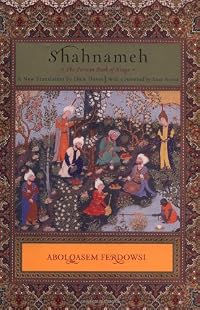
The story has added depth for those who have some familiarity with the story of Seyavash/Siyavash in Ferdowsi’s epic poem, the Shanameh, and I’m sure this contributed to its being a bestseller in Iran. I did find that many of the secondary characters in the story seemed rather one-sided. However, the family – Zari, her husband, brother-in-law & sister-in law and her son Khosrow - and the conflicts Zari finds herself facing were depicted well. show less
In show more my reading, Zari understands and agrees with her husband’s argument that Persia should be governed by Persians, but I think she has a clearer sight than Yusef of the consequences of not cooperating. She yearns for the safety of her household over and above what might be morally/ethically “right,” as might many of us in a situation where choosing a larger good may inflict suffering in the immediate future on those close to us.
The story has added depth for those who have some familiarity with the story of Seyavash/Siyavash in Ferdowsi’s epic poem, the Shanameh, and I’m sure this contributed to its being a bestseller in Iran. I did find that many of the secondary characters in the story seemed rather one-sided. However, the family – Zari, her husband, brother-in-law & sister-in law and her son Khosrow - and the conflicts Zari finds herself facing were depicted well. show less
Persian upper class extended family in the 1940's mixes and conflicts with the colonial Governor, and all the colonial hanger on characters you care to have. This family has lots of uncles and aunts and cousins, and servants, and horses, and villagers to supervise. Brothers have different ideas of how to live under British occupation, and what societal responsibilities come with their privileged class. Part India, part colonial-anywhere, and part oil-rich southwestern Iran during a famine with tribal fighters running arms, there is a core love story that is sweet. I found the women characters pleasant, but so upper class polite, and wimpy weak, except in the case of one evil old girl who was more ham-handed and brutish than clever. show more Overall I felt the sense of family strife in the face of war and colonialism, brother against brother, the evils of ocupation, and the remnants of feudalism in the 1940's in Iran. show less
Ratings
Members
- Recently Added By
Lists

500 Great Books by Women
507 works; 60 members
Author Information

10+ Works 184 Members
Simin Danishvar is one of the most distinguished and popular women writers in Persian. Danishvar was born in 1921 in Shiraz, in the south of Iran, into a middle-class educated family. In 1942 she entered the University of Tehran but left briefly for a career in journalism. Although she was on the faculty of the University of Tehran for many years, show more she was never granted tenure because of her opinions and activism. While she has always maintained a nonpolitical stance, never joining a political party, she has been outspoken. She was a founder of the Writers' Association, which was formed as an alternative to the state-sponsored association and which fought long and hard against the intellectual and artistic censorship of the Shah's era. One of her cofounders was the leading writer Jalal Al-i Ahmad, whom she married in 1952. Her first work, a collection of short stories, was published in 1948, the first such collection ever published by a woman. Her novel Savushun (A Persian Requiem), first published in 1969, continues to be the single best-selling book in Iran, and some literary historians view it as the highest peak of novel writing in Persian. Although Danishvar is strongly identified with women's concerns and experiences, she shows concern for a broader spectrum of the Iranian people as well. (Bowker Author Biography) show less
Some Editions
Awards and Honors
Notable Lists
Common Knowledge
- Canonical title*
- Suvashun
- Original title
- سووشون
- Original publication date
- 1969
- Important places
- Iran; Shiraz, Iran
*Some information comes from Common Knowledge in other languages. Click "Edit" for more information.
Classifications
- Genres
- Fiction and Literature, General Fiction, Historical Fiction
- DDC/MDS
- 891.5533 — Literature & rhetoric Asian Literature East Indo-European and Celtic literatures Iranian literatures Modern Persian / Farsi literature (8th century CE to present) Persian fiction 1900–2000
- LCC
- PK6561 .D263 .S213 — Language and Literature Indo-Iranian languages and literatures Indo-Iranian philology and literature Iranian philology and literature New Persian Literature Individual authors or works
- BISAC
Statistics
- Members
- 148
- Popularity
- 220,515
- Reviews
- 3
- Rating
- (3.68)
- Languages
- 5 — English, Italian, Norwegian (Bokmål), Farsi/Persian, Spanish
- Media
- Paper, Ebook
- ISBNs
- 12
- ASINs
- 1