On This Page
Description
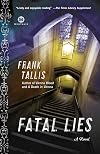
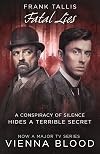
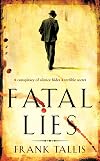
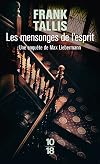
Vienna, 1903. At St. Florian's military school, a young cadet is found dead. Inspector Oskar Rheinhardt calls on his friend, Dr. Liebermann, to help him investigate.Tags
Recommendations




















Member Reviews
The saddest and most disturbing of Frank Tallis' series, The Lieberman Papers that chronicle the crime-solving adventures of Max Lieberman, the psychologist who serves as a police consultant for his friend Oskar Rheinhardt.
This story takes place in a boys school where students are programmed with the "wisdom" of Nietzsche just a bit too enthusiastically. Taking his work as not just justification, but almost a demand for bullying, some students are inflicting a reign of terror on the outcasts, the scholarship students and the Jews. Funny how Nietzsche continues to be an excuse for bullies to this day. Again, the roots of fascism are explored.
The solution, however, is more of a surprise than you might think. Just when you think you know show more the answer, well, you don't. As much as I love figuring out "whodunnit", I like it even more when I am outwitted. show less
This story takes place in a boys school where students are programmed with the "wisdom" of Nietzsche just a bit too enthusiastically. Taking his work as not just justification, but almost a demand for bullying, some students are inflicting a reign of terror on the outcasts, the scholarship students and the Jews. Funny how Nietzsche continues to be an excuse for bullies to this day. Again, the roots of fascism are explored.
The solution, however, is more of a surprise than you might think. Just when you think you know show more the answer, well, you don't. As much as I love figuring out "whodunnit", I like it even more when I am outwitted. show less
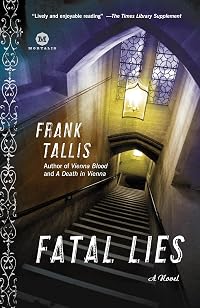
Fatal Lies is the third novel in Frank Tallis’ Liebermann Papers series, set in Vienna at the turn of the 20th Century. In this outing, Detective Inspector Rheinhardt is asked to look into the unexpected death of a young student at a nearby military academy, a place where prejudice and sadism are, if not explicitly encouraged, at least not seriously frowned upon by the school authorities. It seems that one such bully has relatives in high places, which creates difficulty for Rheinhardt, and he must turn to his friend, the Jewish psychiatrist Max Liebermann, for help. When a second boy disappears days after the two friends questioned him, our heroes realize that time is quickly running out if they wish to catch a killer…. As with the show more two previous books in this series, what interests me most about Fatal Lies is the way the author depicts Viennese society in 1903, showing both a rising nationalism amongst some high-powered individuals and an accompanying rise in anti-Semitism in what had been a relatively well assimilated city. As history, it seems pretty accurate, and as a mystery, the book captures the reader’s attention very well. Recommended - but it’s probably best to read the first two novels in the series before this one! show less
It was, in part, the inspiration of Robert Musil's novella, The Confusions of Young Torless, about a young cadet struggling toward self-definition while experiencing the erotic tensions of puberty, that led Frank Tallis to write the mystery novel Fatal Lies.
The heart of the mystery is the machinations a small group of cadets led by Kiefer Wolf, a precocious underclassman. They are attending a private boys' school, Saint Florian, that is replete with ancient traditions and eccentric teachers. It is this story line that draws on Musil's novella most directly with the addition of explicit Nietzschean influences on young Wolf. But the key to the success of Tallis' novel is his intelligent use of the setting of fin-de-siecle Vienna and the show more blend of medicine, music, psychology and history that makes this a satisfying read. The lead detective, Reinhardt and his ally, Dr. Max Liebermann, an expert in the new psychiatric methods of Sigmund Freud, are both intelligent and believable characters in this well-constructed mystery. Each of the main characters must deal with their own issues and their stories are only slightly less interesting than the primary mystery. I was eagerly apprehensive most of the novel as the plot and sub-plots moved forward with alacrity. The climax was also satisfying; So much so that I look forward to reading Tallis' two previous mysteries (also set in Vienna). show less
The heart of the mystery is the machinations a small group of cadets led by Kiefer Wolf, a precocious underclassman. They are attending a private boys' school, Saint Florian, that is replete with ancient traditions and eccentric teachers. It is this story line that draws on Musil's novella most directly with the addition of explicit Nietzschean influences on young Wolf. But the key to the success of Tallis' novel is his intelligent use of the setting of fin-de-siecle Vienna and the show more blend of medicine, music, psychology and history that makes this a satisfying read. The lead detective, Reinhardt and his ally, Dr. Max Liebermann, an expert in the new psychiatric methods of Sigmund Freud, are both intelligent and believable characters in this well-constructed mystery. Each of the main characters must deal with their own issues and their stories are only slightly less interesting than the primary mystery. I was eagerly apprehensive most of the novel as the plot and sub-plots moved forward with alacrity. The climax was also satisfying; So much so that I look forward to reading Tallis' two previous mysteries (also set in Vienna). show less
Much more concise and taut than the previous two books in this series, Fatal Lies begins with the death of a student at a Viennese military academy. Police inspector Oskar Rheinhardt is called away from a ball to go to the scene; he enlists his friend Max Liebermann, a psychiatrist to go with him. Max has been helpful in the past with his experience in Freudian psychology, and Rheinhardt is all for employing new methods in police procedure to better root out crime. The two don't realize it yet, but they are stepping into a very troubled atmosphere in the academy, where odd things are occurring and everyone is doing their best to cover things up.
Tallis plies his readers once again with the culinary, musical and literary delights of show more early 20th-century Vienna, yet manages to interweave all of these with the darkness of international intrigue and the deep and brooding atmosphere of a group of troubled boys. It is a good read, and one that's hard to put down once you get started.
I'd definitely recommend this one to readers of historical mysteries, as well as to those who have started this series and are considering moving through it. show less
Tallis plies his readers once again with the culinary, musical and literary delights of show more early 20th-century Vienna, yet manages to interweave all of these with the darkness of international intrigue and the deep and brooding atmosphere of a group of troubled boys. It is a good read, and one that's hard to put down once you get started.
I'd definitely recommend this one to readers of historical mysteries, as well as to those who have started this series and are considering moving through it. show less
Enjoyed this a good deal more than the first two and especially the second in the series. Still some far-fetched plotting and jamming-in-the-researched-facts, but in this one I found it to be fun and not annoying. It also definitely helped that I read this while on vacation in Vienna!
I found it very difficult to put down. While some areas were boring (as most books have that lull during some parts), the rest was exciting! You start reading it and think, “How on earth are these stories related?”. Keeping reading. You will eventually realize that everyone in the story knows everyone else. Everything is intertwined and you don’t realize that everything you see will end up somewhere else with a shocking turn. I didn’t want the book to end because I wanted to see if they would find out where he was or if he would eventually tell the truth. The only problem I had with this book was the German (yes, there are German words in here) and the words that seemed like another language to me, but they were in English. I show more don’t have as wide as a vocabulary as some readers so I was constantly writing words down so I can look them up at a later date. Other than that, I loved it! show less
C'est avec plaisir que l'on retrouve, dans ce troisième volume, l'inspecteur viennois et son ami psychiatre, aux prises cette fois, au meurtre d'un adolescent dans une école militaire. Machiavélisme, perversité et violence côtoient ici amitié, suspens et "air du temps".
Aug 28, 2014French
Members
- Recently Added By
Author Information

32+ Works 2,843 Members
Frank Tallis is a writer and practicing clinical psychologist, who has taught clinical psychology and neuroscience at the Institute of Psychiatry and Kings College in London. Dr. Tallis has published six nonfiction books, including Changing Minds, a history of psychotherapy, and many academic articles in international journals. He has also written show more two novels, for which he received a 1999 Writer's Award from the Arts Council of Great Britain and a 2000 New London Writer's Award from the London Arts Board. show less
Series

Common Knowledge
- Canonical title
- Fatal Lies
- Original publication date
- 2008-01-17
- People/Characters
- Max Liebermann; Oskar Rheinhardt; Amelia Lydgate; Victor von Bulow; Else Rheinhardt; Manfred Brügel (show all 24); Kiefer Wolf; Martin Drexler; Julius Eichmann; Bernhard Becker; Paul Lang; Klodwig Gärtner; Meta Zelenka; Fanousek Zelenka; Justinus Kerner; Stefan Kanner; Isidor Perger; Trezska Novak; Lázár Kiss; Leopoldine Becker; Gerold Sommer; Jószef Kálman; Alfred Rosé; Randall Pelletier-Lydgate
- Important places
- Vienna, Austria-Hungary
Classifications
Statistics
- Members
- 280
- Popularity
- 114,795
- Reviews
- 7
- Rating
- (3.67)
- Languages
- 5 — English, French, German, Polish, Portuguese
- Media
- Paper, Audiobook, Ebook
- ISBNs
- 19
- ASINs
- 7