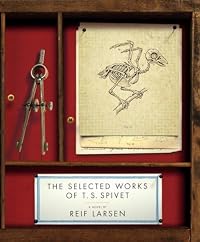
The Selected Works of T. S. Spivet
by Reif Larsen
On This Page
Description
This brilliant, boundary-leaping debut novel traces 12-year-old genius map-maker T.S. Spivet's attempts to understand the ways of the world, taking T.S. on a journey from his family ranch just north of Divide, Montana, to the Smithsonian's hallowed halls.Tags
Recommendations






Member Recommendations
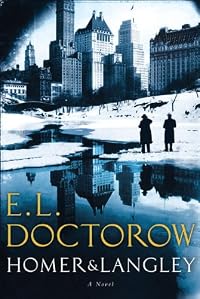
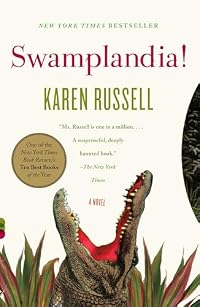
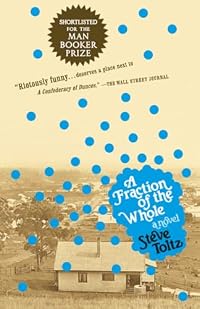
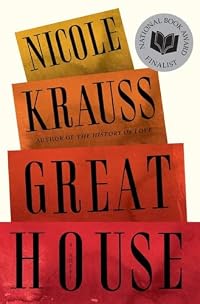
BookshelfMonstrosity The precocious young narrators in each of these novels embark on journeys alone, providing illustrations to enhance their complex narratives, which include family history as well as current concerns. T. S. travels across the U.S, while Oskar travels throughout New York City.
30
Member Reviews
Adult fiction. This is one that you have to read at a leisurely pace--you'll want to take the time to inspect and study T.S.' drawings and sociological maps, spotting the places where he lovingly hides his deceased brother's name in most of them. It drags a bit in the middle (during the retelling of his great-grandmother's life), but push through to the end and the conclusion of T.S.' fantastical journey.
An extraordinary book that defies categorisation. It purports to be the notes of a 12 year old boy prodigy who is obsessed with making "maps" (including all sorts of illustrations and diagrams, both literal representations and more metaphorical). Several are published in respected journals and when he unexpectedly wins a fellowship of the Smithsonian, he runs away from his family's ranch in Montana to attend the event and give a speech in Washington DC.
TS' life story
The first two thirds concern TS's life and journey, and the narrative is heavily annotated with notes and diagrams. His father is a cowboy rancher and his mother a somewhat detached entomologist he calls "Dr Clair". He is clever, analytical and talented, but still has toys, show more fears, and occasional imaginary conversations with inanimate objects.
As well as his own story, occasional mentions of his younger brother's death in a shooting accident gradually build up a sad sub-plot. There are also two long passages of biographical notes of an ancestor who was a pioneering female scientist; they were too substantial and thus intrusive for my taste.
Final stretch
The last third of the book is completely different and not nearly as good. It loses all credibility as the plot seems more like something from Dan Brown: a mysterious old man, secret societies, secret underground passages, wormholes and adults who ignore all aspects of caring for someone else's (injured) child. Very disappointing.
Enjoyable because
Nevertheless, there are delights in the book. The passion and compulsion of explaining things visually is wonderful:
"I think we are born with a map of the entire world in our heads... The patterns are already there and I see the map in my head and draw it... part of the reason I drew my maps in the first place: to return the unfamiliar to the familiar... an unfinished map always left a little tickle in the back of my throat."
Mapping is an act "of translation and transcendence":
"Aa map does not just chart, it unlocks and formulates meaning; it forms bridges between here and there, between disparate ideas that we didn't know were previously connected."
TS has a intuitive appreciation of landscape:
"The railway tracks cut straight ahead, asking no questions of the bedrock... the river talked with the land as it wound its way through the valley" versus "the serpentine geography of civilisation... a collective obsession with the comforting logic of right angles."
Less literally:
"The air was not filled with thought bubbles or sidelong glances. Everyone was sleeping, all of their ideas and hopes and hidden agendas entangled in the dream world."
There is humour too. He has
"The kind of mother who would teach you the periodic table while feeding you porridge but not the type, in this age of global terrorism and child kidnappers, to ask who might be calling her children."
And fear:
"Past midnight, sounds in old houses were no longer governed by the laws of cause and effect."
YA audience
Maybe this book would appeal more to 12 year old boys; I'm not sure. It reminds me a little of Mark Haddon's The Curious Incident of the Dog in the Night-time, and TS does have slight ASD tendencies (feeling uneasy about the "naked wooden square" of a pencil that was missing its rubber and grooved metal ring, for example).
In some ways, I think it only deserves 3*, but it is so original and so beautifully presented, that I've given it 4*.
See also
• For a magical-realist slant on map-making, see Alix E Harrow's short story, The Autobiography of a Traitor and a Half-Savage, which I reviewed HERE.
• The arrival of uninvited outsiders, plus a hired map-maker, change a remote English village forever. See my review of Jim Crace's Harvest HERE. show less
TS' life story
The first two thirds concern TS's life and journey, and the narrative is heavily annotated with notes and diagrams. His father is a cowboy rancher and his mother a somewhat detached entomologist he calls "Dr Clair". He is clever, analytical and talented, but still has toys, show more fears, and occasional imaginary conversations with inanimate objects.
As well as his own story, occasional mentions of his younger brother's death in a shooting accident gradually build up a sad sub-plot. There are also two long passages of biographical notes of an ancestor who was a pioneering female scientist; they were too substantial and thus intrusive for my taste.
Final stretch
The last third of the book is completely different and not nearly as good. It loses all credibility as the plot seems more like something from Dan Brown: a mysterious old man, secret societies, secret underground passages, wormholes and adults who ignore all aspects of caring for someone else's (injured) child. Very disappointing.
Enjoyable because
Nevertheless, there are delights in the book. The passion and compulsion of explaining things visually is wonderful:
"I think we are born with a map of the entire world in our heads... The patterns are already there and I see the map in my head and draw it... part of the reason I drew my maps in the first place: to return the unfamiliar to the familiar... an unfinished map always left a little tickle in the back of my throat."
Mapping is an act "of translation and transcendence":
"Aa map does not just chart, it unlocks and formulates meaning; it forms bridges between here and there, between disparate ideas that we didn't know were previously connected."
TS has a intuitive appreciation of landscape:
"The railway tracks cut straight ahead, asking no questions of the bedrock... the river talked with the land as it wound its way through the valley" versus "the serpentine geography of civilisation... a collective obsession with the comforting logic of right angles."
Less literally:
"The air was not filled with thought bubbles or sidelong glances. Everyone was sleeping, all of their ideas and hopes and hidden agendas entangled in the dream world."
There is humour too. He has
"The kind of mother who would teach you the periodic table while feeding you porridge but not the type, in this age of global terrorism and child kidnappers, to ask who might be calling her children."
And fear:
"Past midnight, sounds in old houses were no longer governed by the laws of cause and effect."
YA audience
Maybe this book would appeal more to 12 year old boys; I'm not sure. It reminds me a little of Mark Haddon's The Curious Incident of the Dog in the Night-time, and TS does have slight ASD tendencies (feeling uneasy about the "naked wooden square" of a pencil that was missing its rubber and grooved metal ring, for example).
In some ways, I think it only deserves 3*, but it is so original and so beautifully presented, that I've given it 4*.
See also
• For a magical-realist slant on map-making, see Alix E Harrow's short story, The Autobiography of a Traitor and a Half-Savage, which I reviewed HERE.
• The arrival of uninvited outsiders, plus a hired map-maker, change a remote English village forever. See my review of Jim Crace's Harvest HERE. show less
The Selected Works of T S Spivet is almost a paeon to science. It's longer than a paeon, of course, but it explores and acclaims the very joy of scientific discovery, the power that science has in ordering and understanding the world, and how important it is to not cloister science as the exclusive preserve of academia.
The story is exciting and funny. T S is a unique kind of boy, very clever, very inquisitive, and practical in a way that isn't very practical for his circumstances. He keeps notebooks on everything, analysing the world around him. He is misunderstood by his father. He is not really noticed by his mother. The one adult he feels close to has lied to him and for him without permission.
T S is 12 and at that junction where you show more are still young enough to need the security of adults' authority over your life but are also beginning to realise that adults are flawed and not always to be relied on. So T S begins to rely upon himself and sets out on a journey. It's a coming of age road trip. The language is delicious, wrapping similes and analogies around itself. The guileless honesty of T S makes him instantly likeable. He's a lot like Charlie Bucket.
There are a lot of facts in the book - scientific, historical, mathematical, artistic - and it reads like a really good popular documentary that presents these facts in an accessible way without patronising. I learned a lot about the continental divide and the division of the US into east and west based on whether water flows from the divide to the Atlantic or to the Pacific. I learnt something of the history of Montana mining towns. It's an adventure story that doesn't just rely on risk and tricky situations.
Illustrations drawn from T S' notebooks pepper the narrative as asides, revealing quirks of family history or providing context to a theorem or observation. These are often drily funny and make me think of the films of Wes Anderson. And then the introduction of T S' mother's notebook recording the biography of T S' great great grandmother made me think of novels like Possession - the unveiling of family mysteries and the revelation of family pioneers.
The book coincidentally made me realise how attached I am to things. Each time T S is in a situation where it looks like he might become separated from his suitcase, I grew anxious and had to force myself to concentrate on the story's progress, rather than on the 'what ifs' circling around my head. Things are important to me, then. Kind of in a similar way to T S. show less
The story is exciting and funny. T S is a unique kind of boy, very clever, very inquisitive, and practical in a way that isn't very practical for his circumstances. He keeps notebooks on everything, analysing the world around him. He is misunderstood by his father. He is not really noticed by his mother. The one adult he feels close to has lied to him and for him without permission.
T S is 12 and at that junction where you show more are still young enough to need the security of adults' authority over your life but are also beginning to realise that adults are flawed and not always to be relied on. So T S begins to rely upon himself and sets out on a journey. It's a coming of age road trip. The language is delicious, wrapping similes and analogies around itself. The guileless honesty of T S makes him instantly likeable. He's a lot like Charlie Bucket.
There are a lot of facts in the book - scientific, historical, mathematical, artistic - and it reads like a really good popular documentary that presents these facts in an accessible way without patronising. I learned a lot about the continental divide and the division of the US into east and west based on whether water flows from the divide to the Atlantic or to the Pacific. I learnt something of the history of Montana mining towns. It's an adventure story that doesn't just rely on risk and tricky situations.
Illustrations drawn from T S' notebooks pepper the narrative as asides, revealing quirks of family history or providing context to a theorem or observation. These are often drily funny and make me think of the films of Wes Anderson. And then the introduction of T S' mother's notebook recording the biography of T S' great great grandmother made me think of novels like Possession - the unveiling of family mysteries and the revelation of family pioneers.
The book coincidentally made me realise how attached I am to things. Each time T S is in a situation where it looks like he might become separated from his suitcase, I grew anxious and had to force myself to concentrate on the story's progress, rather than on the 'what ifs' circling around my head. Things are important to me, then. Kind of in a similar way to T S. show less
I'm usually very deliberate about my book rankings. I think about what I like and what I didn't like and assign and deduct points to come up with a final opinion. The Selected Works of T.S. Spivet is NOT that kind of book. T.S. Spivet gets five stars for the room-feeling of the book. Yes, it deserves them for introducing concepts such as room-feelings, for its unique approach, and for its gutsy nature. Yes, it deserves high recognition for depicting the portrait of the scientist as a young man - the coming of age of one young scientist from a obsessive prodigy who values science above all else into a nuanced adult who seeks to be a part of the world as well as depict it. It is amazing to me that I have never even heard of another book show more focusing on the development of a scientific mindset within a character in a way that is nuanced and treats science respectfully, rather than a foil for robotic rationalism or an idol for intelligence. Larsen uses every single trope of a conventional coming of age story, which adds to the power.
12 is such a perfect age for a child protagonist. Larsen depicts the emergent adulthood of a 12 year old almost perfectly (there are a few stumbles). Like a true tween, T.S. at times acts like an adult and at others acts like a toddler, with very few in between moments. It's rare to capture the true granular nature of coming of age, where childhood falls away chunk-by-chunk and memes of adult life settle in, rather than as a linear progression.
But despite all of that, the best thing about T.S. Spivet is simply a ton of fun. We're having a bad week at work. Everyone is cranky. Usually, the worse of a mood I'm in, the less I read (and the more I use pure escapism that doesn't require reflection) But even after long, cranky calls, all I wanted to do was read about T.S. I laughed out loud at points on his reflection on adulthood, science and cross-country travel. I flipped through to find my favorite illustrations. I smiled when he name-checked Paul Ekman (a Duchenne smile, of course.) Pure enjoyment.
There are a lot of criticisms that one could level at T.S. Spivet: it is a pretentious novel, built on a schtick. In fact, built on a ton of schticks. It's like someone got a deal on schticks: there's the child protagonist, who is a prodigy, and may also have an autistic spectrum disorder, the maps/illustrations, secret societies, a book-within-a-book, just to name in a few. Luckily, I am a sucker for pretentious novels built on schticks, so it is going to go right next to Special Topics in Calamity Physics on my shelf.
More bitingly, there are several narrative threads in T.S. Spivet that never satisfyingly come together on the level of the plot: the Emma thread, the Mother as a Writer and Mother but Not as a Scientist thread, the Wormhole thread and to be honest, the Layton is Dead thread. They are all tied up from a thematic level, but I would have liked more literal closure. show less
12 is such a perfect age for a child protagonist. Larsen depicts the emergent adulthood of a 12 year old almost perfectly (there are a few stumbles). Like a true tween, T.S. at times acts like an adult and at others acts like a toddler, with very few in between moments. It's rare to capture the true granular nature of coming of age, where childhood falls away chunk-by-chunk and memes of adult life settle in, rather than as a linear progression.
But despite all of that, the best thing about T.S. Spivet is simply a ton of fun. We're having a bad week at work. Everyone is cranky. Usually, the worse of a mood I'm in, the less I read (and the more I use pure escapism that doesn't require reflection) But even after long, cranky calls, all I wanted to do was read about T.S. I laughed out loud at points on his reflection on adulthood, science and cross-country travel. I flipped through to find my favorite illustrations. I smiled when he name-checked Paul Ekman (a Duchenne smile, of course.) Pure enjoyment.
There are a lot of criticisms that one could level at T.S. Spivet: it is a pretentious novel, built on a schtick. In fact, built on a ton of schticks. It's like someone got a deal on schticks: there's the child protagonist, who is a prodigy, and may also have an autistic spectrum disorder, the maps/illustrations, secret societies, a book-within-a-book, just to name in a few. Luckily, I am a sucker for pretentious novels built on schticks, so it is going to go right next to Special Topics in Calamity Physics on my shelf.
More bitingly, there are several narrative threads in T.S. Spivet that never satisfyingly come together on the level of the plot: the Emma thread, the Mother as a Writer and Mother but Not as a Scientist thread, the Wormhole thread and to be honest, the Layton is Dead thread. They are all tied up from a thematic level, but I would have liked more literal closure. show less
I needed to read this one sooner after hearing it would be a Jean-Pierre Jeunet film - the director responsible for the amazing Amelie. Off the shelf and into my hands it goes. The book is built in with plenty of room for sidebars (mostly scientific but also fun notes like the easiest way to beat the Oregon Trail game), all of them enjoyable. Tecumseh Sparrow Spivet is a scientific twelve year old in Montana that doesn't feel he really fits on the ranch with his cowboy/rancher father. It's a little easier that his mother is a scientist, looking for years for the Tiger Monk beetle that might not exist. "The world inside these tall grasses was not just a land of make believe: it was the unofficial borderland between scientific observation show more and the practical business of running a ranch."(page 37) It's slowly revealed early on that T.S.'s younger brother has died and his older sister is also feeling lost on the ranch. T.S. wins the Baird award for his excellent mapping and drawing skills and is invited to Washington D.C. to accept the award, so onto a train he hops like a drifter. Everything does not go as planned (as good as planning as a drifter could go, I guess). Within the plot is also a journal that T.S.'s mother has secretly written - an imagined life story of T.S.'s great-great-grandmother - one of the first female geologists. An imagined speech about accepting all scientists - ignoring their race, gender, or religion doesn't mention the age of the scientist - a hurdle for her future grandchild (and something T.S.'s mother should have thought of). T.S. is such a great character. Really, all of them are. When T.S.'s father speaks, he says the most hilarious things (ie "Crick's drier than a mummy's pocket.") I liked the characters and sidebars more than the plot.
The book reminds me of Wes Anderson films. T.S. could almost be the kid from Moonrise Kingdom. This book can go in the kids-go-on-seemingly-impossible-journeys-usually-motivated-in-part-by-death category like Jonathan Safran Foer's 'Extremely Loud and Incredibly Close' or Karen Russell's 'Swamplandia'. A drifter speaking with T.S. even mentioned meeting a family of alligator wrestlers in Florida, which I thought could be a shout out to Russell's book - but that one was released in 2011 while this one was released in 2009. Maybe Karen Russell got the idea for her novel from the drifter? show less
The book reminds me of Wes Anderson films. T.S. could almost be the kid from Moonrise Kingdom. This book can go in the kids-go-on-seemingly-impossible-journeys-usually-motivated-in-part-by-death category like Jonathan Safran Foer's 'Extremely Loud and Incredibly Close' or Karen Russell's 'Swamplandia'. A drifter speaking with T.S. even mentioned meeting a family of alligator wrestlers in Florida, which I thought could be a shout out to Russell's book - but that one was released in 2011 while this one was released in 2009. Maybe Karen Russell got the idea for her novel from the drifter? show less
Reif Larsen’s Selected Works of T.S. Spivet is all at once a bildungsroman, an adventure tale, and a poignant look at history and loss. The Spivets are a quiet family. Each character almost becomes a caricature, but he toes the line rather well. The Spivets’ third child, Layton, died in a gun accident on the ranch and all the members feel his loss in their own way. One day, while mapping his sister de-husking corn on the ranch, T.S. gets a call from the Smithsonian notifying him that he has won the Baird Fellowship. Expecting very little help from his family, he runs away, hops a train, and begins a trek of both inward and outward exploration. On the way, he learns more about both his living and deceased ancestors, encounters real show more danger, and comes to terms with his brother’s death. Perhaps my favorite part was how young T.S. spoke. You can tell he’s precocious but not obnoxious. His language can only represent what he has experienced, and the author is careful not to put too lofty a phrase in his speeches. All in all, a pleasant and unexpected read. show less
I really, really want this to be a 5-star book! It is, in so many ways - the travel narrative, the main character, the science... Most of this book is an absolute delight!
And then comes Part 3. It just ruined the book for me. Not only was the plot of this section entirely contrived, but it succeeded in making the plot of Parts 1 & 2 entirely contrived in retrospect. Oh, everyone already knew! (So what's the point of letting things unfold in this massively convoluted way?) And look - a secretive conspiratorial organization that plays utterly no essential role in the narrative!
Seriously?
In the end, the author tried way too hard to be clever. If he'd just let go and tried to do nothing more than tell a good story, this book would have show more rocketed to the top of my list of all-time favorite novels! This book came so close to being great. Which just makes its failings all the more disappointing. show less
And then comes Part 3. It just ruined the book for me. Not only was the plot of this section entirely contrived, but it succeeded in making the plot of Parts 1 & 2 entirely contrived in retrospect. Oh, everyone already knew! (So what's the point of letting things unfold in this massively convoluted way?) And look - a secretive conspiratorial organization that plays utterly no essential role in the narrative!
Seriously?
In the end, the author tried way too hard to be clever. If he'd just let go and tried to do nothing more than tell a good story, this book would have show more rocketed to the top of my list of all-time favorite novels! This book came so close to being great. Which just makes its failings all the more disappointing. show less
Members
- Recently Added By
Lists

child hero ~ adult novel
60 works; 12 members

1001 Children's Books You Must Read Before You Grow Up
774 works; 101 members

Books Read in 2016
4,666 works; 197 members

First Novels
373 works; 16 members

Books We Discovered On LibraryThing
530 works; 130 members

Experimental Literature
141 works; 18 members
Author Information

5+ Works 2,696 Members
Awards and Honors
Work Relationships
Common Knowledge
- Canonical title
- The Selected Works of T. S. Spivet
- Original title
- .
- Original publication date
- 2009-05-09
- People/Characters
- T. S. Spivet
- Important places
- Butte, Montana, USA; Washington, D.C., USA; Smithsonian, Washington, D.C., USA
- Epigraph
- "It is not down in any map; true places never are." -Herman Melville, Moby-Dick
- Dedication
- For Katie
- First words
- The phone call came late one August afternoon as my older sister Gracie and I sat out on the back porch shucking the sweet corn into the big tin buckets.
- Quotations
- "Angela Ashford says [AIDS] are bad and that I probably have 'em."
Dr. Clair looked at Layton. The mancala pieces were still in her hand.
"If Angela Ashford ever says anything like that to you ever again, you ... (show all)tell her that just because she's insecure about being a little girl in a society that puts an inordinate amount of pressure on little girls to live up to certain physical, emotional, and ideological standards- many of which are improper, unhealthy, and self-perpetuating- it doesn't mean she has to take her misplaced self-loathing out on a nice boy like you. You may be inherently part of the problem, but that doesn't mean you aren't a nice boy with nice manners, and it certainly doesn't mean you have AIDS."
"I'm not sure I can remember all that," Layton said.
"Well then, tell Angela that her mother is a white-trash drunk from Butte." p. 37
I do love the sound of ripping corn husks. The violence of the noise, the sustained popping and shoring of the silky organic threads, made me think of someone tearing up an expensive and potentially Italian set of trousers in... (show all) a fit of madness that this person might just regret later. p. 10
The moment that latch on my door ticked shut, I began agonizing. For the art of packing I changed into an athletic costume complete with sweatband and kneepads. This was going to be more difficult than the President's Fitness... (show all) Challenge, in which I couldn't manage a single pull-up.
I put a little Brahms on the record player to calm the nerves. p. 77
How lucky I was to have grown up on such a ranch, such a castle of imagination, where hounds gnawed on bones and the mountains signed with the weight of the heavens on their backs. p. 350
"... A map does not just chart, it unlocks and formulates meaning; it forms bridges between here and there, between disparate ideas that we did not know were previously connected. To do this right is very difficult." - Mr. Be... (show all)nefideo, p. 138
Everywhere in the Sett'ng Room there were fading and faded photographs of nameless men on nameless horses. Soapy Williams riding crazy old Firefly, his elastic frame impossibly twisted yet still somehow clinging to the back o... (show all)f the bucking beast. It was like looking at a good marriage.
My father saw conversing as a chore, like shoeing a horse: it was not done for enjoyment; it was done when it needed to be done.
Dr. Clair was the kind of mother who would teach you the periodic table while feeding you porridge as an infant but not the type, in this age of global terrorism and child kidnappers, to ask who might be calling her children ... (show all)on the telephone. - Last words
- (Click to show. Warning: May contain spoilers.)Then my hands were on the door. I hesitated. My father clucked his tongue and gave me a nod. I pushed open the door and walked into the light.
- Blurbers
- King, Stephen; Shteyngart, Gary
Classifications
Statistics
- Members
- 2,305
- Popularity
- 8,570
- Reviews
- 109
- Rating
- (3.89)
- Languages
- 14 — Chinese, Czech, Danish, Dutch, English, French, German, Italian, Japanese, Portuguese, Romanian, Spanish, Swedish, Turkish
- Media
- Paper, Audiobook, Ebook
- ISBNs
- 40
- ASINs
- 12