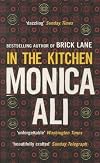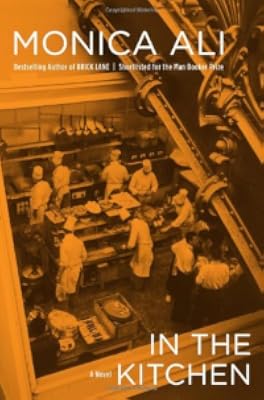
In the Kitchen
by Monica Ali
On This Page
Description
Gabriel Lightfoot, the executive chef at the posh Imperial Hotel, has more than one pot set to boil over. Beside the unusual nuisance of brash diners, unpredictable kitchen staff, and an absolute ogre of a genreal manager, Gabriel finds further difficulty just under his nose when a Ukranian porter turns up dead. Throw in a mysterious woman from Belarus, add a dash of family trauma, and it's obvious the beleagured chef is overseeing a complicated menu that even he might not be able to master.Tags
Recommendations




































Member Reviews
This is Monica Ali's third book, following a brilliant debut, “Brick Lane,” and a not-very-well-received second effort, “Alentejo Blue.” She is a wonderful writer, whose talents are on vivid display in “In the Kitchen.” I've never been in a high-end restaurant kitchen or watched a reality show set in one but the world Ali has created -- a volatile mix of polyglot personalities and just-barely-contained chaos – strikes me as completely realistic and beautifully rendered.
The Imperial Hotel is well past its heyday but its elegant restaurant attracts London's movers and shakers. Executive chef Gabe Lightfoot, the novel's protagonist, runs a tight ship and appears poised for breakout success. He has a beautiful girlfriend to show more whom he is about to propose marriage and well-heeled partners who are ready to back him in achieving his dream of opening his own bistro, which he envisions filling a niche by bringing back perfectly executed classic French cuisine.
In retrospect, Gabe thinks it all started going downhill when Yuri, the restaurant's Ukrainian night porter, was found dead in the hotel basement. But this isn't a classic mystery; the events that follow aren't threads that expose sinister schemes and motives that led to Yuri's death. What Yuri's death exposes is the fragility of Gabe's psyche, as he suffers nightmares that ultimately rob him of sleep entirely, gets involved with a fragile but wily Belorussian restaurant employee, destroys his relationship with his girlfriend and copes with a dying father and the legacy of a bipolar mother.
Not much happens in the first third or so of the book. I was at first captivated by Ali's pitch-perfect prose in describing the restaurant kitchen and its cast of characters. (Oona, the motherly West Indian deputy chef, is priceless.) But I was thinking that I knew as much about these people as I needed to just about the time the action finally gets under way. When it does, we are on a wild ride that, although told in the third person, has us inside Gabe's head as he becomes more and more unhinged.
Along the way, there are bits of plot involving sex trade and slave labor although these seem less integral parts of the story than contrivances to illustrate the plight of immigrants. There are also beautifully written sections that take Gabe from multicultural London to the Midlands mill town where he grew up and where his father, grandmother and sister still live. The glimpses of Gabe’s childhood and the lengthy exposition of the pressures on him provide plenty of support for Gabe’s breakdown but the events that occur as he careens out of control and his rapid regaining of his senses strain credulity.
This book is not an unqualified success; the narrative is sometimes sluggish and the plot not always plausible. But Monica Ali is one of those superb writers who are always worth reading even when not at their best and “In the Kitchen” is a worthy addition to her work. show less
The Imperial Hotel is well past its heyday but its elegant restaurant attracts London's movers and shakers. Executive chef Gabe Lightfoot, the novel's protagonist, runs a tight ship and appears poised for breakout success. He has a beautiful girlfriend to show more whom he is about to propose marriage and well-heeled partners who are ready to back him in achieving his dream of opening his own bistro, which he envisions filling a niche by bringing back perfectly executed classic French cuisine.
In retrospect, Gabe thinks it all started going downhill when Yuri, the restaurant's Ukrainian night porter, was found dead in the hotel basement. But this isn't a classic mystery; the events that follow aren't threads that expose sinister schemes and motives that led to Yuri's death. What Yuri's death exposes is the fragility of Gabe's psyche, as he suffers nightmares that ultimately rob him of sleep entirely, gets involved with a fragile but wily Belorussian restaurant employee, destroys his relationship with his girlfriend and copes with a dying father and the legacy of a bipolar mother.
Not much happens in the first third or so of the book. I was at first captivated by Ali's pitch-perfect prose in describing the restaurant kitchen and its cast of characters. (Oona, the motherly West Indian deputy chef, is priceless.) But I was thinking that I knew as much about these people as I needed to just about the time the action finally gets under way. When it does, we are on a wild ride that, although told in the third person, has us inside Gabe's head as he becomes more and more unhinged.
Along the way, there are bits of plot involving sex trade and slave labor although these seem less integral parts of the story than contrivances to illustrate the plight of immigrants. There are also beautifully written sections that take Gabe from multicultural London to the Midlands mill town where he grew up and where his father, grandmother and sister still live. The glimpses of Gabe’s childhood and the lengthy exposition of the pressures on him provide plenty of support for Gabe’s breakdown but the events that occur as he careens out of control and his rapid regaining of his senses strain credulity.
This book is not an unqualified success; the narrative is sometimes sluggish and the plot not always plausible. But Monica Ali is one of those superb writers who are always worth reading even when not at their best and “In the Kitchen” is a worthy addition to her work. show less
 This review was written for LibraryThing Early Reviewers.
A brief synopsis might state this is a novel about a middle-aged chef in London who hopes to run his own restaurant but first has to deal with an employee’s death. That would be doing short shrift to the underlying themes. The obvious sub-theme is the trafficking in illegal workers. Although this is set in England, we Americans shouldn’t fool ourselves that it doesn’t happen here. Another, more subtle, theme has to do with the lies we tell ourselves, and how much our lives are influenced by how we remember our past. The truth/lie dichotomy is also found in his internal defensiveness about the lies he tells at work, and wondering whether he is a bad role model vs. whether he is providing a good lesson to his subordinates on how to show more get ahead in the business. Less pervasive, but important to the character’s development, is his struggle to determine where the limits of his responsibilities are, whether he lowers his moral standards when he closes his eyes to problems.
Around mid-book it became difficult to continue reading pages and pages of Gabe’s stressed out thoughts and actions, and his inability to reach out for help. I had to keep putting the book down, taking a break. When I finally realized what a masterful job the author was doing at portraying a midlife crisis, I became motivated to finish the book. The ending was unexpected, but, in a way, is a Zen resolution: when we step out of ourselves we can become attuned to the larger picture. show less
Around mid-book it became difficult to continue reading pages and pages of Gabe’s stressed out thoughts and actions, and his inability to reach out for help. I had to keep putting the book down, taking a break. When I finally realized what a masterful job the author was doing at portraying a midlife crisis, I became motivated to finish the book. The ending was unexpected, but, in a way, is a Zen resolution: when we step out of ourselves we can become attuned to the larger picture. show less
Hmm. Not easy to crystalise my thoughts about this. Its one of those books where although the characters are well drawn, its hard to care for any of them. Gabe, the head chef is clearly trying to force himself to commit - to a new restaurant, to a marriage, and has clearly been spending years in avoidance - of his past and his family. Will he finally grow up? He does, but its only through a crisis brought on by an unlikely relationship with Lena, the runaway, illegal, Eastern European porter that the crisis that forces him to grow up is brought on. Yet, I found it hard to care. Ali's heart is in the right place and the points she has to make about bonded labour, people trafficking, the miseries of the immigrant experience and the show more obscenity of food being sold at absurdly inflated prices vs the abject circumstances of those producing it are well made. She may yet end up being a Zola for our times. But still, I didn't really care
Perhaps one of the problems were the "Northern" sections of the book; I had recently read "The Northern Clemency" - and there are a lot of parallels in the characters particularly the character of Gabe's mother. Brian Thompson's "Keeping Mum" also has many parallels; perhaps I had just read these books too close to each other, but I felt as though I could anticipate most of what was going to happen at the Lightfoot household. But the sections on the weaving business were good - and the changes to the immigrant experience as encapsulated through the changes from a manufacturing to a service economy were again, well described.
But still I ultimately wasn't interested in the characters. Sorry show less
Perhaps one of the problems were the "Northern" sections of the book; I had recently read "The Northern Clemency" - and there are a lot of parallels in the characters particularly the character of Gabe's mother. Brian Thompson's "Keeping Mum" also has many parallels; perhaps I had just read these books too close to each other, but I felt as though I could anticipate most of what was going to happen at the Lightfoot household. But the sections on the weaving business were good - and the changes to the immigrant experience as encapsulated through the changes from a manufacturing to a service economy were again, well described.
But still I ultimately wasn't interested in the characters. Sorry show less
Many of the reviewers here didn't like it -- many thought Ali's _Brick Lane_ was far better. I can't wait to read that because I really loved this! The characterization of Gabriel Lightfoot -- the executive chef in midlife, who unravels personally and professionally in a bipolar episode that the reader sees from Gabe's POV -- was brilliant. As a citizen of the U.S., I found the discussion of political and economic realities of Britain then and now to be interesting and relevant. In general I found the book page-turningly suspenseful -- will it turn out that the restaurant porter was murdered? What are Gabe's underling Ivan and his colleague Gleeson up to? How is Gabe going to find out and what's he going to do about it?
In The Kitchen by Monica Ali was like a good-looking, sweet-smelling dessert that held so much promise – until you sunk your teeth into it. Despite its delectable exterior, it turned out to be a book with little taste or appeal.
The recipe was classic. Gabriel Lightfoot was on the brink of culinary success, entering into a business agreement with investors for his own restaurant and involved in a promising relationship with the perfect woman. Then, one night, one of his porters died in the restaurant’s cellar, marking a downward spiral for Gabriel – his life methodically spinning out of control.
As if watching a character deteriorate was not hard enough, it was even harder to read how Gabriel made no attempt to get his life back show more together. His affair with Lena, a stone-cold wisp of a woman, and his treatment of his dying father did little to add to Gabriel’s plight – or his likeability. Not every character has to be likeable, but at least there should be a purpose in his general “unlikeability,” and I struggled to find that purpose in Gabriel.
I do applaud Ali’s attempts to elucidate the issues of immigration, sex trade and xenophobia in this story, but it was not enough. Her themes were right, but the story wasn’t.
While I had issues with the characterization and the plot, Ali’s writing was superb, and I do plan on reading more by this author. Simply put, In the Kitchen was not the story for me. show less
The recipe was classic. Gabriel Lightfoot was on the brink of culinary success, entering into a business agreement with investors for his own restaurant and involved in a promising relationship with the perfect woman. Then, one night, one of his porters died in the restaurant’s cellar, marking a downward spiral for Gabriel – his life methodically spinning out of control.
As if watching a character deteriorate was not hard enough, it was even harder to read how Gabriel made no attempt to get his life back show more together. His affair with Lena, a stone-cold wisp of a woman, and his treatment of his dying father did little to add to Gabriel’s plight – or his likeability. Not every character has to be likeable, but at least there should be a purpose in his general “unlikeability,” and I struggled to find that purpose in Gabriel.
I do applaud Ali’s attempts to elucidate the issues of immigration, sex trade and xenophobia in this story, but it was not enough. Her themes were right, but the story wasn’t.
While I had issues with the characterization and the plot, Ali’s writing was superb, and I do plan on reading more by this author. Simply put, In the Kitchen was not the story for me. show less
This review was written for LibraryThing Early Reviewers.First I have to say that I absolutely loved Ali's first book, Brick Lane. The movie that followed was also very good so I was really looking forward to this book. Somehow, all the things I loved about Brick Lane, the immigrant experience, treatment of women, rich character development and a terrifcally absorbing storyline were totally missing form this book. On top of that, instead of building interest, the book seemed to reach its peak about midway through and then recklessly slide into the abyss. The main character, Gabriel, was totally unlikeable, which is not always a detriment to a book but in this case his lack of appeal was so overwhelming that I could barely force myself to finish. Not recommended.
This review was written for LibraryThing Early Reviewers.After the success of her debut “Brick Lane”, Monica Ali revisits the immigrant experience in this her third novel. This time though, the location is a central London hotel’s restaurant kitchen and its working life. Ali’s prose captures the teamwork of the assortment of nationalities with their different temperaments and makes you feel the tensions and heat of their working environment.
The executive chef, Gabriel Lightfoot, struggles to keep the team on track as well as worrying about his elderly, unwell father and his poor relationship with him and at the same time trying to finalise plans to open his own restaurant in order to fulfil a long-held ambition. Ali reveals the pressures building on him and his mental equilibrium is show more thrown off balance by revelations about his dead brother and his suspicions about the activities of some of the hotel and kitchen staff.
These challenges build to an intense climax where Ali’s writing steers you to an ambiguous ending and Gabriel faces an uncertain future. show less
The executive chef, Gabriel Lightfoot, struggles to keep the team on track as well as worrying about his elderly, unwell father and his poor relationship with him and at the same time trying to finalise plans to open his own restaurant in order to fulfil a long-held ambition. Ali reveals the pressures building on him and his mental equilibrium is show more thrown off balance by revelations about his dead brother and his suspicions about the activities of some of the hotel and kitchen staff.
These challenges build to an intense climax where Ali’s writing steers you to an ambiguous ending and Gabriel faces an uncertain future. show less
Members
- Recently Added By
Published Reviews
ThingScore 50
Monica Ali’s main themes are already coming into focus. “In the Kitchen,” like her wildly successful first novel, “Brick Lane,” takes on multicultural, postcolonial Britain. What does it look and sound like? Who gets included? What are its prospects?
added by LiteraryFiction
This novel also demonstrates some of the strengths of her first work. There is much pleasure to be had in the lovingly crafted characters, the vivid scenes and the generously comic eye that lurks even in a novel detailing great human tragedy.
However, these many strengths do not constitute a thoroughly engaging whole, largely because of a lack of narrative drive. Perhaps in an attempt to mirror show more Gabe's uncertainty and vacillation, the story lurches erratically and stalls repeatedly.
One of the recurring ideas in the novel is the nature of choice in life - the degree to which one can shape one's own destiny. But however shapeless real life may be, readers can be unforgiving of novels with a real-life plot structure and, as a literary conceit, it is old news.
The thematic development is also clunky, with many of the characters' conversations on capital-T themes seeming tacked-on and didactic.
Ali furnishes Gabe's kitchen with the intellectual Nikolai, a refugee doctor forced to become a junior chef, and his conversations with the increasingly manic Gabe recall the Socratic discussion of a philosophy tutorial.
Towards the end, the plot finally gathers momentum, indicating that some vigorous pruning would have released the story and made for a more absorbing novel.
As it is, too many readers will be lost in the swirls of Gabe's erratic breakdown, which is unfortunate because this writer's many talents could have made for another critical and popular success show less
However, these many strengths do not constitute a thoroughly engaging whole, largely because of a lack of narrative drive. Perhaps in an attempt to mirror show more Gabe's uncertainty and vacillation, the story lurches erratically and stalls repeatedly.
One of the recurring ideas in the novel is the nature of choice in life - the degree to which one can shape one's own destiny. But however shapeless real life may be, readers can be unforgiving of novels with a real-life plot structure and, as a literary conceit, it is old news.
The thematic development is also clunky, with many of the characters' conversations on capital-T themes seeming tacked-on and didactic.
Ali furnishes Gabe's kitchen with the intellectual Nikolai, a refugee doctor forced to become a junior chef, and his conversations with the increasingly manic Gabe recall the Socratic discussion of a philosophy tutorial.
Towards the end, the plot finally gathers momentum, indicating that some vigorous pruning would have released the story and made for a more absorbing novel.
As it is, too many readers will be lost in the swirls of Gabe's erratic breakdown, which is unfortunate because this writer's many talents could have made for another critical and popular success show less
added by crgalvin
Lists

Biggest Disappointments
606 works; 168 members

A Smorgasbord of Culinary Fiction
221 works; 94 members
Author Information

5+ Works 7,693 Members
Monica Ali was born October 20, 1967. She is a British writer of Bangladeshi origin. She is the author of Brick Lane, her debut novel, which was shortlisted for the Man Booker Prize for Fiction in 2003. (Bowker Author Biography)
Some Editions
Awards and Honors
Distinctions
Common Knowledge
- Canonical title
- In the Kitchen
- Original title
- In the kitchen
- Original publication date
- 2009
Classifications
Statistics
- Members
- 642
- Popularity
- 45,005
- Reviews
- 43
- Rating
- (2.93)
- Languages
- 9 — Danish, Dutch, English, French, German, Italian, Norwegian (Bokmål), Spanish, Swedish
- Media
- Paper, Audiobook, Ebook
- ISBNs
- 33
- ASINs
- 7