On This Page
Description
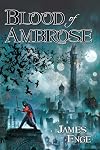
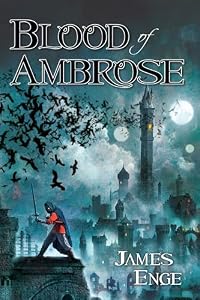
In a remote city on the edge of two worlds, where blood has power and water is more precious than freedom, three far-flung friends unite on a quest to save their families. Sal Hrvati's estranged father has brought more into the world than the woman he loved. Instead of saving her from the Void Beneath, he has summoned an unknown creature -- a creature with a mission of its own and a past that stretches back to the beginning of the world. The quest to find both of them entangles Sal and his show more companions in a hunt for magical treasure on the floor of the Divide, a mighty crack in the earth inhabited by creatures that are not remotely human. Desert landscapes and dirigibles feature in a fast-paced fantasy that combines romance, adventure, and humor with an original take on magic.The Books of the Cataclysm take inspiration from many arcane and mythological sources. In positing that this world is just one of many "realms," three of which are inhabited by humans during various stages of their lives, it begins in the present world but soon propels the reader to a landscape that is simultaneously familiar and fantastic.
. show less
Tags
Recommendations








Member Reviews
Blood of Ambrose is an enjoyable different sword-and-sorcery novel - a bit of a throwback in many ways. Enge has created an interesting cast of characters and a narrative with a nice pace to it.I'm looking forward to further entries in the series.
The King of Ambrose has always relied on help from the semi-mortal Ambrosius siblings - powerful wizards with a swarm of legends trailing them. Just as well, as the young King as been usurped, and he will need every ounce of creativity his "uncle" and "aunty" can bring to regain, and retain, his throne.
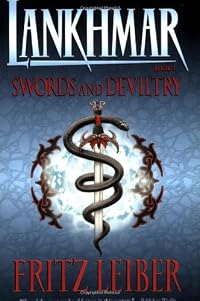
I enjoyed this novel. Enge is one of a growing number of fantasy writers writers, not outside genre per se, but certainly distinct from the prevailing trends. The antecedents of Blood of show more Ambrose are earlier fantasy novels. There's a kind of humour and Vance-ian touch to proceedings, and also a clear debt to Fritz Leiber.
As it happens, I love those older authors and their style of fantasy, so I felt right at home with Blood of Ambrose. This was Enge's first novel, and there are a few rough corners (the prose gets a little unfinished at times), but there's a solid base underneath it all.
That base is the characterisation. The Ambrose siblings, Morlock and Ambrosia, are well-drawn, interesting, and call back to a very rich history during the course of this book. Enge is happy to keep some cards off the table, and it makes for a complexity and ambiguity that really bodes well for the future books in the series.
Morlock in particular, is a tortured, and flawed figure who is always compelling. Enge resist silly hyperbole when it comes to these flaws - something a lot of fantasy writers succumb to, and it keeps the character fresh and his responses unpredictable.
A great start for a debut novel and first in a series. I'll definitely read more. show less
The King of Ambrose has always relied on help from the semi-mortal Ambrosius siblings - powerful wizards with a swarm of legends trailing them. Just as well, as the young King as been usurped, and he will need every ounce of creativity his "uncle" and "aunty" can bring to regain, and retain, his throne.
I enjoyed this novel. Enge is one of a growing number of fantasy writers writers, not outside genre per se, but certainly distinct from the prevailing trends. The antecedents of Blood of show more Ambrose are earlier fantasy novels. There's a kind of humour and Vance-ian touch to proceedings, and also a clear debt to Fritz Leiber.
As it happens, I love those older authors and their style of fantasy, so I felt right at home with Blood of Ambrose. This was Enge's first novel, and there are a few rough corners (the prose gets a little unfinished at times), but there's a solid base underneath it all.
That base is the characterisation. The Ambrose siblings, Morlock and Ambrosia, are well-drawn, interesting, and call back to a very rich history during the course of this book. Enge is happy to keep some cards off the table, and it makes for a complexity and ambiguity that really bodes well for the future books in the series.
Morlock in particular, is a tortured, and flawed figure who is always compelling. Enge resist silly hyperbole when it comes to these flaws - something a lot of fantasy writers succumb to, and it keeps the character fresh and his responses unpredictable.
A great start for a debut novel and first in a series. I'll definitely read more. show less
The concept and characters of this book are far stronger than the writing and execution. Which is a pity, because the characters and concept are very, very promising.
The Empire is threatened twice - there's an internal threat, from the Protector who seeks to "protect" the country a little too well, arranging for the death of the Empress and stealing power from the very young King - as well as an external threat, from a mysterious "Shadow" that was bolstering the Protector. The first half of the book deals with the King's overthrow and the events that bring his immortal ancestors, Morlock and Ambrosia, into the city and to his aid. The second half deals with the discovery of the Shadow and his creepy necromantic acts, and his attempts to show more take over not just the Empire, but the world.
The world and its magical systems are fascinating - there's ties to Arthurian England, odd hints of immortality and spiritual magic, and all sorts of cool quasi-magical, quasi-mechanical creations wandering about. There's illusions, and alchemy, and smithery - phlogiston plays a major part in several areas, and dephlogistonating something seems to be an activity reserved for an excellent smith (or Maker) that also has psychic abilities. Fascinating concepts, all, and they're well applied against a backdrop of political machinations and coming-of-age.
The characters are unusual and engrossing, especially Ambrosia. She's an impossibly strong, dominant female character, the sort you don't see too often in fantasy literature. She's the progenetrix of an entire empire, and is still around to try to guide it and mould it to her will as the power behind the throne for generations; she's a powerful psychic and an incredibly deadly warrior, and is just plain badass. She's fearless, unsentimental, and vicious. It's striking to see this in a female character, because usually they're watered down with sentiment or sympathy SOMEWHERE along the line - not so Ambrosia. She has very little maternal instinct, and her drive is simply to gather power and protect the legacy she spent centuries building. She'll fight like a wolverine for her brother, but nothing else gets that sort of devotion - just cold, calculating logic and the fierceness of a hardened general. It's refreshing.
That said, the writing really lets down the side. There's way too many parenthetical asides, and there's a lot of details that simply don't compute. The young King has food tasters and constant bodyguards, for instance, and yet he mentions at one point being used to being cuffed, because the scullery boys used to beat him up. WHAT?! That doesn't even begin to make sense or flow in the context of this world or the author's own setup. There are simply too many contradictions and "oopsies" in terms of consistency and flow.
Which truly stinks, because I'd like to get to know more of this world and its characters - how Morlock and Ambrosia and Hope came to be who they are, and why Morlock really got kicked out of the Wardlands, and how this whole world came to be, with Merlin playing a large role in things and there being a clear link back to earth (this is NOT set on earth - there are three moons and a complicated timekeeping system based on their movement). I just don't think I can handle more of these internal inconsistencies and all the parenthetical asides. show less
The Empire is threatened twice - there's an internal threat, from the Protector who seeks to "protect" the country a little too well, arranging for the death of the Empress and stealing power from the very young King - as well as an external threat, from a mysterious "Shadow" that was bolstering the Protector. The first half of the book deals with the King's overthrow and the events that bring his immortal ancestors, Morlock and Ambrosia, into the city and to his aid. The second half deals with the discovery of the Shadow and his creepy necromantic acts, and his attempts to show more take over not just the Empire, but the world.
The world and its magical systems are fascinating - there's ties to Arthurian England, odd hints of immortality and spiritual magic, and all sorts of cool quasi-magical, quasi-mechanical creations wandering about. There's illusions, and alchemy, and smithery - phlogiston plays a major part in several areas, and dephlogistonating something seems to be an activity reserved for an excellent smith (or Maker) that also has psychic abilities. Fascinating concepts, all, and they're well applied against a backdrop of political machinations and coming-of-age.
The characters are unusual and engrossing, especially Ambrosia. She's an impossibly strong, dominant female character, the sort you don't see too often in fantasy literature. She's the progenetrix of an entire empire, and is still around to try to guide it and mould it to her will as the power behind the throne for generations; she's a powerful psychic and an incredibly deadly warrior, and is just plain badass. She's fearless, unsentimental, and vicious. It's striking to see this in a female character, because usually they're watered down with sentiment or sympathy SOMEWHERE along the line - not so Ambrosia. She has very little maternal instinct, and her drive is simply to gather power and protect the legacy she spent centuries building. She'll fight like a wolverine for her brother, but nothing else gets that sort of devotion - just cold, calculating logic and the fierceness of a hardened general. It's refreshing.
That said, the writing really lets down the side. There's way too many parenthetical asides, and there's a lot of details that simply don't compute. The young King has food tasters and constant bodyguards, for instance, and yet he mentions at one point being used to being cuffed, because the scullery boys used to beat him up. WHAT?! That doesn't even begin to make sense or flow in the context of this world or the author's own setup. There are simply too many contradictions and "oopsies" in terms of consistency and flow.
Which truly stinks, because I'd like to get to know more of this world and its characters - how Morlock and Ambrosia and Hope came to be who they are, and why Morlock really got kicked out of the Wardlands, and how this whole world came to be, with Merlin playing a large role in things and there being a clear link back to earth (this is NOT set on earth - there are three moons and a complicated timekeeping system based on their movement). I just don't think I can handle more of these internal inconsistencies and all the parenthetical asides. show less
Good lord but James Enge can write! This is by far the most impressive novel debut I have read for some time.
Enjoyable read. Coming of age story in a fantastic world with interesting characters.
Loved the introduction.
Loved the introduction.
Good first entry in a series.
Ratings
Members
- Recently Added By
Published Reviews
ThingScore 75
There's a kind of literately sensuous pleasure in Enge's writing—not so much sentence by sentence, of the sort found in Shakespeare, Mervyn Peake, and Raymond Chandler—to pick a wide range—but in his storytelling, including his writing per se, his sense of humor, his cleverness, and his power of invention.
added by sdobie
Author Information

37+ Works 761 Members
Some Editions
Awards and Honors
Awards
Distinctions
Series


Belongs to Publisher Series
Common Knowledge
- Original publication date
- 2009-04-01
- People/Characters
- Morlock Ambrosius
- Epigraph
- Blood of Ambrose
The glories of our blood and state
are shadows, not substantial things
There is no armor against fate;
Death lays his icy hands on kings.
-- James Shirley, Ajax and Ulysses - Dedication
- To Lawrence J. Pfundstein Jr.
Laurentius, nonnumquam laureatus, numquam nixus in laureas - First words
- The King was screaming in the throne room when the Protector's Men arrived.
- Publisher's editor
- Anders, Lou
Classifications
Statistics
- Members
- 222
- Popularity
- 146,381
- Reviews
- 5
- Rating
- (3.52)
- Languages
- English, French
- Media
- Paper, Audiobook, Ebook
- ISBNs
- 3
- ASINs
- 3