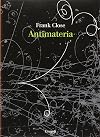
Antimatter
by Frank Close
On This Page
Description
Frank Close explores the strange mirror world of antimatter, revealing that reality is even more fascinating than the sci-fi stories suggest. Explaining the science behind one of physics' most extraordinary discoveries, he shows how, through understanding antimatter, we can shed light on some of the deepest mysteries of the universe.Tags
Recommendations





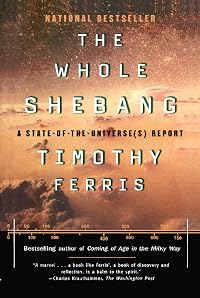
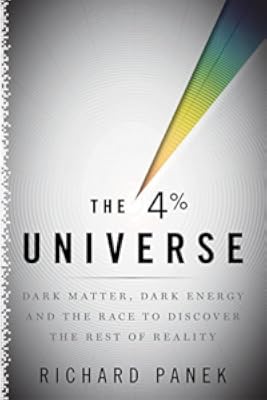
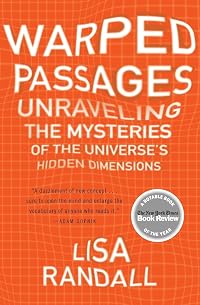
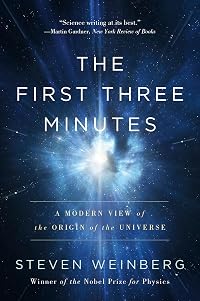

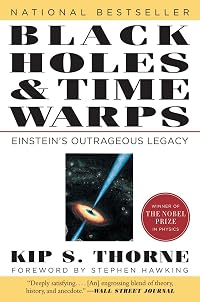
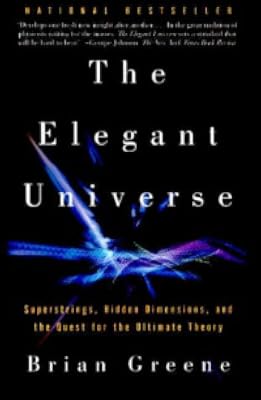
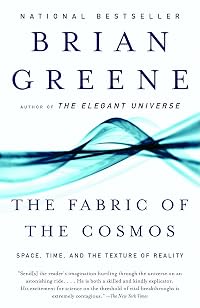

Member Recommendations
Member Reviews
(posted on my blog: davenichols.net)
Physicist Frank Close offers a short but enlightening look at a frequently misunderstood aspect of physical reality in his book Antimatter. In about 150 pages, Close delivers a solid summary of the historical and current research into the nature of the tricky particles, especially the positron.
As a physics buff, albeit a non-technical one, Close's descriptions and narrative are easy to follow and not overly-detailed. He keeps close to his main points, explaining the nature of antimatter and exposing some of the latest experiments into its properties, without overburdening the reader with dense technical interjections. While I thought I understood antimatter prior to reading this book, Close provided show more a strong overview that supplements the understanding of most any popular physics reader, myself included.
Close explores many of the theories surrounding the symmetries between normal matter and antimatter, as well as offering some thoughts on why we might see a universe which appears to be largely devoid of antimatter. While a small handful of antimatter particles have been created in labs around the world, as well as a few dozen antihydrogen atoms, the mysterious lack of antimatter in the universe remains one of the questions needing a great deal of further research to explain. Close uses the Tunguska event to explore the possibility that a chunk of antimatter could have caused the currently unexplained explosion in 1908 (Close determines it was not antimatter, but leaves the question open until the latter chapters). The author also debunks most of the antimatter properties and usages found in Dan Brown's Angels and Demons, as well as the idea that antimatter is likely to supplement traditional sources of energy found on the planet.
Popular physics readers have good cause to pick up this tightly-focused book, and will almost certainly learn things about antimatter that aren't covered in many sources. A solid, very quick read that can be knocked out in an afternoon, I recommend this book to anyone interested in physics wanting to gain a reasonable understanding of this mysterious and interesting subset of the science. Three and one-half stars. show less
Physicist Frank Close offers a short but enlightening look at a frequently misunderstood aspect of physical reality in his book Antimatter. In about 150 pages, Close delivers a solid summary of the historical and current research into the nature of the tricky particles, especially the positron.
As a physics buff, albeit a non-technical one, Close's descriptions and narrative are easy to follow and not overly-detailed. He keeps close to his main points, explaining the nature of antimatter and exposing some of the latest experiments into its properties, without overburdening the reader with dense technical interjections. While I thought I understood antimatter prior to reading this book, Close provided show more a strong overview that supplements the understanding of most any popular physics reader, myself included.
Close explores many of the theories surrounding the symmetries between normal matter and antimatter, as well as offering some thoughts on why we might see a universe which appears to be largely devoid of antimatter. While a small handful of antimatter particles have been created in labs around the world, as well as a few dozen antihydrogen atoms, the mysterious lack of antimatter in the universe remains one of the questions needing a great deal of further research to explain. Close uses the Tunguska event to explore the possibility that a chunk of antimatter could have caused the currently unexplained explosion in 1908 (Close determines it was not antimatter, but leaves the question open until the latter chapters). The author also debunks most of the antimatter properties and usages found in Dan Brown's Angels and Demons, as well as the idea that antimatter is likely to supplement traditional sources of energy found on the planet.
Popular physics readers have good cause to pick up this tightly-focused book, and will almost certainly learn things about antimatter that aren't covered in many sources. A solid, very quick read that can be knocked out in an afternoon, I recommend this book to anyone interested in physics wanting to gain a reasonable understanding of this mysterious and interesting subset of the science. Three and one-half stars. show less
If you want to find out about antimatter, but you don't have the background in physics and mathematics to deal with the heavy stuff, this is the book for you. In a very clear and readble style (sometimes even too chatty for my liking) Frank Close gives a great overview of the question (and some criticism of Dan Brown). It reads like a thriller.
Short and (authoritatively) to the point, even though it necessarily talks about quantum field theory to some extent. Apparently written in part to assure laypeople that the next "benefit" from the military won't be antimatter-based bombs.
Ratings
Members
- Recently Added By
Lists

In Our Time books
4,934 works; 2 members
Author Information

33 Works 2,540 Members
Frank Close is an eminent research theoretical physicist in nuclear and particle physics. He is Emeritus Professor of Physics at Oxford University and a Fellow of Exeter College, and he was formerly the Head of the Theoretical Physics Division at the Rutherford Appleton Laboratory. He served as Chair of the UK Space Exploration Working Group 2007 show more which culminated with Tim Peake's launch to the ISS. He is the author of several books, including the best-selling Lucifer's Legacy, and was the winner of the Kelvin Medal of the Institute of Physics for his "outstanding contributions to the public understanding of physics." In 2013, Professor Close was awarded the Royal Society Michael Faraday Prize for communicating science. show less
Series
Belongs to Publisher Series
Common Knowledge
- Original publication date
- 2009
- Epigraph
- [None]
- Dedication
- [None]
- First words
- 'What happens when the irresistible force meets the immovable object?' My father didn't beat about the bush when it came to the mysteries of the universe, and as Isaac Newton hadn't been satisfied with just one law of motion,... (show all) or Beethoven with one symphony, so Dad had more than one question: 'How do you store a substance that destroyed everything it touched?'
- Last words
- (Click to show. Warning: May contain spoilers.)With such inspirations in fact, who needs fiction?
Classifications
Statistics
- Members
- 291
- Popularity
- 111,008
- Reviews
- 3
- Rating
- (3.95)
- Languages
- English, German, Italian, Turkish
- Media
- Paper, Ebook
- ISBNs
- 9
- ASINs
- 4