On This Page
Description
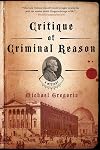
Arriving in the city of Ko?nigsberg to help solve a series of murders, young detective Hanno Stiffeniis joins forces with his mentor, philosopher Immanuel Kant, to track down a serial killer, in a historical mystery set in early nineteenth-century Prussia.Tags
Recommendations












































Member Reviews
In the first book in this intelligent and fascinating series, the reader is quickly plunged into the midst 1803 investigation of a string of murders in Konigsberg, Prussia. Hanno Stiffeniis, a rural procurator, finds himself mysteriously and peremptorily ordered by King William III to report "with all haste" to the ancient city held in a "grip of terror".
Stiffeniis has been recommended to the King by an "imminent person", which turns out to be aged Immanuel Kant, whom he knows from a brief but intense meeting seven years earlier. Something about that meeting caused such concern that Kant's lawyer had written to Stiffeniis and demanding that he never communicate with the old philosopher again. Dark hints are dropped as well that show more Stiffeniis had a hand in his brother's untimely death.
Mystery swirls around the murders. Are they part of a Jacobin plot to destabilize the Prussian state? Or are the killings the work of a madman? Stiffeniis does meet, of course, with Kant who has also engaged the aid of a doctor engaged in paranormal "science" and primitive pathology. Does Kant really put stock in the doctor's hocus pocus wherein he appears to speak with the spirit of the most recently deceased victim? Has Kant's great mind finally broken under the strain of decades of heroic sustained effort? Has he suddenly changed his philosophical views on death's door?
Stiffeniis also has to struggle with the brutal methods of the Prussian military in handling his prisoners, but his own missteps lead to tragic results that pile one on top of another.
The identity and motive of the killer are well-hidden. Any number of characters seem like plausible candidates at one time or another: Stiffeniis's assistant, Kant's former assistant Martin Lampe, a luridly sensuous albino prostitute, and even Kant himself (!). Even once the murders are solved, the mystery concerning Stiffeniis's brother remains. His own parents turned bitterly and irredeemably against him, but why?
The book contains a number of historical characters in addition to Kant, including his lawyer Jachmann, and his former live-in aide Lampe, who really was fired about two years before Kant's death. The telling of the tale magnificently recreates the lost world of inflexible bureaucratic militaristic Prussia, the debauched denizens of an early 18th century port city's waterfront, the vast chasm of separating the well-to-do burghers from the multitudes living in Third World class poverty. The story also oozes appropriate amounts of creepiness.
Critique of Criminal Reason is an extremely well-written and intelligent murder mystery - but don't worry, you don't need to know Kant's philosophy to appreciate the story. Highest recommendation. show less
Stiffeniis has been recommended to the King by an "imminent person", which turns out to be aged Immanuel Kant, whom he knows from a brief but intense meeting seven years earlier. Something about that meeting caused such concern that Kant's lawyer had written to Stiffeniis and demanding that he never communicate with the old philosopher again. Dark hints are dropped as well that show more Stiffeniis had a hand in his brother's untimely death.
Mystery swirls around the murders. Are they part of a Jacobin plot to destabilize the Prussian state? Or are the killings the work of a madman? Stiffeniis does meet, of course, with Kant who has also engaged the aid of a doctor engaged in paranormal "science" and primitive pathology. Does Kant really put stock in the doctor's hocus pocus wherein he appears to speak with the spirit of the most recently deceased victim? Has Kant's great mind finally broken under the strain of decades of heroic sustained effort? Has he suddenly changed his philosophical views on death's door?
Stiffeniis also has to struggle with the brutal methods of the Prussian military in handling his prisoners, but his own missteps lead to tragic results that pile one on top of another.
The identity and motive of the killer are well-hidden. Any number of characters seem like plausible candidates at one time or another: Stiffeniis's assistant, Kant's former assistant Martin Lampe, a luridly sensuous albino prostitute, and even Kant himself (!). Even once the murders are solved, the mystery concerning Stiffeniis's brother remains. His own parents turned bitterly and irredeemably against him, but why?
The book contains a number of historical characters in addition to Kant, including his lawyer Jachmann, and his former live-in aide Lampe, who really was fired about two years before Kant's death. The telling of the tale magnificently recreates the lost world of inflexible bureaucratic militaristic Prussia, the debauched denizens of an early 18th century port city's waterfront, the vast chasm of separating the well-to-do burghers from the multitudes living in Third World class poverty. The story also oozes appropriate amounts of creepiness.
Critique of Criminal Reason is an extremely well-written and intelligent murder mystery - but don't worry, you don't need to know Kant's philosophy to appreciate the story. Highest recommendation. show less
Hanno Stiffeniis, a man in his early thirties, was serving as a magistrate in a small town in Prussia in 1804 when he receives a summons from King Frederick Wilhelm III ordering him to leave for Konigsberg. There have been a few unsolved murders and the circumstances of the murders have panicked the townspeople.
He hadn’t been in Konigsberg for seven years and had been told to never return there because of an incident between himself and Immanuel Kant, the philosopher and teacher but believes he cannot refuse his King’s command.
Other, more experienced men have been trying to solve the murders but have been unsuccessful. He doesn’t know how he would be able to succeed where they have failed. Soon after he arrives, he does meet show more with Dr. Kant and what happens next changes everything.
The usual way to solve crimes was through threats and torture. The murder victims are found in a kneeling position. The police reports lack a lot of basic information such as the cause of death and important names of people involved in the investigation. He begins his job by trying to determine a motive and, after finding one and determining the murderer; discovers he was wrong. This happens several other times. Dr. Kant, who is quite old at this point and in poor health, leads Stiffeniis to use logic and evidence in looking for the information he needs. It is the beginning of modern crime technique.
One quote of Kant, “...Reason operates on the surface alone. What happens beneath the surface shapes events,” helps Stiffeniis solve the murders as well as several others which occur after his arrival.
He eventually learns the reason he was recommended for the job as well as resolves some deep personal problems within his own family.
Michael Gregorio’s descriptions of people, places, and just about everything else are very detailed. The reader can picture what Stiffeniis sees. The book goes into very gory detail about the corpses. I eventually skipped over them and don’t think I missed anything important.
There are a lot of criminals who are being shipped to Russia and he sees them at a tavern while waiting for their ship. They are seated in a circle around a fire. “So many people, so close together, yet barely a word was said” made me think of our modern culture where people gather together and, rather than interact with the people around them, are involved with their smart phones. These prisoners didn’t have that option.
The book does a fairly good job weaving logic and philosophy into solving crimes at a level that most readers will be able to understand. show less
He hadn’t been in Konigsberg for seven years and had been told to never return there because of an incident between himself and Immanuel Kant, the philosopher and teacher but believes he cannot refuse his King’s command.
Other, more experienced men have been trying to solve the murders but have been unsuccessful. He doesn’t know how he would be able to succeed where they have failed. Soon after he arrives, he does meet show more with Dr. Kant and what happens next changes everything.
The usual way to solve crimes was through threats and torture. The murder victims are found in a kneeling position. The police reports lack a lot of basic information such as the cause of death and important names of people involved in the investigation. He begins his job by trying to determine a motive and, after finding one and determining the murderer; discovers he was wrong. This happens several other times. Dr. Kant, who is quite old at this point and in poor health, leads Stiffeniis to use logic and evidence in looking for the information he needs. It is the beginning of modern crime technique.
One quote of Kant, “...Reason operates on the surface alone. What happens beneath the surface shapes events,” helps Stiffeniis solve the murders as well as several others which occur after his arrival.
He eventually learns the reason he was recommended for the job as well as resolves some deep personal problems within his own family.
Michael Gregorio’s descriptions of people, places, and just about everything else are very detailed. The reader can picture what Stiffeniis sees. The book goes into very gory detail about the corpses. I eventually skipped over them and don’t think I missed anything important.
There are a lot of criminals who are being shipped to Russia and he sees them at a tavern while waiting for their ship. They are seated in a circle around a fire. “So many people, so close together, yet barely a word was said” made me think of our modern culture where people gather together and, rather than interact with the people around them, are involved with their smart phones. These prisoners didn’t have that option.
The book does a fairly good job weaving logic and philosophy into solving crimes at a level that most readers will be able to understand. show less
In 1803, Hanno Stiffeniis, a rural procurator, is ordered to the city of Konigsberg, Prussia, to solve a series of mysterious murders. It turns out that his summons has come about at the behest of Stiffeniis' former mentor, Immanuel Kant.
I read enough historical mysteries involving real-life personages to know the formula (introduce the real historical figure with far more fanfare than makes sense in context; give said historical figure a mystery that will inspire all his or her writings / actions / philosophy from that moment forth, as if there would have been no writings but for this; and if there's a young attractive sister-brother pair we're looking at an 80% chance of incest), and this adhered to it. But it also kept me genuinely show more interested in the solution to the mystery, which many of them don't, and the protagonist was realistically flawed without being unsympathetic. I felt that the ending piffled out, and I'm not interested in reading the sequel, but there was nothing wrong with spending a few days on this. show less
I read enough historical mysteries involving real-life personages to know the formula (introduce the real historical figure with far more fanfare than makes sense in context; give said historical figure a mystery that will inspire all his or her writings / actions / philosophy from that moment forth, as if there would have been no writings but for this; and if there's a young attractive sister-brother pair we're looking at an 80% chance of incest), and this adhered to it. But it also kept me genuinely show more interested in the solution to the mystery, which many of them don't, and the protagonist was realistically flawed without being unsympathetic. I felt that the ending piffled out, and I'm not interested in reading the sequel, but there was nothing wrong with spending a few days on this. show less
Chi può essere l'unico possibile precursore del metodo d'indagine deduttivo, prima ancora di colui che lo ha portato alla fama, vale a dire Sherlok Holmes? Immanuel Kant, il grande filosofo che spinse la sua mente oltre ogni limite della ragione.
E sarà Hanno Stiffenius, procuratore prussiano, uomo che ha visto il male nonché riluttante allievo di Kant, a seguire passo passo la strada che il suo maestro ha preparato per lui, fino a risolvere gli orrendi misteri di Koninsberg, e dell'animo umano.
Primo libro di una serie dedicata al procuratore, è scorrevole anche se ancora un po' immaturo.
E sarà Hanno Stiffenius, procuratore prussiano, uomo che ha visto il male nonché riluttante allievo di Kant, a seguire passo passo la strada che il suo maestro ha preparato per lui, fino a risolvere gli orrendi misteri di Koninsberg, e dell'animo umano.
Primo libro di una serie dedicata al procuratore, è scorrevole anche se ancora un po' immaturo.
An okay (and just okay) mystery/thriller in what has become something of a sub-genre: famous philosopher/author/personage on the sidelines while the "main character" tries to solve the rime. In this case it's Immanuel Kant, although the philosophical background doesn't really come through very well. If you read it just as a standard potboiler, though, it'll do for a good afternoon's read.
Take yourself back in time to Prussia in 1804, at the dawn of the Enlightenment. A serial killer is striking without mercy in a snow-covered, dark city. Magistrate Hanno Stiffeniis is called from his small town to the magnificent city of Koningsberg, which is gripped by terror at the prospect of future murders.
Once in Koningsberg, Stiffeniis begins to realise that greater schemes are afoot and he seeks guidance from the eminent philosopher Immanuel Kant, who is attempting to pioneer a new way of thinking when investigating crimes. The logical ways of conducting a forensic investigation which seem so commonplace to us CSI-junkies are new-fangled ideas in Koningsberg.
Michael Gregorio is actually a husband and wife team of writers, who show more have combined to create a dark and superstitious world which struggles to emerge into an age of reason. The ever-present threat of invasion from Bonaparte hangs like a grim spectre over all dialogue and interactions. It is in turns a tense thriller and a philosophical read. Look out for more in the series. show less
Once in Koningsberg, Stiffeniis begins to realise that greater schemes are afoot and he seeks guidance from the eminent philosopher Immanuel Kant, who is attempting to pioneer a new way of thinking when investigating crimes. The logical ways of conducting a forensic investigation which seem so commonplace to us CSI-junkies are new-fangled ideas in Koningsberg.
Michael Gregorio is actually a husband and wife team of writers, who show more have combined to create a dark and superstitious world which struggles to emerge into an age of reason. The ever-present threat of invasion from Bonaparte hangs like a grim spectre over all dialogue and interactions. It is in turns a tense thriller and a philosophical read. Look out for more in the series. show less
ATTENZIONE: LA RECENSIONE CONTIENE ANCHE QUALCHE "BLANDA" ANTICIPAZIONE...
Francamente deludente. Il protagonista è piuttosto lento di comprendonio e il "mistero" sul suo passato, sebbene continuamente ricordato nel corso del libro, lascia indifferenti (fino alla rivelazione finale, che è intuibilissima e non un granché...): il personaggio non è né "simpatico" né "antipatico", è totalmente incolore. La caratterizzazione di Kant non mi è piaciuta per nulla. Anche i meccanismi del giallo sembrano un po' farraginosi e "improvvisati": i passi avanti nell'indagine sembrano verificarsi quasi così, per caso, per non parlare di particolari incongrui e poco plausibili (il protagonista non aveva mai notato che le vittime erano show more inginocchiate prima che glielo dicesse Kant? ma andiamo!!! La donna, Anna, agisce in tutto in 10 pagine del libro eppure il protagonista ne rimane incredibilmente turbato...). Il tutto procede stancamente verso la conclusione, ma non c'è praticamente tensione: la soluzione del "mistero" è a quel punto obbligata (e qualsiasi esperto di gialli l'ha già intuita), ma alquanto stonata e insoddisfacente. Inoltre, alcuni dettagli e descrizioni volutamente "splatter" sono malriuscite e insistite al punto da risultare ridicole. Infine, una nota: Luigi XVI non fu affatto ghigliottinato il 2 gennaio 1793 ma il 21 gennaio 1793. Potevano evitare quest'errore (ripetuto 2 volte) in fase di correzione di bozze...
Sto diventando sempre più scettica verso i romanzi con tra i protagonisti figure illustri del passato, ma avevo pensato di dare a questo libro una possibilità: soldi buttati.
WARNING: SOME SPOILERS
Disappointing. The main character is really dumb and the mistery behind his past, though stressed over and over, has left me really cold until the final revelation (not so difficult to guess...): the guy is neither "good" nor "bad", he's just reall boring and uninteresting. I hated the Kant character. The plot is lacking in some points, and there are details and events that are really hard to believe (the detective hadn't noticed that all the victims were found on their knees until Kant pointed that out to him?? come on!!! The woman, Anna, appears for just about 10 pages, nevertheless the main character is suddenly smitten by her...). The book drags itself to the ending, but there's no tension at all: the solution is the one any capable reader had already foreseen, yet it's really unsatisfactory. Some details and descriptions are ridicuosly exaggerated to sound "splatter". One last thing: Louis XVI of France was not executed on January 2, 1793 (as stated in the Italian edition of the book that I read), but on January 21, 1793: incredibile (and avoidable) mistake.
I have become increasingly skeptical towards books that have famous people from the past as characters, but I thought I could give this one a chance: what a waste of money... show less
Francamente deludente. Il protagonista è piuttosto lento di comprendonio e il "mistero" sul suo passato, sebbene continuamente ricordato nel corso del libro, lascia indifferenti (fino alla rivelazione finale, che è intuibilissima e non un granché...): il personaggio non è né "simpatico" né "antipatico", è totalmente incolore. La caratterizzazione di Kant non mi è piaciuta per nulla. Anche i meccanismi del giallo sembrano un po' farraginosi e "improvvisati": i passi avanti nell'indagine sembrano verificarsi quasi così, per caso, per non parlare di particolari incongrui e poco plausibili (il protagonista non aveva mai notato che le vittime erano show more inginocchiate prima che glielo dicesse Kant? ma andiamo!!! La donna, Anna, agisce in tutto in 10 pagine del libro eppure il protagonista ne rimane incredibilmente turbato...). Il tutto procede stancamente verso la conclusione, ma non c'è praticamente tensione: la soluzione del "mistero" è a quel punto obbligata (e qualsiasi esperto di gialli l'ha già intuita), ma alquanto stonata e insoddisfacente. Inoltre, alcuni dettagli e descrizioni volutamente "splatter" sono malriuscite e insistite al punto da risultare ridicole. Infine, una nota: Luigi XVI non fu affatto ghigliottinato il 2 gennaio 1793 ma il 21 gennaio 1793. Potevano evitare quest'errore (ripetuto 2 volte) in fase di correzione di bozze...
Sto diventando sempre più scettica verso i romanzi con tra i protagonisti figure illustri del passato, ma avevo pensato di dare a questo libro una possibilità: soldi buttati.
WARNING: SOME SPOILERS
Disappointing. The main character is really dumb and the mistery behind his past, though stressed over and over, has left me really cold until the final revelation (not so difficult to guess...): the guy is neither "good" nor "bad", he's just reall boring and uninteresting. I hated the Kant character. The plot is lacking in some points, and there are details and events that are really hard to believe (the detective hadn't noticed that all the victims were found on their knees until Kant pointed that out to him?? come on!!! The woman, Anna, appears for just about 10 pages, nevertheless the main character is suddenly smitten by her...). The book drags itself to the ending, but there's no tension at all: the solution is the one any capable reader had already foreseen, yet it's really unsatisfactory. Some details and descriptions are ridicuosly exaggerated to sound "splatter". One last thing: Louis XVI of France was not executed on January 2, 1793 (as stated in the Italian edition of the book that I read), but on January 21, 1793: incredibile (and avoidable) mistake.
I have become increasingly skeptical towards books that have famous people from the past as characters, but I thought I could give this one a chance: what a waste of money... show less
Members
- Recently Added By
Lists

MysteryCAT: Historical Crime
27 works; 7 members
Author Information

12+ Works 772 Members
Some Editions
Awards and Honors
Distinctions
Series

Belongs to Publisher Series
Common Knowledge
- Canonical title
- Critique of Criminal Reason
- Original title
- Critique of Criminal Reason
- Original publication date
- 2006
- People/Characters
- Hanno Stiffeniis; Herr Köch; Immanuel Kant; Helena Stiffeniis (wife of Hanno); Amadeus Koch; August Vigilantius (show all 18); Ulich Totz; Gerta Totz; Guntar Stoltzen; Reinhold Jachmann; Johannes Odum; Anna Rostova; Anton Theodor Lublinsky; Wilhelm Ignatius Stiffeniis; Stefan Stiffeniis; Arnold Lutbatz; Martin Lampe; Margareta Lungrenek
- Important places
- Königsberg, Prussia (today Kaliningrad, Russia)
- First words
- 'Observe, Stiffeniis. It slid in like a hot knife cutting lard.'
- Last words
- (Click to show. Warning: May contain spoilers.)The Prussian seed had been planted in Napoleon Bonaparte's indomitable mind, and it would flower within a year, carried south, perhaps, on innocent wings of a migrant ladybird from a cornfield on the outskirts of Jena ...
Classifications
Statistics
- Members
- 432
- Popularity
- 71,074
- Reviews
- 18
- Rating
- (2.99)
- Languages
- 8 — Dutch, English, French, German, Italian, Polish, Portuguese, Spanish
- Media
- Paper, Ebook
- ISBNs
- 19
- ASINs
- 5