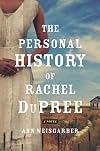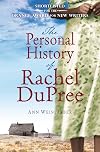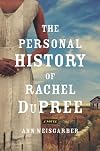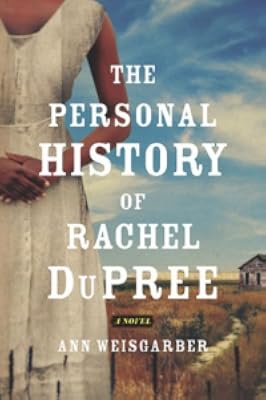
The Personal History of Rachel DuPree
by Ann Weisgarber
On This Page
Description
It is 1917 in the South Dakota Badlands and the summer has been hard. Rachel and Isaac DuPree had left Chicago fourteen years ago to stake their claim. Isaac, a former Buffalo Soldier, is fiercely proud: black families are rare in the West, and black ranchers even rarer. But it hasn't rained in months, the cattle are bellowing with thirst, and supplies have dwindled. Struggling to feed her family, Rachel is isolated by more than just geography. She is determined to give her surviving show more children the life they deserve, but Isaac will never leave his ranch: land means a measure of equality with the white man. Rachel must find the strength to do what is right--for her children, for her husband, and for herself. show lessTags
Recommendations





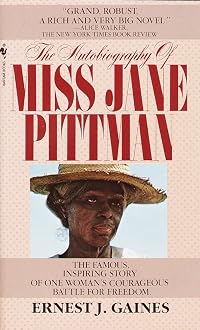
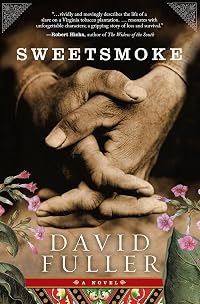
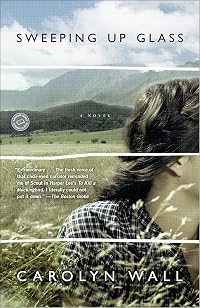


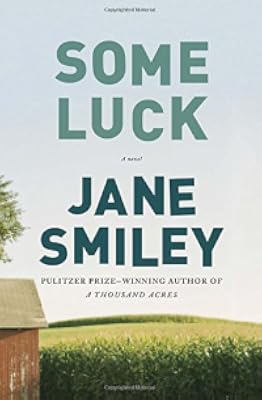








Member Recommendations
Member Reviews
I broke my own rule while reading The Personal History of Rachel DuPree by Ann Weisgarber - I flipped forward and read ahead. And then went back to slowly enjoy the story of Rachel DuPree. I became so invested in her trials and tribulations that I had to know what was going to happen next.
It's 1917 and a terrible drought has struck the Badlands in South Dakota. Rachel DuPree, her husband Isaac and their children are struggling to survive this latest hardship. For Isaac, there is no question - he will prevail. His goal has been the land all along and he will not give up. But Rachel is struggling. She's given birth to seven children, lost two and has another on the way. When Isaac lowers one of her girls down the well to get what little show more water remains, it seems to be a breaking point. Rachel questions her life, what is best for her children and her relationship with the man who is her husband.
In flashbacks we learn how Isaac and Rachel came to be homesteaders in this brutal environment. Rachel is a cook in a boarding house. While she believes she is in love with the dashing son of the owner, Isaac sees it as a business proposition - Rachel can apply for another 160 acres of land from the Homestead Act.
"I stared until my eyes blurred. It was so big. All that land and sky, all that openness; there was no end to any of it. It made me feel small, It gave me a bad feeling,. I didn't belong; this place called for bigger things than me."
Weisgarber has written a story rich with emotion, detail and history. Relationships are explored - that of Rachel and her husband, the sense of belonging and homesickness. The history of settlers in this area has been explored, but not really from the point of view of black settlers. Rachel faces predjudice from many sides - that of 'upper class' blacks, whites and the native Americans as well. Isaac's view of the natives was an eye opener - he bristles at his treatment at the hand of whites, yet considers himself above the natives. I really enjoyed the physical details of everyday life and what it took to stake a claim - the dreams, the hopes and the aspirations. The setting is a character in the book as well, the wind, the dust and the grit almost tangible in Weisgarber's descriptions.
I think I enjoyed this book so much as the character of Rachel reminded me of Addy Shadd, the protagonist in one of my favourite books - Rush Home Road by Lori Lansens. The strength it takes to move continually forward despite unforgiving odds. The pleasure of finding joy amongst the troubles. The courage to make difficult decisions. And the determination to keep going.
As Rachel says: "I admired the feel of a book. I opened the book and held it to each girl's nose. I alwasy believed that smelling the pages of a book took a person into the story." I lost myself in Rachel's story. show less
It's 1917 and a terrible drought has struck the Badlands in South Dakota. Rachel DuPree, her husband Isaac and their children are struggling to survive this latest hardship. For Isaac, there is no question - he will prevail. His goal has been the land all along and he will not give up. But Rachel is struggling. She's given birth to seven children, lost two and has another on the way. When Isaac lowers one of her girls down the well to get what little show more water remains, it seems to be a breaking point. Rachel questions her life, what is best for her children and her relationship with the man who is her husband.
In flashbacks we learn how Isaac and Rachel came to be homesteaders in this brutal environment. Rachel is a cook in a boarding house. While she believes she is in love with the dashing son of the owner, Isaac sees it as a business proposition - Rachel can apply for another 160 acres of land from the Homestead Act.
"I stared until my eyes blurred. It was so big. All that land and sky, all that openness; there was no end to any of it. It made me feel small, It gave me a bad feeling,. I didn't belong; this place called for bigger things than me."
Weisgarber has written a story rich with emotion, detail and history. Relationships are explored - that of Rachel and her husband, the sense of belonging and homesickness. The history of settlers in this area has been explored, but not really from the point of view of black settlers. Rachel faces predjudice from many sides - that of 'upper class' blacks, whites and the native Americans as well. Isaac's view of the natives was an eye opener - he bristles at his treatment at the hand of whites, yet considers himself above the natives. I really enjoyed the physical details of everyday life and what it took to stake a claim - the dreams, the hopes and the aspirations. The setting is a character in the book as well, the wind, the dust and the grit almost tangible in Weisgarber's descriptions.
I think I enjoyed this book so much as the character of Rachel reminded me of Addy Shadd, the protagonist in one of my favourite books - Rush Home Road by Lori Lansens. The strength it takes to move continually forward despite unforgiving odds. The pleasure of finding joy amongst the troubles. The courage to make difficult decisions. And the determination to keep going.
As Rachel says: "I admired the feel of a book. I opened the book and held it to each girl's nose. I alwasy believed that smelling the pages of a book took a person into the story." I lost myself in Rachel's story. show less
As this novel begins it is the early 1900's, and Rachel Reeves has been working as a cook for eight years at Mrs. DuPree's boarding house for black men in Chicago. Now 25, she is still unmarried, but attracted to Mrs. DuPree’s son Isaac, 31, who has been in the army for 13 years. (Isaac served in the 9th Cavalry Regiment, historically one of the original six regiments of the regular U.S. Army set aside for black enlisted men by Congress in the act of July 28, 1866 reorganizing the army for post-Civil War service, mainly against native peoples in the West.) Isaac intends to get land pursuant to the 1862 Homestead Act, providing that any man or unmarried woman could claim a hundred and sixty ares of public land out west. Even blacks show more were eligible - as Isaac explained to a friend: “The Homestead Act doesn’t care about the color of a man’s skin. A man’s a man in the West.”
Mrs. DuPree looks down on Rachel - she is “too dark,” not well-educated (she had to quit school to support her family), and doesn’t come from an aristocratic family. Nevertheless, the ambitious Isaac figures that with Rachel, he could get 320 acres instead of 160, and agrees to marry her for one year in exchange. Rachel intended to prove to Isaac in that year that he wouldn’t be able to do without her. Mrs. DuPree disowns Isaac for marrying “low” and the couple sets out for the South Dakota Badlands.
The book, narrated by Rachel, goes back and forth in time beginning when Rachel worked at the boarding house, and alternating with a period fourteen years after the couple left for the west. They now have five children, with another two having died as infants. Life in the Badlands is extremely difficult, but whenever they get extra money, Isaac uses it to buy yet more land; as the story begins, they have 2500 acres, but hardly enough food and water to survive.
Rachel increasingly feels that Isaac cares more about accumulating land than the welfare of the rest of the family, especially the children. Brave, resourceful, and determined, she makes a hard decision for her future.
Discussion: There are a couple of subplots in the story worth mentioning. One is the social divide between Northern and Southern blacks. If you read World of Our Fathers by Irving Howe you will be reminded of the similar friction between German and Russian Jewish immigrants to the United States, the former considering themselves a cut above the latter.
When Mrs. DuPree has Ida B. Wells come to speak to her ladies group, Rachel is delighted to discover that the famous and accomplished Mrs. Wells had been born a slave in Mississippi and related more to Rachel than the fancy women in the parlor. [Ida Bell Wells-Barnett born in 1862, was an African-American journalist, newspaper editor, suffragist, sociologist, feminist, an early leader in the Civil Rights Movement, and one of the founders of the National Association for the Advancement of Colored People (NAACP) in 1909.]
Another thread running through the story is Isaac’s curiously virulent hostility toward Native Americans. Rachel doesn’t find out the reason for it until almost the end of the story. But hints of what happened arise periodically, and affect the family’s relationship with others out west.
Evaluation: This gem of a book grabbed me from the start. It’s not long, but manages to pack a lot into it, from conditions for early settlers in the west, to race relations, social conventions, gender roles and expectations, and family love and loyalty. It would make an excellent book club selection.
Awards:
Orange Prize Nominee for New Writers (2009)
David J. Langum Sr. Prize for American Historical Fiction (2010)
Note: A movie with an all-star cast (with Viola Davis, Mahershala Ali, and Quvenzhané Wallis is in the works. show less
Mrs. DuPree looks down on Rachel - she is “too dark,” not well-educated (she had to quit school to support her family), and doesn’t come from an aristocratic family. Nevertheless, the ambitious Isaac figures that with Rachel, he could get 320 acres instead of 160, and agrees to marry her for one year in exchange. Rachel intended to prove to Isaac in that year that he wouldn’t be able to do without her. Mrs. DuPree disowns Isaac for marrying “low” and the couple sets out for the South Dakota Badlands.
The book, narrated by Rachel, goes back and forth in time beginning when Rachel worked at the boarding house, and alternating with a period fourteen years after the couple left for the west. They now have five children, with another two having died as infants. Life in the Badlands is extremely difficult, but whenever they get extra money, Isaac uses it to buy yet more land; as the story begins, they have 2500 acres, but hardly enough food and water to survive.
Rachel increasingly feels that Isaac cares more about accumulating land than the welfare of the rest of the family, especially the children. Brave, resourceful, and determined, she makes a hard decision for her future.
Discussion: There are a couple of subplots in the story worth mentioning. One is the social divide between Northern and Southern blacks. If you read World of Our Fathers by Irving Howe you will be reminded of the similar friction between German and Russian Jewish immigrants to the United States, the former considering themselves a cut above the latter.
When Mrs. DuPree has Ida B. Wells come to speak to her ladies group, Rachel is delighted to discover that the famous and accomplished Mrs. Wells had been born a slave in Mississippi and related more to Rachel than the fancy women in the parlor. [Ida Bell Wells-Barnett born in 1862, was an African-American journalist, newspaper editor, suffragist, sociologist, feminist, an early leader in the Civil Rights Movement, and one of the founders of the National Association for the Advancement of Colored People (NAACP) in 1909.]
Another thread running through the story is Isaac’s curiously virulent hostility toward Native Americans. Rachel doesn’t find out the reason for it until almost the end of the story. But hints of what happened arise periodically, and affect the family’s relationship with others out west.
Evaluation: This gem of a book grabbed me from the start. It’s not long, but manages to pack a lot into it, from conditions for early settlers in the west, to race relations, social conventions, gender roles and expectations, and family love and loyalty. It would make an excellent book club selection.
Awards:
Orange Prize Nominee for New Writers (2009)
David J. Langum Sr. Prize for American Historical Fiction (2010)
Note: A movie with an all-star cast (with Viola Davis, Mahershala Ali, and Quvenzhané Wallis is in the works. show less
This must be the most hardscrabble of all the hardscrabble books I’ve read. Having visited The Badlands, I cannot imagine trying to make a living there, especially during a drought. This novel plainly and startlingly tells a story about homesteading in the 1910s by a black family in South Dakota. Ann Weisgarber makes you feel the desolation of the area, the hopelessness of the situation, and the strength of character it takes to endure. Water. You won’t take it for granted after reading this book.
The Personal History of Rachel Dupree by Ann Weisgarber is written so vividly and with such intensity that I felt that I was living her life as I read.
I picked this book because my grandmother and grandfather homesteaded in South Dakota in the same time period. They were discouraged by extremes of the climate and moved back to Indiana when my great grandmother offered them a house. There was no hesitation about their decision.
But this book is much more than the struggle to survive Mother Nature’s extremes. It asks the question of what is important in life. What life should you make for your children? It deals with racism, the work ethic, survival and marriage. All the themes are strong and thought provoking.
The book opens with a show more gripping scene. Rachel’s daughter Liz will be lowered down a well. There has been a terrible drought and extreme water rationing. Liz is only six years old and she is being forced to save her family’s life. The well is almost completely dry. Liz doesn’t want to go. Her father, Isaac insists. Her mother was praying that God take care of Liz. She begs Isaac not to do it. When four buckets and a part of another have been filled by the little girl, she is hauled up. Her hands are bleeding, she has been crying, her clothes are torn. Later it seems that she is vacant, she stares, and she doesn’t want to do anything. Should any child be forced to do this? This is just one of the poignant scenes in this book. This book immersed me in the times and places and the feelings of this homesteading family.
I highly recommend this book. I will never forget this story. I hope that you will read this book. And even though my grandmother never had to face racism at its worse, I now have a deeper understanding of why my grandparents quit homesteading after several years. show less
I picked this book because my grandmother and grandfather homesteaded in South Dakota in the same time period. They were discouraged by extremes of the climate and moved back to Indiana when my great grandmother offered them a house. There was no hesitation about their decision.
But this book is much more than the struggle to survive Mother Nature’s extremes. It asks the question of what is important in life. What life should you make for your children? It deals with racism, the work ethic, survival and marriage. All the themes are strong and thought provoking.
The book opens with a show more gripping scene. Rachel’s daughter Liz will be lowered down a well. There has been a terrible drought and extreme water rationing. Liz is only six years old and she is being forced to save her family’s life. The well is almost completely dry. Liz doesn’t want to go. Her father, Isaac insists. Her mother was praying that God take care of Liz. She begs Isaac not to do it. When four buckets and a part of another have been filled by the little girl, she is hauled up. Her hands are bleeding, she has been crying, her clothes are torn. Later it seems that she is vacant, she stares, and she doesn’t want to do anything. Should any child be forced to do this? This is just one of the poignant scenes in this book. This book immersed me in the times and places and the feelings of this homesteading family.
I highly recommend this book. I will never forget this story. I hope that you will read this book. And even though my grandmother never had to face racism at its worse, I now have a deeper understanding of why my grandparents quit homesteading after several years. show less
It is 1903 and Rachel is a cook in the Chicago boarding house belonging to Mrs. DuPree. When Mrs. DuPree’s son Isaac comes home on leave from the Army, Rachel believes that she and Isaac are meant to be together in marriage. Isaac agrees to marry her if she will apply for ownership of 160 acres of land being offered as part of the Homestead Act. The land that he wants is in the Badlands of South Dakota. So she files the application and they marry and head to South Dakota to live a grueling life as African American homesteaders.
Weisgarber created Rachel as a strong African American female character who made the most of a difficult life on the frontier. Rachel’s story drew me in and I found myself very emotional as I read about the show more family and their endeavors to survive the brutal landscape and weather of the South Dakota Badlands. Rachel and Isaac’s story for survival is the most important theme in the book but the author also wisely integrated accounts of racial tensions that were transpiring in the early 1900’s thus making the book a well researched historical fiction. show less
Weisgarber created Rachel as a strong African American female character who made the most of a difficult life on the frontier. Rachel’s story drew me in and I found myself very emotional as I read about the show more family and their endeavors to survive the brutal landscape and weather of the South Dakota Badlands. Rachel and Isaac’s story for survival is the most important theme in the book but the author also wisely integrated accounts of racial tensions that were transpiring in the early 1900’s thus making the book a well researched historical fiction. show less
An amazing first person history of two seemingly disparate elements: South Dakota and African American pioneers. Rachel is a cook in a stockyard boardinghouse for black workers when she meets Isaac, the son of the proprietor, and sees opportunity, a chance for love, and a ticket out of crowded Chicago. Isaac, a former Indian fighter, takes Rachel with him to South Dakota to cook and to allow him to stake a larger claim for his cattle ranch.
The time frame is the early 1900s, and all the hardships of settling the West and ranching are compounded by drought, racism, loneliness, and Isaac's determination to increase his land holdings at the expense of the health of his family. He's a complex character, as is Rachel, who is alternately show more devoted to him and her five living children and despairing of their survival due to the continuing series of natural disasters. Her life is torn between her family in South Dakota and her mother, brother, and sisters, who are facing race riots in the Midwest.
This is a riveting history, chock full of Rachel's thoughts and deeds. The only missing element is a listing of the author's research and suggestions on additional readings. And a sequel! show less
The time frame is the early 1900s, and all the hardships of settling the West and ranching are compounded by drought, racism, loneliness, and Isaac's determination to increase his land holdings at the expense of the health of his family. He's a complex character, as is Rachel, who is alternately show more devoted to him and her five living children and despairing of their survival due to the continuing series of natural disasters. Her life is torn between her family in South Dakota and her mother, brother, and sisters, who are facing race riots in the Midwest.
This is a riveting history, chock full of Rachel's thoughts and deeds. The only missing element is a listing of the author's research and suggestions on additional readings. And a sequel! show less
I wanted Isaac to say that I meant something to him, that he’d be proud to take me as his wife. Instead, I felt cheap. This wasn’t how I wanted it to be. I had sold myself for a hundred and sixty acres of land. But it didn’t have to stay that way. I’d work hard. I’d prove myself. Isaac wouldn’t be able to do without me. - from The Personal History of Rachel DuPree, page 57 -
It is the early part of the twentieth century and Rachel is a black woman working as a housekeeper in a Chicago boarding house when she meets Isaac DuPree. Isaac is a Buffalo Soldier fighting Indians in the West and he dreams of land ownership – something that is now possible through the Homestead Act (a Federal law which gave an applicant ownership of show more free farmland called a “homestead” – typically 160 acres of undeveloped federal land west of the Mississippi River). Rachel is instantly attracted to Isaac, but Isaac is not looking for a wife…until he realizes that marrying Rachel means he will have 320 acres instead of just 160. They strike a bargain that Rachel will turn over her land to Isaac and he will marry her for one year. Fourteen years later, the couple is still together living on the unforgiving plains of the South Dakota Badlands with their five children.
The Personal History of Rachel DuPree is written in the first person narrative of Rachel, a woman who had dreams of her own wooden home but now finds herself barely surviving a drought, and desperate for the contact of other women. Fearful for her children and at odds with her husband, Rachel begins to hatch a plan to escape the Badlands and return to Chicago.
Ann Weisgarber’s novel is the story of one woman, but it takes a broader look at the struggle of blacks to break free of inequality and become landowners. Weisgarber also touches on the plight of Native Americans during the early part of the twentieth century…and about the rigid racial stereotypes which were typical at that time.
Through vivid descriptions of life in a barren and harsh environment, Rachel Dupree lives and breathes in the pages of this novel. Rachel is symbolic of the many women who ventured from civilization into the wilds of the west, helping their husbands to settle the land and facing drought, starvation, accidents and even the dangers of childbirth with courage.
The writing in this novel is unsentimental, Rachel’s voice often matter-of-fact, yet it is surprisingly moving. I found myself deeply engrossed in this very American story of a strong woman’s quest for a better life for herself and her children. Readers who love Pioneer history, will be drawn to Weisgarber’s novel which was short-listed for the Orange Prize’s New Writers Award in 2009.
Recommended. show less
It is the early part of the twentieth century and Rachel is a black woman working as a housekeeper in a Chicago boarding house when she meets Isaac DuPree. Isaac is a Buffalo Soldier fighting Indians in the West and he dreams of land ownership – something that is now possible through the Homestead Act (a Federal law which gave an applicant ownership of show more free farmland called a “homestead” – typically 160 acres of undeveloped federal land west of the Mississippi River). Rachel is instantly attracted to Isaac, but Isaac is not looking for a wife…until he realizes that marrying Rachel means he will have 320 acres instead of just 160. They strike a bargain that Rachel will turn over her land to Isaac and he will marry her for one year. Fourteen years later, the couple is still together living on the unforgiving plains of the South Dakota Badlands with their five children.
The Personal History of Rachel DuPree is written in the first person narrative of Rachel, a woman who had dreams of her own wooden home but now finds herself barely surviving a drought, and desperate for the contact of other women. Fearful for her children and at odds with her husband, Rachel begins to hatch a plan to escape the Badlands and return to Chicago.
Ann Weisgarber’s novel is the story of one woman, but it takes a broader look at the struggle of blacks to break free of inequality and become landowners. Weisgarber also touches on the plight of Native Americans during the early part of the twentieth century…and about the rigid racial stereotypes which were typical at that time.
Through vivid descriptions of life in a barren and harsh environment, Rachel Dupree lives and breathes in the pages of this novel. Rachel is symbolic of the many women who ventured from civilization into the wilds of the west, helping their husbands to settle the land and facing drought, starvation, accidents and even the dangers of childbirth with courage.
The writing in this novel is unsentimental, Rachel’s voice often matter-of-fact, yet it is surprisingly moving. I found myself deeply engrossed in this very American story of a strong woman’s quest for a better life for herself and her children. Readers who love Pioneer history, will be drawn to Weisgarber’s novel which was short-listed for the Orange Prize’s New Writers Award in 2009.
Recommended. show less
Members
- Recently Added By
Author Information
5+ Works 785 Members
Awards and Honors
Common Knowledge
- Canonical title
- The Personal History of Rachel DuPree
- Original publication date
- 2008
- People/Characters
- Rachel DuPree; Isaac DuPree; Elizabeth DuPree; Mary DuPree; John DuPree; Liz DuPree (show all 8); Alise DuPree; Emma DuPree
- Important places
- Chicago, Illinois, USA; Badlands, South Dakota, USA
- Epigraph
- We Can; We Will!
Motto of the Ninth Cavalry
Again, I think it would be somewhat different
if it weren't for the wind. It blows and blows
until it makes me feel lonesome and so far away
from ..... (show all). Illinois.
Oscar Michenaux,
South Dakota homesteader - Dedication
- For my husband, Ronald L. Weisgarber
- First words
- I still see her, our Liz, sitting on a plank, dangling over that well.
- Last words
- (Click to show. Warning: May contain spoilers.)Then I straightened my shoulders as best I could and looked west, a trail of black smoke starting to show in the gray sky.
Classifications
Statistics
- Members
- 396
- Popularity
- 79,115
- Reviews
- 37
- Rating
- (4.00)
- Languages
- English, French
- Media
- Paper, Audiobook, Ebook
- ISBNs
- 17
- ASINs
- 12