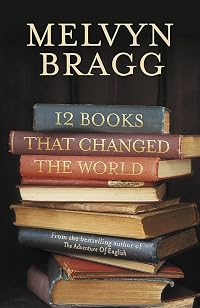
12 Books That Changed the World
by Melvyn Bragg
On This Page
Description
Melvyn Bragg explores a definitive, yet controversial selection of British books and their huge impact on history. In this digitised age of shared information, it is easy to take for granted the power of the printed word. Here, Melvyn Bragg presents a vivid reminder of the book as agent of social, political and personal revolution. In the fascinating book accompanying the ITV series, Melvyn Bragg takes a look at the most important British books in history, and their long-lasting effects show more which can still be felt throughout the world today. Far from being a study of dry texts, Twelve British Books That Changed The World presents a rich variety of human endeavour and a great diversity of characters. From scientific breakthroughs to seminal human rights treatises; from dramatic works of staggering emotional depth to what were at the time seemingly innocuous documents - all these works have shaped the history of Britain and beyond. Definitive, always illuminating and sometimes controversial, the hidden story of these twelve books is a journey through the colourful history of our island and its people. show lessTags
Recommendations














Member Reviews
Think about all the books you’ve read in your lifetime. Can you name just twelve that have truly changed your life? Which twelve books would make your list? Melvyn Bragg has an even harder task at hand. He has to pick twelve books that have not just changed his life, but the lives of the all the people on the planet. His 12 Books That Changed the World is a speculative look into just which tomes would make the list.
His picks are presented in a weird order, but in order of publication, they are:
• 1215: Magna Carta
• 1611: The King James Bible
• 1623: William Shakespeare’s The First Folio
• 1687: Isaac Newton’s Principia Mathematica
• 1769: Richard Arkwright’s Patent Specification for Arkwright’s Spinning Machine
• 1776: show more Adam Smith’s An Inquiry in the Nature and Causes of the Wealth of Nations
• 1789: William Wilberforce’s On the Abolition of the Slave Trade
• 1792: Mary Wollstonecraft’s A Vindication of the Rights of Woman
• 1839-1855: Michael Faraday’s Experimental Researches in Electricity
• 1859: Charles Darwin’s On the Origin of Species
• 1863: The Rule Book of Association Football
• 1918: Marie Stopes’s Married Love
The first thing you’ll notice that these are all British books, and two aren’t even’t books. The Wilberforce entry is a printed speech and Arkwright’s patent is a pamphlet at best. But still, Bragg does make an interesting case for their global effect. The Magna Carta set primitive democracy in motion, Shakespeare’s works expanded the English vocabulary and imagination, and Newton, Faraday, and Darwin brought science experiment and theory out of the realm of the gentleman philosopher and gave humanity robust theories of how the natural world and the universe worked.
Bragg’s writing is not the best I’ve encountered: he’s a bit stuffy and in need of some editing. Nonetheless, the history behind the authors, books, and their publication was interesting. Each publication is indicative of its age, and the philosophical impact of each choice is pretty clear. You could probably give this task to a hundred different writers and get back a hundred different lists, but each book that’s published changes the world in some infinitesmal way (for better or for worse) and that’s what makes Bragg’s list worth checking out. Each selection he makes gives the reader a moment to think about their own “distinguished dozen.” An engaging and thoughtful book. show less
His picks are presented in a weird order, but in order of publication, they are:
• 1215: Magna Carta
• 1611: The King James Bible
• 1623: William Shakespeare’s The First Folio
• 1687: Isaac Newton’s Principia Mathematica
• 1769: Richard Arkwright’s Patent Specification for Arkwright’s Spinning Machine
• 1776: show more Adam Smith’s An Inquiry in the Nature and Causes of the Wealth of Nations
• 1789: William Wilberforce’s On the Abolition of the Slave Trade
• 1792: Mary Wollstonecraft’s A Vindication of the Rights of Woman
• 1839-1855: Michael Faraday’s Experimental Researches in Electricity
• 1859: Charles Darwin’s On the Origin of Species
• 1863: The Rule Book of Association Football
• 1918: Marie Stopes’s Married Love
The first thing you’ll notice that these are all British books, and two aren’t even’t books. The Wilberforce entry is a printed speech and Arkwright’s patent is a pamphlet at best. But still, Bragg does make an interesting case for their global effect. The Magna Carta set primitive democracy in motion, Shakespeare’s works expanded the English vocabulary and imagination, and Newton, Faraday, and Darwin brought science experiment and theory out of the realm of the gentleman philosopher and gave humanity robust theories of how the natural world and the universe worked.
Bragg’s writing is not the best I’ve encountered: he’s a bit stuffy and in need of some editing. Nonetheless, the history behind the authors, books, and their publication was interesting. Each publication is indicative of its age, and the philosophical impact of each choice is pretty clear. You could probably give this task to a hundred different writers and get back a hundred different lists, but each book that’s published changes the world in some infinitesmal way (for better or for worse) and that’s what makes Bragg’s list worth checking out. Each selection he makes gives the reader a moment to think about their own “distinguished dozen.” An engaging and thoughtful book. show less
Bragg presents an odd combination of so called "books" that changed the world and 12 is a neat number, but why not a baker's dozen. it turns out that his choice of 12 that changed the world stretches beyond books to documents (the Magna Carta ) , a patent specification. ( Arkwight's spinning machine.) a set of rules for football . This book shrieks of the pot boile variety... And deqdlines to be met . It is too contrived and evidently aimed to meet a publisher's deadline by a much loved author, I was hugely impressed by his book Speak for England and loved his style . this book makes one think about what you would choose given the same brief .... Ie books that changed the world . My coverage would have included Karl Marx's Das Kapitsl show more and Keynes 's General Theory , Mao Tse Tung., Gandhi, David Landes . His choice runs to Newton, Marie Stopes ( all of us women who today opt for 2 kids do indeed need to thank this lady.) , the Magna Carta ( at a stretch yes , in how it can be claimed to be the start of democracy for the landowning upper class in England) . I agree with his choice of Darwin, The abolition of the slave trade was a speech in Parliament by Wilbrforce and deserves comment but it was not a book but a pamphlet . Yes the Bible is significant but means different things to different people , the King James version appeals because it has a cadence that thrills when read aloud in a cavernous church. but what about the Koran? Adam Smith's Wealth of Nations would make my cut and yes I own not one but three copies of this book . In any orthodox list is Shakespeare but you need to settle on one play not a collection. In all a very Anglo British literature list and actually not that unconventional . Overall a good read and a book worth adding to one's library . I wonder what Bill Bryson's choices would have been . It could be a neat game over a dinner table as to which books have firstly changed your view of the world and secondly , changed the way in which the world sees itself . what about Aristotle, Plago , Justinian? this book wins my recommendation if only to get our thinking and playing the same game . show less
I found the book excellent and thoroughly enjoyed the read - much better that trying to read each one and gives a good guide to further reading...
Read like a draft set of notes for one of his radio programmes. The content kept drifting from a biography of the writer to the content of the book and its context. It would had worked better if a) it explored why the book came to be written and then b) its impact. Did it make science and technology exciting and accessible as one of the blurbs say? No and its always worth asking if the puff comes from friends of the author...
A great idea but full of over long quotations of the work of others, and unsupported assertions of the author. I assume he was in a rush to finish.
Good enough, but treats the books it examines in a very superficial way. Lots of context, but again, not particularly deep treatment of the time in which each book was published.
This is the book of the TV series, and as one might expect, is therefore shallow, trite, and dull. It contains information, but you already know it all.
Members
- Recently Added By
Author Information

70+ Works 5,640 Members
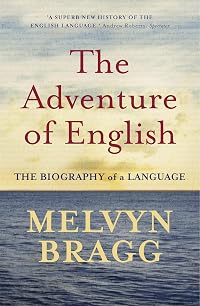
Melvyn Bragg is a British writer and broadcaster. His novels include The Hired Man, for which he won the Time/Life Silver Pen Award, Without a City Wall, winner of the John Llewellyn Rhys Prize, The Soldier's Return, winner of the WHSmith Literary Award, A Son of War and Crossing the Lines, both of which were longlisted for the Man Booker Prize, show more and most recently Grace and Mary. He has also written several works of non-fiction, the latest being The Book of Books about the King James Bible. In 2015, his book The Adventure of English became a New York Times bestseller. He lives in London and Cumbria. (Publisher Provided) show less
Work Relationships
Is a study of
Common Knowledge
- Original publication date
- 2006
- People/Characters
- Richard Arkwright; Charles Darwin [Charles Robert: 1809-1882]; Michael Faraday; Isaac Newton; William Shakespeare; Adam Smith (show all 8); William Tyndale; William Wilberforce
Classifications
- Genres
- Nonfiction, Literature Studies and Criticism, General Nonfiction, History
- DDC/MDS
- 028 — Computer science, information & general works Library & information sciences Reading and use of other information media
- LCC
- Z1003 — Bibliography, Library Science and Information Resources General bibliography Biography of bibliographers
- BISAC
Statistics
- Members
- 390
- Popularity
- 80,523
- Reviews
- 9
- Rating
- (3.25)
- Languages
- English
- Media
- Paper, Audiobook, Ebook
- ISBNs
- 7
- ASINs
- 3