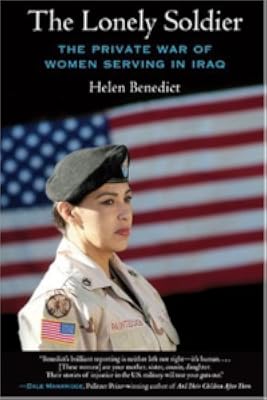
The Lonely Soldier: The Private War of Women Serving in Iraq
by Helen Benedict
On This Page
Description
The Lonely Soldier --the inspiration for the documentary The Invisible War --vividly tells the stories of five women who fought in Iraq between 2003 and 2006--and of the challenges they faced while fighting a war painfully alone. More American women have fought and died in Iraq than in any war since World War Two, yet as soldiers they are still painfully alone. In Iraq, only one in ten troops is a woman, and she often serves in a unit with few other women or none at all. This isolation, show more along with the military's deep-seated hostility toward women, causes problems that many female soldiers find as hard to cope with as war itself: degradation, sexual persecution by their comrades, and loneliness, instead of the camaraderie that every soldier depends on for comfort and survival. As one female soldier said, "I ended up waging my own war against an enemy dressed in the same uniform as mine." In The Lonely Soldier , Benedict tells the stories of five women who fought in Iraq between 2003 and 2006. She follows them from their childhoods to their enlistments, then takes them through their training, to war and home again, all the while setting the war's events in context. We meet Jen, white and from a working-class town in the heartland, who still shakes from her wartime traumas; Abbie, who rebelled against a household of liberal Democrats by enlisting in the National Guard; Mickiela, a Mexican American who grew up with a family entangled in L.A. gangs; Terris, an African American mother from D.C. whose childhood was torn by violence; and Eli PaintedCrow, who joined the military to follow Native American tradition and to escape a life of Faulknerian hardship. Between these stories, Benedict weaves those of the forty other Iraq War veterans she interviewed, illuminating the complex issues of war and misogyny, class, race, homophobia, and post-traumatic stress disorder. Each of these stories is unique, yet collectively they add up to a heartbreaking picture of the sacrifices women soldiers are making for this country. Benedict ends by showing how these women came to face the truth of war and by offering suggestions for how the military can improve conditions for female soldiers-including distributing women more evenly throughout units and rejecting male recruits with records of violence against women. Humanizing, urgent, and powerful, The Lonely Soldier is a clarion call for change. show lessTags
Recommendations







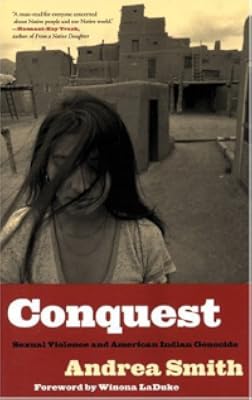
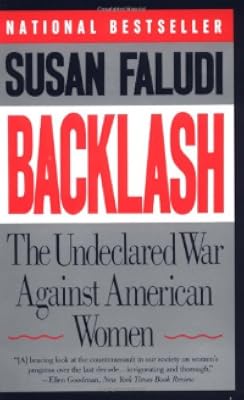
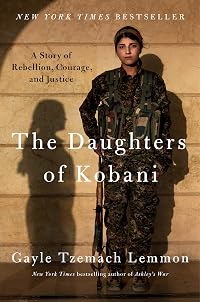
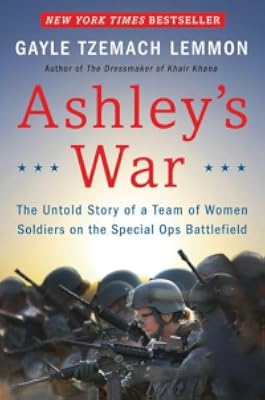
Member Recommendations
Member Reviews
For my own sanity, I hope that this book represents a minority of women serving in the military. Benedict writes her book well, but I believe the book's biggest shortcoming is that she does not interview a single commissioned officer. I understand that this book was published last year, but there have been enormous gender strides recently among officers, and I wish Benedict had perhaps interviewed some who were recognized by their male counterparts instead of harassed to get another perspective. Dunwoody earned her fourth star in 2008, and this year, the two cadets at USMA who have earned Rhodes Scholarships are female. I would like to see if there exists a sense of unity between enlisted and officers female soldiers. The one female show more major whom Benedict mentions is hostile, and I think another difficult subject Benedict discusses well is the racial discrimination that soldiers can experience. show less
For my own sanity, I hope that this book represents a minority of women serving in the military. Benedict writes her book well, but I believe the book's biggest shortcoming is that she does not interview a single commissioned officer. I understand that this book was published last year, but there have been enormous gender strides recently among officers, and I wish Benedict had perhaps interviewed some who were recognized by their male counterparts instead of harassed to get another perspective. Dunwoody earned her fourth star in 2008, and this year, the two cadets at USMA who have earned Rhodes Scholarships are female. I would like to see if there exists a sense of unity between enlisted and officers female soldiers. The one female show more major whom Benedict mentions is hostile, and I think another difficult subject Benedict discusses well is the racial discrimination that soldiers can experience. show less
This book describes a situation in which patriotic American soldier have more to fear from their own "comrades" than from the enemy. This is a chilling story. Well written and unforgettable.
Cuarta película en mi semana de documentales. (Porque con cuarenta grados de calor haciendo imposible salir afuera sin sufrir una combustión espontánea, aparentemente no encontré nada mejor que hacer que ponerme el ventilador en la cara y sufrir con historias trágicas y reales.)
Hoy, The invisible war, inspirada por este libro.
Hoy, The invisible war, inspirada por este libro.
Ratings
Members
- Recently Added By
Author Information

21+ Works 419 Members
Helen Benedict, the author of ten books, is professor of journalism at Columbia University and writes frequently on women, race, and justice. Her work on soldiers won the James Aronson Award for Social Justice Journalism.
Awards and Honors
Notable Lists
Common Knowledge
- Dedication
- For the war dead, and the living wounded
Classifications
- Genres
- Nonfiction, History, General Nonfiction, Sexuality and Gender Studies, Biography & Memoir
- DDC/MDS
- 956.7044 — History & geography History of Asia Middle East Asia: Turkey, Iraq, Syria, Lebanon, Israel, Jordan Iraq 1920- 1979-
- LCC
- DS79.76 .B445 — History of Europe, Asia, Africa and Oceania Asia History of Asia
- BISAC
Statistics
- Members
- 87
- Popularity
- 369,027
- Reviews
- 4
- Rating
- (3.67)
- Languages
- English
- Media
- Paper, Ebook
- ISBNs
- 3