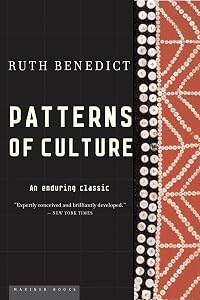
Patterns of Culture
by Ruth Benedict
On This Page
Description
This book was originally published in 1935. For some years past the scientific study of primitive peoples has experimented in a variety of directions for new methods of investigation. Criticism of the comparative method, of which Sir James Frazer is recognized as the foremost exponent all the world over, has been directed mainly against the fragmentary character of its evidence when torn from its context. In this book Dr Benedict offers an alternative method of approach. The aim of the show more investigator, she maintains, should be the discovery in the diversity of cultures of the 'configuration' of each - that is the cultural drive in group and individual which determines the characteristic reaction to stimulus in any and every situation in life. show lessTags
Recommendations





































Member Reviews
Benedict is “one of the country’s most highly respected anthropologists,” if you want to believe the back of the book. In this book she describes and compares three different indigenous cultures. The Zuni are a Pueblo culture in New Mexico who reflect the Apollonian values of sobriety, moderation, and a lack of individuality to the extreme. The Kwakiutls of Vancouver Island are complete opposites as they reflect Dionysian values like individual rivalry, ecstasies, and intoxication from a variety of sources. The third culture is the Dobu tribe in Melanesia who are violent, suspicious of everyone outside their biological families, and view life as a personal conflict with nature and other people.
I really wanted to love this book, show more but I couldn’t. The three chapters about the different cultures were decent, although I would have like them to have been split up into multiple sections by subject to make it easier to digest the information. I also would have liked a bit more information about some of the really different and unusual practices of the cultures. In several cases, I was left with more questions than answers. The three chapters of introduction and two chapters of conclusion, however, were mind-numbingly boring and only seemed to be marginally related to the three cultures that made up the rest of the book. Overall, it was an interesting subject and an interesting approach, but the book could have been written and organized better. show less
I really wanted to love this book, show more but I couldn’t. The three chapters about the different cultures were decent, although I would have like them to have been split up into multiple sections by subject to make it easier to digest the information. I also would have liked a bit more information about some of the really different and unusual practices of the cultures. In several cases, I was left with more questions than answers. The three chapters of introduction and two chapters of conclusion, however, were mind-numbingly boring and only seemed to be marginally related to the three cultures that made up the rest of the book. Overall, it was an interesting subject and an interesting approach, but the book could have been written and organized better. show less
A contributing work in the history of anthropological thought. Ruth Benedict, as was Margaret Mead, was a proponent of the "culture and personality" school of anthropological thinking. Here, she compared the Dobus of New Guinea, the Pueblos of New Mexico, Kwakiutls of the Northwest Coast and the Great Plains nations and argued that the values of each are intelligible in terms of its own coherent cultural system and that the individual should be seen within the context of his or her own culture. Basically, it is a treatise advocating cultural relativism.
The book is well written and worth a read if you are interested in the subject and even if you do not find her arguments persuasive 70 years of anthropological research later.
The book is well written and worth a read if you are interested in the subject and even if you do not find her arguments persuasive 70 years of anthropological research later.
"An analysis of our social structure as related to primitive civilizations"
psychology
Ratings
Members
- Recently Added By
Lists

Big History
72 works; 1 member

Trinity College Booklist (1951): Class Two, Social and Psychological Scienc
60 works; 3 members

Book Titles Mentioned In Newberry Medal And Honor Books
884 works; 3 members

The Torchlight List
95 works; 1 member

Works Cited in The History of White People by Nell Irvin Painter
321 works; 2 members

Books in the Bibliography of The Dawn of Everything by Graeber & Wengrow
478 works; 2 members
Author Information

11+ Works 2,790 Members
Some Editions
Awards and Honors
Series
Belongs to Publisher Series
Common Knowledge
- Canonical title*
- Kulturmönster : livsstilar och sedvänjor
- Original title
- Patterns of Culture
- Original publication date
- 1934
- Epigraph
- In the beginning God gave to every people a cup of clay, and from this cup they drank their life - Proverb of Digger Indians.
- First words
- Anthropology is the study of human beings as creatures of society.
- Last words
- (Click to show. Warning: May contain spoilers.)We shall arrive then at a more realistic social faith, accepting as grounds of hope and as new bases for tolerance the co-existing and equally valid patterns of life which mankind has created for itself from the raw materials of existence.
- Original language
- English
*Some information comes from Common Knowledge in other languages. Click "Edit" for more information.
Classifications
- Genres
- Anthropology, Nonfiction, General Nonfiction
- DDC/MDS
- 306 — Society, government, & culture Social sciences, sociology & anthropology Social Behavior - Dating, Marriage, Divorce
- LCC
- GN400 .B4 — Geography, Anthropology and Recreation Anthropology Anthropology Ethnology. Social and cultural anthropology
- BISAC
Statistics
- Members
- 1,230
- Popularity
- 20,143
- Reviews
- 4
- Rating
- (3.66)
- Languages
- 13 — Catalan, Czech, Dutch, English, Estonian, Finnish, German, Italian, Norwegian (Nynorsk), Polish, Spanish, Swedish, Portuguese (Portugal)
- Media
- Paper, Ebook
- ISBNs
- 29
- UPCs
- 2
- ASINs
- 30