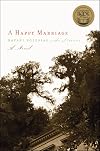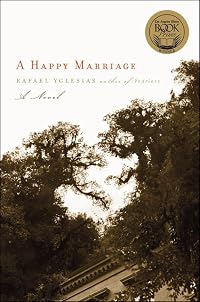
A Happy Marriage: A Novel
by Rafael Yglesias
On This Page
Description
Enrique and Margaret Sabas have been married for 30 years. Now, Margaret is under hospice care in the final stages of cancer and asks Enrique to control access to her during her final days so that she can say good-bye to a select few on her own terms. Enrique does so, patiently waiting for his own turn. As he waits, he remembers their life together, from their first conversation forward. The story alternates between past and present, contrasting the budding and then mature relationship to show more the sad reality of its end. show lessTags
Recommendations










Member Reviews
In this autobiographical novel, Yglesias explores a happy, if far from perfect, marriage primarily through the eyes of the husband, Enrique Sabas, as he faces his wife Margaret’s death. The novel opens with the 21-year-old Enrique being introduced to the two-or-three-years-older Margaret through a mutual friend, Bernard. Enrique is smitten, but knows this lovely creature is out of his league. He’s a high-school dropout; she studied at Cornell. The fact that he has already published two or three novels and lives on the money he’s earned as a writer does nothing to calm his fears and self-doubt. Bernard was right when he refused to introduce them before: Margaret is way out of Enrique’s league. The next chapter flies forward show more thirty years to his wife’s hospital bed, where Enrique watches Margaret in a drug-induced sleep while he ponders how he will get the courage to negotiate the terms of her death, fighting against doctors, her parents, and friends, to grant this woman he loves one final wish – to die at home.
The novel alternates with each chapter between the final two weeks of Margaret’s life and the early days of their courtship and marriage. It’s a testament to Yglesias’s skill as a writer that the reader (obviously already knowing the marriage will happen and last) is just as anxious as Enrique that Margaret like him, feels his nervousness as he dallies so as not to arrive too early to dinner, worries whether his own failings and mistakes will cause irreparable harm to their relationship. There were times I wanted to throttle him; there were times I wanted to console him. And Margaret is not without faults, though I think Yglesias allowed Enrique to dwell on her faults too much. A word of warning to the reader who is squeamish: Yglesias writes with brutal honesty about the horrors and indignities of a major illness. The final chapter hurls the reader back and forth between Margaret’s final moments and the beginnings of their relationship. I was moved to tears, at the same time my heart swelled with love and joy. show less
The novel alternates with each chapter between the final two weeks of Margaret’s life and the early days of their courtship and marriage. It’s a testament to Yglesias’s skill as a writer that the reader (obviously already knowing the marriage will happen and last) is just as anxious as Enrique that Margaret like him, feels his nervousness as he dallies so as not to arrive too early to dinner, worries whether his own failings and mistakes will cause irreparable harm to their relationship. There were times I wanted to throttle him; there were times I wanted to console him. And Margaret is not without faults, though I think Yglesias allowed Enrique to dwell on her faults too much. A word of warning to the reader who is squeamish: Yglesias writes with brutal honesty about the horrors and indignities of a major illness. The final chapter hurls the reader back and forth between Margaret’s final moments and the beginnings of their relationship. I was moved to tears, at the same time my heart swelled with love and joy. show less
“A Happy Marriage” is autobiography thinly disguised as fiction. This is an incredibly moving and intensely literary book. Mr. Ygelsias has written a profoundly personal book, which exhibits his powers as a storyteller in a manner evidencing respect for his audience as well as his subject. This is an astonishing feat, considering that he has included ridiculously personal details of his marriage without seeming to betray the essential emotional intimacies of his married life.
I read it because I loved the movie “Fearless,” which Raphael Yglesias wrote, and because I’ve been a reader of his son Matthew’s blog for many years. (It was Matt’s blog that informed me of the book’s existence.) Although Mr. Yglesias’ life is one show more of great accomplishment and privilege, he has managed to craft an autobiographical narrative that bridges enormous gaps of status. I wept repeatedly while reading this book. It is a mature and phenomenally insightful story of marriage, love, and raw human need. I recommend it unreservedly. show less
I read it because I loved the movie “Fearless,” which Raphael Yglesias wrote, and because I’ve been a reader of his son Matthew’s blog for many years. (It was Matt’s blog that informed me of the book’s existence.) Although Mr. Yglesias’ life is one show more of great accomplishment and privilege, he has managed to craft an autobiographical narrative that bridges enormous gaps of status. I wept repeatedly while reading this book. It is a mature and phenomenally insightful story of marriage, love, and raw human need. I recommend it unreservedly. show less
The story is Enrique's, and, evidently, Rafael Yglesias's. Enrique's wife Margaret is dying of cancer, and the novel is structured to jump back and forth in time between her final weeks of life and other times, stretching backwards 30 years, during which they met, fell in love, and struggled. Yglesias writes with a sharp and unsparing insight into insecure Enrique, into himself, laying bare his immature and unfaithful love of youth and then later in time, contrastingly, the depth of love and devotion to Margaret that he recognizes as the essential truth of his life, and the profound pain, guilt, and bereavement he feels at losing her. Enrique and Margaret are both brought fully and wonderfully to life, characters created with all the show more authenticity seemingly transferred whole and without loss from their real-life models.
Essentially this a novel of loss, and so can be bleak. Straightaway Yglesias writes that "His ambition since last fall had been to lift a single grain of the tonnage of her grief at saying good-bye to life. Listening to her while the red- and orange-colored frozen fruit bars melted onto his blue jeans, he knew he would fail." (page 24... sure you want to keep reading?!). Enrique is a harsh self-critic who fears he cannot provide what is needed for Margaret and for their two young adult sons. "He dreaded the sorrow that lay ahead for his sons and feared he would be unable to console them. He soothed himself with the hope that a permanent deposit of those carefree hours playing on the hardwood floors with their mother - not a memory of happiness but an unremembered absorption of her joy at having created them - could provide a lifetime's buoyancy that would eventually lift his sons' hearts above the cruelty of losing her."
Alternating paragraphs that deal with the present with paragraphs that recount the past, in which Margaret and Enrique are young and full of life and in which death is an unconsidered far-off reality, balances the couple's ending with its beginning and provides moments of welcome amusement, as Yglesias pokes fun at his extraordinarily insecure, but with a patina of bravado, younger self. There is a yearlong affair Enrique has with a friend of Margaret's during an early portion of their marriage, a time during which he professed to feel like the marriage was a huge mistake, and that he did not love his wife and felt he never would. If there is anything murky in this novel, it is how he moved from those feelings to the deep and unmistakable love he clearly feels for her 20 years on. show less
Essentially this a novel of loss, and so can be bleak. Straightaway Yglesias writes that "His ambition since last fall had been to lift a single grain of the tonnage of her grief at saying good-bye to life. Listening to her while the red- and orange-colored frozen fruit bars melted onto his blue jeans, he knew he would fail." (page 24... sure you want to keep reading?!). Enrique is a harsh self-critic who fears he cannot provide what is needed for Margaret and for their two young adult sons. "He dreaded the sorrow that lay ahead for his sons and feared he would be unable to console them. He soothed himself with the hope that a permanent deposit of those carefree hours playing on the hardwood floors with their mother - not a memory of happiness but an unremembered absorption of her joy at having created them - could provide a lifetime's buoyancy that would eventually lift his sons' hearts above the cruelty of losing her."
Alternating paragraphs that deal with the present with paragraphs that recount the past, in which Margaret and Enrique are young and full of life and in which death is an unconsidered far-off reality, balances the couple's ending with its beginning and provides moments of welcome amusement, as Yglesias pokes fun at his extraordinarily insecure, but with a patina of bravado, younger self. There is a yearlong affair Enrique has with a friend of Margaret's during an early portion of their marriage, a time during which he professed to feel like the marriage was a huge mistake, and that he did not love his wife and felt he never would. If there is anything murky in this novel, it is how he moved from those feelings to the deep and unmistakable love he clearly feels for her 20 years on. show less
Moving and almost uncomfortably intimate fictionalized account of the author's marriage, viewed through the lens of her death from cancer. The chapters alternating between the beginning of Enrique's relationship with Helen to the days leading up to her death work well. Some issues are left unresolved (how did Enrique manage to stay with his wife after coming so close to ending the marriage during his affair with one of her friends?), and at times the narrators swings from self-centeredness to self-flagellation gets a bit tiresome. But it is astonishing that Yglesias puts both himself and his marriage out there, warts and all, for everyone to see. Every moment of the book is achingly real and unsettlingly true.
 This review was written for LibraryThing Early Reviewers.
I would give this book 5 stars alone just on technical merit, emotional attachment, style, you name it. But the subject matter is SO HARD. If it hadn't been for Book Club, I would have never picked this up.
But I'm glad I did. And I'd like to read something ele by Yglesias, hopefully to balance this out.
So... to actually review this...
The story is of a marriage, and is told from the early days when they met, and the last days, when the wife, Margaret, is dying. It is interesting to observe through Enrique the maturation of love, the devotion they have to each other, body and soul, how that changes yet never really leaves. There are moments of passion, when they think they can do nothing but go forward with this love, and moments of show more decision, when they have to choose to commit and re-commit. There are so many moments of illumination, when you see what love comes down to for all of us: how simple are our needs, and yet how complicated meeting those needs becomes, until we look back and see the gifts we were given all along.
There is regret, of course. The story is told through Enrique, so we're not sure what Margaret might regret. And there is the torture of realizing there's not enough time to say it all, let alone do it all: even in a 29-year marriage, with partners who are blessed enough to be able to spend the last months by each other's sides, there still isn't enough time.
If you're up for the challenge, this is a great book. But you will be moved to tears, probably every chapter. show less
But I'm glad I did. And I'd like to read something ele by Yglesias, hopefully to balance this out.
So... to actually review this...
The story is of a marriage, and is told from the early days when they met, and the last days, when the wife, Margaret, is dying. It is interesting to observe through Enrique the maturation of love, the devotion they have to each other, body and soul, how that changes yet never really leaves. There are moments of passion, when they think they can do nothing but go forward with this love, and moments of show more decision, when they have to choose to commit and re-commit. There are so many moments of illumination, when you see what love comes down to for all of us: how simple are our needs, and yet how complicated meeting those needs becomes, until we look back and see the gifts we were given all along.
There is regret, of course. The story is told through Enrique, so we're not sure what Margaret might regret. And there is the torture of realizing there's not enough time to say it all, let alone do it all: even in a 29-year marriage, with partners who are blessed enough to be able to spend the last months by each other's sides, there still isn't enough time.
If you're up for the challenge, this is a great book. But you will be moved to tears, probably every chapter. show less
This is a beautiful book, both intimate and universal in its scope. The story of Enrique and Margaret's life together travels from lust to anger to contentment. It encompasses all of the elements of a long, full life: work, friendship, family dynamics, and ultimately death. Yglesias gives us a detailed picture of one man and his relationship with his wife, his parents, and his children, but through this specific portrait we are given windows into pain and pleasure that is universal. Like Joan Didion's "A Year of Magical Thinking" the stark image of death in Yglesias' novel is both hard to take, and hard to look away from. The level of detail can feel overwhelming at times, but it all works together to portray a realistic and complete show more life. Knowing that this fiction is based on Ygesias' own life gives it added power.
While reading I thought about my relationship with my parents, my father's death, my friends, and especially my fiancee. I'll be passing this book on to my mother, my sister, and my fiancee, but I will make sure to get it back - it has a place in my permanent collection. show less
While reading I thought about my relationship with my parents, my father's death, my friends, and especially my fiancee. I'll be passing this book on to my mother, my sister, and my fiancee, but I will make sure to get it back - it has a place in my permanent collection. show less
This review was written for LibraryThing Early Reviewers.Yglesias's novel is beautifully wrought, with meticulously crafted characters moving through the heartbreaking denouement of a thirty-year romance. Enrique, the protagonist, is saddled with the burden of herding his family through the final days of his wife Margaret's life. In between the episodes of final goodbyes and medical crises, the reader sees how their romance started and how it unfolded through their years of happy marriage.
Of course, it could hardly be happy in the sense of blissfully moving from one joyous moment to the next. They have their problems, including the near dissolution of their marriage in its early years. What makes the reader cheer from the sidelines, even while it is revealed that Enrique had an affair, is the show more way he desperately wants to tell his wife, at the end of her life, how much he loves her, how much her very existence has made life worth living. His fear, as he coordinates a social calendar of final goodbyes for her friends and family, is that he won't have a chance to tell her. This fear is pervasive, and seeing how these final days unfold make the novel engrossing.
Yglesias employs beautiful turns of phrase throughout the novel, putting words to feelings that many have experienced while dealing with the illness and death of a loved one. Enrique reveals how difficult it is to help other people cope emotionally, when he is trying so hard himself to do that as well: they were “demanding he put Band-Aids on their scrapes while he was bleeding to death” (88). Enrique deals with the demands of family, particularly Margaret's parents concern with funeral arrangements. In passages like this, Yglesias shines in describing Margaret's mother's need to control the arrangements, to have them just the way her family has always had them, because the need for something familiar would almost make one feel safe in the midst of the uncertainty of a life without Margaret (184).
There are witty passages as well, like Enrique's internal debate about selecting pants to wear on his first date with Margaret (129). Enrique and Margaret are great conversational foils, never devolving into the pattern of saying the same things to each other repeatedly, nor remaining silent because, after all these years, there is nothing left to say. Their relationship is alive and vibrant, and they still can surprise each other when they open their mouths. This is something beautiful to see, and it makes the ending of the novel so hard to bear.
The first chapter didn't draw me in to the novel the way that the second – and each subsequent chapter – did. I do not mention this as a critique, but rather so that readers know that they might not be enthralled on first meeting the characters, but it is worth hanging on for a few more pages to let this story get a running start.
I think the great strength of this novel is the detailed expression of the emotions that swirl around the beginning and end of this marriage. These characters are vibrantly alive, and will remain lodged in my mind for some time now. It is an excellent read, even if it leaves the reader in tears. show less
Of course, it could hardly be happy in the sense of blissfully moving from one joyous moment to the next. They have their problems, including the near dissolution of their marriage in its early years. What makes the reader cheer from the sidelines, even while it is revealed that Enrique had an affair, is the show more way he desperately wants to tell his wife, at the end of her life, how much he loves her, how much her very existence has made life worth living. His fear, as he coordinates a social calendar of final goodbyes for her friends and family, is that he won't have a chance to tell her. This fear is pervasive, and seeing how these final days unfold make the novel engrossing.
Yglesias employs beautiful turns of phrase throughout the novel, putting words to feelings that many have experienced while dealing with the illness and death of a loved one. Enrique reveals how difficult it is to help other people cope emotionally, when he is trying so hard himself to do that as well: they were “demanding he put Band-Aids on their scrapes while he was bleeding to death” (88). Enrique deals with the demands of family, particularly Margaret's parents concern with funeral arrangements. In passages like this, Yglesias shines in describing Margaret's mother's need to control the arrangements, to have them just the way her family has always had them, because the need for something familiar would almost make one feel safe in the midst of the uncertainty of a life without Margaret (184).
There are witty passages as well, like Enrique's internal debate about selecting pants to wear on his first date with Margaret (129). Enrique and Margaret are great conversational foils, never devolving into the pattern of saying the same things to each other repeatedly, nor remaining silent because, after all these years, there is nothing left to say. Their relationship is alive and vibrant, and they still can surprise each other when they open their mouths. This is something beautiful to see, and it makes the ending of the novel so hard to bear.
The first chapter didn't draw me in to the novel the way that the second – and each subsequent chapter – did. I do not mention this as a critique, but rather so that readers know that they might not be enthralled on first meeting the characters, but it is worth hanging on for a few more pages to let this story get a running start.
I think the great strength of this novel is the detailed expression of the emotions that swirl around the beginning and end of this marriage. These characters are vibrantly alive, and will remain lodged in my mind for some time now. It is an excellent read, even if it leaves the reader in tears. show less
This review was written for LibraryThing Early Reviewers.Members
- Recently Added By
Published Reviews
ThingScore 88
Yglesias' novel is a stunner... by turns wrenching, amusing and exasperating.
added by Shortride
The mystery of what’s at the heart of a marriage can’t be unlocked, or even fully captured in words. But Enrique and Margaret are anything but common, distinct both as characters and in the endurance of their love.
added by jimsnopes
Author Information
14+ Works 1,390 Members
Rafael Yglesias was born on May 12, 1954. He dropped out of high school to finish his first novel, Hide Fox, and All After, which was published in 1972. He wrote three novels by the age of twenty-one and then stopped writing books between 1976 and 1984 to concentrated on starting a family. During this time, he made a living by writing screenplays. show more His other books include Hot Properties, Only Children, The Murderer Next Door, Fearless, and Dr. Neruda's Cure for Evil. A Happy Marriage won the 2009 Los Angeles Times Book Prize for Fiction. In 1992, he resumed writing screenplays. The first to be produced, Fearless, was an adaptation of his novel of the same title. He also wrote the screenplays for Death and the Maiden, Les Miserables, From Hell, and Dark Water. (Bowker Author Biography) show less
Awards and Honors
Awards
Distinctions
Common Knowledge
- Original publication date
- 2010
- Important places
- Greenwich Village, New York, New York, USA
- Dedication
- For her
- First words
- He had ordered her in.
- Blurbers
- Beattie, Ann; Groopman, Jerome
Classifications
Statistics
- Members
- 393
- Popularity
- 79,738
- Reviews
- 32
- Rating
- (3.93)
- Languages
- English, German, Russian, Spanish
- Media
- Paper, Audiobook, Ebook
- ISBNs
- 18
- ASINs
- 3