
Centennial
by James A. Michener
On This Page
Description
Fiction. Literature. Thriller. Historical Fiction. HTML:Written to commemorate the Bicentennial in 1976, James A. Michener’s magnificent saga of the West is an enthralling celebration of the frontier. Brimming with the glory of America’s past, the story of Colorado—the Centennial State—is manifested through its people: Lame Beaver, the Arapaho chieftain and warrior, and his Comanche and Pawnee enemies; Levi Zendt, fleeing with his child bride from the Amish country; the cowboy, Jim show more Lloyd, who falls in love with a wealthy and cultured Englishwoman, Charlotte Seccombe. In Centennial, trappers, traders, homesteaders, gold seekers, ranchers, and hunters are brought together in the dramatic conflicts that shape the destiny of the legendary West—and the entire country.BONUS: This edition includes an excerpt from James A. Michener's Hawaii.
Praise for Centennial
“A hell of a book . . . While he fascinates and engrosses, Michener also educates.”—Los Angeles Times
“An engrossing book . . . imaginative and intricate . . . teeming with people and giving a marvelous sense of the land.”—The Plain Dealer
“Michener is America’s best writer, and he proves it once again in Centennial. . . . If you’re a Michener fan, this book is a must. And if you’re not a Michener fan, Centennial will make you one.”—The Pittsburgh Press
“An absorbing work . . . Michener is a superb storyteller.”—BusinessWeek. show less
Tags
Recommendations
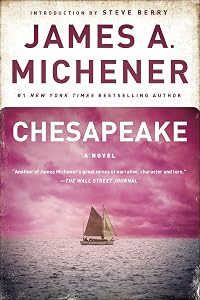
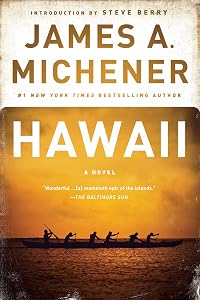



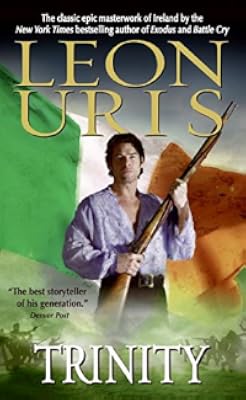

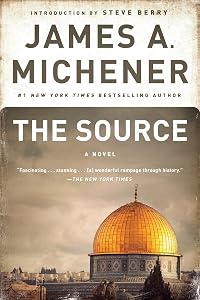
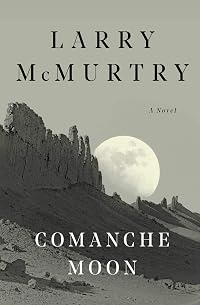
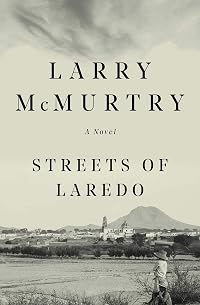














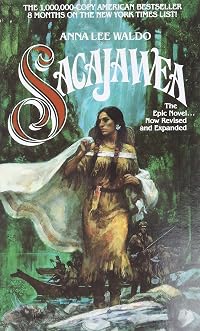
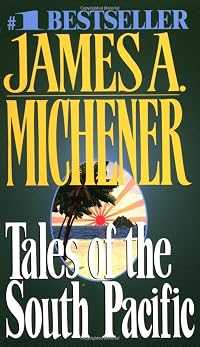

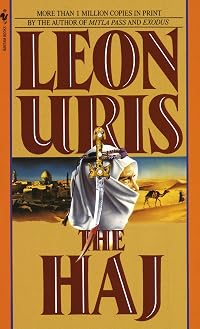


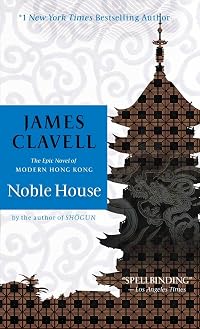


Member Recommendations

Member Reviews
A typical Michener tale in scope, detail, and heft. To my tastes, it was pretty good for about the first 700 pages and then it just seemed to come apart. There were too many characters, too many families, too many plots and subplots, and too many tangential deep dives into minutia of the region and time. Honestly ... I'm interested in sugar beets for only about 10 pages if I'm feeling patient. 80 pages? Not really.
There's no doubt that writing about something as big and grand and as mythologized as The American West is an enormous undertaking. It is way bigger than the sum of the events that happened or the people who lived there. Michener's approach at the start was to follow a couple of families and that worked -- we could see the show more world unfolding in their actions and dialogue. We didn't need the narrator to step in and tell us what was important. But then Michener jumped from people to topics and the narrator became the dominant voice. Cattle drives, water, agriculture, ranching, sheep, and the railroad ... and each topic required another 8-10 characters who played their bit parts and then get thrown into the mix with all the other characters floating around. After a while the story just becomes a bunch of stuff that happened to a bunch of people that the narrator tells us is important.
Based on the average rating for this book, I suppose people like it. NBC made a miniseries out of it. But don't think that is has the magic that Chesapeake or Alaska had. show less
There's no doubt that writing about something as big and grand and as mythologized as The American West is an enormous undertaking. It is way bigger than the sum of the events that happened or the people who lived there. Michener's approach at the start was to follow a couple of families and that worked -- we could see the show more world unfolding in their actions and dialogue. We didn't need the narrator to step in and tell us what was important. But then Michener jumped from people to topics and the narrator became the dominant voice. Cattle drives, water, agriculture, ranching, sheep, and the railroad ... and each topic required another 8-10 characters who played their bit parts and then get thrown into the mix with all the other characters floating around. After a while the story just becomes a bunch of stuff that happened to a bunch of people that the narrator tells us is important.
Based on the average rating for this book, I suppose people like it. NBC made a miniseries out of it. But don't think that is has the magic that Chesapeake or Alaska had. show less
A runaway best seller, Michener's Centennial was written as a tribute to America's bicentennial celebration. The book is about a fictitious town of the same name in Colorado. The town is not nestled in the majestic Rockies, as one might expect, but instead is located out on the vast, open, treeless, windswept plains that run down from the eastern slopes of the mountains. It is here that Michener gives the reader a comprehensive history of the area, from the formation of the land and its rivers, to its prehistoric inhabitants, to its early settlers, to its subsequent clash of various cultures. The plains Indians, fur trappers, pioneer settlers, soldiers, ranchers, dry land and irrigation farmers, and the hearty descendants of these show more diverse groups--all are depicted vividly and weaved into an engrossing story by an author with a keen eye for detail. Each chapter is a mini-novel in itself dealing with a specific time period. Like all of Michener's historical fiction novels, Michener lived in the actual town of Centennial, Colorado, for a year or more to do the extensive research for his story. Michener's writing style is one that is unique to him. Readers seem to either love his vivid and prolific prose, or they are overwhelmed by the great attention to detail that is Michener. I love his writing and have read virtually all his novels. If you have never read a novel by Michener, this is the one to start with to see if you like his writing style. Chances are you will become a life-long fan of the man who has become one of my favorite authors. show less
as always, i love his historical detail and the vast amount of information he provides. he chose a weird way to do it in this book, though, and it detracted because it was so undeveloped and obviously a tool to get his research across. the middle of this book was extremely compelling to me; the rest less so. although i do, of course, love his discourse on how we're destroying the world, and i wept for what seemed like days when reading about what i wish was the blackest blight in american history (but i think there's unfortunately a lot to choose from) - the government's treatment of the native americans.
A novel about Colorado and a large book in every sense of the word, Centennial is one of Michener's most successful outings. It boasts the humongous timeline we've come to expect from him, but the fiction itself rests on a solid foundation of fascinating historical facts. Exposition abounds, of course, but in this case it's well balanced against the human stories.
Michener starts with a somewhat didactic geology lesson and gamely presents us with the personal trials and tribulations of dinosaurs and early mammals, followed by.. um, beavers? Well, beavers can have rich and emotional inner lives, too. Heck, you can tell the man even did massive research into beavers. This is a very dedicated writer, folks.
Anyway, the human part of the book show more starts with the first inhabitants of the area, the Arapaho, and their initial encounter with whites. This portion has some of the most interesting characters, the Arapaho chief Lame Beaver and the intrepid French trader Pasqinel. These people are so colorful they must surely be based on real historical figures.
There's a particularly disturbing massacre about a third of the way through the novel (basically the Sand Creek Massacre). Sad that so little of the horrific details of this event had to be made up by the author. (Truth is often worse than any nightmare one can dream up.)
An impressive pageant of characters wander in and out the pages of this book; it'd be a slog to go through them all. You have your usual black hats and white hats, a generous amount of gray characters, and a generous sprinkling of under-developed walk on parts. It's an engrossing and informative read, not high literature, but by Michener standards pretty good. show less
Michener starts with a somewhat didactic geology lesson and gamely presents us with the personal trials and tribulations of dinosaurs and early mammals, followed by.. um, beavers? Well, beavers can have rich and emotional inner lives, too. Heck, you can tell the man even did massive research into beavers. This is a very dedicated writer, folks.
Anyway, the human part of the book show more starts with the first inhabitants of the area, the Arapaho, and their initial encounter with whites. This portion has some of the most interesting characters, the Arapaho chief Lame Beaver and the intrepid French trader Pasqinel. These people are so colorful they must surely be based on real historical figures.
There's a particularly disturbing massacre about a third of the way through the novel (basically the Sand Creek Massacre). Sad that so little of the horrific details of this event had to be made up by the author. (Truth is often worse than any nightmare one can dream up.)
An impressive pageant of characters wander in and out the pages of this book; it'd be a slog to go through them all. You have your usual black hats and white hats, a generous amount of gray characters, and a generous sprinkling of under-developed walk on parts. It's an engrossing and informative read, not high literature, but by Michener standards pretty good. show less
A long investment of time but so worth it. One of Michener's masterpieces. Rich with American history, rich characterization, complex plotting. A fascinating story with fictional and true life characters interacting. A great read. Worth the investment in every way.
I like these things that Mr. Michener does with history and place. Not as good for me as "The Source", but I sure loved reading it - and then reading John Kings book "In Search of Centennial" which chronicled it's research and production.
Michener is a good writer, but in picking up his books it is important to ask "am I in the mood for a book from the beginning of time?" at page 134 he has only just gotten to humans. However, this strategy for writing made me think about evolution, the difference between humans and animals and survival. In writing historical fiction, Michener portrays the sense of a place, and how we came to be where we are today. He tells a good story, but he also depicts unhappy truths without romantisizing them.
Members
- Recently Added By
Published Reviews
ThingScore 75
An amazing amount of history, effortlessly digestible, the source of The Source's great attraction for many of those home historians, since Michener, with his seven league clodhoppers, does cover a lot of ground.
added by Richardrobert
Lists

Best Historical Fiction
620 works; 257 members

Africa
109 works; 8 members

Publisher's Weekly Bestsellers - Part II - 1940 - 1979
355 works; 5 members

Novels That Take Place In Colorado or Wyoming
20 works; 3 members

Time-Sweep Novels
28 works; 3 members

Swinging Seventies
255 works; 18 members

History in the long view
55 works; 3 members

Books You Couldn't Finish
202 works; 32 members
Author Information

207+ Works 49,304 Members
James A. Michener, 1907 - 1997 James Albert Michener was born on February 3, 1907 in Doylestown, Pa. He earned an A.B. from Swarthmore College, an A.M. from Colorado State College of Education, and an M.A. from Harvard University. He taught for many years and was an editor for Macmillan Publishing Company. His first book, "Tales of the South show more Pacific," derived from Michener's service in the Pacific in World War II, won the 1947 Pulitzer Prize for Fiction and was the basis for the Rodgers and Hammerstein Broadway musical South Pacific, which won the 1950 Pulitzer Prize for Drama. Michener completed close to 40 novels. Some other epic works include "Hawaii," "Centennial," "Space," and "Caribbean." He also wrote a significant amount of nonfiction including his autobiography "The World Is My Home." Among his many other honors, James Michener received the Presidential Medal of Freedom in 1977. He was married to Patti Koon in 1935; they divorced in 1948. He married Vange Nord in 1948 (divorced 1955) and Mari Yoriko Sabusawa in 1955 (deceased 1994). He died in 1997 in Austin, Texas. (Bowker Author Biography) show less
Awards and Honors
Awards
Distinctions
Work Relationships
Is contained in
Contains
Has the adaptation
Is abridged in
Has as a supplement
Has as a commentary on the text
Common Knowledge
- Canonical title
- Centennial
- Original title
- Centennial
- Alternate titles*
- Colorado saga
- Original publication date
- 1974
- People/Characters
- Pasquinel; Levi Zendt; Alexander McKeag; Lame Beaver; Clay Basket; Jacques Pasquinel (show all 13); Marcel Pasquinel; Frank Skimmerhorn; Paul Garrett; Jim Lloyd; Charlotte Lloyd; Mervin Wendell; Phillip Wendell
- Important places
- Lancaster County, Pennsylvania, USA; Colorado, USA; Mexico; St. Louis, Missouri, USA; Texas, USA
- Related movies
- Centennial (1978 | IMDb)
- Epigraph*
- Voor drie voortreffelijke journalisten in Colorado
Floyd Merril van Greeley, die me de rivieren heeft laten zien;
Otto Unfug van Sterling, die me veel over het vee heeft geleerd; Clyde Stanley van Keota, die me naar de... (show all) prairie heeft geleid. - Dedication
- To Three distinguished Colorado newspapermen:
Floyd Merrill of Greeley, who showed me the rivers;
Otto Unfug of Sterling, who taught me about cattle;
Clyde Staley of Keota, who introduced me to the prairie. - First words
- Only another writer, someone who had worked his heart out on a good book which sold three thousand copies, could appreciate the thrill that overcame me one April morning in 1973 when Dean Rivers of our small college in Georgi... (show all)a appeared at my classroom door.
- Last words
- (Click to show. Warning: May contain spoilers.)"Could be," Garrett said. "It damn well could be."
- Original language*
- Anglais (Etats-Unis) (Etats-Unis)
- Disambiguation notice
- ISBN 0854565698 is for the Reader's Digest Condensed version.
*Some information comes from Common Knowledge in other languages. Click "Edit" for more information.
Classifications
- Genres
- Fiction and Literature, General Fiction, Historical Fiction
- DDC/MDS
- 813.54 — Literature & rhetoric American literature in English American fiction in English 1900-1999 1945-1999
- LCC
- PZ3 .M583 — Language and Literature Fiction and juvenile belles lettres Fiction and juvenile belles lettres Fiction in English
- BISAC
Statistics
- Members
- 3,284
- Popularity
- 5,185
- Reviews
- 44
- Rating
- (4.05)
- Languages
- 8 — Danish, Dutch, English, French, German, Italian, Polish, Spanish
- Media
- Paper, Audiobook, Ebook
- ISBNs
- 53
- ASINs
- 42